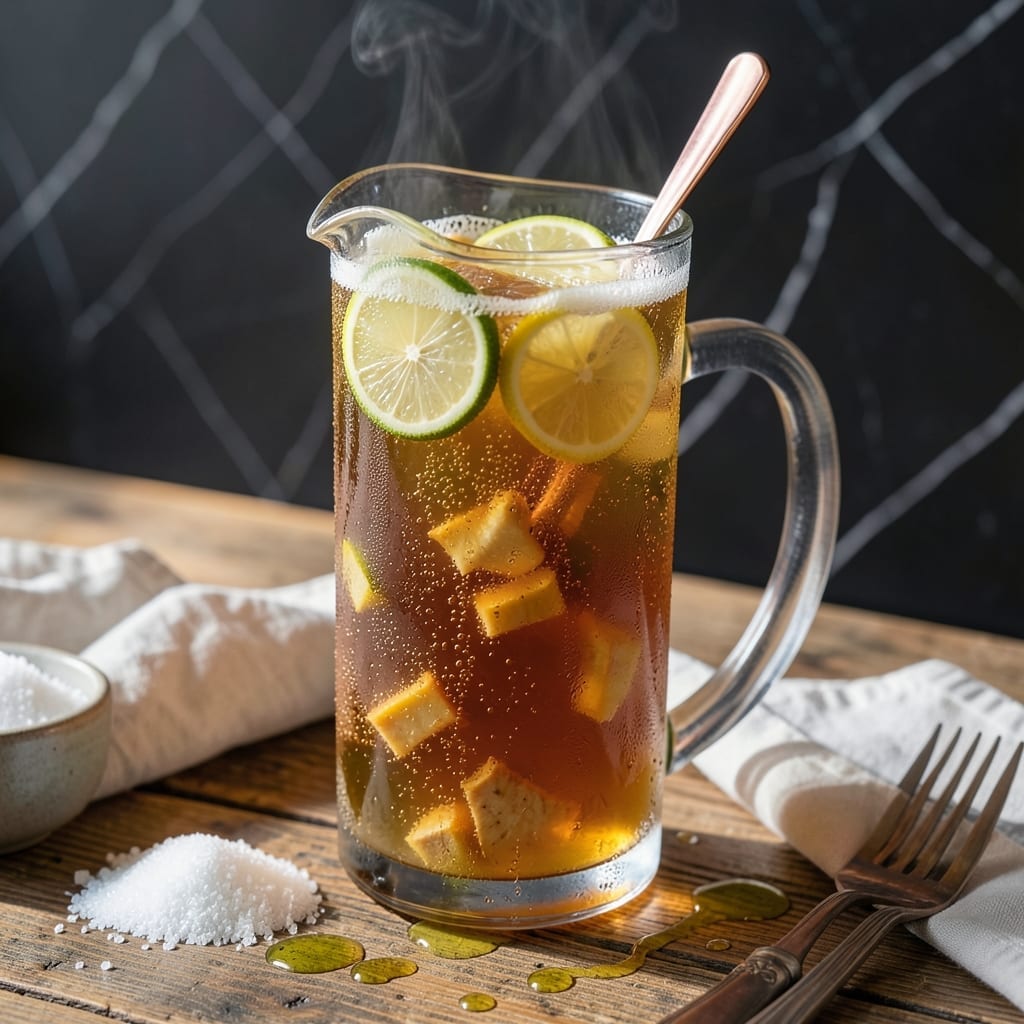
This fermented ginger beer delivers bold, spicy-sweet flavor with a natural fizz you won’t find in store-bought versions.
Using simple ingredients and a 48-hour fermentation process, this recipe creates a refreshing beverage with depth and complexity.
Ingredients for Recipe for Ginger Beer Drink
Simple pantry staples create this bold, spicy-sweet fermented beverage with natural fizz and depth.
| Ingredient | Amount | Notes |
|---|---|---|
| Fresh Ginger Root 🌿 | 1 cup | Peeled and finely grated |
| Granulated Sugar 🍚 | 1 cup | Organic or raw preferred |
| Water 💧 | 4 cups | Filtered for best results |
| Lemon Juice 🍋 | ¼ cup | Freshly squeezed preferred |
| Lime Juice 🍈 | 2 tbsp | Freshly squeezed preferred |
| Champagne Yeast 🍞 | ¼ tsp | Or bread yeast in pinch |
| Ground Cinnamon 🌿 | ½ tsp | Ceylon for milder flavor |
| Ground Cloves 🌶️ | ¼ tsp | Optional for warmth |
| Sea Salt 🧂 | ½ tsp | Fine grain preferred |
| Raisins 🍇 | ¼ cup | Optional for extra fermentation |
[recipe_ingredient_scaler]
The ginger is non-negotiable—fresh and plump roots with taut skin are ideal. Avoid fibrous or shriveled pieces. Whole Foods and Trader Joe’s typically stock high-quality organic ginger. For sugar, organic or raw varieties ferment more actively than refined white. The yeast is your fermentation engine—champagne yeast is optimal, but bread yeast from the grocery aisle works in a pinch.
No champagne yeast? Bread yeast at double the amount gets the job done. Swap sugar for honey if vegan isn’t a concern (but skip it here). The citrus can be adjusted—all lemon or all lime both work. Cinnamon and cloves add warmth, but they’re optional if you prefer a pure ginger profile. Raisins boost fermentation activity but aren’t essential.
Store unpeeled ginger in the freezer for up to 3 months. The finished ginger beer keeps refrigerated for 1-2 weeks (the fizz diminishes over time). Always use clean, sterilized bottles to prevent contamination during fermentation.
Why You’ll Love This Recipe
- One Pot Wonder: I just simmer ginger, sugar, and water, then add citrus—no fancy equipment.
- Zingy Kick: The fresh ginger and lime give that sharp, refreshing bite I crave.
- Crowd Pleaser: Honestly, it’s a hit at summer BBQs and cozy winter nights alike.
- Budget Sip: A batch costs pennies and lasts for days in my fridge.
Step-by-Step Instructions for Ginger Beer
Master the fermentation process with this tested method for consistent, effervescent results.
Step 1: Prepare the Ginger Syrup Base
In a medium saucepan, combine the 1 cup Fresh Ginger Root with 4 cups Water. Bring to a boil over medium-high heat, then reduce to a simmer for 15-20 minutes until the liquid takes on a deep amber hue and the ginger aroma is pronounced.
Strain through a fine-mesh sieve into a clean heatproof vessel, pressing firmly on the ginger with a spoon to extract all liquid. Stir in the 1 cup Granulated Sugar until fully dissolved. This concentrated base ensures maximum ginger flavor in the final brew.
Step 2: Incorporate Spices and Acid
Allow the syrup to cool to room temperature (this prevents killing the yeast). Once cool, stir in the 0.25 cup Lemon Juice, 2 tbsp Lime Juice, 0.5 tsp Ground Cinnamon, 0.25 tsp Ground Cloves, and 0.5 tsp Sea Salt until fully combined.
The citrus juices add necessary acidity for fermentation, while the spices create depth. I always add the 0.5 tsp Ground Cinnamon first—it disperses better when introduced to warm liquid. The mixture should smell bright and aromatic at this stage.
Step 3: Pitch the Yeast and Add Raisins
Sprinkle the 0.25 tsp Champagne Yeast over the surface of the liquid and let it sit undisturbed for 5 minutes. This allows the yeast to hydrate. Then stir gently to incorporate. Add the 0.25 cup Raisins, which provide additional fermentable sugars and help maintain consistent carbonation.
The raisins will plump as they absorb liquid, and you’ll notice small bubbles forming at the surface within 30-60 minutes—this is the yeast activating. The mixture should now have a faintly yeasty aroma layered with the ginger and citrus notes.
Step 4: Ferment and Monitor Activity
Transfer the mixture to a clean, sterile fermentation vessel, leaving at least 2 inches of headspace. Secure with an airlock or loosely cover with a clean cloth. Store at room temperature (ideally 68-72°F) away from direct sunlight.
You’ll see vigorous bubbling within 12-24 hours as the yeast consumes the sugars. The raisins will float to the top. Ferment for 2-3 days, tasting daily after the first 48 hours. The brew is ready when it has developed a pleasant tang and visible carbonation when swirled.
Step 5: Bottle and Complete Carbonation
Strain out the raisins and carefully transfer the liquid to sterilized swing-top bottles, leaving 1.5 inches of headspace. Seal tightly. Let the bottles sit at room temperature for 24-48 hours to build carbonation.
Refrigerate once carbonated to halt fermentation. The ginger beer will continue developing flavor for 1-2 weeks in the fridge. Serve chilled, opening bottles slowly to avoid excessive foaming. The finished product should have a sharp ginger bite, balanced sweetness, and lively effervescence.
Pro Tips For Making Recipe For Ginger Beer Drink
- Grate the Ginger: Use a microplane for the fresh ginger root—it releases more juice and spicy flavor than chopping, and you won’t end up with stringy bits in your drink.
- Simmer, Don’t Boil: Keep the ginger-sugar-water mixture at a gentle simmer for 15-20 minutes; boiling hard can make the ginger taste harsh instead of warm and aromatic.
- Strain While Hot: I learned this the hard way—strain the ginger syrup while it’s still hot to avoid a clogged sieve and get every last drop of spicy-sweet liquid.
- Add Citrus Last: Stir in the lemon and lime juice after the syrup cools to preserve their bright, fresh flavor—adding them early dulls the zing that makes ginger beer sing.
Dietary Considerations for This Recipe
Vegan-Friendly Option
This recipe is naturally vegan as written, using only plant-based ingredients. The Fresh Ginger Root and Granulated Sugar (organic or raw) ensure no animal products are involved. I always double-check my sugar source—some brands use bone char in processing. 💛
Gluten-Free Naturally
With no grains or gluten-containing ingredients, this ginger beer is inherently gluten-free. The Champagne Yeast is safe, but verify your bread yeast substitute if using that—most commercial yeasts are gluten-free but cross-contamination can occur.
Sugar Alternatives
For a lower-glycemic version, replace Granulated Sugar with coconut sugar or honey (if vegan isn’t a priority). Note that honey may slightly alter the flavor profile. Avoid artificial sweeteners—they won’t ferment properly.
Low-Sodium Adjustment
Reduce or omit the 0.5 tsp Sea Salt if watching sodium intake. The ginger and citrus provide plenty of flavor, so the salt is more about balancing sweetness than necessity. I often skip it entirely for a cleaner ginger taste.
Allergen Notes
This beverage is free of common allergens like dairy, eggs, and nuts. The only potential concern is sulfites in some dried fruits—if using raisins, opt for unsulfured organic raisins to be safe. Always check yeast packaging for allergen warnings.
Fermentation Safety
Ensure all equipment is sterilized to prevent contamination. If you’re immunocompromised, pasteurize the finished ginger beer by heating to 160°F for 10 minutes to kill any wild yeasts or bacteria before refrigerating. This stops fermentation but preserves flavor. ✨
Nutrition Facts
Frequently Asked Questions
How long does homemade ginger beer last?
It stays fresh for 1-2 weeks refrigerated after opening. The carbonation fades over time, so drink within 5-7 days for maximum fizz.
Can I use bread yeast instead of champagne yeast?
Yes, use double the amount of active dry bread yeast. It ferments slightly faster but may produce less consistent carbonation.
Why is my ginger beer not fizzy?
Insufficient fermentation time or improper sealing is usually the cause. Ensure bottles are airtight and left at room temperature for 24-48 hours after initial fermentation.

Trained in classic French technique but raised on slow-cooked ribs and spicy rubs, she blends culinary skill with smoke and soul.
- Recipe for Boneless Pork Chops in Cast Iron Skillet: Sear and Baste to Juicy Perfection - October 3, 2026
- Recipe for Boneless Cross Rib Roast: Slow-Roasted Beef with Herb Crust - October 3, 2026
- Hamburgers in Sauce Recipe Crock Pot: Slow-Cooked Savory Delight - October 3, 2026