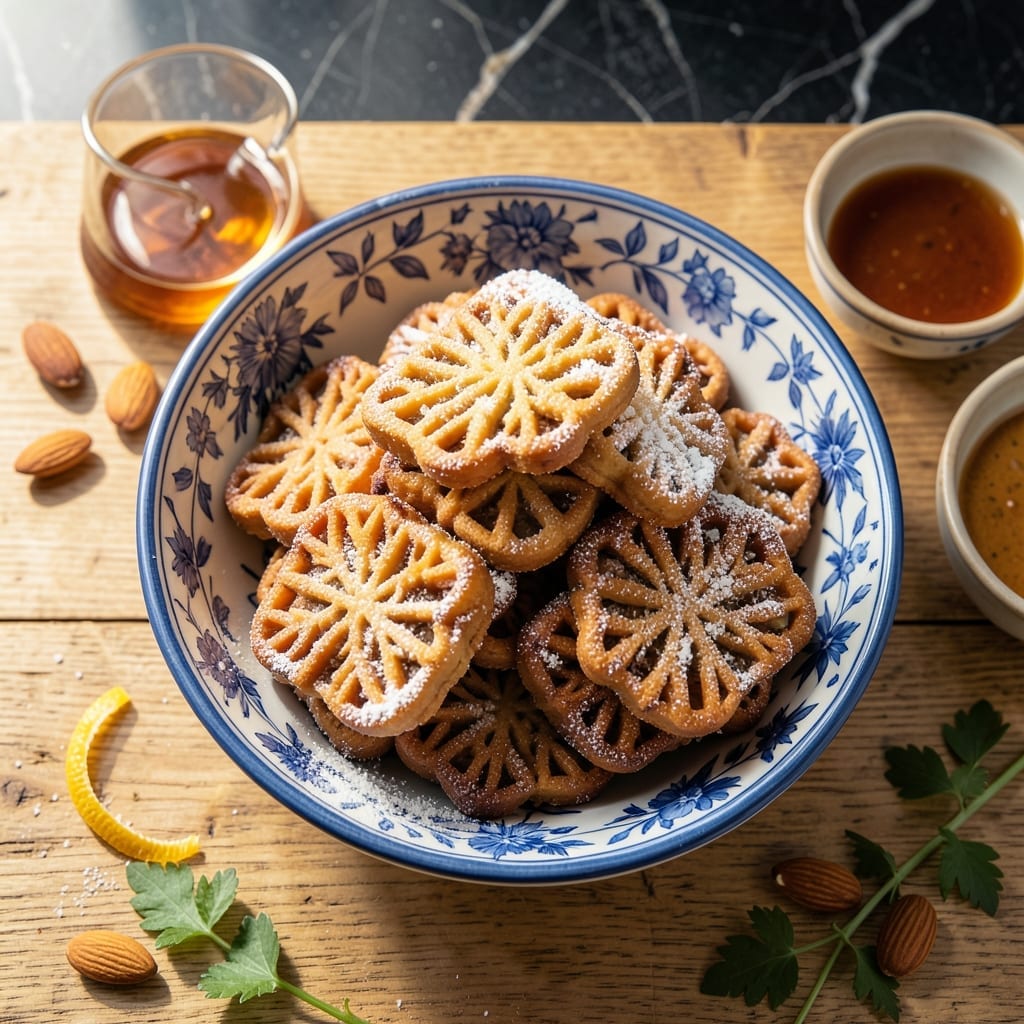
Few desserts capture tradition like these delicate waffle cookies, pressed between hot irons to create intricate patterns. This proven method delivers crispy, buttery results every time.
With simple ingredients and the right technique, you’ll achieve professional-quality cookies that honor their Italian heritage. The batter comes together quickly, then transforms in minutes under the iron’s heat.
Ingredients for Recipe for Italian Pizzelle
Traditional Italian ingredients create delicate, crispy cookies with rich buttery flavor and intricate designs.
| Ingredient | Amount | Notes |
|---|---|---|
| All-Purpose Flour 🌾 | 2 cups | Sifted for light texture |
| Granulated Sugar 🍚 | ¾ cup | Fine grain for even distribution |
| Unsalted Butter 🧈 | ½ cup | Melted and cooled slightly |
| Large Eggs 🥚 | 3 whole | Room temperature for better volume |
| Vanilla Extract 🌿 | 1 tsp | Pure extract for best flavor |
| Baking Powder 🧂 | 1 tsp | Ensures proper rise in batter |
| Salt 🧂 | ¼ tsp | Fine sea salt preferred |
| Anise Extract 🌿 | 1 tsp | Traditional Italian flavor (optional) |
| Lemon Zest 🍋 | 1 tbsp | Freshly grated for brightness |
| Orange Zest 🍊 | 1 tsp | Freshly grated for depth |
| Powdered Sugar 🍚 | ½ cup | For dusting finished cookies |
[recipe_ingredient_scaler]
The flour is the foundation here. King Arthur all-purpose is ideal for its consistent protein content, which ensures the batter holds together without spreading too thin. Use European-style butter (like Plugrá or Kerrygold) for a richer, more authentic flavor profile. The eggs should be fresh—room temperature ensures maximum volume when beaten, which is critical for achieving the characteristic lacy texture.
No anise extract? Substitute with 1 tsp almond extract or omit entirely if you prefer a more neutral flavor. The citrus zest can be adjusted—swap lemon for orange or use a mix of both. For a modern twist, add 1/4 cup finely chopped pistachios to the batter. The powdered sugar can be replaced with cocoa powder for chocolate pizzelle, a popular variation in Southern Italy.
Store cooled cookies in an airtight container at room temperature for up to 2 weeks. They’ll soften slightly over time but revive with a quick warm in the oven. Freeze uncooked batter in portions for up to 3 months—thaw in the fridge before using. Always dust with powdered sugar just before serving to preserve the crisp texture.
Why You’ll Love This Recipe
- Mix and Go: I just dump flour, sugar, butter, eggs, and vanilla in one bowl—no fancy steps, no fuss.
- Buttery Vanilla Magic: The warm vanilla and rich butter make these taste like a cozy Italian hug in cookie form.
- Holiday Superstar: Honestly, these disappear at Christmas, weddings, and even my kid’s bake sale.
- Batch and Stash: One recipe makes 36 pizzelle, so I freeze half and still have enough to share.
Step-by-Step Instructions for Italian Pizzelle
Master the technique for these delicate, lace-patterned cookies with precise timing and temperature control.
Step 1: Prepare the Batter with Precision
In a large mixing bowl, whisk together the 2 cups All-Purpose Flour, 0.75 cup Granulated Sugar, 1 tsp Baking Powder, and 0.25 tsp Salt until evenly combined. Sifting the flour first ensures a light, airy texture in your cookies.
Make a well in the center and add the 0.5 cup Unsalted Butter (melted and cooled), 3 whole Large Eggs, 1 tsp Vanilla Extract, 1 tsp Anise Extract, 1 tbsp Lemon Zest, and 1 tsp Orange Zest. Whisk the wet ingredients together before gradually incorporating the dry mixture.
Beat the batter until smooth and thick, about 2-3 minutes. It should resemble a soft, pipeable dough rather than a liquid batter. The citrus zests add brightness that balances the rich anise flavor.
Step 2: Preheat and Lubricate the Pizzelle Iron
Plug in your pizzelle iron and preheat it according to the manufacturer’s instructions, typically to medium-high heat. Most irons require 5-7 minutes to reach the proper temperature for even baking.
Lightly brush the hot iron plates with melted butter or neutral oil using a pastry brush. This prevents sticking and ensures the cookies release cleanly with their intricate patterns intact. Avoid excess oil, as it can cause the batter to spread too thin.
Step 3: Cook the Pizzelle to Golden Perfection
Using a small spoon or cookie scoop, place 1 tablespoon of batter slightly off-center on each iron pattern. Close the iron firmly and cook for 30-45 seconds, depending on your iron’s heat and the desired color.
Open the iron and check for a golden brown hue with crisp edges. If the cookies appear pale, close and cook for an additional 10-15 seconds. Overcooking will darken them too quickly, so monitor closely.
Carefully remove the pizzelle with a fork or heatproof spatula, as they crisp up rapidly once removed from the iron. Work efficiently to maintain consistent heat in the iron between batches.
Step 4: Cool and Finish with Powdered Sugar
Transfer the hot pizzelle to a wire rack to cool completely. They will firm up as they cool, so avoid stacking them while warm, as this can cause them to stick together and lose their delicate texture.
Once fully cooled, dust the cookies lightly with 0.5 cup Powdered Sugar using a fine-mesh sieve. The sugar should adhere to the ridges and patterns, enhancing their visual appeal without overwhelming the subtle flavors.
Store in an airtight container at room temperature for up to 1 week, though they’re best enjoyed fresh within the first 2-3 days for optimal crispness.
Pro Tips For Making Recipe For Italian Pizzelle
- Preheat the Iron: Always heat your pizzelle iron for at least 5 minutes before the first batch—cold irons make pale, doughy cookies. I learned this the hard way after pulling apart too many undercooked waffles.
- Soften the Butter: Use room-temperature butter, not melted, for a smoother batter. Sounds weird, but it works: cold butter leaves lumps, and melted butter can make the dough spread too thin.
- Skip Overmixing: Stir the batter just until combined—overmixing develops gluten, and your pizzelle will turn tough instead of tender.
- Chill the Batter: Give it a solid 30 minutes in the fridge before cooking. My grandmother swore by this, and she was right: it thickens the dough and prevents it from oozing out the sides.
Dietary Considerations for This Dish
Gluten-Free Option
Swap the 2 cups All-Purpose Flour for a 1:1 gluten-free baking blend like King Arthur Measure for Measure. Add ½ tsp xanthan gum if your blend doesn’t include it. The texture stays crisp when cooled properly. 💪
Dairy-Free Adaptation
Use ½ cup coconut oil (melted) or vegan butter (like Miyoko’s) in place of the unsalted butter. Ensure all other ingredients are dairy-free, and the flavor remains rich and authentic.
Egg-Free Version
Replace the 3 large eggs with 3 tbsp ground flaxseed mixed with 9 tbsp water, let sit for 5 minutes to thicken. This works well, though the cookies may be slightly denser.
Reduced Sugar
Cut the ¾ cup Granulated Sugar in half and add 1 tsp cinnamon for warmth. The cookies will be less sweet but still delicious, with the anise and citrus shining through.
Nut-Free Assurance
The traditional recipe is nut-free, but always check your baking powder and extracts for processing warnings. Use dedicated nut-free equipment to avoid cross-contamination.
Vegan Variation
Combine the dairy-free and egg-free swaps above for a fully vegan treat. The coconut oil and flax eggs create a batter that presses beautifully in the iron. 🌱
Nutrition Facts
Frequently Asked Questions
Can I make these without a pizzelle iron?
Unfortunately, no. The iron’s unique patterned plates are essential for creating the signature lacy design and thin texture. A waffle iron won’t provide the same intricate patterns or crispness.
Why did my pizzelle turn out soft instead of crisp?
This usually happens if they’re removed from the iron too soon or stacked while still warm. Ensure they cook to a golden brown and cool completely on a wire rack before storing.
How do I prevent the batter from sticking to the iron?
Always preheat the iron fully and lightly brush the plates with melted butter or oil before adding batter. Avoid using too much oil, as it can cause the batter to spread excessively.

Trained in classic French technique but raised on slow-cooked ribs and spicy rubs, she blends culinary skill with smoke and soul.
- Recipe for Boneless Pork Chops in Cast Iron Skillet: Sear and Baste to Juicy Perfection - October 3, 2026
- Recipe for Boneless Cross Rib Roast: Slow-Roasted Beef with Herb Crust - October 3, 2026
- Hamburgers in Sauce Recipe Crock Pot: Slow-Cooked Savory Delight - October 3, 2026