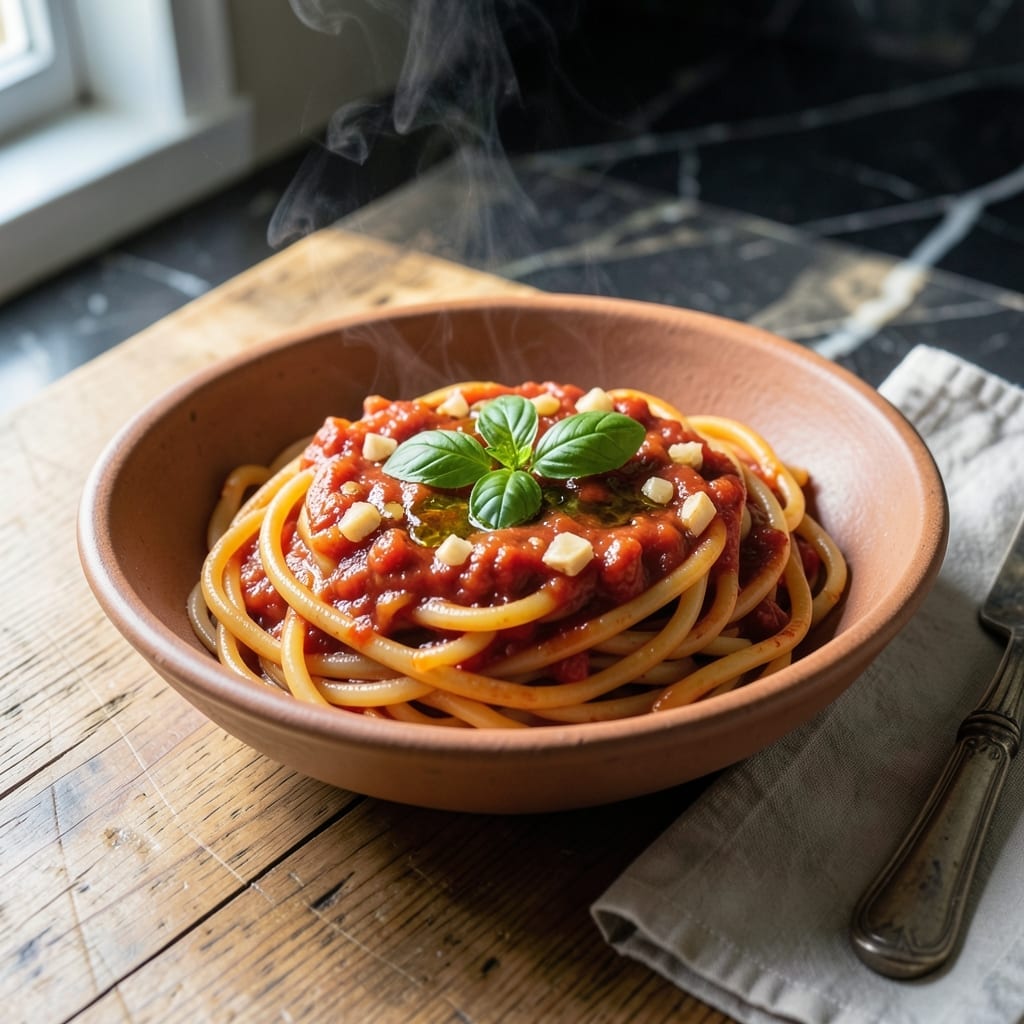
This Italian tomato sauce captures the essence of San Marzano tomatoes with just a few simple ingredients. The slow simmer develops rich, authentic flavors that elevate any pasta dish.
What makes this sauce special is its balance of sweetness and acidity, achieved through minimal seasoning. The result is a versatile base that lets the tomato shine.
Ingredients for Recipe for Italian Tomato Sauce for Pasta
Nine simple ingredients transform into a rich, authentic Italian sauce base.
| Ingredient | Amount | Notes |
|---|---|---|
| San Marzano Canned Tomatoes 🍅 | 28 oz | Whole, peeled, crushed by hand |
| Extra-Virgin Olive Oil 🫒 | 3 tbsp | High-quality, cold-pressed |
| Yellow Onion 🧅 | ½ whole | Finely diced for base flavor |
| Garlic Cloves 🧄 | 4 cloves | Minced to release aroma |
| Fresh Basil Leaves 🌿 | ¼ cup | Torn just before serving |
| Sea Salt 🧂 | 1 tsp | Adjust to taste gradually |
| Black Pepper 🌶️ | ½ tsp | Freshly cracked for depth |
| Sugar 🍚 | ½ tsp | Optional to balance acidity |
| Red Pepper Flakes 🌶️ | ¼ tsp | For subtle heat (optional) |
[recipe_ingredient_scaler]
The tomatoes are non-negotiable—San Marzano DOP from Italy (look for the certification on the can) delivers the sweet, low-acid foundation. Eataly or Whole Foods carry them, but most supermarkets have decent options too. The olive oil should be fruity and peppery; if you wouldn’t drizzle it on bread, don’t use it here. Fresh basil is ideal, but dried works in a pinch (use one-third the amount).
No San Marzano? Standard canned tomatoes will do—just avoid pre-seasoned varieties. Sweet onion can sub for yellow, and garlic powder (at half the quantity) replaces fresh if needed. The sugar balances acidity, but omit it if your tomatoes are naturally sweet. Red pepper flakes add warmth, but fresh chili or cayenne works too.
Sauce keeps in the fridge for 5 days or freezes beautifully for 3 months. For best results, cool completely before storing in airtight containers. The flavors deepen overnight, making leftovers even better.
Why You’ll Love This Recipe
- One Pot Wonder: I just dump the San Marzano tomatoes, olive oil, and a few other staples in a pan and let it simmer.
- Ridiculously Good: That sweet onion and garlic base with fresh basil? It tastes like Nonna’s kitchen in a bowl.
- Freezer Friendly: I double the batch and freeze half for those nights I’m too tired to cook.
- Five Ingredients: Honestly, it’s just tomatoes, oil, onion, garlic, and basil—no fuss, no fancy pantry items.
Step-by-Step Instructions for Italian Tomato Sauce
This method delivers a rich, balanced sauce with minimal effort and maximum flavor.
Step 1: Build the Aromatic Base
Heat the 3 tbsp Extra-Virgin Olive Oil in a heavy-bottomed saucepan over medium-low heat. Add the 0.5 whole Yellow Onion, finely diced, and cook until translucent and just beginning to caramelize at the edges—about 8-10 minutes.
This slow cooking process develops the onion’s natural sweetness, creating a flavorful foundation for the sauce. Stir occasionally to prevent burning, adjusting the heat as needed to maintain a gentle sizzle.
Step 2: Bloom the Garlic and Season
Add the 4 cloves Garlic Cloves, minced, to the onions and cook for 30-60 seconds until fragrant but not browned. Immediately stir in the 1 tsp Sea Salt, 0.5 tsp Black Pepper, 0.5 tsp Sugar, and 0.25 tsp Red Pepper Flakes.
The sugar balances the tomatoes’ natural acidity, while the red pepper flakes add a subtle warmth. Be careful not to let the garlic burn—it should release its aroma without taking on color.
Step 3: Incorporate the Tomatoes
Add the 28 oz San Marzano Canned Tomatoes, crushing them by hand as you add them to the pot. This releases their juices and breaks them into rustic chunks. Stir well to combine with the aromatic base.
Increase the heat to medium and bring the mixture to a gentle simmer. The tomatoes should bubble lightly around the edges of the pan, not boil vigorously.
Step 4: Simmer to Perfection
Reduce the heat to low and let the sauce simmer uncovered for 45-60 minutes, stirring occasionally. You’ll notice the sauce thickens gradually and the flavors deepen as it cooks down.
The sauce is ready when it has reduced by about one-third and the oil begins to separate slightly at the surface. Taste and adjust seasoning if needed, though the initial measurements should provide perfect balance.
Step 5: Finish with Fresh Basil
Remove the sauce from heat and stir in the 0.25 cup Fresh Basil Leaves, torn by hand. The residual heat will wilt the basil slightly while preserving its bright, fresh flavor.
Let the sauce rest for 5-10 minutes before serving. This allows the flavors to meld completely. The basil’s aromatic oils will infuse throughout, creating a beautifully layered finish to your sauce.
Pro Tips For Making Recipe For Italian Tomato Sauce For Pasta
- Crush the Tomatoes: Hand-crush the San Marzano tomatoes before adding them to the pot—this breaks them down faster and gives you chunkier texture without the metallic taste of a blender.
- Bloom the Garlic: Cook the minced garlic in the olive oil for just 30 seconds until fragrant but not browned; any longer and it turns bitter, ruining the sauce.
- Skip the Raw Onion: I learned this the hard way—sauté the yellow onion until translucent first, or you’ll end up with a harsh, raw bite in your finished sauce.
- Finish with Basil: Stir in the fresh basil leaves at the very end, off the heat; adding them earlier turns them black and bitter instead of bright and aromatic.
Dietary Considerations for This recipe for italian tomato sauce for pasta
Keto-Friendly Options
To make this Italian tomato sauce keto-compatible, skip added sugars and use fresh, high-quality San Marzano tomatoes. Since tomatoes are naturally low in carbs, you can enjoy this sauce in moderation. Pair it with zucchini noodles or shirataki noodles for a satisfying low-carb meal.
Gluten-Free
This recipe is naturally gluten-free if you use certified gluten-free ingredients. Double-check that canned tomatoes and any seasonings (like bouillon or spice blends) are free from gluten contaminants. Serve with gluten-free pasta to keep the dish entirely safe.
Allergens
Common allergens in tomato sauce include garlic, onions, and nightshades. For those with sensitivities, omit garlic and onions or replace them with asafetida (hing) for a similar depth of flavor. Always verify that canned tomatoes are processed in allergen-free facilities.
Vegetarian Modifications
This classic Italian tomato sauce is inherently vegetarian. To enhance the flavor, consider adding roasted red peppers or mushrooms. For a richer taste, a splash of vegetable broth or a sprinkle of nutritional yeast can add umami depth.
Low-Sodium
To reduce sodium, use no-salt-added canned tomatoes and avoid adding table salt. Instead, boost flavor with fresh herbs like basil or oregano, a squeeze of lemon juice, or a dash of black pepper. This keeps the sauce vibrant and heart-healthy.
Nutrition Facts

Trained in classic French technique but raised on slow-cooked ribs and spicy rubs, she blends culinary skill with smoke and soul.
- Recipe for Boneless Pork Chops in Cast Iron Skillet: Sear and Baste to Juicy Perfection - October 3, 2026
- Recipe for Boneless Cross Rib Roast: Slow-Roasted Beef with Herb Crust - October 3, 2026
- Hamburgers in Sauce Recipe Crock Pot: Slow-Cooked Savory Delight - October 3, 2026