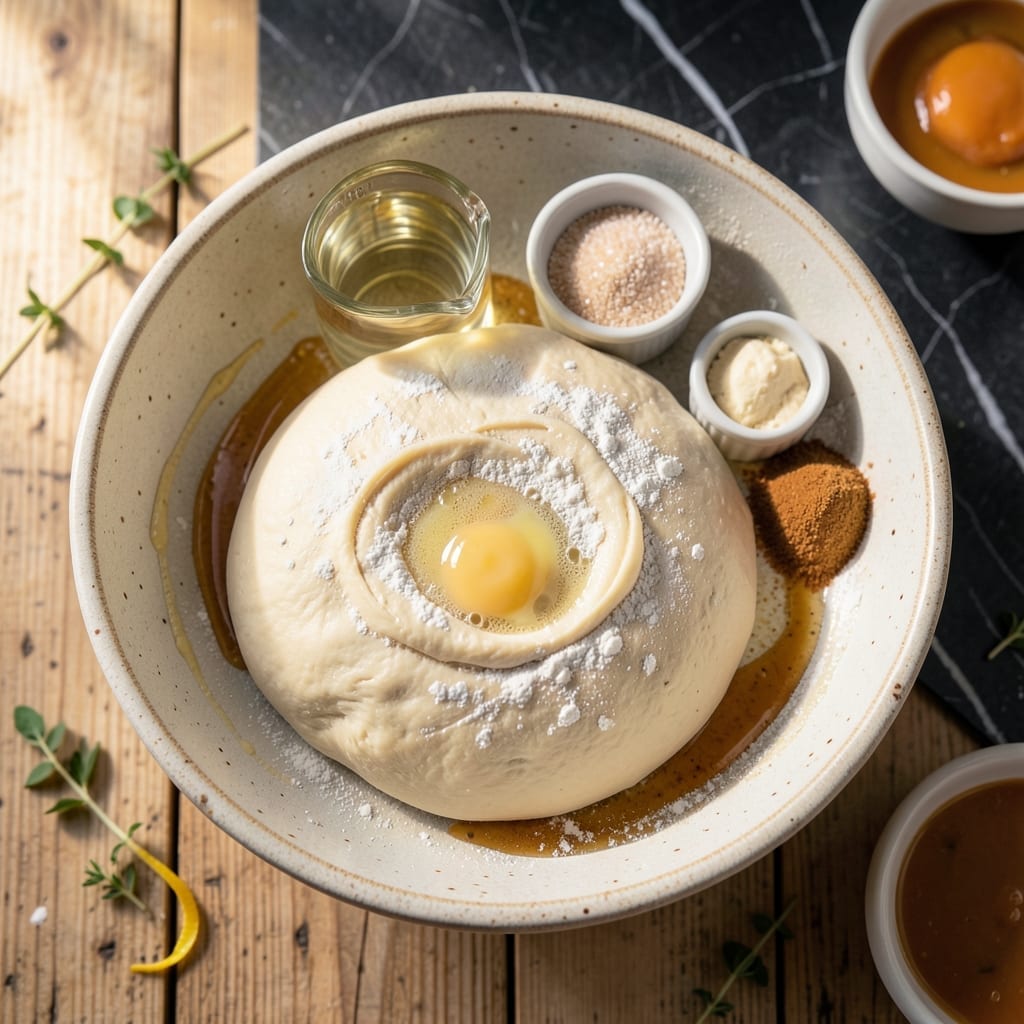
These homemade rolls deliver bakery-quality results with a golden crust and soft interior. I developed this recipe to capture the classic kaiser bun texture without complicated techniques.
With a straightforward process and basic ingredients, you’ll achieve professional results. The dough comes together easily, and shaping takes just minutes of practice.
Ingredients for Recipe for Kaiser Buns
Basic pantry staples yield bakery-quality rolls with that signature golden finish and tender crumb.
| Ingredient | Amount | Notes |
|---|---|---|
| Bread Flour 🌾 | 4 cups | High-protein for structure |
| Warm Water 💧 | 1 ¼ cups | 110-115°F, not hot |
| Granulated Sugar 🍚 | 2 tbsp | Feeds the yeast |
| Active Dry Yeast 🍞 | 2 ¼ tsp | One packet plus extra |
| Unsalted Butter 🧈 | 3 tbsp | Softened to room temperature |
| Large Egg 🥚 | 1 whole | Room temperature for binding |
| Kosher Salt 🧂 | 2 tsp | Fine grain for even distribution |
| Whole Milk 🥛 | ¼ cup | Warmed slightly for richness |
| Sesame Seeds 🌰 | 2 tbsp | For topping, optional |
| Poppy Seeds 🌿 | 2 tbsp | Alternative topping option |
| All-Purpose Flour 🌾 | ½ cup | For dusting work surface |
[recipe_ingredient_scaler]
The flour makes all the difference here. King Arthur Bread Flour is ideal for its consistent 12.7% protein content, which gives these buns their structure. Bob’s Red Mill works too if that’s what your store carries. Yeast should be fresh—check the expiration date and proof it in warm water with sugar before adding other ingredients (bubbly within 5-10 minutes means it’s active).
No bread flour? All-purpose flour plus vital wheat gluten (1 tbsp per cup of flour) gets you close. Out of whole milk? Any milk works—even plant-based, though dairy gives the most authentic flavor. For a richer dough, swap the butter for European-style unsalted butter with higher fat content. Skip the seeds if you prefer plain buns, or use everything bagel seasoning for a twist.
Store yeast in the freezer for long-term freshness. Dough can be made a day ahead and refrigerated overnight—just bring to room temp before shaping. Baked buns keep 3-4 days in an airtight container at room temperature, or freeze for up to 3 months.
Why You’ll Love This Recipe
- One Bowl Wonder: I mix everything right in the stand mixer—no extra bowls, no mess, just flour, yeast, and warm water doing their thing.
- Buttery Richness: The unsalted butter gives them that melt-in-your-mouth softness, with just a hint of sweetness from the sugar.
- Sandwich Superstar: Honestly, these buns turn any lunch into something special—burgers, sloppy joes, or even just a thick slice of ham and cheese.
- Freezer Friendly: I double the batch and freeze half. Pull one out, toast it, and it’s like fresh-baked all over again.
Step-by-Step Instructions for Kaiser Buns
Master the technique for bakery-quality rolls with a crisp crust and tender crumb.
Step 1: Activate the Yeast and Begin the Dough
In the bowl of a stand mixer, combine the 1.25 cups Warm Water, 2 tbsp Granulated Sugar, and 2.25 tsp Active Dry Yeast. Let this mixture sit for 5-7 minutes until it becomes foamy and frothy—this confirms the yeast is active and ready to work its magic.
Once the yeast is activated, add the 4 cups Bread Flour, 1 whole Large Egg, 2 tsp Kosher Salt, and 3 tbsp Unsalted Butter. The butter should be softened to room temperature for even distribution. Mix on low speed until the ingredients come together into a shaggy dough.
Step 2: Knead the Dough to Develop Gluten
Switch to the dough hook attachment and knead the dough on medium speed for 8-10 minutes. The dough should pull away from the sides of the bowl and become smooth and elastic. If it’s too sticky, add 1-2 tablespoons of the 0.5 cup All-Purpose Flour reserved for dusting, one at a time.
This kneading process develops the gluten, which gives the buns their structure and chewy texture. The dough is ready when it springs back slowly after being poked with a finger. Avoid adding too much flour, as this can make the buns dense.
Step 3: First Rise Until Doubled in Size
Transfer the dough to a lightly greased bowl, turning it once to coat all sides. Cover the bowl with a clean kitchen towel or plastic wrap and place it in a warm, draft-free spot. Let the dough rise for 1 to 1.5 hours, or until it has doubled in volume.
For a more controlled rise, warm the 0.25 cup Whole Milk slightly and use it to create a warm environment for the dough. This step is crucial for achieving a light, airy texture. The dough should look puffy and slightly jiggly when gently shaken.
Step 4: Shape and Proof the Kaiser Buns
Punch down the risen dough to release the air, then turn it out onto a lightly floured work surface dusted with the remaining All-Purpose Flour. Divide the dough into 8 equal portions (about 4 ounces each) and roll each into a smooth ball.
To shape the traditional kaiser rolls, use a bench scraper or your thumb to create a deep crease in the center of each ball, forming a figure-eight shape. Place the shaped buns on a parchment-lined baking sheet, spacing them 2 inches apart. Cover and let them proof for 45-60 minutes until puffy and nearly doubled in size.
Step 5: Bake to Golden Perfection
Preheat your oven to 375°F. Once the buns have finished proofing, brush them gently with a bit of water or beaten egg for a shiny finish. Sprinkle the tops with 2 tbsp Sesame Seeds or 2 tbsp Poppy Seeds for added texture and visual appeal.
Bake in the preheated oven for 18-22 minutes, or until the buns are golden brown and sound hollow when tapped on the bottom. Transfer them to a wire rack to cool completely. The buns should have a crisp crust and a soft, fluffy interior when fully cooled.
Pro Tips For Making Recipe For Kaiser Buns
- Proof the Yeast: Always bloom your active dry yeast in the warm water with sugar first—I learned this the hard way after a few flat buns ruined my batch.
- Use Bread Flour: Skip the all-purpose and stick with bread flour; the higher protein content gives kaiser buns that chewy texture they’re known for.
- Avoid Overheating Butter: Soften the unsalted butter to room temperature, but don’t melt it; melted butter can throw off the dough’s structure and leave your buns dense.
- Steam for Shine: Brush the buns with warm water before baking and add a pan of boiling water to the oven—this creates that glossy, professional bakery finish.
Serving Suggestions for recipe for kaiser buns
Classic Sandwich Use
These buns are perfect for hearty sandwiches—their sturdy structure holds up to juicy burgers or stacked deli meats without falling apart. I love them with a ½-pound beef patty and all the fixings. The slightly crisp crust adds wonderful texture contrast. 🔥
Breakfast Pairings
Split and toast these for breakfast sandwiches with fried eggs and cheese. The soft interior soaks up egg yolks beautifully. I often make a batch on Sunday to use for quick egg and sausage sandwiches all week.
Dinner Accompaniment
Serve warm alongside soups, stews, or roasted meats. They’re especially good with beef bourguignon or chicken pot pie. The golden crust looks stunning on any dinner table.
Appetizer Ideas
Mini versions make excellent slider buns for parties. Top with pulled pork, coleslaw, and pickles for crowd-pleasing bites. I use a 2-ounce dough ball for perfect mini buns.
Sweet Applications
Don’t limit these to savory uses—split and fill with ice cream and hot fudge for a decadent dessert sandwich. The slightly sweet dough pairs wonderfully with vanilla bean ice cream.
Bread Basket Star
Serve warm in a bread basket with whipped butter and herb-infused olive oil for dipping. They’ll disappear fast—I always make extra for seconds. 💛
Nutrition Facts
Frequently Asked Questions
What’s the best flour for the softest texture?
Bread flour is ideal for its 12.7% protein content. For a lighter crumb, avoid adding too much extra flour during kneading. King Arthur or Bob’s Red Mill work perfectly.
How can I tell when the dough is kneaded enough?
It’s ready when smooth, elastic, and springs back slowly after a poke. This takes 8-10 minutes in a stand mixer. Don’t rush it—under-kneading leads to dense buns.
Why didn’t my buns rise properly?
Check yeast freshness first—it should bubble within 5-10 minutes in warm water. Also, ensure your kitchen is warm (75-80°F) for optimal proofing.
Can I make these ahead of time?
Yes! Shape and refrigerate overnight, or bake and freeze for up to 3 months. Reheat in a 350°F oven for 5-10 minutes to revive freshness.

Trained in classic French technique but raised on slow-cooked ribs and spicy rubs, she blends culinary skill with smoke and soul.
- Recipe for Boneless Pork Chops in Cast Iron Skillet: Sear and Baste to Juicy Perfection - October 3, 2026
- Recipe for Boneless Cross Rib Roast: Slow-Roasted Beef with Herb Crust - October 3, 2026
- Hamburgers in Sauce Recipe Crock Pot: Slow-Cooked Savory Delight - October 3, 2026