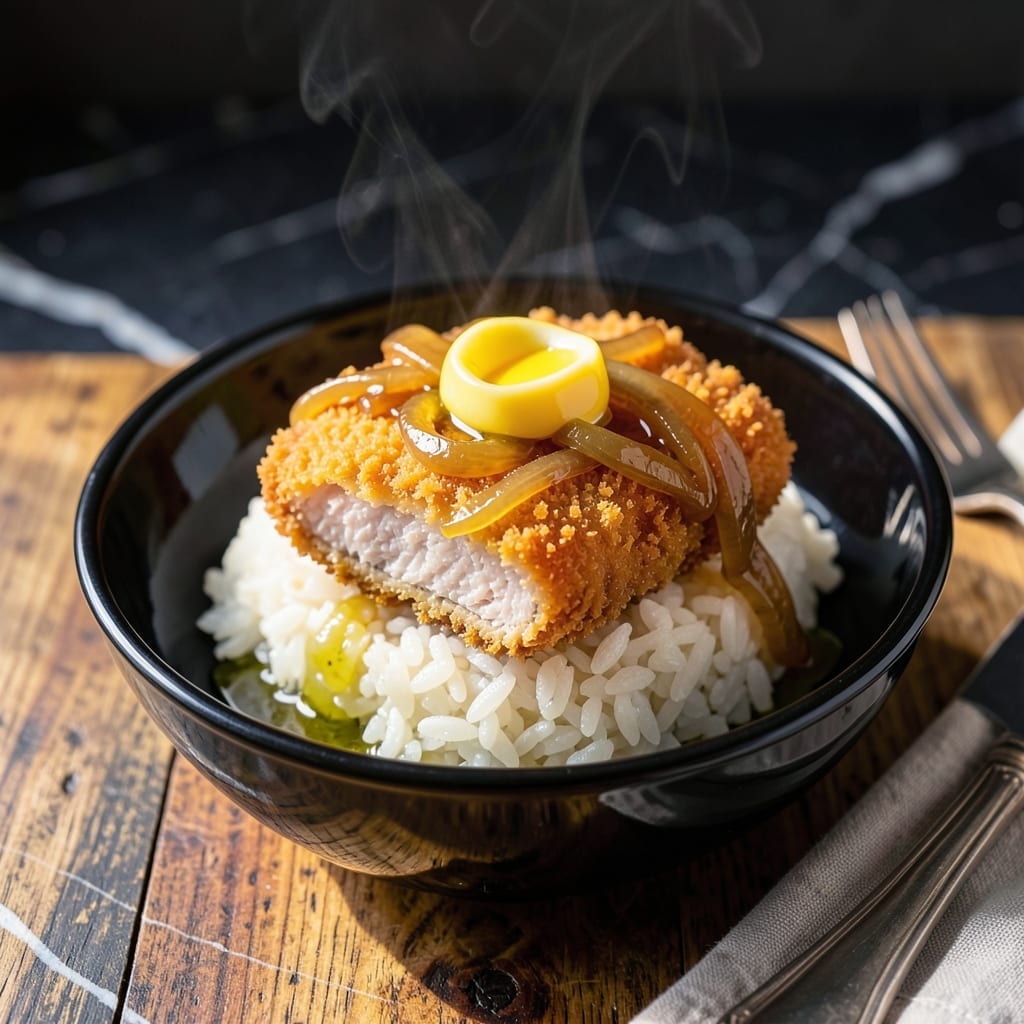
This Japanese classic combines a crispy breaded cutlet with fluffy eggs and a savory broth over steamed rice.
I perfected the technique for achieving the ideal crunch while keeping the pork tender and juicy inside.
Ingredients for Recipe for Katsu Don
Crispy pork cutlets and fluffy eggs meet savory broth over steamed rice in this dish.
| Ingredient | Amount | Notes |
|---|---|---|
| Pork Cutlets 🥩 | 4 pieces | Boneless, 1/2-inch thick, pounded even |
| All-Purpose Flour 🌾 | ½ cup | For initial breading layer |
| Large Eggs 🥚 | 2 whole | Beaten, for egg wash |
| Panko Breadcrumbs 🍞 | 1 ½ cups | Japanese-style for maximum crunch |
| Neutral Oil 🫒 | 2 cups | For deep frying, like vegetable or canola |
| Onion 🧅 | 1 whole | Thinly sliced for broth |
| Dashi Stock 🍲 | 2 cups | Japanese stock base, essential for authenticity |
| Soy Sauce 🫙 | 3 tbsp | Use low-sodium if preferred |
| Mirin 🍶 | 2 tbsp | Sweet Japanese cooking wine |
| Sugar 🍬 | 1 tbsp | Granulated, for balancing flavors |
| Steamed Rice 🍚 | 4 cups | Japanese short-grain preferred |
| Large Eggs 🥚 | 4 whole | For topping, lightly beaten |
| Green Onions 🌱 | ¼ cup | Thinly sliced for garnish |
| Vegetable Oil 🫒 | 1 tbsp | For cooking onions |
[recipe_ingredient_scaler]
The pork cutlets are non-negotiable for texture. Pork loin cut into 1/2-inch thick slices works best—tender and juicy inside while staying crisp outside. Most Asian markets carry pre-cut tonkatsu pork, saving prep time. For breading, Japanese panko (found at Whole Foods or H-Mart) is essential—regular breadcrumbs won’t deliver that signature crunch. The dashi stock is the soul of the broth.
No dashi? Chicken or vegetable stock with a splash of soy sauce works in a pinch. Panko can be swapped for fresh breadcrumbs (toasted first), but the texture won’t be identical. Mirin is sweet, but 1 tbsp sugar plus 1 tbsp water mimics it. For a lighter version, chicken cutlets can replace pork. The eggs should be fresh—older ones spread too thin.
Fry the cutlets just before serving to keep them crisp. Leftover broth keeps 3 days refrigerated, but the cutlets are best fresh. Reheat rice with a splash of water to restore moisture. Garnish with green onions right before eating for a pop of color.
Why You’ll Love This Recipe
- Foolproof Steps: I love that the breading process is just flour, egg, panko—no fancy techniques, just dip and coat.
- Crispy Perfection: That panko crust fries up golden and shatteringly crisp, while the pork stays juicy inside.
- Weeknight Hero: Honestly, it’s my go-to for busy evenings when I need something satisfying fast.
- Budget Stretch: One pork cutlet per person, plus pantry staples, and it still feels like a restaurant meal at home.
Step-by-Step Instructions for Katsu Don
Master the technique that ensures a crispy cutlet and perfectly set egg topping every time.
Step 1: Bread and Fry the Pork Cutlets
Set up a breading station with three shallow dishes. Place the 0.5 cup all-purpose flour in the first, beat the 2 whole large eggs in the second, and spread the 1.5 cups panko breadcrumbs in the third. Pat the 4 pieces pork cutlets dry, then dredge each in flour, shaking off excess.
Dip the floured cutlets into the beaten egg, allowing excess to drip off, then press firmly into the panko breadcrumbs, ensuring complete coverage. Heat the 2 cups neutral oil in a deep skillet to 350°F. Fry the cutlets for 4-5 minutes per side until golden brown and crisp. Transfer to a wire rack to drain.
Step 2: Prepare the Onion Broth
While the cutlets fry, thinly slice the 1 whole onion. Heat the 1 tbsp vegetable oil in a saucepan over medium heat. Add the sliced onion and cook for 5-6 minutes until softened and translucent, stirring occasionally.
Pour in the 2 cups dashi stock, 3 tbsp soy sauce, 2 tbsp mirin, and 1 tbsp sugar. Stir well and bring to a gentle simmer. Reduce the heat to low and let it cook for 8-10 minutes until the flavors meld and the broth takes on a slightly syrupy consistency.
Step 3: Assemble the Katsu Don
Divide the 4 cups steamed rice evenly among four serving bowls. Slice the fried pork cutlets into ½-inch strips and arrange them over the rice in each bowl. Ladle the warm onion broth generously over the cutlets and rice, ensuring each serving is well-coated.
In a separate bowl, lightly beat the 4 whole large eggs. Pour a quarter of the beaten eggs over each bowl, allowing it to settle into the broth. The residual heat from the rice and broth will gently cook the egg to a soft, custard-like consistency.
Step 4: Garnish and Serve
Thinly slice the 0.25 cup green onions and sprinkle them evenly over each bowl. This adds a fresh, sharp contrast to the rich, savory flavors. Let the bowls sit for 2-3 minutes to allow the egg to set slightly and the flavors to meld together.
Serve immediately while the pork cutlets are still crisp and the egg topping is warm and creamy. Each bite should deliver a harmony of textures: the crunch of the panko, the tenderness of the pork, the silkiness of the egg, and the fragrant broth-soaked rice.
Pro Tips For Making Recipe For Katsu Don
- Pound the Cutlets: Use the flat side of a knife or a meat mallet to pound the pork cutlets to an even 1/2-inch thickness—this guarantees even cooking and prevents chewy, underdone centers.
- Chill Before Frying: After breading, let the cutlets rest in the fridge for 10-15 minutes. I learned this the hard way—it keeps the coating from sliding off in the hot oil.
- Double Fry for Crisp: Fry the cutlets once at 325°F (160°C) until golden, then again at 375°F (190°C) for 30 seconds. Sounds tedious, but it’s the only way to get that shatteringly crisp panko crust.
- Use Fresh Panko: Skip the fine breadcrumbs—fresh panko makes a real difference because its coarse texture holds up to frying and stays crunchy under the egg and onion topping.
Storing and Reheating Leftovers
Refrigerator Storage
Store leftover katsu don components separately for best results. The broth keeps in an airtight container for up to 3 days at 40°F or below. I recommend glass containers to preserve flavors.
Freezer Storage
The onion broth freezes beautifully for up to 1 month in quart-sized freezer bags. Squeeze out excess air to prevent freezer burn. Unfortunately, the fried cutlets don’t freeze well as they lose their crispiness.
Reheating the Broth
Gently reheat the broth in a saucepan over medium-low heat for 5-7 minutes, stirring occasionally. Add 1-2 tbsp water if it’s too thick. Avoid boiling to maintain the delicate flavors. 🔥
For the microwave, use 30-second intervals at 50% power, stirring between each until reaching 165°F.
Reviving the Cutlets
To restore crispiness, place leftover cutlets on a wire rack in a 400°F oven for 5-8 minutes. This method works better than microwaving, which makes them soggy.
Assembling Leftovers
Reheat rice with a splash of water to restore moisture. Assemble the dish fresh with reheated components to maintain texture. The egg topping is best added fresh rather than stored.
Nutrition Facts
Frequently Asked Questions
Can I use chicken instead of pork?
Chicken breast cutlets work well—pound them to ½-inch thickness for even cooking. Fry for 3-4 minutes per side at 350°F since chicken cooks faster than pork.
Why did my egg topping turn out watery?
This happens when the rice and broth aren’t hot enough. Ensure both are steaming when you add the beaten eggs. Let the bowl sit for 2-3 minutes to set properly before serving.
How do I keep the cutlets crispy when assembling?
Fry the cutlets last and assemble immediately. If needed, keep them warm on a wire rack in a 200°F oven for up to 10 minutes. Avoid covering, as steam softens the crust.

Trained in classic French technique but raised on slow-cooked ribs and spicy rubs, she blends culinary skill with smoke and soul.
- Recipe for Boneless Pork Chops in Cast Iron Skillet: Sear and Baste to Juicy Perfection - October 3, 2026
- Recipe for Boneless Cross Rib Roast: Slow-Roasted Beef with Herb Crust - October 3, 2026
- Hamburgers in Sauce Recipe Crock Pot: Slow-Cooked Savory Delight - October 3, 2026