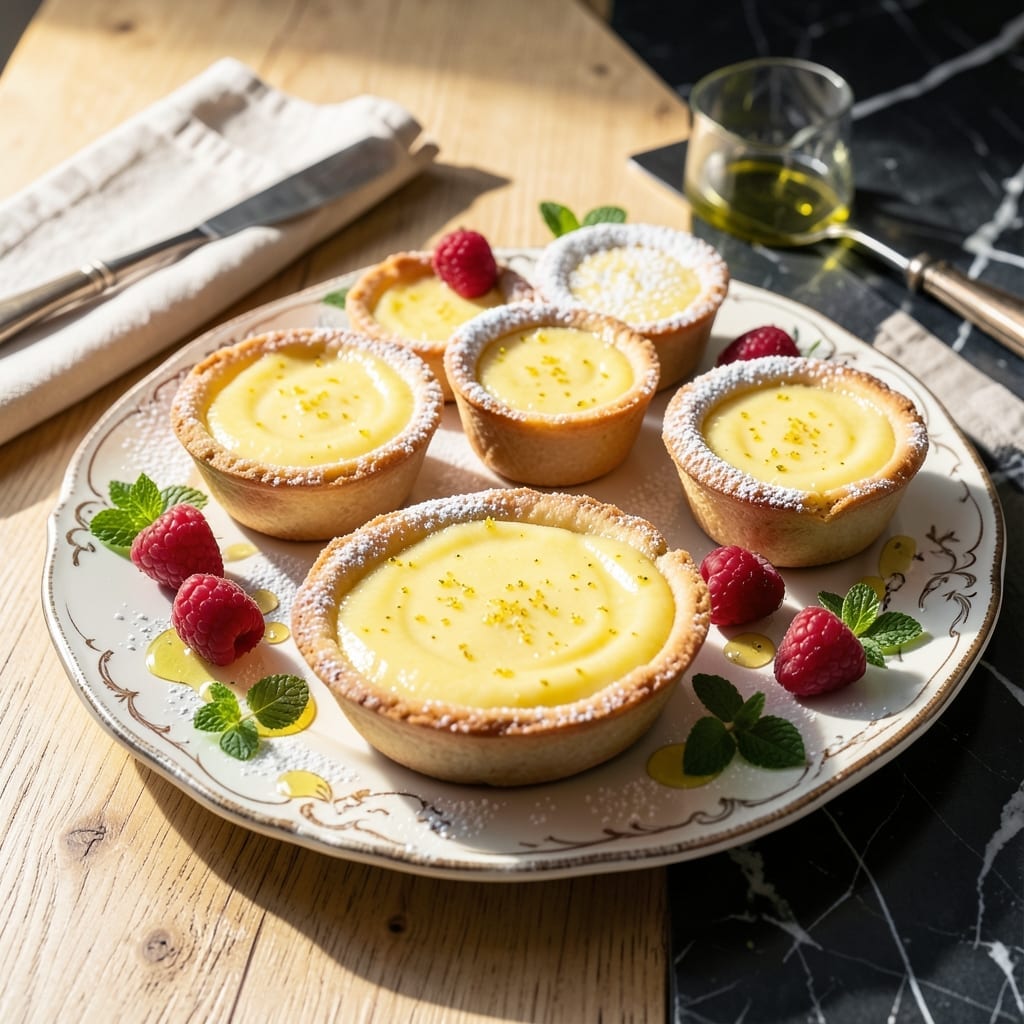
There’s something timeless about the contrast of buttery pastry and bright citrus in a well-made tartlet. This creation brings together the perfect balance of sweet and tart flavors in a presentation that’s as elegant as it is delicious.
The pastry shell provides a crisp, flaky base that holds its shape beautifully. Meanwhile, the lemon curd filling delivers that signature tangy richness we all love. The combination is both sophisticated and comforting, making it ideal for special occasions or afternoon treats.
What makes this dish special is the precision in both components. The pastry bakes to a golden finish while the curd sets to just the right consistency. Together, they create a harmony of textures and flavors that’s hard to resist.
These tartlets keep well for several days, making them perfect for entertaining. The presentation possibilities are endless, from simple dustings of powdered sugar to elaborate fruit garnishes.
Ingredients for Recipe for Lemon Curd Tartlets
Buttery pastry meets bright citrus in these elegant tartlets with just the right ingredients.
| Ingredient | Amount | Notes |
|---|---|---|
| All-Purpose Flour 🌾 | 2 cups | Plus extra for dusting work surface |
| Unsalted Butter 🧈 | 1 cup | Cold, cubed for flaky pastry |
| Granulated Sugar 🍚 | ¼ cup | Divided for pastry and filling |
| Large Egg Yolks 🥚 | 6 whole | Room temperature for curd |
| Fresh Lemon Juice 🍋 | ¾ cup | About 4-5 large lemons |
| Lemon Zest 🍋 | 2 tbsp | Finely grated from organic lemons |
| Ice Water 💧 | 3 tbsp | For pastry dough binding |
| Salt 🧂 | ¼ tsp | Fine sea salt preferred |
| Vanilla Extract 🌿 | ½ tsp | Pure extract for best flavor |
| Powdered Sugar 🍚 | ¼ cup | For dusting finished tartlets |
| Heavy Cream 🥛 | ¼ cup | For optional whipped topping |
| Fresh Raspberries 🍓 | ½ cup | Optional garnish for presentation |
[recipe_ingredient_scaler]
The butter is everything here—use European-style like Plugrá or Kerrygold for that extra flaky texture (the higher fat content makes a difference). Find it in the dairy case at Whole Foods or most larger supermarkets. For the lemons, organic are worth it since you’re using the zest. Look for ones with thick, bumpy skins—they have more oil and flavor. The flour? Any all-purpose works, but King Arthur is my go-to for consistency.
No fresh lemons? Bottled lemon juice at half the amount (but skip the zest entirely). Egg yolks are non-negotiable for the curd’s richness, but you can use pasteurized eggs if you’re serving vulnerable folks. Out of powdered sugar? A quick pulse in the blender with granulated sugar works (just sift it first). For the pastry, shortening at a 1:1 ratio makes a good vegan swap for the butter.
Pastry dough freezes beautifully for up to 3 months—just thaw overnight in the fridge. The curd keeps in the fridge for 1 week (cover with plastic pressed right on the surface). Assembled tartlets are best the day they’re made, but they’ll keep for 3 days without the garnish.
Why You’ll Love This Recipe
- One Bowl Wonder: I mix the crust dough right in the same bowl I’ll use for the curd—no extra dishes, just butter, flour, and sugar coming together in minutes.
- Zesty Punch: That first bite of tangy lemon curd against the buttery crust? Honestly, it’s the kind of flavor that makes you close your eyes.
- Tea Party Star: I’ve served these at brunch, packed them for picnics, and even snuck one for breakfast—they fit everywhere.
- Budget Brightener: Egg yolks and lemons are cheap, and this recipe turns them into something that tastes downright fancy.
Step-by-Step Instructions for Lemon Curd Tartlets
Here’s the method. Straightforward, tested, works every time.
Step 1: Prepare the Pastry Dough
In a food processor, pulse the 2 cups all-purpose flour, 0.25 tsp salt, and 0.25 cup granulated sugar until combined. Add the 1 cup unsalted butter (cold and cubed) and pulse until the mixture resembles coarse crumbs with pea-sized butter pieces visible. This texture ensures the flaky layers you want.
With the processor running, drizzle in the 3 tbsp ice water, 1 tbsp at a time, until the dough just begins to come together. It should hold when pressed but still look slightly dry. Turn the dough onto a lightly floured surface and gently knead just until it forms a cohesive ball—overworking develops gluten and makes the pastry tough.
Step 2: Chill and Roll Out the Dough
Divide the dough into 4 equal portions and shape each into a disc. Wrap in plastic and refrigerate for 30 minutes to 1 hour. Chilling relaxes the gluten and firms the butter, which prevents shrinking during baking.
On a well-floured surface, roll each disc to a ¼-inch thickness and about 5 inches in diameter—large enough to line your tartlet molds. Press the dough gently into the molds, ensuring it covers the bottom and sides evenly. Trim any excess with a sharp knife. Dock the bottoms with a fork to prevent puffing during baking.
Step 3: Blind Bake the Pastry Shells
Preheat your oven to 375°F. Line each tartlet shell with parchment paper and fill with pie weights or dried beans. This prevents the pastry from puffing or slumping as it bakes. Bake for 15 minutes, then carefully remove the weights and parchment.
Return the shells to the oven and bake for another 8-10 minutes until the edges are light golden brown and the bottoms look dry. Let them cool completely on a wire rack—they need to be room temperature before adding the filling to prevent a soggy crust.
Step 4: Make the Lemon Curd Filling
In a medium saucepan, whisk together the 6 whole large egg yolks, remaining 0.25 cup granulated sugar, 0.75 cup fresh lemon juice, and 2 tbsp lemon zest. Cook over medium-low heat, stirring constantly, until the mixture thickens and coats the back of a spoon—about 8-10 minutes.
Remove from heat and stir in the 0.5 tsp vanilla extract and 1 cup unsalted butter (cut into small pieces) until smooth. Strain the curd through a fine-mesh sieve into a bowl to remove any cooked egg bits, ensuring a silky texture. Press plastic wrap directly onto the surface and chill for 1 hour to thicken fully.
Step 5: Assemble and Garnish
Divide the chilled lemon curd evenly among the cooled tartlet shells, filling each to the top. Smooth the surface with the back of a spoon. The curd should set slightly as it sits in the shell.
Just before serving, dust with 0.25 cup powdered sugar and garnish with 0.5 cup fresh raspberries for a pop of color and tart contrast. For an extra touch, whip the 0.25 cup heavy cream to soft peaks and dollop a spoonful on each tartlet. Serve immediately for the best texture.
Pro Tips For Making Recipe For Lemon Curd Tartlets
- Chill the Dough: After mixing your tartlet shells, let the dough rest in the fridge for at least 30 minutes—I learned this the hard way when my first batch shrunk like a sad deflated balloon.
- Strain the Curd: After cooking the lemon curd, push it through a fine-mesh sieve to remove any cooked bits of egg. Sounds fussy, but it makes the filling silky smooth.
- Blind Bake Completely: Don’t pull the tart shells out too early. Bake until they’re fully golden, about 15-18 minutes, or you’ll end up with soggy bottoms.
- Use Room-Temp Eggs: Take the egg yolks out of the fridge 20 minutes before starting. Cold yolks can cause the curd to thicken unevenly or even curdle.
Serving Suggestions for Leftovers
Elegant Plating
For a restaurant-worthy look, I use a fine-mesh sieve to dust powdered sugar in a delicate pattern across the tartlets. A light sprinkle enhances their beauty without overpowering the vibrant lemon color. David always says this little touch makes them look 10 times fancier. 💛
Fruit Garnishes
Fresh raspberries add a pop of color and complementary tartness. Arrange 3-4 berries per tartlet in a small cluster. For variety, try thin lemon slices or edible flowers from the Austin farmers market for a seasonal twist.
Cream Accents
Whipped heavy cream with a touch of vanilla makes a perfect topping. I pipe small rosettes using a star tip, or simply dollop with a spoon. A sprinkle of lemon zest on the cream ties everything together beautifully.
Serving Temperature
These tartlets taste best served slightly cool but not cold. I let them sit at room temperature for 20-30 minutes after assembly. The pastry stays crisp while the curd softens just enough for that perfect creamy texture.
Portion Presentation
For parties, I serve tartlets on a tiered stand with small plates. Each guest gets their own perfect portion. At home, we often enjoy them with a cup of Earl Grey tea—the bergamot notes complement the lemon beautifully.
Nutrition Facts
Frequently Asked Questions
Can I make the dough ahead of time?
Yes! The pastry dough keeps well wrapped in plastic for up to 3 days in the fridge. For longer storage, freeze for up to 3 months.
Why did my curd turn out lumpy?
This usually happens if the eggs cook too quickly. Always use medium-low heat and stir constantly. Straining through a fine-mesh sieve removes any cooked bits for a silky texture.
How do I prevent a soggy crust?
Blind bake the shells completely and let them cool before adding filling. Press plastic wrap directly on the curd surface while chilling to prevent moisture from softening the pastry.
Can I use store-bought crust?
You can, but the texture won’t be as flaky. If short on time, look for all-butter pre-made tart shells and bake according to package instructions before filling.

Trained in classic French technique but raised on slow-cooked ribs and spicy rubs, she blends culinary skill with smoke and soul.
- Jamie Oliver’s Fast and Simple Brisket Recipe: Smoky-Sweet One-Pan Magic - October 15, 2026
- Best Smoked Oxtail Recipe: Deep-Rich Flavor After Low-and-Slow Cooking - October 14, 2026
- Pit Boss Smoked Prime Rib Roast Recipe: Bark-to-Bone Crispness in 4 Hours - October 14, 2026