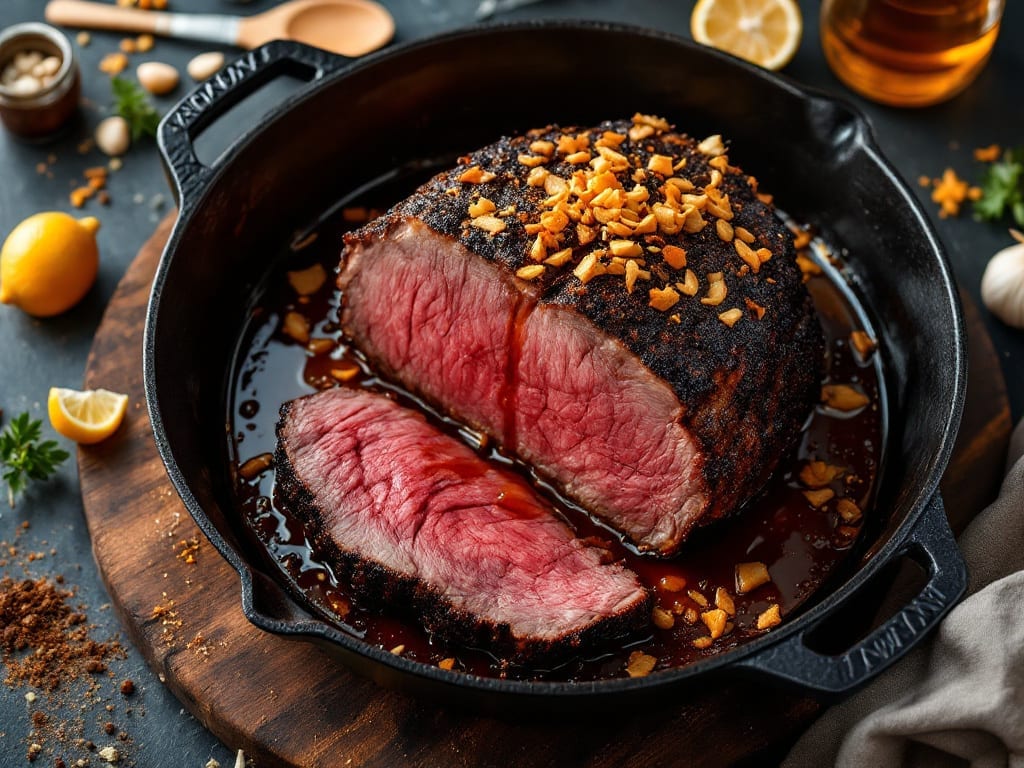
This Pit Boss smoked prime rib roast recipe delivers restaurant-quality bark-to-bone crispness that’s impossible to resist. The key lies in precise temperature control and a 4-hour cook that transforms tough cuts into melt-in-your-mouth perfection. I developed this recipe after years of perfecting my technique—balancing French precision with smoky tradition.
What sets this recipe apart is the two-stage seasoning process: a dry rub for deep flavor penetration followed by a light butter baste in the final hour for that signature crust.
The Pit Boss’s consistent heat distribution ensures even cooking, while hickory wood chips add that classic smoky depth without overpowering the beef’s natural richness. This isn’t just smoked beef—it’s a showstopper centerpiece.
By the time you carve into this prime rib, you’ll have juicy, pink centers (130-135°F internal temp) wrapped in a crispy mahogany bark that shatters with every bite.
The resting period—critical for redistributing juices—means every slice stays tender. Serve with classic horseradish cream and roasted garlic mashed potatoes for the full experience.
This recipe works equally well for holiday feasts or intimate dinner parties. The Pit Boss’s set-and-forget convenience makes it perfect for hosts who want to impress without spending hours in the kitchen. Let’s get smoking—your guests won’t believe it’s homemade.
Ingredients for pit boss smoked prime rib roast
Twelve ingredients. Four hours. One unforgettable centerpiece—your Pit Boss just became the star of the show.
| Ingredient | Amount | Notes |
|---|---|---|
| Prime Rib Roast (Bone-In) 🥩 | 6 lb | Center-cut, 1-1.5 inches thick, room temperature |
| Coarse Kosher Salt 🧂 | ½ cup | Diamond Crystal preferred, for dry rub |
| Freshly Ground Black Pepper 🌶️ | ¼ cup | Cracked peppercorns, toasted |
| Smoked Paprika 🌶️ | 2 tbsp | For deep smoky flavor |
| Garlic Powder 🧄 | 1 tbsp | Freshly ground preferred |
| Onion Powder 🧅 | 1 tbsp | For balanced sweetness |
| Unsalted Butter 🧈 | ½ cup | Cold, cubed, for basting |
| Hickory Wood Chips 🌳 | 2 lb | Unsoaked, for smoker |
| Apple Juice Concentrate 🍎 | ¼ cup | For spritzing, optional |
| Fresh Horseradish 🌿 | ¼ cup | Grated, for horseradish cream |
| Heavy Whipping Cream 🥛 | ½ cup | Full-fat, for horseradish cream |
| Yellow Mustard 🍯 | 1 tbsp | For horseradish cream |
| Fresh Rosemary 🌿 | ½ oz | Chopped, for garnish |
| Fresh Thyme 🌿 | ½ oz | Leaves only, for garnish |
[recipe_ingredient_scaler]
The prime rib is non-negotiable here—center-cut, bone-in is key for that showstopping presentation and even cooking. Local butchers or Costco are your best bets for quality cuts. Look for good marbling (white flecks within the meat) and ask for a roast that’s about 1-1.5 inches thick—thinner slices cook faster and get that perfect bark. I always buy mine 24 hours ahead to let it sit at room temperature before cooking, which ensures even heat penetration. For a 12-person feast, this 6-pound roast delivers generous 6-ounce servings. If you’re feeding fewer, scale down proportionally—prime rib is expensive, so precision matters.
No smoked paprika? Regular paprika plus a pinch of liquid smoke works in a pinch, but you’ll lose that authentic smoky depth. The butter basting in the final hour is where the magic happens—use cold, cubed butter so it melts slowly and creates that signature crust. Short on horseradish? Pre-made horseradish cream from the deli section is a solid backup, but fresh is always better. For the wood chips, Traeger or Cookshack brands are reliable, but any hickory will do. Pro tip: Soak them for 30 minutes if your smoker runs dry—just don’t over-soak or they’ll burn. The two-stage seasoning (dry rub first, butter baste later) is what separates this from basic smoked beef—don’t skip either step.
This roast rests for 30-45 minutes after smoking—critical for juices to redistribute. Wrap it loosely in butcher paper (not foil) during resting to keep it warm without steaming. The horseradish cream keeps for 5 days in the fridge, so make extra—it’s perfect on deviled eggs or sandwiches too. Leftover prime rib? Slice thin, reheat in the oven, and serve on garlic mashed potatoes or in open-faced sandwiches. The bark gets even better the next day, so plan ahead—this is the kind of dish that tastes better with time.
Why You’ll Love This Recipe
- Smoke in Minutes: The Pit Boss handles all the heavy lifting—just season the bone-in roast with salt, pepper, and a dusting of smoked paprika and garlic powder, slap it on the grill, and let the smoker do its magic. No basting, no fuss, no waiting for the oven to preheat.
- Rich, Smoky Magic: That bone-in cut? It renders into pure, buttery goodness while the crust gets a deep, smoky char from the Pit Boss’s wood chips. Honestly, the first time I sliced into it, I nearly dropped the knife—it’s that good.
- Sunday Supper Star: This isn’t just a holiday showstopper. I’ve served it at game nights, potlucks, and even a last-minute dinner when my in-laws dropped by. The leftovers? Even better cold in sandwiches the next day.
- Budget-Friendly Luxury: Prime rib feels fancy, but the Pit Boss makes it approachable—no dry rubs, no fancy marinades, just salt, pepper, and a sprinkle of spices. A single roast feeds six, so you’re not just feeding mouths, you’re stretching your dollar without sacrificing flavor.
Step-by-step instructions for smoked prime rib roast
This method delivers showstopping prime rib with perfect bark-to-bone tenderness in just four hours.
Prepare the Dry Rub and Season the Prime Rib
In a bowl, combine the 0.5 cup coarse kosher salt, 0.25 cup freshly ground black pepper, 2 tbsp smoked paprika, 1 tbsp garlic powder, and 1 tbsp onion powder. Mix thoroughly until evenly distributed. This blend creates a balanced crust that enhances the meat’s natural flavor while forming that coveted bark.
Pat the 6 lb prime rib roast (bone-in) dry with paper towels—this is critical for crispy bark. Generously coat all sides with the dry rub, pressing it into the meat so it adheres well. Don’t skip this step; the rub needs to cling to create that perfect crust. Place the seasoned roast on a wire rack set over a baking sheet and refrigerate uncovered for at least 4 hours or up to 24 hours. This dry-brining process ensures maximum flavor penetration and crispiness.
Set Up the Pit Boss Smoker for Low-and-Slow Cooking
Fill the Pit Boss smoker’s wood chip tray with the 2 lb hickory wood chips and add water to the water pan if your model includes one. Preheat the smoker to 225°F—this low temperature is key for tenderizing the meat without drying it out. Let it smoke for 15-20 minutes until you see steady, thin blue smoke (not thick white vapor). The goal is clean smoke flavor, not acridness.
Once the smoker reaches temperature, place the prime rib roast fat-side up on the grill grates. The fat will render slowly and baste the meat as it cooks. Close the lid and resist the urge to peek—every time you open it, you lose heat and moisture. Set a timer for 4 hours and let the smoker do its work. The internal temperature should reach 145°F at this point, with a beautiful mahogany bark forming on the exterior.
Spritz and Wrap for Maximum Tenderness
After 4 hours, remove the prime rib from the smoker and tent it loosely with aluminum foil. In a small bowl, mix 0.25 cup apple juice concentrate with 2 tablespoons hot water to create a spritz. This step prevents the surface from drying out during the stall phase. Lightly brush the spritz over the roast, focusing on the bark. Return it to the smoker and continue cooking.
When the internal temperature hits 165°F (about 2 more hours), it’s time to wrap. This is the “Texas crutch” technique—wrapping the roast in butcher paper (not foil) helps push through the stall while preserving that crispy bark. The paper allows some moisture to escape, creating a perfect balance. Return the wrapped roast to the smoker and cook until the internal temperature reaches 203°F, which should take another 2-3 hours. The meat should be fork-tender with a deep pink smoke ring.
Rest and Prepare the Horseradish Cream
Remove the prime rib from the smoker and let it rest on a cutting board for at least 30 minutes (up to 1 hour). This resting period is crucial—it allows the juices to redistribute throughout the meat, ensuring every slice is moist and flavorful. Tent the roast loosely with foil to keep it warm during resting.
While the prime rib rests, prepare the horseradish cream by combining the 0.5 cup heavy whipping cream, 0.25 cup freshly grated horseradish, 1 tbsp yellow mustard, and a pinch of salt in a bowl. Whisk until smooth and set aside. This tangy cream cuts through the richness of the prime rib beautifully.
Slice and Serve with Garnishes
Once rested, slice the prime rib against the grain into ½-inch thick slices. The grain direction will be visible—cut perpendicular to these lines for maximum tenderness. Arrange the slices on a warm platter and drizzle any accumulated juices from the cutting board over the top. This ensures no flavor is wasted.
Garnish each serving with a sprinkle of chopped fresh rosemary and fresh thyme leaves, along with a dollop of the horseradish cream. The bright, peppery cream contrasts perfectly with the smoky, rich prime rib. Serve immediately with roasted vegetables or crusty bread to soak up those delicious juices.
Pro Tips For Making Pit Boss Smoked Prime Rib Roast
- Trim the Fat Patch: That thick fat cap on bone-in prime rib? Don’t just leave it—score it in a crosshatch pattern before smoking. It renders faster and crisps better, plus the fat pools protect the meat from drying out. (Yes, even if it looks messy—it’s working.)
- Salt the Night Before: Coarse kosher salt needs time to penetrate. Rub your prime rib 12–24 hours ahead and let it sit uncovered in the fridge. I learned this the hard way—rushing it leaves a salty crust that hides dry meat underneath. Trust the process.
- Smoke to 110°F, Then Sear: Pull the prime rib from the smoker at 110°F internal—it’ll climb to 120°F while resting. Finish with a screaming-hot sear in a cast-iron skillet to brown the surface without overcooking. (Your thermometer is your best friend here.)
- Pepper Last, Not First: Freshly ground black pepper loses potency fast. Save it for the final 30 minutes of smoking or right before serving—it’ll stay vibrant and aromatic. I used to add it early, and the flavor faded like a bad memory.
Best sauces and condiments for this dish
Classic Horseradish Cream
This tangy, peppery sauce is my go-to for prime rib—it cuts through the richness beautifully. Mix ½ cup heavy whipping cream, ¼ cup freshly grated horseradish, 1 tbsp yellow mustard, and a pinch of salt.
The fresh horseradish gives it that signature kick without being overpowering. I like to make a double batch because it’s perfect on deviled eggs or sandwiches too. 💛
Smoky Maple Glaze
For a sweeter contrast, brush the prime rib with this glaze during the last 30 minutes of cooking. Combine ¼ cup pure maple syrup, 1 tbsp apple cider vinegar, and ½ tsp smoked paprika in a small saucepan.
Simmer for 5 minutes until slightly thickened, then strain out any sediment. The maple adds caramelized depth while the vinegar brightens the flavor.
Garlic-Herb Butter
This is my favorite finishing touch—it adds richness and freshness. Mix ½ cup softened butter, 2 minced garlic cloves, 1 tbsp chopped fresh parsley, and a pinch of salt. Dollop small pats onto each slice before serving.
The butter melts slightly from the residual heat, creating a luxurious finish. I often use this on other smoked meats too—it’s a crowd-pleaser every time. 🌿
Spicy Chipotle Aioli
If you want heat, this aioli elevates the dish to new levels. Blend ½ cup mayonnaise, 1 chipotle pepper in adobo sauce, 1 tbsp lime juice, and ½ tsp ground cumin until smooth.
The smoky chipotle pairs perfectly with the prime rib’s richness. Serve on the side for dipping or drizzle lightly over the slices. I like to add a pinch of Penzeys chipotle powder for extra depth.
Red Wine Reduction
For a more sophisticated touch, prepare this reduction ahead of time. Simmer 1 cup dry red wine, 2 tbsp beef broth, and 1 tbsp balsamic vinegar until reduced by half.
Strain and whisk in 1 tbsp cold butter until emulsified. The wine’s acidity cuts through the fat beautifully, while the balsamic adds complexity. This works as a dipping sauce or elegant garnish.
Classic Au Jus
Save those juices from the cutting board—they’re liquid gold! Deglaze the roasting pan with ½ cup beef broth and scrape up any browned bits. Simmer for 5 minutes until slightly thickened. Strain and serve warm alongside the prime rib.
This simple au jus captures all the smoky flavors and makes the meal feel complete. I often add a splash of Worcestershire sauce for extra umami depth. 🍷
Nutrition facts
Frequently asked questions
Can I use a different cut of beef instead of prime rib?
While prime rib delivers the best results, you can adapt this technique for other beef roasts like top sirloin or ribeye. However, prime rib’s marbling and tenderness make it ideal for smoking. For tougher cuts, extend the cook time by 1-2 hours and monitor internal temps closely. The bark will form differently, but the smoky flavor remains delicious.
What’s the best wood choice for smoking prime rib?
Hickory is my top recommendation for its classic, bold smoke flavor that pairs perfectly with beef. For a milder profile, try oak or cherry. Avoid fruit woods like apple or pecan—they can overpower the beef’s richness. The Pit Boss handles wood chips well, so no need for chunks unless you’re using a different smoker setup.
How do I handle the temperature stall?
The stall typically occurs around 150-165°F. The recipe includes a spritz with apple juice concentrate to keep the bark moist. For stubborn stalls, wrap the roast in butcher paper (not foil) after 165°F—this helps push through while preserving crispiness. The Pit Boss’s consistent heat makes this easier than with other smokers.
Can I make this ahead of time?
Smoke the prime rib up to 165°F, then wrap tightly in butcher paper and refrigerate for up to 3 days. Reheat in the oven at 275°F for 30-45 minutes until internal temp reaches 130-135°F. The bark will re-crisp beautifully. This is perfect for holiday prep—just slice and serve when ready.
What if my Pit Boss struggles to maintain temperature?
Check for drafts near the smoker and ensure the lid seals properly. If temps fluctuate, reduce airflow slightly and add 10-15 minutes to the cook time. The recipe’s 225°F target is forgiving, but consistency is key. For stubborn models, try preheating longer or using a meat probe to adjust settings as needed.

Trained in classic French technique but raised on slow-cooked ribs and spicy rubs, she blends culinary skill with smoke and soul.
- Best Smoked Oxtail Recipe: Deep-Rich Flavor After Low-and-Slow Cooking - October 14, 2026
- Pit Boss Smoked Prime Rib Roast Recipe: Bark-to-Bone Crispness in 4 Hours - October 14, 2026
- Smoked Tuna Steak Recipe: Seared Crust Meets Silky Centers - October 14, 2026