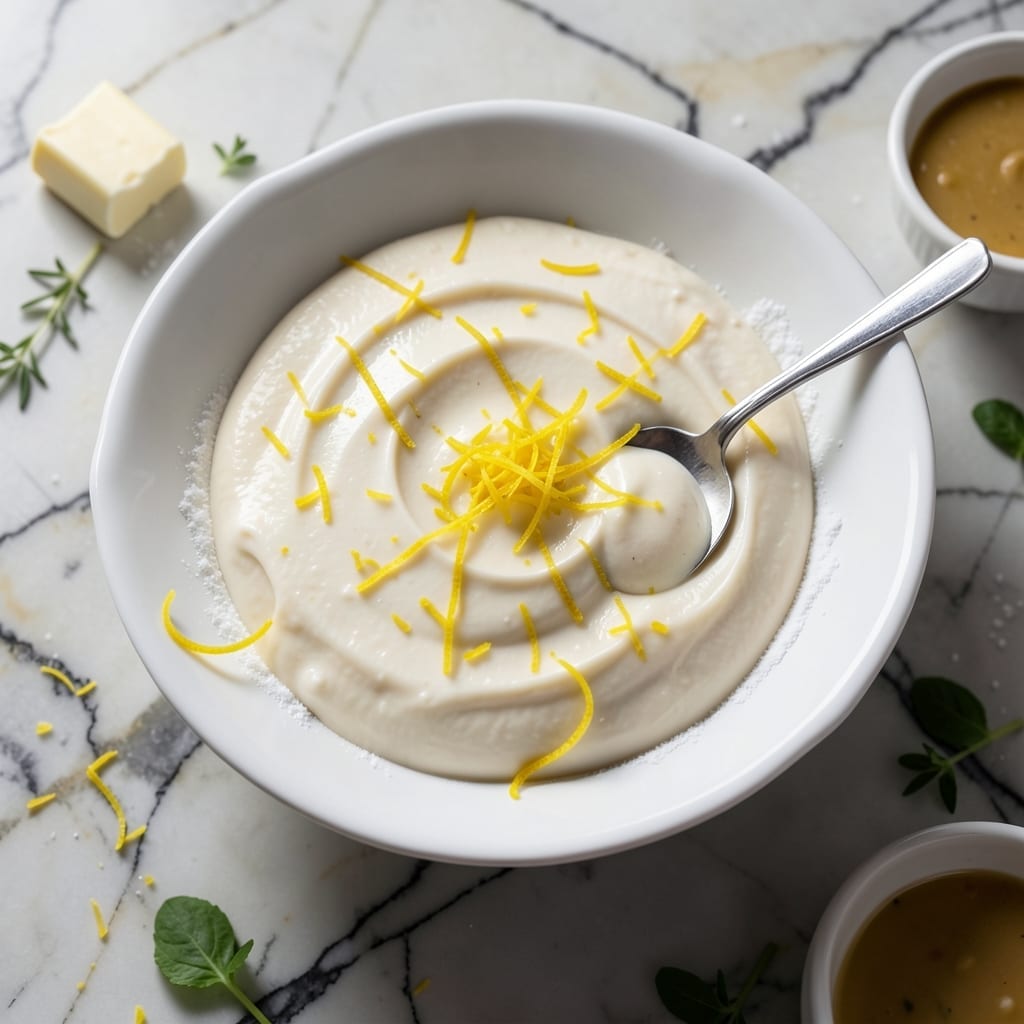
This lemon glaze frosting transforms any cake or pastry with its bright, tangy sweetness. The simple blend of powdered sugar and fresh lemon juice creates a smooth, pourable glaze that hardens to a perfect finish.
Ready in minutes, it adds a professional touch to bundt cakes, scones, or cookies. The key is using fresh lemon juice for that vibrant citrus flavor that store-bought versions can’t match.
Ingredients for Recipe for Lemon Glaze Frosting
Seven ingredients for that vibrant citrus finish everyone loves on desserts.
| Ingredient | Amount | Notes |
|---|---|---|
| Powdered Sugar 🍚 | 2 cups | Sifted for smooth texture |
| Fresh Lemon Juice 🍋 | ¼ cup | About 2-3 lemons |
| Lemon Zest 🍋 | 1 tbsp | Finely grated, packed |
| Unsalted Butter 🧈 | 2 tbsp | Melted and cooled |
| Vanilla Extract 🌿 | ½ tsp | Pure, not imitation |
| Heavy Cream 🥛 | 1 tbsp | Or whole milk |
| Salt 🧂 | 0.125 tsp | Fine grain |
[recipe_ingredient_scaler]
Powdered sugar quality matters here. Domino or C&H brands dissolve beautifully without graininess. The lemons should be bright yellow and firm—avoid any with green tinges or soft spots. I grab mine from Whole Foods for consistent juice content, but any grocery store with good turnover works. For the butter, Plugrá or Kerrygold give the cleanest flavor without overpowering the citrus.
No fresh lemons? Bottled lemon juice in a pinch (but cut back by 25%—it’s more concentrated). Skip the zest? The glaze will lack depth. Want it thicker? Add powdered sugar 1 tbsp at a time. Thinner? Warm the glaze slightly or add cream gradually. For a dairy-free version, coconut oil works but may set differently.
Store glaze in an airtight container at room temperature for 1-2 days. For longer storage, refrigerate up to 1 week—let it warm to room temp and stir before using. It freezes well too, though texture may change slightly after thawing.
Why You’ll Love This Recipe
- 5-Minute Magic: I mix powdered sugar, butter, and a splash of fresh lemon juice—no mixer, no fuss, just a whisk and done.
- Zing in Every Bite: That hit of lemon zest and juice cuts through the sweetness so it’s bright, not cloying.
- Cake’s Best Friend: Drizzle over bundt cakes, glaze donuts, or slather on cupcakes—it plays well with everything.
- Keeps Like a Dream: Leftovers? No problem. It firms up in the fridge and softens right back to spreadable perfection.
Step-by-Step Instructions for Lemon Glaze Frosting
This simple method ensures a smooth, tangy glaze with the perfect drizzle consistency every time.
Step 1: Whisk the Powdered Sugar Base
In a medium mixing bowl, add the 2 cups Powdered Sugar. I always sift mine first to eliminate any lumps—this is crucial for that ultra-smooth texture you want in a glaze. Even if your powdered sugar looks fine, sifting prevents graininess in the final product.
Create a well in the center of the sugar and set the bowl aside. This prepares the base for incorporating the liquid ingredients gradually, which prevents clumping and ensures an even, silky consistency throughout the glaze.
Step 2: Combine Wet Ingredients and Flavorings
In a separate small bowl, whisk together the 0.25 cup Fresh Lemon Juice, 1 tbsp Lemon Zest, 2 tbsp Unsalted Butter (melted and cooled), 0.5 tsp Vanilla Extract, 1 tbsp Heavy Cream, and 0.125 tsp Salt.
The butter should be warm but not hot—adding hot butter to powdered sugar can cause it to seize up. The lemon zest adds bright citrus oil that’s packed with flavor, so make sure it’s finely grated. This wet mixture carries all the flavor and will transform the sugar into a pourable glaze.
Step 3: Gradually Incorporate and Adjust Consistency
Slowly pour the lemon juice mixture into the well of the powdered sugar, whisking constantly with a wire whisk. Start with about half the liquid, then add more as needed. You want the glaze to be smooth and pourable but not so thin that it runs right off your cake.
As you whisk, the mixture will change from a thick paste to a glossy, fluid glaze. If it’s too thick, add the remaining liquid 1 teaspoon at a time until it reaches the right consistency. For a standard drizzle, it should coat the back of a spoon and ribbon off in a steady stream that holds its shape for a few seconds before dissolving.
Step 4: Test and Apply Immediately
Dip a spoon into the glaze and let it drip back into the bowl. The drips should form a thick, slow-moving stream that eventually dissolves back into the mixture. If it’s too thin, whisk in additional powdered sugar 1 tablespoon at a time until thickened.
Use the glaze immediately while it’s fresh—the lemon juice will cause it to set as it sits. Pour it over cooled cakes, pastries, or scones, allowing it to drip down the sides for a professional finish. The glaze will firm up slightly as it cools but remain tender enough to slice through cleanly.
Pro Tips For Making Recipe For Lemon Glaze Frosting
- Soften the Butter: Let the unsalted butter sit at room temperature for 30-45 minutes before mixing—cold butter makes the glaze clumpy, and melted butter thins it too much.
- Sift the Sugar: I learned this the hard way—skip sifting and you’ll end up with tiny lumps in your glaze. A quick pass through a fine-mesh sieve guarantees smooth frosting every time.
- Add Juice Slowly: Start with half the lemon juice, then adjust. Powdered sugar absorbs liquid differently, and it’s easier to thin the glaze than to thicken it after it’s too runny.
- Zest First, Juice Later: Always zest the lemon before cutting it open for juice—it’s nearly impossible to do after, and you’ll waste half the zest clinging to the rind.
Flavor Customization for These Flavors
Make it Spicier 🔥
For a bold, unexpected kick, add ½ tsp of ground cinnamon or ¼ tsp of cayenne pepper to your lemon glaze frosting. The warmth of cinnamon complements the citrus zing, while cayenne adds a subtle heat that balances the sweetness. This twist is perfect for those who love a little adventure in their desserts!
Add Sweetness 🍯
If you prefer a sweeter glaze, increase the powdered sugar by ½ cup or incorporate 2 tbsp of honey. Honey not only adds natural sweetness but also a floral depth that pairs beautifully with the bright lemon flavor. Adjust to taste, but remember a little goes a long way!
Tangy Twist 🍋
For an extra burst of citrus, mix in 1 tbsp of fresh lime juice or 1 tsp of lemon zest. The lime juice adds a sharper tang, while the zest brings a more concentrated lemon aroma. This adjustment intensifies the glaze’s citrusy profile, making it even more refreshing.
Extra Smoky 🌡️
A pinch of ¼ tsp smoked paprika or a dash of liquid smoke (2-3 drops) can give your glaze a subtle smoky undertone. This works wonderfully with spiced cakes or grilled desserts, adding complexity without overpowering the lemon’s freshness.
Umami Boost ✨
For a savory depth, try adding ½ tsp of vanilla extract or 1 tsp of cream cheese to the glaze. Vanilla rounds out the acidity, while cream cheese adds a rich, creamy umami that pairs deliciously with the citrus. These tweaks make the glaze more versatile for both sweet and semi-savory treats.
Nutrition Facts

Trained in classic French technique but raised on slow-cooked ribs and spicy rubs, she blends culinary skill with smoke and soul.
- Recipe for Boneless Pork Chops in Cast Iron Skillet: Sear and Baste to Juicy Perfection - October 3, 2026
- Recipe for Boneless Cross Rib Roast: Slow-Roasted Beef with Herb Crust - October 3, 2026
- Hamburgers in Sauce Recipe Crock Pot: Slow-Cooked Savory Delight - October 3, 2026