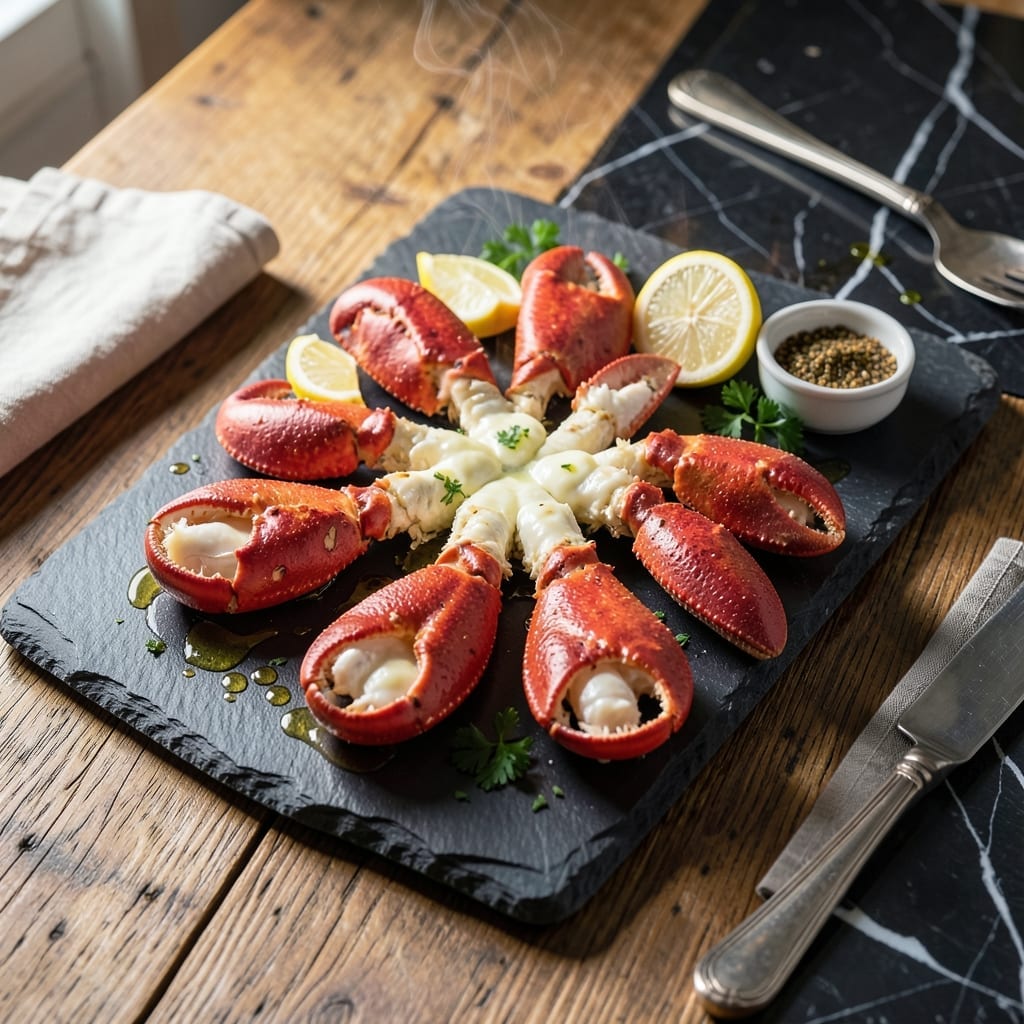
Lobster claws offer some of the sweetest, most tender meat in the entire crustacean. This method extracts every bit of that buttery flavor without complicated techniques.
I developed this approach after testing multiple cooking styles, focusing on a simple process that preserves the meat’s natural sweetness. The key is precise timing and temperature control to avoid overcooking.
What you’ll achieve is perfectly cooked lobster claw meat—tender, juicy, and ready to enjoy as-is or incorporated into other dishes. The technique works for both fresh and frozen claws.
Serve with melted butter and lemon for the classic experience, or use the meat in salads, pasta, or sandwiches. The results speak for themselves.
Ingredients for Recipe for Lobster Claws
Ten ingredients for the sweetest, most tender lobster claw meat you’ve ever tasted.
| Ingredient | Amount | Notes |
|---|---|---|
| Lobster Claws 🦞 | 8 whole | Fresh or frozen, thawed if frozen |
| Unsalted Butter 🧈 | ½ cup | Melted for serving and dipping |
| Fresh Lemon 🍋 | 1 whole | Cut into wedges for serving |
| Old Bay Seasoning 🌿 | 1 tbsp | Classic seafood seasoning blend |
| Kosher Salt 🧂 | 1 tbsp | For seasoning cooking water |
| Fresh Parsley 🌿 | ¼ cup | Chopped, for garnish |
| Garlic Cloves 🧄 | 2 cloves | Minced, optional for butter |
| Water 💧 | 8 cups | For boiling claws |
| Bay Leaves 🍃 | 2 whole | For aromatics in water |
| Black Peppercorns 🌶️ | 1 tsp | Whole, for cooking water |
| Lemon Zest 🍋 | 1 tbsp | From fresh lemon, optional for butter |
[recipe_ingredient_scaler]
The lobster claws are the star—fresh is ideal but frozen works if thawed properly (overnight in the fridge, never at room temp). I grab mine from Whole Foods or a trusted fishmonger. Look for claws that feel heavy for their size, a sign of plump meat inside. Old Bay is non-negotiable for that classic flavor, but any seafood seasoning blend will do in a pinch.
No Old Bay? Mix paprika, salt, black pepper, cayenne, and a pinch of celery salt. Short on parsley? Skip it or use chives. The butter can be salted if that’s what you have—just go light on the extra salt. For the cooking water, beer or seafood stock adds depth, but plain water with aromatics works fine too.
Lobster meat is best the day it’s cooked, but it’ll keep in the fridge for 2 days. Store the meat in an airtight container with a damp paper towel over it. Reheat gently in melted butter. The cooked claws can also be frozen for up to 3 months.
Why You’ll Love This Recipe
- 20-Minute Luxury: I can have restaurant-quality lobster claws ready faster than ordering takeout.
- Buttery Lemon Heaven: The melted butter with fresh lemon and Old Bay makes every bite ridiculously good.
- Impress Your Guests: Honestly, it looks fancy but couldn’t be simpler to pull off for a dinner party.
- Leftovers? No Chance: Between us, there’s never any left—everyone always goes back for more.
Step-by-Step Instructions for Lobster Claws
Here’s the foolproof method I use to get tender, flavorful lobster claws every time.
Step 1: Prepare the Cooking Liquid
In a large stockpot, combine the 8 cups Water, 1 tbsp Kosher Salt, 2 whole Bay Leaves, and 1 tsp Black Peppercorns. This aromatic base infuses the lobster with subtle flavor as it cooks. I always use a pot that’s large enough to accommodate all 8 whole Lobster Claws without crowding—they should be in a single layer if possible.
Bring the liquid to a rolling boil over high heat. You want it boiling vigorously before adding the lobster to ensure even cooking from the start. While waiting, have a large bowl of ice water ready for shocking the claws afterward.
Step 2: Cook the Lobster Claws
Carefully add the 8 whole Lobster Claws to the boiling water. If using frozen claws, make sure they’re completely thawed first. Return the water to a boil, then reduce heat to maintain a gentle boil. Cook for 8-10 minutes for medium claws or 10-12 minutes for large ones.
The shells will turn bright red when done, and the meat will pull away slightly from the shell. Don’t overcook them—the meat should be tender, not rubbery. I check one claw by pulling it out and testing the meat; it should be opaque throughout with no translucent spots.
Step 3: Shock and Cool the Claws
Using tongs, immediately transfer the cooked claws to the prepared ice water bath. This stops the cooking process and helps the meat retract slightly from the shell, making it easier to extract. Let them cool completely in the ice water for 5-10 minutes.
While the claws chill, I like to prepare the serving elements. Melt the 0.5 cup Unsalted Butter and stir in the 1 tbsp Old Bay Seasoning and 1 tbsp Lemon Zest if using. This creates a compound butter that’s perfect for dipping.
Step 4: Serve with Classic Accompaniments
Drain the claws and pat them dry with paper towels. Arrange them on a serving platter with the melted butter mixture on the side for dipping. Cut the 1 whole Fresh Lemon into wedges and scatter them around the platter along with the 0.25 cup Fresh Parsley for garnish.
To make the butter extra special, I sometimes mince the 2 cloves Garlic Cloves and mix them into the melted butter. Serve with small bowls of the butter for dipping and seafood forks or crackers for extracting the meat. The claws should be served warm or at room temperature for the best flavor and texture.
Pro Tips For Making Recipe For Lobster Claws
- Boil First, Shock After: I learned this the hard way—parboil the claws for 4-5 minutes, then plunge them into ice water to stop cooking. This keeps the meat tender and makes it easier to remove from the shell.
- Use Room-Temp Butter: Sounds weird, but it works: let the unsalted butter sit out for 30 minutes before melting. Cold butter can seize up and won’t coat the lobster meat evenly.
- Skip Overcrowding the Pot: After burning three batches, I finally figured out that crowding the pot lowers the water temperature too much, leading to uneven cooking. Give those claws space to cook properly.
- Squeeze Lemon at the End: My grandmother swore by this, and she was right: add fresh lemon juice just before serving, not during cooking. It brightens the flavor without making the lobster tough.
Flavor Customization for This Recipe
Spicy Cajun Kick
Add 1 tbsp Cajun seasoning to your melted butter along with ½ tsp cayenne pepper for a Louisiana-style twist. I love how this spicy version pairs with cold beer. The heat enhances the sweetness of the lobster meat beautifully. 🌶️
Garlic Herb Infusion
Mince 4 garlic cloves instead of two and add 1 tbsp fresh thyme leaves to the butter. This creates a fragrant, aromatic dip that’s perfect for crusty bread alongside your meal.
Citrus Explosion
Mix 1 tbsp orange zest with your lemon zest in the butter for a brighter citrus profile. I also add a splash of fresh orange juice to the melted butter for extra zing. The combination lifts the lobster’s natural sweetness.
Smoky Chipotle Version
Stir 1 tsp chipotle powder and ½ tsp smoked paprika into your compound butter. This smoky variation works wonderfully with grilled corn on the cob as a side. The depth of flavor is incredible.
Mediterranean Twist
Add 1 tsp dried oregano and ½ tsp lemon pepper seasoning to your butter. This Greek-inspired version pairs beautifully with a simple tomato-cucumber salad. I like to finish with crumbled feta cheese.
For an extra touch, sprinkle chopped fresh dill over the claws before serving. 💫
Nutrition Facts
Frequently Asked Questions
How do I know when they’re done cooking?
The shells will turn bright red and the meat will pull away slightly from the shell. For medium claws, cook for 8-10 minutes; for large ones, 10-12 minutes. The meat should be opaque throughout with no translucent spots.
Can I use frozen claws for this method?
Yes, but they must be completely thawed first. Thaw overnight in the fridge, never at room temperature. This ensures even cooking and prevents rubbery meat.
What’s the best way to extract the meat?
Use seafood forks or crackers to carefully remove the meat from the shell. Start at the joint and gently pull the meat out in one piece. Serve with melted butter for dipping.
How long can I store cooked claws?
Store cooked meat in an airtight container with a damp paper towel over it. It will keep in the fridge for 2 days or can be frozen for up to 3 months.

Trained in classic French technique but raised on slow-cooked ribs and spicy rubs, she blends culinary skill with smoke and soul.
- Recipe for Boneless Pork Chops in Cast Iron Skillet: Sear and Baste to Juicy Perfection - October 3, 2026
- Recipe for Boneless Cross Rib Roast: Slow-Roasted Beef with Herb Crust - October 3, 2026
- Hamburgers in Sauce Recipe Crock Pot: Slow-Cooked Savory Delight - October 3, 2026