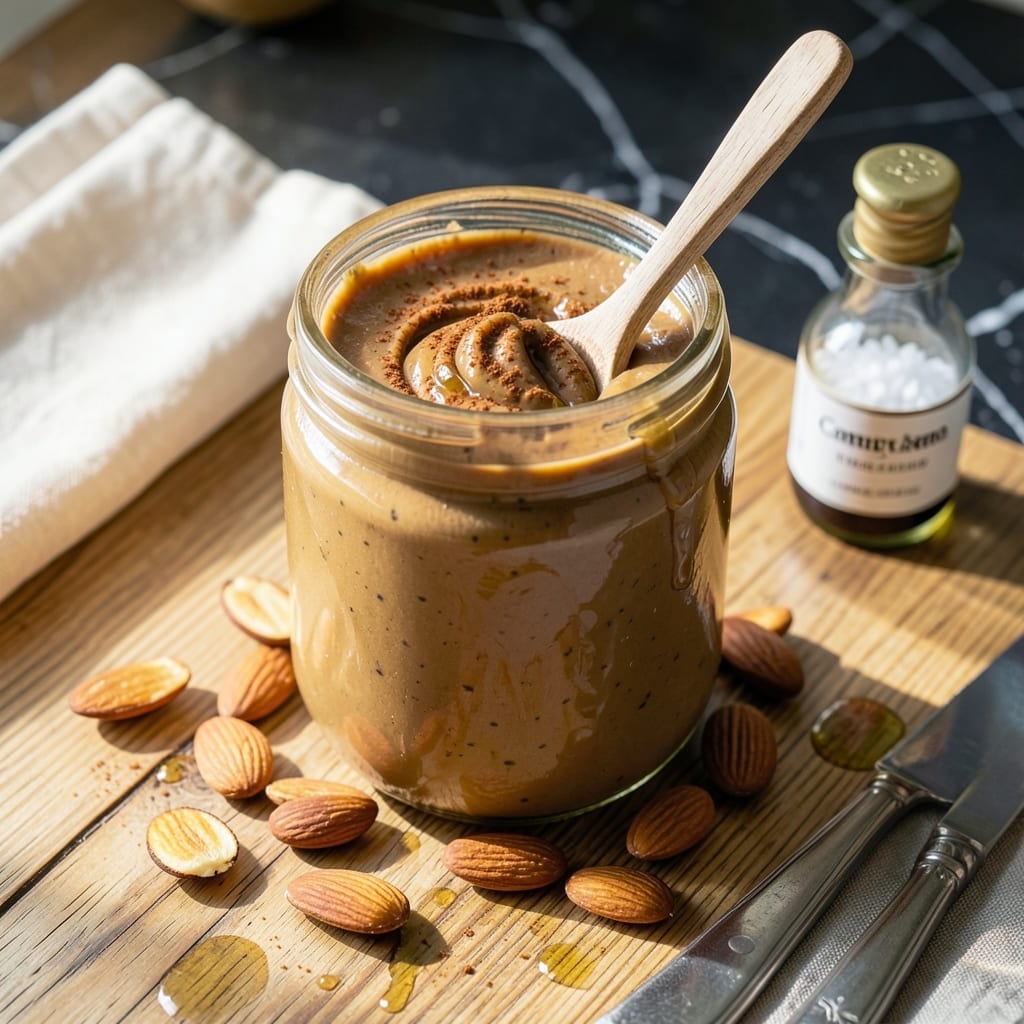
I’ve perfected a method for creating silky almond butter that’s naturally sweet and endlessly versatile. No preservatives, no added sugars—just pure, creamy goodness.
This spread comes together with a single ingredient and a bit of patience. The result is a smooth, rich paste that elevates everything from toast to smoothies.
Ingredients for Recipe for Making Almond Butter
Six ingredients max. Pure almond flavor with optional enhancements for customization.
| Ingredient | Amount | Notes |
|---|---|---|
| Raw Almonds 🌰 | 2 cups | Blanched or skin-on, unsalted |
| Neutral Flavored Oil 🫒 | 1 tbsp | Optional for creamier texture |
| Sea Salt 🧂 | ¼ tsp | Fine grain, to taste |
| Vanilla Extract 🌿 | ½ tsp | Pure, for depth of flavor |
| Cinnamon 🌶️ | ¼ tsp | Ground, optional warm spice |
| Maple Syrup 🍁 | 1 tsp | Optional for light sweetness |
[recipe_ingredient_scaler]
The almonds are everything here. Raw, unsalted almonds yield the cleanest flavor—Costco and Trader Joe’s both carry high-quality bulk options. Avoid roasted or salted varieties, as they can overpower the natural sweetness and affect texture. Skin-on is fine (adds fiber and visual flecks), but blanched gives that ultra-smooth finish. Storage matters: keep almonds in the freezer until use to prevent rancidity.
No neutral oil? Skip it—the almonds release enough natural oils for a spreadable consistency. Prefer a different sweetener? Agave or date syrup swaps in at a 1:1 ratio for maple. Want chocolate almond butter? Add 2 tbsp cocoa powder and an extra 1 tbsp maple syrup. The vanilla and cinnamon are subtle but elevate the flavor profile significantly (don’t skip them).
Store in an airtight jar in the fridge for up to 1 month, or at room temperature for 2 weeks. The natural oils may separate—just stir before using. Freezing isn’t recommended, as it can alter the creamy texture.
Why You’ll Love This Recipe
- One Bowl Wonder: I just toss raw almonds in the food processor, drizzle in oil, and let it whir—no fancy steps, no mess.
- Sweet & Warm: The vanilla and cinnamon turn plain nuts into something that tastes like dessert for breakfast.
- Spoon or Spread: I slather it on toast in the morning, then use the same batch to sweeten oatmeal or smoothies.
- Pantry Savior: A pound of almonds makes a jar that lasts me two weeks, and it’s still cheaper than store-bought.
Step-by-Step Instructions for Making Almond Butter
Transform raw almonds into a velvety spread with this straightforward, foolproof technique.
Step 1: Toast the Raw Almonds
Preheat your oven to 350°F. Spread all 2 cups Raw Almonds in a single layer on a rimmed baking sheet. Toast for 10-12 minutes, stirring halfway through, until the almonds are fragrant and light golden brown.
Watch closely during the last few minutes—almonds can go from perfectly toasted to burnt quickly. The toasting step enhances the natural oils and deepens the flavor, which is crucial for a rich, nutty almond butter. Remove them from the oven and let cool for 5 minutes.
Step 2: Process the Almonds into a Paste
Transfer the warm almonds to a high-powered food processor or blender. Secure the lid and process on high speed for 1-2 minutes. The almonds will first break into coarse crumbs, then form a fine meal, and finally begin to release their oils, creating a thick, crumbly paste.
Scrape down the sides of the processor with a spatula every 30-45 seconds to ensure even processing. This step requires patience—the almonds must fully break down and release their natural oils before the butter will form. Don’t be tempted to add liquid yet; the almonds will transform on their own.
Step 3: Achieve a Creamy Consistency
Continue processing the almond paste. After 3-5 minutes of total processing time, the mixture will become smooth and creamy, like thick, liquid almond butter. You’ll hear the processor motor strain less as the mixture loosens.
At this point, add the 1 tbsp Neutral Flavored Oil if using. This helps achieve an ultra-smooth texture, especially if your processor isn’t high-powered. The oil should fully incorporate within 30 seconds of additional processing.
Step 4: Season and Sweeten to Taste
Add the 0.25 tsp Sea Salt, 0.5 tsp Vanilla Extract, 0.25 tsp Cinnamon, and 1 tsp Maple Syrup. Pulse the processor 3-4 times to distribute the seasonings evenly without over-processing the almond butter.
Taste and adjust the seasoning if needed. The sea salt enhances the almond flavor, while the vanilla and cinnamon add warmth and depth. The maple syrup provides a subtle sweetness that balances the natural bitterness of the almonds. Transfer the almond butter to a clean jar.
Pro Tips For Making Recipe For Making Almond Butter
- Toast the Almonds: Roast raw almonds at 350°F for 10-12 minutes until golden and fragrant—I learned this the hard way after my first batch tasted bland and pasty.
- Use Warm Oil: Heat your neutral oil slightly (just warm to the touch) before blending; it helps the almonds release their oils faster and prevents a gritty texture.
- Skip the Overfill: Never fill your food processor more than halfway—almond butter needs room to move, or you’ll end up with a burned motor and uneven texture.
- Add Salt Last: Fold in sea salt after blending the almonds into butter; adding it earlier can make the mixture seize up, and you won’t get to taste and adjust properly.
Regional Styles of This Dish
Texas Style 🌰
In Texas, almond butter often gets a bold twist with smoked sea salt or a hint of chipotle powder for a subtle heat. Roasting the almonds at a low temperature (300°F) preserves their natural oils, while a touch of honey or maple syrup adds sweetness. This style leans into the state’s love for big, rich flavors, making it perfect for pairing with hearty breads or grilled meats.
California Style 🌿
California’s version celebrates simplicity and health. Raw or lightly roasted almonds are blended with coconut oil for creaminess and a pinch of Himalayan pink salt. Some add vanilla bean or cinnamon for warmth. This style reflects the state’s farm-to-table ethos, often using organic, locally sourced almonds for a clean, fresh taste.
Midwest Style 🌽
The Midwest takes a comforting approach, mixing almond butter with a touch of brown sugar or date syrup for a deeper sweetness. Some versions incorporate oat flour for texture, making it thicker and ideal for baking. This style nods to the region’s love for homey, hearty flavors and is often used in oatmeal or sandwiches.
Southern Style 🍯
Southern almond butter often includes bourbon-infused honey or pecan pieces for a rich, nutty depth. A slow roast at 275°F enhances the almonds’ natural oils, while a dash of cocoa powder adds a chocolatey note. This style mirrors the South’s affection for decadent, slow-cooked flavors.
Nutrition Facts

Trained in classic French technique but raised on slow-cooked ribs and spicy rubs, she blends culinary skill with smoke and soul.
- Recipe for Boneless Pork Chops in Cast Iron Skillet: Sear and Baste to Juicy Perfection - October 3, 2026
- Recipe for Boneless Cross Rib Roast: Slow-Roasted Beef with Herb Crust - October 3, 2026
- Hamburgers in Sauce Recipe Crock Pot: Slow-Cooked Savory Delight - October 3, 2026