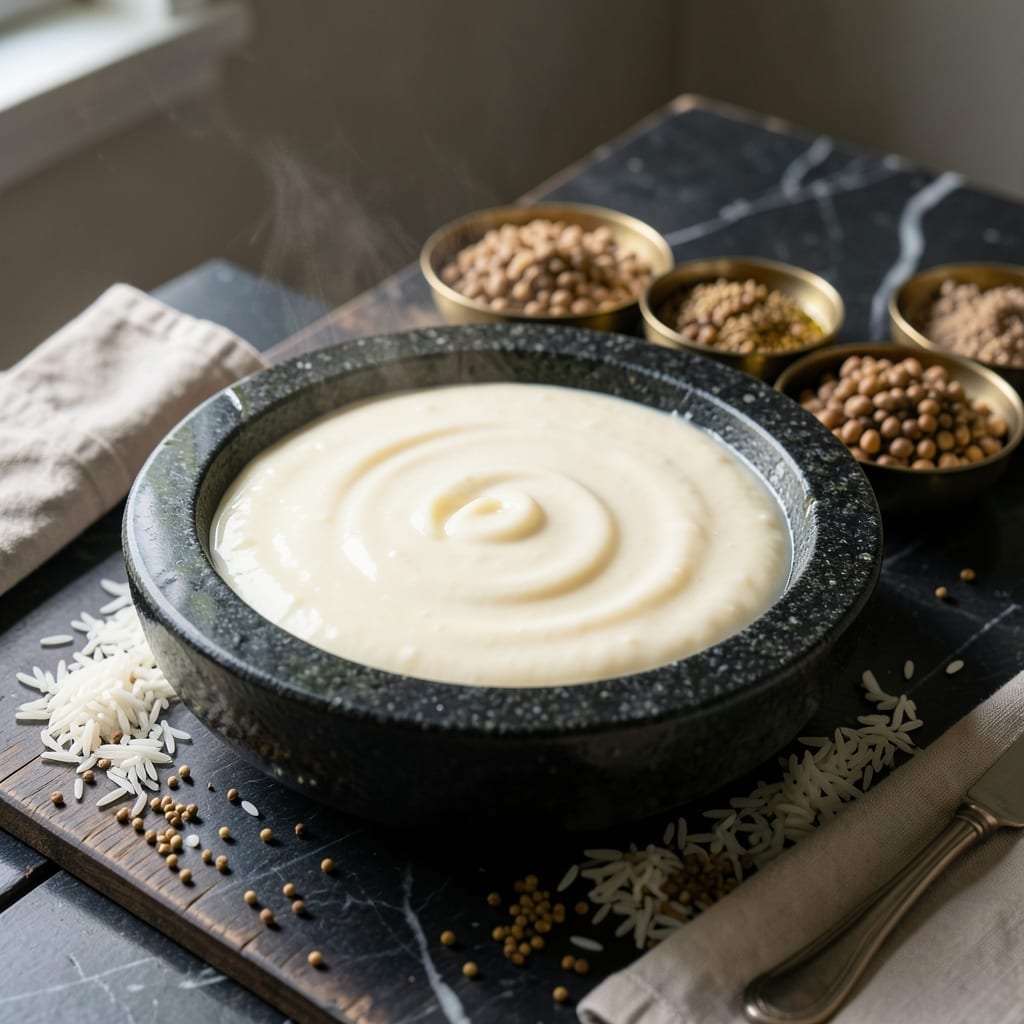
Mastering dosa batter is the foundation of perfect, crisp South Indian crepes. This traditional recipe combines rice and lentils in precise ratios for authentic flavor and texture.
The fermentation process is key, requiring patience to develop the right tang and airy consistency. Properly fermented batter ensures light, lace-like dosas that crisp beautifully on the griddle.
Ingredients for Recipe for Making Dosa Batter
Traditional lentils and rice create this authentic South Indian foundation for perfect crepes.
| Ingredient | Amount | Notes |
|---|---|---|
| Parboiled Rice 🌾 | 2 cups | Long-grain variety preferred |
| Urad Dal 🌿 | ½ cup | Whole black gram, unskinned |
| Chana Dal 🌿 | ¼ cup | Split chickpea lentils |
| Fenugreek Seeds 🌿 | ½ tsp | Optional for fermentation aid |
| Water 💧 | 6 cups | For soaking and grinding |
| Salt 🧂 | 1 ½ tsp | Adjust to taste after fermentation |
| Cooked White Rice 🍚 | ½ cup | Optional for extra crispiness |
| Poha (Flattened Rice) 🌾 | ¼ cup | Optional for softness |
[recipe_ingredient_scaler]
The urad dal is non-negotiable for proper fermentation and that signature lace texture. Indian grocery stores like Patel Brothers or H Mart carry the best quality—look for whole, unskinned black gram with a fresh aroma. Parboiled rice (like Sona Masoori) gives the ideal crispness, but basmati works in a pinch. Always rinse thoroughly; any starch residue affects fermentation.
No urad dal? Split mung beans can substitute but expect a milder flavor. Fenugreek seeds aren’t mandatory but boost fermentation—especially helpful in cooler climates. Short on time? Pre-soaked lentils from the fridge cut prep by half. The poha is a regional addition; skip if unavailable without affecting the core recipe.
Fermented batter keeps 2-3 days refrigerated but tastes best used within 24 hours. Store in a large container—it expands! For longer storage, freeze portions in airtight bags for up to 1 month. Always bring to room temperature before cooking.
Why You’ll Love This Recipe
- Soak and Forget: I just toss the parboiled rice, urad dal, and fenugreek seeds in water before bed, and by morning they’re ready to blend.
- Fermented Magic: That tangy kick from the urad dal and fenugreek after fermentation? Honestly, it’s what makes the dosa so addictive.
- Breakfast to Dinner: I use the same batter for crispy dosas at breakfast, soft uttapams for lunch, or even quick pancakes for dinner.
- Budget Stretch: Between us, one batch makes enough for a week, and the ingredients cost pennies compared to takeout.
Step-by-Step Instructions for Dosa Batter
Mastering the fermentation process is essential for achieving the perfect crisp texture and tangy flavor.
Step 1: Soak the Rice and Lentils
Rinse the 2 cups Parboiled Rice, 0.5 cup Urad Dal, 0.25 cup Chana Dal, and 0.5 tsp Fenugreek Seeds separately under cold water until the water runs clear. This removes excess starch and impurities, which can affect fermentation.
Place each in separate bowls and cover with 6 cups Water, ensuring they are fully submerged. The Parboiled Rice needs at least 4-6 hours of soaking, while the dals and Fenugreek Seeds require 2-3 hours. The grains should soften slightly but retain their shape. Drain thoroughly before grinding to avoid a watery batter.
Step 2: Grind to a Smooth Consistency
Grind the soaked Urad Dal and Fenugreek Seeds first, using minimal water, until smooth and fluffy. This takes about 15-20 minutes in a high-speed blender. The mixture should be thick and airy, like whipped cream. Transfer to a large fermentation vessel.
Next, grind the Parboiled Rice in batches with just enough water to assist the blades. Aim for a fine, gritty texture. If using the optional 0.5 cup Cooked White Rice or 0.25 cup Poha (Flattened Rice), add them during the last minute of grinding for extra crispiness and softness, respectively.
Step 3: Combine and Ferment
Mix the ground rice and dal batter in the fermentation vessel. The ideal ratio is roughly 3 parts rice to 1 part dal. Use your hands to combine thoroughly—this introduces natural bacteria that aid fermentation. The batter should be thick but pourable; adjust with a splash of water if needed.
Cover loosely with a clean cloth and let it ferment in a warm place for 8-12 hours or until it doubles in volume and develops a slightly sour aroma. In cooler climates, place it near a warm oven or on top of the refrigerator. Avoid sealing it tightly, as the batter needs room to expand and release gases.
Step 4: Season and Rest
Once fermented, gently stir in the 1.5 tsp Salt. The batter should be light and bubbly, with a tangy smell. If it’s too thick, add a little water—it should coat the back of a spoon but still be easy to pour.
Let the seasoned batter rest for 30 minutes before using. This allows the salt to distribute evenly and the flavors to meld. For the best texture, refrigerate the batter for 1-2 hours before making dosas—this enhances the crispness and makes it easier to spread thinly on the griddle.
Pro Tips For Making Recipe For Making Dosa Batter
- Soak Overnight: Give the parboiled rice and dals at least 8-10 hours in water—any less and your batter won’t ferment properly, leaving dosas dense instead of light.
- Use Warm Water: I learned this the hard way—soaking in lukewarm water cuts fermentation time by half and gives the fenugreek seeds a head start on releasing their magic.
- Grind Urad First: Always grind the urad dal and fenugreek seeds first into a smooth paste before adding rice—this guarantees a fluffier batter and prevents gritty texture.
- Skip the Blender Crowd: Resist the urge to fill the blender more than halfway; the batter needs room to move, or you’ll end up with uneven grinding and a motor that’s screaming for mercy.
Perfect Pairings for This Recipe
Chutney Companions
No dosa is complete without coconut chutney—blend 1 cup grated coconut with ¼ cup roasted chana dal, 2 green chilies, and a pinch of salt. The creamy texture contrasts perfectly with crispy dosas. 💫
Sambar Pairing
A hot bowl of vegetable sambar is the classic accompaniment. I love the tangy lentil stew with drumsticks, eggplant, and pumpkin. The tamarind and sambar powder flavors complement the mild dosa beautifully.
Spicy Podis
For a quick fix, serve with gunpowder podi (idli milagai podi). Mix 2 tbsp with 1 tbsp sesame oil for dipping. The nutty, spicy blend from Patel Brothers adds a punchy kick.
Fresh Additions
Add onion-tomato chutney for sweetness—sauté 1 chopped onion and 2 tomatoes with mustard seeds and curry leaves. The caramelized flavors pair wonderfully with the fermented batter.
Dessert Dosa
For a sweet twist, serve with jaggery syrup and grated coconut. Drizzle 2 tbsp melted jaggery over hot dosas and sprinkle with cardamom powder for a South Indian treat.
Nutrition Facts
Frequently Asked Questions
How long does the batter need to ferment?
Ferment for 8-12 hours in a warm place until it doubles in volume and develops a tangy aroma. In cooler climates, place it near a warm oven to speed up the process.
Can I use regular rice instead of parboiled?
Yes, but parboiled rice gives the best crispness. Basmati works in a pinch, though the texture may be slightly less lace-like. Stick to the same 2 cups measurement.
Why did my batter not rise properly?
Likely causes: insufficient warmth, not enough urad dal, or stale ingredients. Ensure your dal is fresh and the mixture sits in a consistently warm spot for at least 8 hours.
How do I adjust the batter consistency?
If too thick, add water 1-2 tablespoons at a time until it coats the back of a spoon. For thin batter, let it sit longer to thicken naturally.

Trained in classic French technique but raised on slow-cooked ribs and spicy rubs, she blends culinary skill with smoke and soul.
- Recipe for Boneless Pork Chops in Cast Iron Skillet: Sear and Baste to Juicy Perfection - October 3, 2026
- Recipe for Boneless Cross Rib Roast: Slow-Roasted Beef with Herb Crust - October 3, 2026
- Hamburgers in Sauce Recipe Crock Pot: Slow-Cooked Savory Delight - October 3, 2026