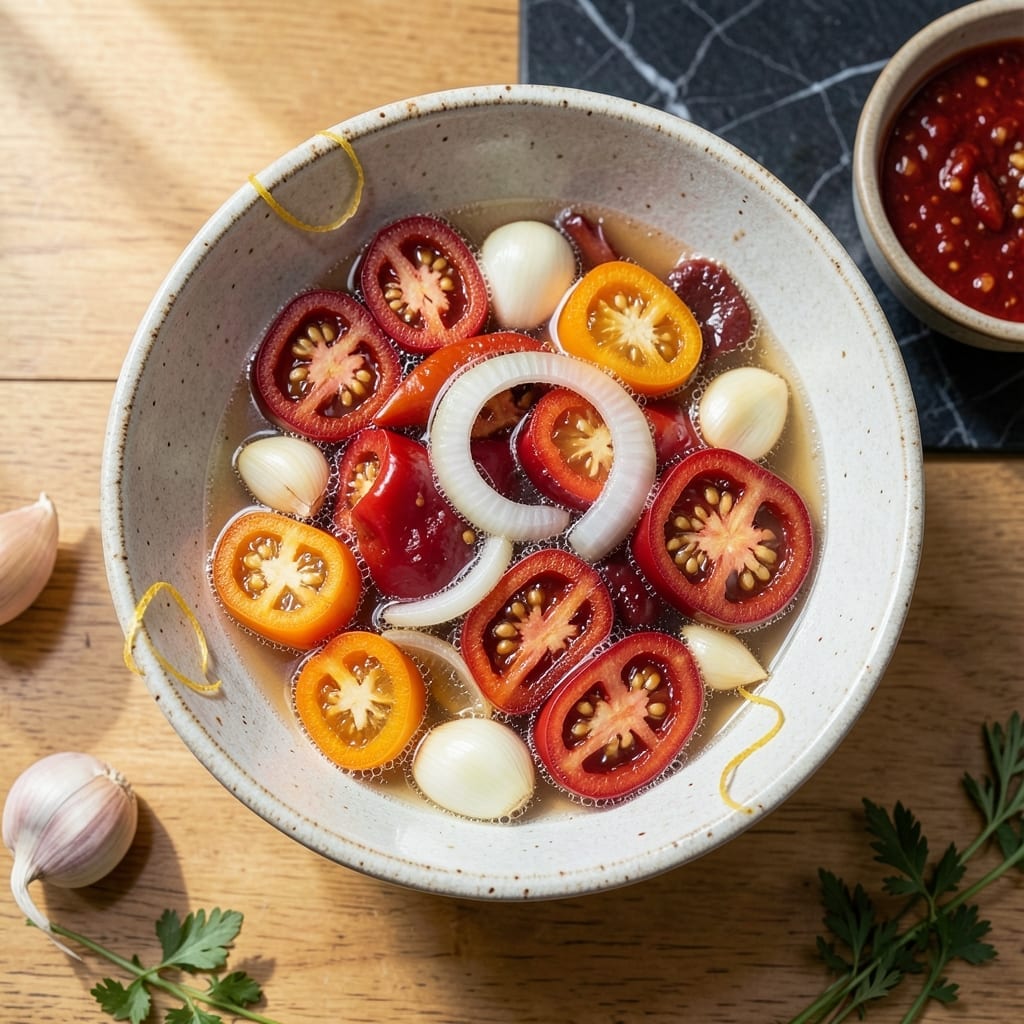
This homemade hot sauce delivers complex, fermented heat that store-bought versions can’t match. The process transforms simple peppers and vinegar into a bold, tangy condiment with deep, layered flavors.
With just a few ingredients and patience for fermentation, you’ll create a sauce that adds intensity and character to any dish. The result is versatile, long-lasting, and far superior to commercial options.
Ingredients for Recipe for Making Hot Sauce
Eight ingredients transform into a complex, fermented sauce with bold, layered heat and tang.
| Ingredient | Amount | Notes |
|---|---|---|
| Fresh Hot Peppers 🌶️ | 2 lb | Jalapeño, serrano, or habanero preferred |
| Garlic Cloves 🧄 | 8 cloves | Peeled, smashed lightly |
| White Vinegar 💧 | 2 cups | 5% acidity for preservation |
| Sea Salt 🧂 | 2 tbsp | Non-iodized for fermentation |
| Distilled Water 💧 | 1 cup | Filtered if possible |
| Onion 🧅 | 1 whole | White or yellow, quartered |
| Brown Sugar 🍚 | 2 tbsp | Optional for balanced sweetness |
| Lime Juice 🍈 | ¼ cup | Freshly squeezed preferred |
[recipe_ingredient_scaler]
The peppers define the character—use jalapeños for mild heat, serranos for medium, or habaneros for intense fire. Source from local farmers markets for peak freshness and potency. The garlic should be firm, with tight skins; avoid any with green sprouts. White vinegar at 5% acidity is non-negotiable for both flavor and safe fermentation. Sea salt must be non-iodized to prevent cloudiness in the brine.
Substitute apple cider vinegar at a 1:1 ratio if white vinegar is unavailable, though the flavor profile will shift slightly. For a milder sauce, seed the peppers before fermenting. The onion can be omitted, but it adds depth—shallots work as a refined alternative. Brown sugar may be replaced with coconut sugar or agave, but avoid honey to maintain strict vegan compliance.
The fermented mash keeps for 1-2 weeks at room temperature during active fermentation. Once strained and bottled, the hot sauce stores in the refrigerator for 6-12 months. Always use clean, airtight containers to prevent contamination and maintain freshness.
Why You’ll Love This Recipe
- Minimal Effort: I just blend the peppers, garlic, vinegar, and salt—no cooking required.
- Fiery Kick: The fresh peppers give it that bright, bold heat I crave.
- Endless Uses: I drizzle it on eggs, tacos, even popcorn. Honestly, it goes everywhere.
- Pantry Staple: A batch lasts me weeks, and it costs pennies compared to store-bought.
Step-by-Step Instructions for Making Hot Sauce
This method ensures proper fermentation and balanced heat for a complex, long-lasting sauce.
Step 1: Prepare and Ferment the Pepper Base
Combine the 2 lb Fresh Hot Peppers, 8 cloves Garlic Cloves, and 1 whole Onion in a large bowl. I quarter the onion first for better surface area exposure. Add the 2 tbsp Sea Salt and 1 cup Distilled Water, then stir until the salt fully dissolves.
Transfer the mixture to a clean, airtight fermentation vessel. The liquid should fully submerge the solids—if not, add a bit more distilled water. Cover loosely (fermentation gases need to escape) and let sit at room temperature for 5-7 days, stirring daily. You’ll know it’s ready when bubbles stop forming and the mixture has a tangy aroma.
Step 2: Blend the Fermented Mixture
Once fermentation is complete, transfer the contents to a blender. The peppers should have softened significantly and the garlic will have mellowed slightly. Add the 2 cups White Vinegar and blend until completely smooth.
For a chunkier texture, pulse blend instead of running continuously. The vinegar stops further fermentation and adds the necessary acidity for preservation. Strain through a fine-mesh sieve if you prefer a silky-smooth sauce, pressing with a spatula to extract all liquid.
Step 3: Season and Adjust the Flavor Profile
Pour the blended mixture into a saucepan and add the 2 tbsp Brown Sugar and 0.25 cup Lime Juice. The sugar balances the heat while the lime juice brightens the flavor. Bring to a gentle simmer over medium heat.
Simmer for 10-15 minutes until the sauce thickens slightly and the raw garlic flavor mellows. Taste and adjust seasoning—you might want a pinch more salt or sugar depending on your pepper variety. The sauce should coat the back of a spoon but still be pourable.
Step 4: Bottle and Store Properly
Let the sauce cool completely to room temperature. Using a funnel, pour it into clean, sterilized glass bottles. The sauce will continue to develop complexity over time, so I recommend letting it rest for at least 24 hours before using.
Store in the refrigerator for up to 6 months. The vinegar and fermentation process ensure it stays safe while the flavors meld. Shake well before each use as some separation is natural. The heat level will intensify slightly as it ages.
Pro Tips For Making Recipe For Making Hot Sauce
- Wear Gloves: I learned this the hard way—always wear gloves when handling fresh hot peppers, or you’ll regret it when you touch your face later.
- Simmer Gently: Keep the heat low when combining the vinegar and peppers to avoid boiling off the liquid too fast, which can leave your sauce too thick.
- Use Fresh Garlic: Sounds obvious, but stale garlic cloves turn bitter and ruin the flavor—only use plump, firm cloves for the best result.
- Rest Before Bottling: Let the sauce sit for at least 24 hours in the fridge before using; the flavors meld and mellow, and it’s worth the wait.
Storing and Reheating This Recipe
🍳 Refrigerator Storage
Once your homemade hot sauce is ready, store it in a clean, airtight container in the refrigerator. This method keeps the flavors fresh and vibrant for 3-4 days. Glass jars or bottles work best to preserve the sauce’s bold, tangy profile. Always use a clean spoon to avoid contamination.
❄️ Freezer Storage
For longer storage, freeze your hot sauce in ice cube trays or small portions. Once frozen, transfer the cubes to a freezer-safe bag or container, where they’ll stay flavorful for 2-3 months. Proper wrapping or sealing prevents freezer burn and maintains the sauce’s fiery kick.
🔥 Reheating Methods
Hot sauce is best enjoyed cold, but if you prefer it warm, gently heat it in a saucepan over low heat (120°F–140°F) for 2-3 minutes. Avoid boiling to preserve its complex flavors. For a smoky twist, warm it in a smoker at 180°F for 10 minutes.
💡 Quality Preservation
To maintain the sauce’s texture and heat, minimize exposure to moisture. Thaw frozen hot sauce in the fridge overnight for even results. If separation occurs, give it a good stir or shake before using. Store in small batches to reduce air exposure and keep the flavors bold and fresh.
Nutrition Facts

Trained in classic French technique but raised on slow-cooked ribs and spicy rubs, she blends culinary skill with smoke and soul.
- Recipe for Boneless Pork Chops in Cast Iron Skillet: Sear and Baste to Juicy Perfection - October 3, 2026
- Recipe for Boneless Cross Rib Roast: Slow-Roasted Beef with Herb Crust - October 3, 2026
- Hamburgers in Sauce Recipe Crock Pot: Slow-Cooked Savory Delight - October 3, 2026