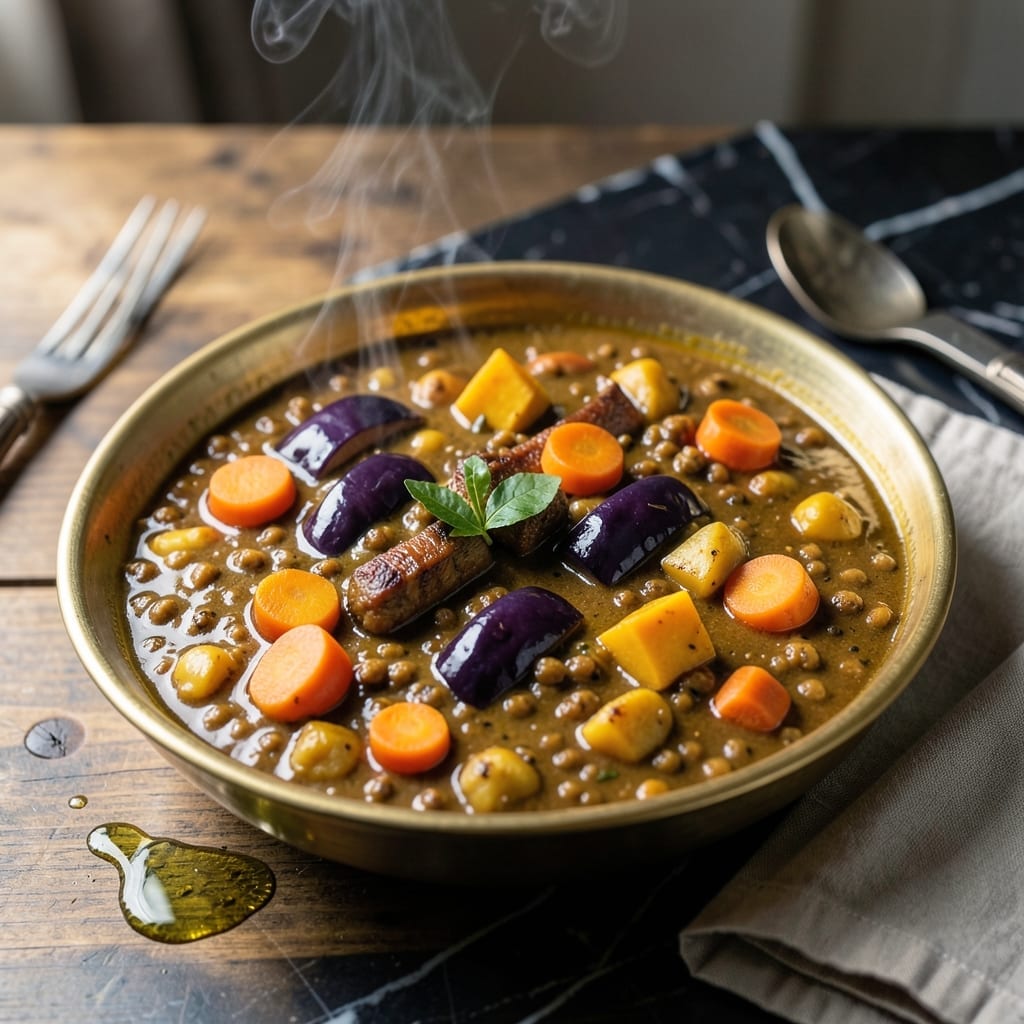
This South Indian classic combines lentils, vegetables, and aromatic spices into a comforting, flavorful stew. The balance of tangy tamarind and warm spices creates a dish that’s both hearty and deeply satisfying.
Simple ingredients come together through a precise method, yielding a rich, fragrant result that’s perfect for any meal. The process is straightforward, and the payoff is a bowl of ambrosial goodness.
Ingredients for Recipe for Making Sambar
Pantry staples and fresh vegetables create this South Indian comforting classic with ease.
| Ingredient | Amount | Notes |
|---|---|---|
| Toor Dal 🌾 | 1 cup | Rinsed and drained thoroughly |
| Tamarind Paste 🍋 | 2 tbsp | Or use lemon-sized tamarind ball |
| Drumsticks 🌿 | 2 whole | Cut into 2-inch pieces |
| Eggplant 🍆 | 1 whole | Small, diced into cubes |
| Carrots 🥕 | 2 whole | Peeled and chopped |
| Pumpkin 🎃 | 1 cup | Peeled and cubed |
| Onion 🧅 | 1 whole | Finely chopped |
| Tomatoes 🍅 | 2 whole | Finely chopped |
| Green Chili Peppers 🌶️ | 2 whole | Slit lengthwise |
| Mustard Seeds 🌿 | 1 tsp | For tempering |
| Cumin Seeds 🌿 | 1 tsp | For tempering |
| Turmeric Powder 🌶️ | ½ tsp | Ground, for color and flavor |
| Asafoetida 🧂 | ¼ tsp | Hing, optional but traditional |
| Curry Leaves 🌿 | 10 pieces | Fresh or dried |
| Vegetable Oil 🫒 | 2 tbsp | For tempering and cooking |
[recipe_ingredient_scaler]
The toor dal is non-negotiable for authentic texture—find it at Indian grocery stores or Patel Brothers. Drumsticks are traditional (look for fresh at Asian markets), but okra works in a pinch. Tamarind paste from Bazaar or Swad brands delivers consistent tang. Fresh curry leaves elevate the dish, but dried at one-third the amount works if that’s what’s available.
No tamarind? Lime juice or amchur (dry mango powder) adds the necessary sourness. Skip the eggplant and use zucchini or bottle gourd instead. Asafoetida is pungent but essential—just a pinch goes a long way. For heat control, adjust green chilies or remove seeds. The vegetables are flexible: add potatoes, beans, or radish for variety.
Store tamarind paste in the fridge for up to 6 months. Toor dal keeps in a cool, dry place for 1 year. Fresh curry leaves? Wrap in a paper towel, seal in a bag—they’ll last 1 week in the fridge. Cooked sambar stays fresh for 3-4 days refrigerated or freezes beautifully for 3 months.
Why You’ll Love This Recipe
- One Pot Wonder: Most of the work happens while the toor dal simmers—just toss in the drumsticks and eggplant when it’s time.
- Tangy Comfort: That first bite where tamarind paste cuts through the creamy dal? I make it just for that moment.
- Meal Prep Hero: It tastes even better the next day, so I double the batch and freeze half for lazy weeks.
- Budget Stretcher: A handful of toor dal, a few veggies, and dinner for four costs less than a fancy coffee.
Step-by-Step Instructions for South Indian Lentil Stew
Master this traditional method for perfectly balanced flavors and ideal texture every time.
Step 1: Cook the Toor Dal to Soft Perfection
Rinse the 1 cup Toor Dal thoroughly under cold water until the water runs clear. This removes excess starch and prevents a gummy texture in your stew. Drain completely, then transfer to a pressure cooker with 3 cups of fresh water.
Cook for 4-5 whistles on medium-high heat until the lentils become completely soft and mushy when pressed between your fingers. If using a regular pot, simmer for 25-30 minutes, stirring occasionally and adding water as needed to maintain a loose, porridge-like consistency. The dal should be fully broken down with no firm pieces remaining.
Step 2: Prepare and Temper the Aromatic Base
Heat the 2 tbsp Vegetable Oil in a heavy-bottomed pot over medium heat. When the oil shimmers, add the 1 tsp Mustard Seeds and allow them to pop for 15-20 seconds until they’re sizzling and aromatic.
Immediately add the 1 tsp Cumin Seeds, 0.25 tsp Asafoetida, and 10 pieces Curry Leaves. Stir constantly for 30 seconds until the cumin turns golden brown and releases its fragrance. Be careful not to burn the spices—this would make them bitter. Add the 1 whole Onion and sauté until translucent.
Step 3: Incorporate Vegetables and Tamarind
Add the 2 whole Tomatoes, 2 whole Green Chili Peppers, 0.5 tsp Turmeric Powder, and the chopped 2 whole Drumsticks, 1 whole Eggplant, 2 whole Carrots, and 1 cup Pumpkin. Stir well to coat all the vegetables with the tempered spices.
Cook for 5-7 minutes over medium heat until the vegetables begin to soften slightly. The tomatoes should start breaking down and creating a thick paste with the onions. At this point, stir in the 2 tbsp Tamarind Paste and cook for another 2 minutes to mellow its sharpness.
Step 4: Combine and Simmer to Perfection
Pour the cooked Toor Dal into the pot with the vegetables and spices. Add 2 cups of water and stir thoroughly to combine. The mixture should have a loose, stew-like consistency—add more water if needed, but remember it will thicken as it simmers.
Bring to a gentle boil, then reduce heat to low. Let it simmer uncovered for 15-20 minutes, stirring occasionally, until the vegetables are tender but still hold their shape and the flavors have fully melded. The stew should have a balanced tangy, spicy, and savory profile with a medium-thick consistency.
Taste and adjust seasoning if needed, though the tamarind and vegetables should provide sufficient flavor. Serve hot with rice or idli for an authentic South Indian meal.
Pro Tips For Making Recipe For Making Sambar
- Soak the Dal: I learned this the hard way—soak toor dal for at least 30 minutes before cooking to cut the cooking time in half and guarantee a creamy texture.
- Balance Tamarind Early: Tamarind paste can overpower; add it gradually, taste as you go, and adjust with a pinch of sugar if it gets too sharp.
- Cook Drumsticks First: They take longer than eggplant or carrots, so add them to the sambar 5-7 minutes before the softer veggies to avoid mushy drumsticks.
- Use Sambar Powder: Skip grinding spices from scratch—high-quality sambar powder saves time and delivers consistent flavor every time.
Creative Variations of These Flavors
North Indian Style
Swap 1 cup Toor Dal for 1 cup Masoor Dal for a quicker-cooking version popular in North India. Add 1 tsp Garam Masala during the final simmer for warmth. I love how this variation brings a different regional character to the dish. 🗺️
Coconut Twist
Stir in ½ cup coconut milk along with the cooked dal for a richer, creamier version common in Coastal regions. This pairs wonderfully with seafood additions like 1 cup shrimp or 1 cup white fish chunks added during the last 10 minutes of cooking.
Spinach Boost
Add 2 cups chopped spinach with the other vegetables for a nutrient-packed version. The spinach wilts quickly, adding color and earthiness. I often make this when I want extra greens in my meal.
Spicy Andhra Version
Increase heat with 1 tbsp red chili powder and 1 tsp black pepper added with the turmeric. Andhra-style sambar is known for its bold, fiery character. Use 3 Green Chili Peppers instead of two for extra punch. 🌶️
Quick Weeknight
Use 1 cup canned lentils (drained) to skip the dal cooking step. Add 1 cup frozen mixed vegetables to save chopping time. The dish comes together in under 30 minutes while keeping the authentic flavor profile.
Tangy Tomato
Replace tamarind with ½ cup tomato puree for a sweeter, more mellow tang. This works especially well when tomatoes are in peak summer season. Add 1 tsp jaggery to balance the acidity beautifully.
Nutrition Facts
Frequently Asked Questions
Can I use other lentils instead of toor dal?
Yes, masoor dal or moong dal work well. They cook faster but may alter the texture slightly. Stick to 1 cup for the best results.
How do I adjust the tanginess?
Add more tamarind paste for extra sourness or balance with a pinch of jaggery. Taste as you go to perfect the flavor.
Can I make this ahead of time?
It tastes even better the next day. Store in an airtight container in the fridge for up to 3-4 days, or freeze for 3 months.

Trained in classic French technique but raised on slow-cooked ribs and spicy rubs, she blends culinary skill with smoke and soul.
- Recipe for Cut Up Chicken: One-Pan Crispy Bites - October 3, 2026
- Recipe For Oven Baked Haddock: Buttery Crumbs With Zesty Lemon Topping - October 3, 2026
- Recipe For Fried Salmon Patties With Flour: Crispy Golden Crust With Flaky Centers - October 3, 2026