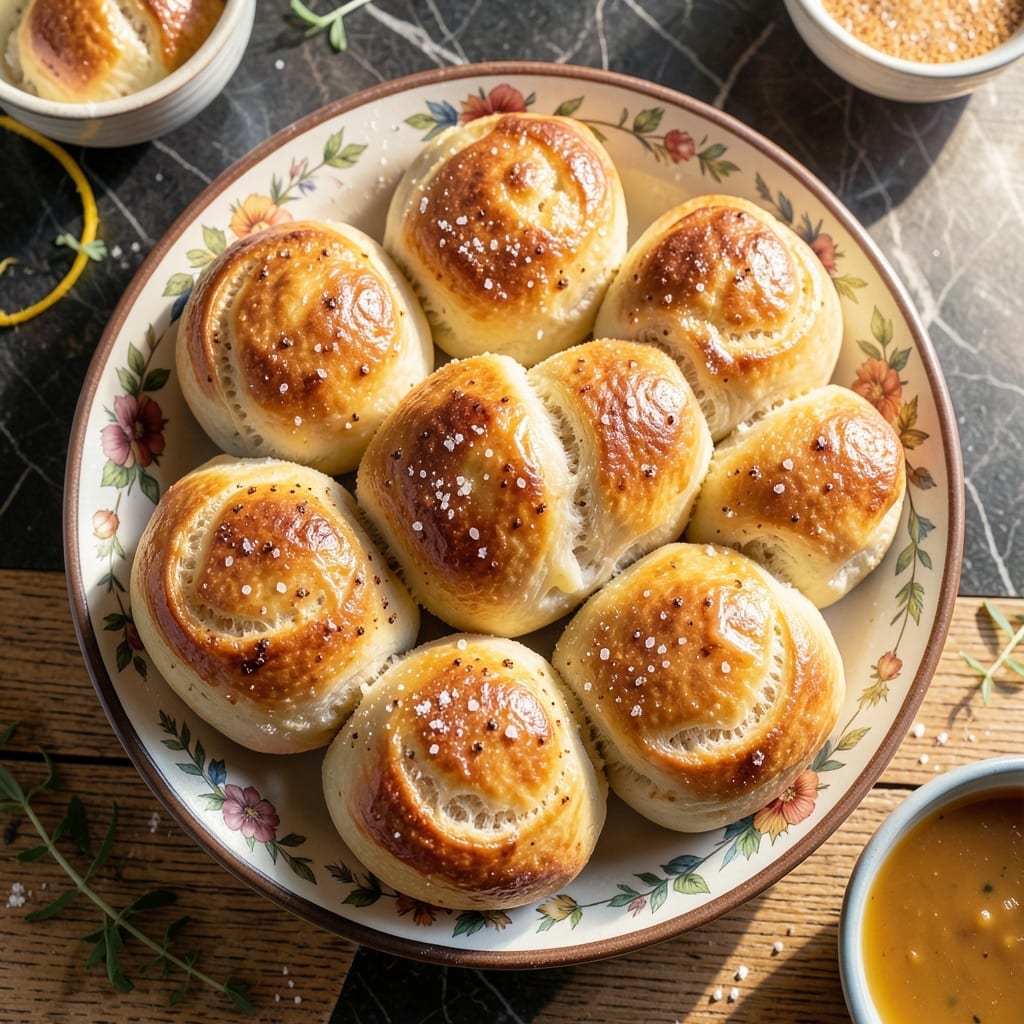
I developed this recipe after years of testing to create yeast rolls that rise quickly without sacrificing texture. The result is light, fluffy bread in under an hour.
The secret is using warm water to activate the yeast and a short rising time in a warm environment. This method ensures the dough doubles in size efficiently.
These rolls emerge golden with a soft, pillowy interior that melts in your mouth. Perfect for Sunday dinners or holiday meals when time is limited.
No special equipment needed—just basic ingredients and a little patience. The process is straightforward and rewarding.
Ingredients for Recipe for One Hour Yeast Rolls
Basic pantry staples create these tender, quick-rising rolls with perfect texture every time.
| Ingredient | Amount | Notes |
|---|---|---|
| All-Purpose Flour 🌾 | 4 ½ cups | Plus extra for dusting |
| Active Dry Yeast 🍞 | 2 ¼ tsp | Or one 0.25 oz packet |
| Granulated Sugar 🍚 | 2 tbsp | Helps activate the yeast |
| Salt 🧂 | 1 ½ tsp | Fine grain preferred |
| Whole Milk 🥛 | 1 cup | Warm to 110°F |
| Unsalted Butter 🧈 | ¼ cup | Melted and cooled |
| Large Egg 🥚 | 1 whole | Room temperature |
| Vegetable Oil 🫒 | 1 tbsp | For greasing bowl |
[recipe_ingredient_scaler]
The yeast is critical here—check the expiration date and store it in the freezer for longest shelf life. King Arthur Flour is my go-to for consistent results, but any all-purpose works. The milk should be warm, not hot (think bathwater temperature). If you’re unsure, use a thermometer: 110°F is ideal. Butter adds richness, but don’t skip melting it first.
No milk on hand? Warm water plus 1 tbsp powdered milk works in a pinch. Short on time? Instant yeast can cut the rise time by half (use the same amount). For extra flavor, swap 1 cup flour for whole wheat. The egg adds structure, but you can omit it—just add 2 tbsp extra milk to compensate.
Dough rises best in a warm, draft-free spot—I use my turned-off oven with the light on. Baked rolls keep 2-3 days at room temperature in a sealed bag. Freeze for up to 1 month (reheat straight from frozen at 350°F for 10 minutes).
Why You’ll Love This Recipe
- One Bowl Magic: I mix everything right in one bowl—no fancy gadgets, just flour, yeast, sugar, and warm milk coming together effortlessly.
- Buttery Perfection: The whole milk gives these rolls a richness that makes them soft, slightly sweet, and irresistibly fluffy every time.
- Holiday Lifesaver: I’ve served these at Thanksgiving, Sunday dinners, and even weeknight meals—they fit any table with zero fuss.
- Budget-Friendly Batch: Honestly, a bag of flour and a packet of yeast make two dozen rolls for pennies. Leftovers? They disappear fast.
Step-by-Step Instructions for One Hour Yeast Rolls
This method delivers soft, pillowy rolls with minimal hands-on time and maximum rise efficiency.
Step 1: Activate the Yeast and Mix the Dough
In a large mixing bowl, combine the warm whole milk, granulated sugar, and 2.25 tsp active dry yeast. Let sit for 5 minutes until the mixture becomes foamy—this confirms the yeast is active and ready to work. I check for a bubbly surface that smells slightly sweet.
Add the melted and cooled unsalted butter, large egg, and 1.5 tsp salt to the yeast mixture. Stir gently to combine. Then incorporate 2 cups of the all-purpose flour and mix until smooth. This initial mixing develops the gluten structure that gives rolls their soft texture.
Step 2: Incorporate Remaining Flour and Knead Briefly
Gradually add the remaining 2.5 cups all-purpose flour to form a soft dough. The dough should pull away from the sides of the bowl but still feel slightly sticky to the touch. I find that using a wooden spoon for the first addition and then switching to my hands works best for control.
Turn the dough onto a lightly floured surface and knead for 3-4 minutes until smooth and elastic. You’ll notice the dough transforms from shaggy to supple—this is the gluten developing properly. Avoid adding too much extra flour, as this can make the rolls dense instead of light.
Step 3: First Rise in Prepared Bowl
Lightly grease a large bowl with the 1 tbsp vegetable oil and place the dough inside, turning once to coat all sides. This thin layer of oil prevents the dough from sticking as it rises. Cover the bowl with a clean kitchen towel or plastic wrap.
Let the dough rise in a warm, draft-free place for 20-25 minutes or until nearly doubled in size. I set my oven to 100°F and place the bowl inside with the door closed for consistent warmth. The dough should look puffy and spring back slowly when gently pressed with a finger.
Step 4: Shape and Second Rise
Punch down the risen dough to release the air, then turn it onto a lightly floured surface. Divide into 12 equal portions and shape each into a smooth ball by pinching the edges underneath. This creates surface tension that helps the rolls maintain their shape during baking.
Place the shaped rolls in a greased 9×13-inch baking pan, spacing them slightly apart. Cover again and let rise for 20-25 minutes until puffy. They should nearly touch each other when ready to bake—this creates that desirable pull-apart texture in the finished product.
Step 5: Bake to Golden Perfection
Preheat your oven to 375°F. When the rolls have completed their second rise, bake for 15-18 minutes or until they’re golden brown on top. I check for doneness by tapping the top of a roll—it should sound hollow.
Remove from the oven and brush the tops with additional melted unsalted butter while still warm. This final touch enhances flavor and gives the rolls a beautiful sheen. Let cool for 5-10 minutes in the pan before serving to allow the structure to set.
Pro Tips For Making Recipe For One Hour Yeast Rolls
- Proof the Yeast: Dissolve the active dry yeast in 1/4 cup warm milk with a pinch of sugar first—if it doesn’t bubble within 5-10 minutes, your rolls won’t rise. I learned this the hard way after wasting a batch with dead yeast.
- Warm the Milk: Use whole milk heated to about 110°F—too hot and it’ll kill the yeast, too cold and it won’t activate. A quick test: it should feel like warm bathwater on your wrist.
- Don’t Overflour: Resist the urge to add extra flour while kneading; the dough will be sticky, but that’s normal. Overworking it makes dense rolls, and nobody wants a hockey puck for dinner.
- Use a Bowl Cover: Skip the towel and cover your rising dough with a lightly greased bowl or plastic wrap—it traps just enough warmth and prevents a dry skin from forming on top.
Serving Suggestions for recipe for one hour yeast rolls
Sunday Dinner Star
These rolls shine at the center of your Sunday table. I serve them warm in a basket lined with a linen towel to keep them soft. They pair beautifully with roasted chicken or pot roast—classic combinations I perfected during those weeks working on my grandmother’s recipes. 💛
Holiday Feast Essential
For holiday meals, arrange them in a cast iron skillet for a rustic presentation. The skillet keeps them warm longer at the table. I always make 1.5x the recipe for Thanksgiving—there are never leftovers.
Brush with honey butter (mix ¼ cup melted butter with 2 tbsp honey) for a special touch that guests rave about.
Weeknight Hero
On busy weeknights, these rolls save dinner. Serve with soup or chili for a comforting meal in minutes. I love tearing a warm roll and dipping it into a bowl of tomato bisque.
Breakfast Treat
Leftovers make incredible breakfast sandwiches. Split a roll, add a fried egg and cheddar cheese, then warm in the oven for 5 minutes at 350°F. My kids request this every weekend. ✨
Nutrition Facts
Frequently Asked Questions
Can I use instant yeast instead of active dry?
Yes! Use the same amount, but skip the activation step. Instant yeast can be mixed directly with dry ingredients. This can shave off 5 minutes from your prep time.
Why didn’t my rolls rise properly?
Check your yeast expiration date first. Also ensure your milk was 110°F—too hot kills yeast, too cold slows activation. A warm rising spot is crucial for doubling in size.
Can I make these ahead of time?
Prepare dough through first rise, then refrigerate overnight. Shape cold dough in the morning, let rise 30-45 minutes, then bake as directed.
How do I get extra soft rolls?
Brush tops with melted butter immediately after baking. Also, don’t overbake—remove at 15-18 minutes when just golden. Overbaking dries them out.

Trained in classic French technique but raised on slow-cooked ribs and spicy rubs, she blends culinary skill with smoke and soul.
- Recipe for Fully Cooked Spiral Ham: Sweet Glaze and Effortless Elegance - October 3, 2026
- Recipe for Cream of Rice: Silky Smooth Breakfast Comfort - October 3, 2026
- Old Fashioned Beef and Noodles Recipe Crock Pot: Set-It-and-Forget-It Hearty Meal - October 3, 2026