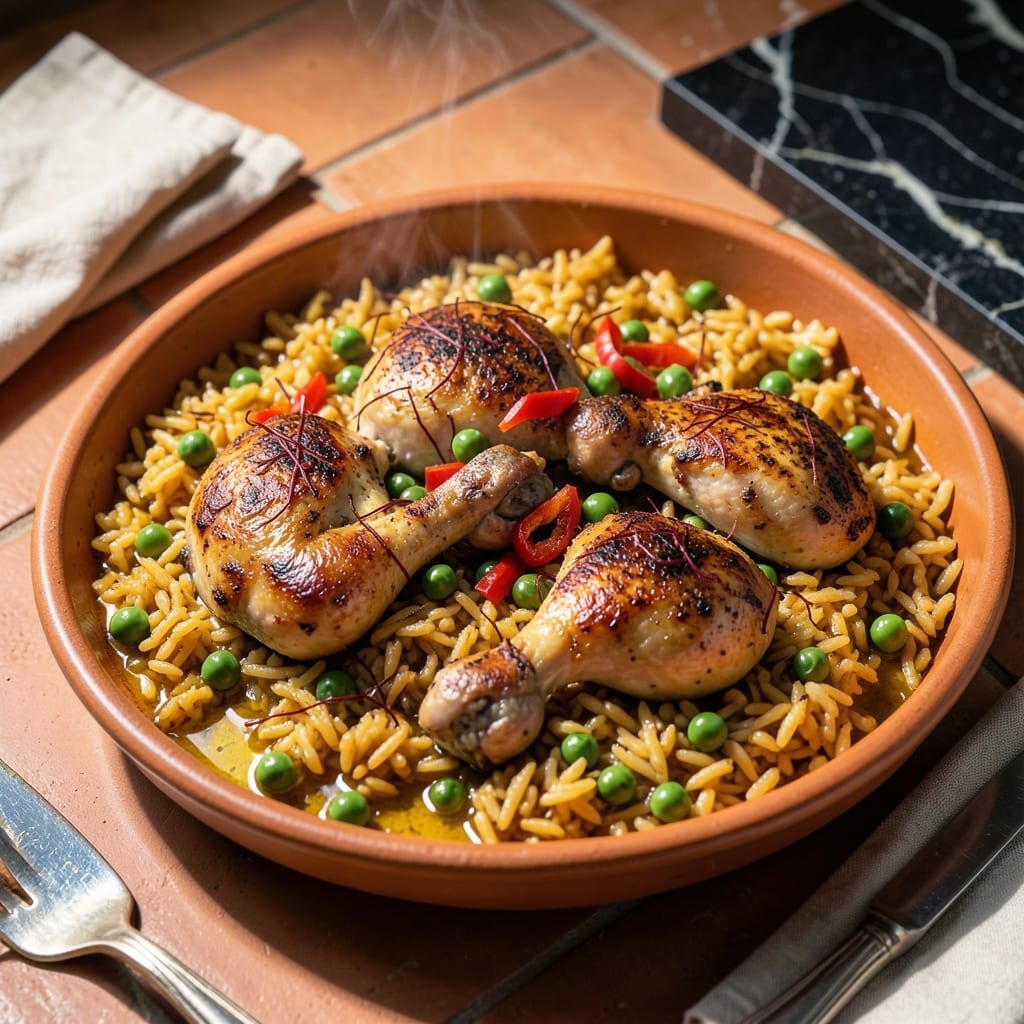
This recipe brings authentic Spanish tradition to your kitchen with its rich saffron and smoky paprika flavors.
You’ll master the traditional technique for achieving the perfect socarrat while keeping the process simple and rewarding.
Ingredients for Recipe for Paella in Spanish Language
Authentic Spanish flavors start with saffron, rice, and the freshest seafood available.
| Ingredient | Amount | Notes |
|---|---|---|
| Bomba Rice 🌾 | 2 cups | Or substitute Calasparra rice |
| Saffron Threads 🌼 | ½ tsp | Spanish, high quality |
| Smoked Paprika 🌶️ | 1 tsp | Sweet or hot variety |
| Olive Oil 🫒 | ½ cup | Extra-virgin preferred |
| Chicken Thighs 🍗 | 1 ½ lb | Boneless, skin-on preferred |
| Rabbit Meat 🐇 | 1 lb | Cut into pieces, optional |
| Shrimp 🦐 | ½ lb | Peeled, deveined, tails on |
| Mussels 🦪 | ½ lb | Cleaned and debearded |
| Green Beans 🫛 | 1 cup | Fresh, trimmed, halved |
| Flat Leaf Parsley 🌿 | ¼ cup | Chopped, for garnish |
| Garlic Cloves 🧄 | 6 cloves | Minced finely |
| Onion 🧅 | 1 whole | Medium, finely diced |
| Tomatoes 🍅 | 2 whole | Ripe, grated or crushed |
| Chicken Stock 💧 | 4 cups | Hot, preferably homemade |
| Sea Salt 🧂 | 1 ½ tsp | Adjust to taste |
[recipe_ingredient_scaler]
The rice is non-negotiable for authenticity—Bomba or Calasparra absorbs liquid without turning mushy. Saffron should be Spanish-grown with deep red threads; avoid the powdered stuff. For proteins, local fishmongers often carry mussels and shrimp fresh, but frozen works in a pinch. The smoked paprika (pimentón) must be imported from Spain for the right depth of flavor.
No rabbit? Chicken thighs alone work perfectly. Swap mussels for clams or scallops if preferred. Vegetable stock can replace chicken stock at a 1:1 ratio for a seafood-only version. The tomatoes can be canned San Marzano if fresh aren’t in season. For saffron, a pinch of turmeric adds color (but not flavor) in an emergency—though purists will frown.
Store rice and saffron in airtight containers away from light for up to 6 months. Fresh seafood should be cooked within 24 hours of purchase. Leftovers? Unlikely, but they’ll keep 2-3 days refrigerated—reheat gently to preserve texture.
Why You’ll Love This Recipe
- One Pan Magic: I swear by this—just one wide pan, a few ingredients, and the stovetop does the rest. No fancy equipment, no fuss.
- Golden Infusion: That saffron and smoked paprika turn the rice into this deep, aromatic masterpiece. Honestly, the scent alone is worth it.
- Crowd Pleaser: From weeknight dinners to weekend gatherings, this paella disappears fast. My picky nephew even goes back for seconds.
- Budget Stretch: Chicken thighs and rice feed a group without breaking the bank. Leftovers? Taste even better the next day for lunch.
Step-by-Step Instructions for Saffron-Infused Paella
This traditional method ensures authentic Spanish flavor with proper texture and depth.
Step 1: Prepare the Sofrito Foundation
Heat the 0.5 cup olive oil in a wide, shallow paella pan over medium heat. Add the 1 whole onion and cook for 3-4 minutes until translucent and just beginning to soften.
Stir in the 6 cloves garlic cloves and cook for 30 seconds until fragrant—don’t let it brown. Add the 2 whole tomatoes and the 1 tsp smoked paprika, cooking until the tomatoes break down into a thick paste. This sofrito builds the essential flavor base for the dish.
Step 2: Brown the Meats
Increase heat to medium-high and add the 1.5 lb chicken thighs and 1 lb rabbit meat. Brown the meats thoroughly on all sides for 8-10 minutes, turning occasionally. The meat should develop a deep golden crust while remaining tender inside.
Season with the 1.5 tsp sea salt during browning. Remove the meats from the pan and set aside once browned, leaving the flavorful fat in the pan for the next steps.
Step 3: Toast the Rice
Add the 1 cup green beans to the pan and sauté for 2 minutes until slightly softened. Stir in the 2 cups Bomba Rice, coating it thoroughly in the oil and sofrito mixture. Toast the rice for 1-2 minutes until it becomes translucent at the edges.
This toasting step is crucial for developing nutty depth in the rice and preventing a gummy texture. Watch for the rice to make a subtle crackling sound as it toasts.
Step 4: Build the Broth and Add Seafood
Pour in the 4 cups chicken stock and add the 0.5 tsp saffron threads. Stir to distribute the saffron evenly. Return the browned meats to the pan, arranging them evenly. Bring the mixture to a boil, then reduce to a gentle simmer.
After 10 minutes, nestle the 0.5 lb shrimp and 0.5 lb mussels into the rice. Cook for another 8-10 minutes until the rice has absorbed most of the liquid and the mussels have opened. Discard any mussels that remain closed.
Step 5: Rest and Garnish
Remove from heat when the rice is al dente and the top begins to develop a golden crust (socarrat). Cover with a clean towel and let rest for 5 minutes—this allows the flavors to meld and the rice to finish cooking in residual steam.
Sprinkle with the 0.25 cup flat leaf parsley before serving. The paella should have distinct layers: crisp bottom, creamy middle, and tender top with perfectly cooked proteins throughout.
Pro Tips For Making Recipe For Paella In Spanish Language
- Toast the Rice: Cook the Bomba rice in the paella pan for 1-2 minutes with the olive oil before adding liquid—this deepens the nutty flavor and prevents mushiness.
- Bloom the Saffron: Crumble the saffron threads into 2 tablespoons of warm (not boiling) water and let it steep for 10 minutes before adding to the dish. I learned this the hard way—saffron needs time to release its color and aroma.
- Skip the Stirring: Resist the urge to stir the rice once the liquid is added—this helps form the coveted socarrat, that crispy bottom layer everyone fights over.
- Use Bone-In Thighs: Bone-in, skin-on chicken thighs stay juicier and add more depth to the broth than boneless. After burning a few batches with dry meat, I finally switched and never looked back.
Make-Ahead Tips for This Recipe
Prep Proteins Ahead
Clean and devein the 0.5 lb shrimp the night before, storing them in an airtight container with a damp paper towel. Scrub the 0.5 lb mussels under cold water, removing beards, and keep them chilled in a bowl covered with a damp cloth.
Measure Dry Ingredients
Pre-measure the 2 cups Bomba Rice, 0.5 tsp saffron threads, and 1 tsp smoked paprika in small bowls. This saves time during cooking and ensures you won’t forget a key spice in the heat of the moment. 💛
Pre-Cook the Sofrito
The sofrito base can be made 1 day ahead. Cook the 1 onion, 6 garlic cloves, and 2 tomatoes as directed, then store in the fridge. Reheat gently in the paella pan before adding rice.
Par-Cook the Meats
Brown the 1.5 lb chicken thighs and 1 lb rabbit the morning of, then refrigerate. This breaks the work into manageable steps. Reheat the meats in the pan for 2 minutes before toasting the rice.
Stock Temperature
Heat the 4 cups chicken stock in a saucepan while prepping other ingredients. Hot stock is essential for even cooking and developing the proper socarrat. Keep it simmering on a back burner.
Equipment Prep
Have your paella pan, wooden spoon, and all ingredients staged near the stove. This dish comes together quickly once the rice goes in, so organization prevents burning or overcooking. ✨
Nutrition Facts
Frequently Asked Questions
What type of rice works best for authentic results?
Use Bomba or Calasparra rice for proper absorption and texture. These Spanish varieties resist turning mushy while soaking up flavors beautifully.
Can I make this without rabbit meat?
Simply double the chicken thighs to 3 lb or add extra seafood like clams or scallops. The dish remains delicious and authentic.
How do I achieve the perfect socarrat?
Increase heat to medium-high in the final 2-3 minutes of cooking. Listen for a crackling sound from the bottom layer, then remove from heat immediately.
What’s the best saffron substitute?
A pinch of turmeric adds color, but lacks saffron’s flavor. For best results, use high-quality Spanish saffron threads—it’s worth the investment.

Trained in classic French technique but raised on slow-cooked ribs and spicy rubs, she blends culinary skill with smoke and soul.
- Recipe for Boneless Pork Chops in Cast Iron Skillet: Sear and Baste to Juicy Perfection - October 3, 2026
- Recipe for Boneless Cross Rib Roast: Slow-Roasted Beef with Herb Crust - October 3, 2026
- Hamburgers in Sauce Recipe Crock Pot: Slow-Cooked Savory Delight - October 3, 2026