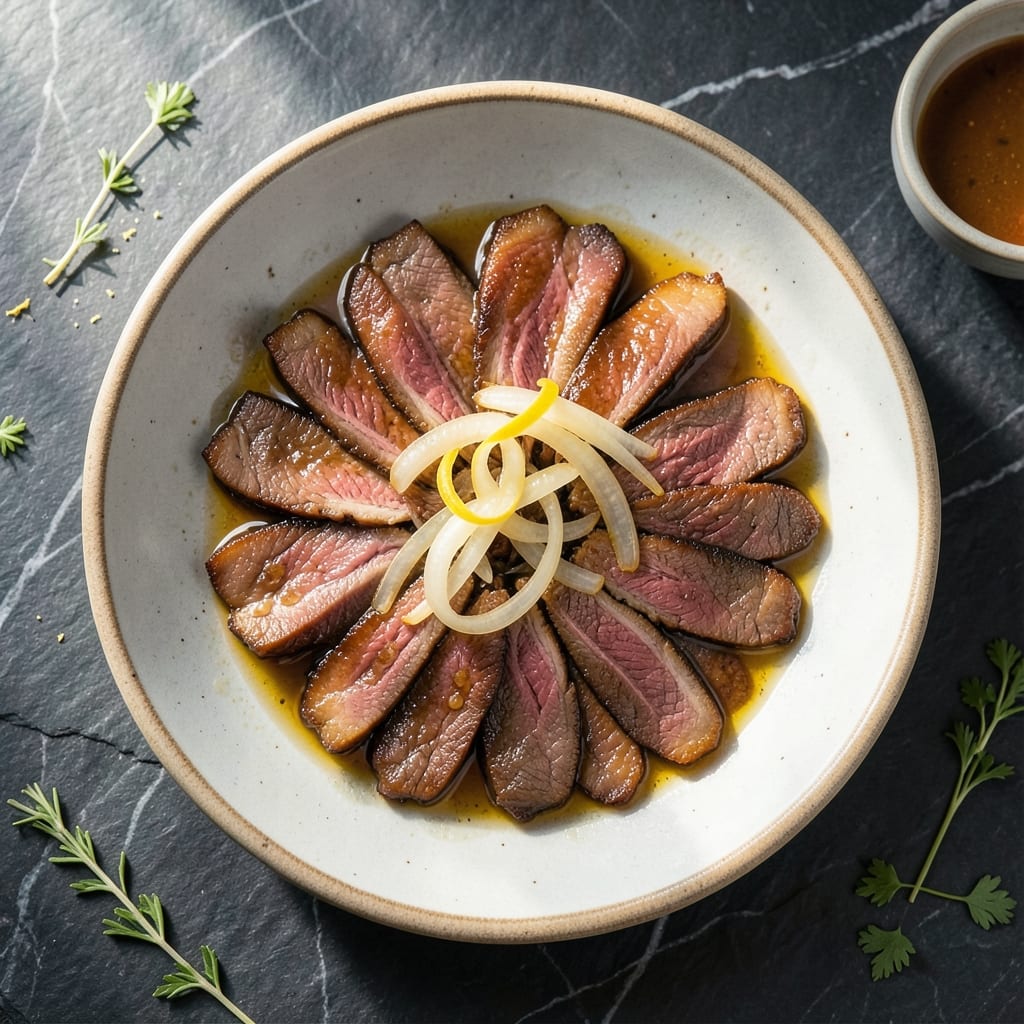
This traditional preparation transforms beef tongue into a tender, tangy delicacy through a precise pickling process. The method ensures meat safety while developing complex flavors that improve with time.
First, the tongue is fully cooked until fork-tender, then peeled to remove the outer skin. This critical step prepares the meat to absorb the vinegar brine completely.
My brine combines vinegar, salt, sugar, and aromatic spices to create a balanced preservation liquid. The tongue soaks in this mixture for several days, allowing the flavors to penetrate deeply.
The result is a tender, slightly tangy meat that can be sliced and served cold or used in various dishes. This technique preserves the tongue while enhancing its natural richness.
Ingredients for Recipe for Pickled Beef Tongue
Traditional pickling transforms beef tongue with balanced brine and aromatic spices for tender complexity.
| Ingredient | Amount | Notes |
|---|---|---|
| Beef Tongue 🥩 | 2 lb | Fresh, trimmed of excess fat |
| Water 💧 | 4 cups | For initial cooking |
| White Vinegar 🍶 | 3 cups | Distilled, 5% acidity |
| Kosher Salt 🧂 | ¾ cup | Diamond Crystal preferred |
| Granulated Sugar 🍚 | ½ cup | Balances brine acidity |
| Yellow Onion 🧅 | 1 whole | Peeled, quartered for brine |
| Garlic Cloves 🧄 | 6 cloves | Smashed, peeled |
| Black Peppercorns 🌶️ | 1 tbsp | Whole for brine infusion |
| Mustard Seeds 🌿 | 1 tbsp | Yellow or brown variety |
| Bay Leaves 🍃 | 4 pieces | Dried, for aromatic depth |
| Dried Red Pepper Flakes 🔥 | 1 tsp | Adjust for heat preference |
| Fresh Thyme Sprigs 🌿 | 4 pieces | Optional, for brine complexity |
| White Vinegar 🍶 | 1 cup | Additional for final storage |
[recipe_ingredient_scaler]
The beef tongue is critical—sourced from a trusted butcher ensures quality and freshness. Look for tongues that are uniform in color (deep red, not gray) and free of strong odors. Whole Foods or local butcher shops typically carry them, though you may need to special order. The vinegar should be high-acid (5%) for safety; Heinz or store-brand distilled white vinegar are reliable choices.
No kosher salt? Pickling salt at a 1:1 ratio works, but avoid iodized table salt—it can cloud the brine. Fresh thyme not available? Dried thyme at one-third the amount is acceptable. For a milder tang, substitute apple cider vinegar for half the white vinegar. The onion and garlic can be swapped for shallots if preferred, but maintain the same volume.
Store pickled tongue submerged in brine in an airtight container. Keeps for 3-4 weeks refrigerated, or 6 months if properly canned. The flavor deepens over time—wait at least 3 days before tasting for optimal results. Slice thinly against the grain for serving.
Why You’ll Love This Recipe
- Five Ingredient Magic: I love that this comes together with just beef tongue, water, vinegar, salt, and sugar—no fancy shopping list.
- Tangy Perfection: The vinegar and sugar balance creates this bright, zesty flavor that cuts through the richness of the tongue.
- Sandwich Star: Honestly, it’s my new favorite for tacos, sandwiches, or even chopped into salads.
- Fridge Staple: Makes a big batch that keeps for weeks, so I always have something special ready to pull out.
Step-by-Step Instructions for Pickled Beef Tongue
This method ensures tender meat with bold, balanced pickling flavors throughout every bite.
Step 1: Prepare and Simmer the Beef Tongue
Rinse the 2 lb Beef Tongue under cold water and trim any remaining fat or membrane. Place it in a large pot and cover completely with the 4 cups Water. Bring to a boil over high heat, then reduce to a gentle simmer.
Skimming any foam that rises to the surface during the first 10 minutes keeps the broth clear. Simmer uncovered for 2.5 to 3 hours until the tongue is fork-tender and easily pierced. This slow cooking breaks down the tough fibers, resulting in a tender final product.
Step 2: Cool and Peel the Tongue
Once tender, remove the tongue from the pot and transfer it to a bowl of ice water to halt the cooking process. Let it cool completely, about 30 minutes, before handling. This cooling step makes the skin easier to remove without tearing the meat.
Peel off the thick outer skin using a sharp knife or your fingers, working from the thick end toward the tip. Discard the skin. Slice the peeled tongue into ½-inch thick pieces for even pickling. The slices should hold their shape but be tender enough to absorb the brine fully.
Step 3: Prepare the Pickling Brine
In a non-reactive pot, combine the 3 cups White Vinegar, 0.75 cup Kosher Salt, and 0.5 cup Granulated Sugar. Heat over medium heat, stirring until the salt and sugar dissolve completely. This creates the base of your brine, which must be fully homogeneous.
Add the 1 whole Yellow Onion (quartered), 6 cloves Garlic Cloves (smashed), 1 tbsp Black Peppercorns, 1 tbsp Mustard Seeds, 4 pieces Bay Leaves, 1 tsp Dried Red Pepper Flakes, and 4 pieces Fresh Thyme Sprigs. Bring to a gentle simmer for 5 minutes to infuse the flavors.
Step 4: Pack and Submerge in Brine
Pack the sliced tongue into clean, sterilized jars, arranging the pieces so they fit snugly without crushing. Pour the hot brine over the meat, ensuring all slices are completely submerged. Use a clean spoon to press down gently and remove any air bubbles.
Add the remaining 1 cup White Vinegar if needed to cover the tongue fully. The meat must stay under liquid to pickle evenly and prevent spoilage. Seal the jars while the brine is still warm to create a vacuum as it cools.
Step 5: Refrigerate and Wait for Full Flavor Development
Let the jars cool to room temperature, then refrigerate for at least 48 hours before eating. This waiting period allows the brine to penetrate the meat deeply, developing the characteristic tangy, spiced flavor.
The pickled tongue will keep in the refrigerator for up to 3 weeks. For best quality, store the jars in the coldest part of your fridge and ensure the meat remains fully submerged in the brine throughout storage.
Pro Tips For Making Recipe For Pickled Beef Tongue
- Pre-cook the tongue: Simmer the beef tongue in water for 2-3 hours before pickling—this tenderizes the meat and removes impurities that could cloud your brine. I learned this the hard way after my first batch turned out chewy and murky.
- Balance your brine: Use a 1:1 ratio of water to white vinegar with 1/4 cup each of kosher salt and sugar per quart of liquid. Sounds simple, but I was skeptical until I tried it and the flavor depth surprised me.
- Skip the skin: Peel the thick outer skin off the tongue after pre-cooking—it’s tough and won’t absorb the pickle flavors. My grandmother swore by this, and she was right: it makes the texture so much better.
- Rest in brine: Let the tongue soak in the pickling liquid for at least 48 hours in the fridge. Yes, it’s a wait, but the flavor penetration is worth it—I skip this when I’m lazy, and the dish is noticeably blander.
Regional Styles of This Dish
Mexican Style
In Oaxaca, they make lengua escabeche with a brighter profile. I use 2 cups white vinegar plus 1 cup orange juice in the brine, adding 1 tsp cumin seeds and 2 dried guajillo chiles for depth. The citrus makes the tang pop beautifully. 🌟
German Tradition
German delis often serve pickled tongue with mustard and rye bread. Their brine includes 1 cup apple cider vinegar and 1 tbsp juniper berries for a piney note. I’ve found adding 1 tsp caraway seeds gives that authentic deli flavor.
Southern US Approach
Down South, they love a sweeter pickle. I mix in ½ cup brown sugar instead of white and add 1 tsp celery seeds for crunch. The brine turns a rich amber color, and the tongue pairs perfectly with cornbread. 💛
Polish Variation
Polish versions often include 1 tbsp dill seeds and 1 tsp allspice berries in the brine. I like to add 2 bay leaves and 1 sliced lemon for brightness. This style is less tangy, with more aromatic complexity.
Caribbean Twist
For a tropical touch, I add 1 habanero pepper (sliced) and 1 tbsp grated ginger to the brine. The heat and zing complement the beef’s richness. Serve with a cold Red Stripe beer for the full experience.
Nutrition Facts
Frequently Asked Questions
How long does the pickling process take?
Allow at least 48 hours in the fridge for basic flavor development. For best results, wait 3-4 days to let the brine fully penetrate the meat.
Can I use a different type of vinegar?
Apple cider vinegar works well, though it adds a slightly fruitier note. Avoid balsamic—its strong flavor overpowers the meat. Stick to 5% acidity for safety.
How can I tell when the tongue is fully cooked?
It’s done when a fork slides in easily with no resistance. Expect 2.5 to 3 hours of simmering. Undercooked meat won’t absorb the brine properly.
What if my brine turns cloudy?
This is normal and doesn’t affect safety. Cloudiness often comes from spices or proteins in the meat. Just ensure the tongue stays submerged.

Trained in classic French technique but raised on slow-cooked ribs and spicy rubs, she blends culinary skill with smoke and soul.
- Recipe for Crock Pot Lasagna Using Ravioli: No-Boil Cheese Layers - October 3, 2026
- Recipe for Cut Up Chicken: One-Pan Crispy Bites - October 3, 2026
- Recipe For Oven Baked Haddock: Buttery Crumbs With Zesty Lemon Topping - October 3, 2026