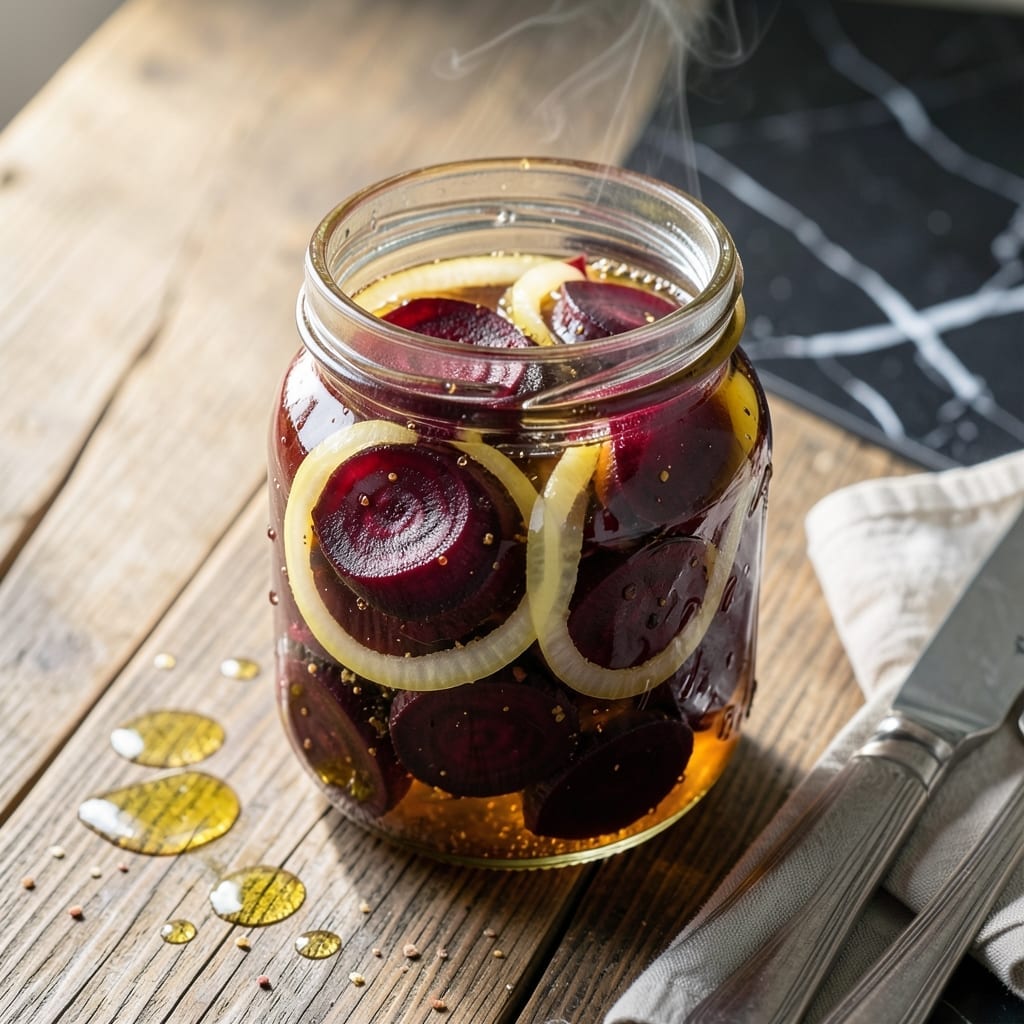
This pickling method preserves beetroot’s natural sweetness while adding a bright tang that elevates any meal. The process transforms fresh beets into vibrant, flavorful jars ready for salads, sandwiches, or charcuterie boards.
With a simple brine and proper technique, you’ll achieve consistent results every time. These pickled beets keep their color and texture, delivering that perfect balance of sweet and sour in every bite.
Ingredients for Recipe for Pickling Beetroot
Transform fresh beets into vibrant, tangy jars with these simple pantry staples and produce.
| Ingredient | Amount | Notes |
|---|---|---|
| Fresh Beetroot 🍠 | 2 lb | Medium-sized, scrubbed clean |
| White Vinegar 💧 | 2 cups | 5% acidity for proper preservation |
| Water 💧 | 2 cups | Filtered for best flavor |
| Granulated Sugar 🍚 | ½ cup | Adjust to taste preference |
| Pickling Salt 🧂 | 2 tbsp | Non-iodized for clear brine |
| Yellow Onion 🧅 | 1 whole | Thinly sliced for aroma |
| Garlic Cloves 🧄 | 4 cloves | Lightly crushed for flavor |
| Black Peppercorns 🌶️ | 1 tbsp | Whole for infusion |
| Mustard Seeds 🌿 | 1 tbsp | Yellow or brown variety |
| Bay Leaves 🍃 | 2 pieces | Dried for depth |
| Red Pepper Flakes 🔥 | ½ tsp | Optional for heat |
| Cider Vinegar 🍏 | ½ cup | Adds fruitiness to brine |
[recipe_ingredient_scaler]
The beets are the foundation here. Choose firm, unblemished roots with bright green stems—this ensures optimal sweetness and texture. Farmers markets often have the best selection, but any grocery store with a solid produce section will work. For uniform pickling, select beets of similar size (medium works best). The vinegar matters too—Heinz or store-brand white vinegar at 5% acidity is ideal for safety and flavor balance.
Out of white vinegar? Use all cider vinegar for a fruitier profile (though color may shift). No pickling salt? Kosher salt at the same ratio works, but avoid iodized table salt—it can cloud the brine. For a sugar-free version, swap in maple syrup or agave (start with 1/3 cup and adjust). The spices are flexible too—coriander seeds or dill seeds add interesting depth if you have them.
These keep beautifully. Once cooled and jarred, store in the fridge for up to 1 month, or process in a water bath for 12 months shelf-stable storage. The onions soften over time, so if you prefer crunch, add them fresh to each jar rather than cooking in the brine. Always use clean, sterile jars (a quick boil does the trick).
Why You’ll Love This Recipe
- Minimal Effort: I just boil, slice, and let the vinegar-sugar brine do the work overnight.
- Tangy Crunch: The sweet-sharp vinegar balances the earthy beetroot in every bite.
- Pantry Staple: I toss these into salads, sandwiches, or straight from the jar for a quick snack.
- Budget Keeper: A bag of beetroot and basic pantry items stretch into weeks of flavor. Honestly, it’s my cheapest jarred treat.
Step-by-Step Instructions for Pickling Beetroot
This method ensures crisp texture and balanced flavor in every jar.
Step 1: Prepare the Beetroot and Aromatics
Begin by scrubbing the 2 lb Fresh Beetroot thoroughly under cold water to remove any dirt. Trim the tops, leaving about 1 inch of stem attached to prevent bleeding during cooking. Place the beetroot in a large pot and cover with water.
Thinly slice the 1 whole Yellow Onion and lightly crush the 4 cloves Garlic Cloves. These will infuse the brine with depth of flavor. Keep the aromatics separate from the beetroot for now—they’ll be added to the jars later.
Step 2: Cook the Beetroot Until Tender
Bring the pot of beetroot to a boil, then reduce the heat to medium-low and simmer for 45-60 minutes until the beetroot is fork-tender. The exact time depends on the size of your beetroot—check for doneness by piercing the largest one with a knife. It should slide in easily.
Drain the beetroot and let it cool slightly, then peel off the skins using a paring knife or your fingers. The skins should slip off easily once cooked. Slice the beetroot into ¼-inch rounds or leave whole if using small beetroot for pickling.
Step 3: Prepare the Pickling Brine
In a medium saucepan, combine the 2 cups White Vinegar, 2 cups Water, 0.5 cup Granulated Sugar, 2 tbsp Pickling Salt, 0.5 cup Cider Vinegar, 1 tbsp Black Peppercorns, 1 tbsp Mustard Seeds, 2 pieces Bay Leaves, and 0.5 tsp Red Pepper Flakes.
Bring the mixture to a boil over medium-high heat, stirring until the sugar and salt are fully dissolved. This creates a clear, flavorful brine that will preserve the beetroot while enhancing its natural sweetness. Remove from heat once boiling.
Step 4: Pack and Process the Jars
Divide the sliced beetroot, sliced onion, and crushed garlic evenly between sterilized jars. Pour the hot brine over the beetroot mixture, ensuring all pieces are fully submerged. Leave ½ inch of headspace at the top of each jar.
Seal the jars with lids and process in a water bath canner for 30 minutes to ensure proper preservation. If you prefer refrigerator pickles, let the jars cool to room temperature, then refrigerate. The beetroot will be ready to eat after 24 hours and will keep for up to 1 month in the fridge.
Pro Tips For Making Recipe For Pickling Beetroot
- Roast Before Pickling: I learned this the hard way—raw beets stay crunchy and unevenly flavored. Roast them first at 200°C for 45-60 minutes until tender; the vinegar absorbs better and the texture turns out perfect every time.
- Use Equal Vinegar-Water: After ruining a batch with vinegar that was too harsh, I now stick to a 1:1 ratio of white vinegar to water. It balances the acidity so the beets stay tangy but not mouth-puckering.
- Peel After Cooking: Skip peeling raw beets—it’s messy and wastes time. Roast or boil them whole, then rub off the skins with a paper towel while still warm. The skins slip right off.
- Rest 24 Hours: Sounds tedious, but I was skeptical until I tried it. Letting the beets sit in the brine for a full day before eating makes the flavor deepen and mellow—worth the wait.
Pro Cooking Tips for Great recipe for pickling beetroot
Brine Balance
The key is getting the sugar-to-vinegar ratio just right. I start with ½ cup sugar per 4 cups liquid for a balanced sweet-tangy profile. Taste the brine before jarring—it should be slightly sweeter than you think you need, as the beets will absorb some sugar. 💡
Beet Prep
Don’t overcook your beets! They should be fork-tender but still firm enough to hold shape when sliced. I find medium-sized beets take about 45 minutes in boiling water. Overcooking makes them mushy, which ruins the crisp texture pickling should preserve.
Jar Sterilization
Sterilize jars by boiling them for 10 minutes before packing. This prevents spoilage and extends shelf life. I use wide-mouth Mason jars for easy packing—they’re a game-changer for whole beets or large slices. Never skip this step, even for fridge pickles.
Spice Infusion
Toast your mustard seeds and peppercorns in a dry pan for 2 minutes before adding to the brine. This releases their essential oils, giving your pickles a deeper, more complex flavor. I learned this trick at a local BBQ competition—simple but effective.
Resting Time
Let your pickled beets sit for at least 24 hours before eating. The flavors meld and intensify over time. For best results, wait 3-4 days—patience pays off with a more developed tang. Store in a cool, dark place if canning, or refrigerate for up to 1 month. ❄️
Color Retention
To keep that vibrant red color, add 1 tbsp lemon juice to the brine. The acidity helps stabilize the pigments. Also, avoid using metal utensils when handling the beets—they can react with the natural compounds and dull the color over time.
Nutrition Facts
Frequently Asked Questions
How long do pickled beets last in the fridge?
Properly pickled beets stay fresh in the fridge for up to 1 month. For longer storage, process jars in a water bath for 30 minutes to make them shelf-stable for up to 12 months.
Can I use apple cider vinegar instead of white?
Yes! Apple cider vinegar adds a fruitier flavor. Use the same amount, but note it may slightly alter the color. For best results, stick to 5% acidity vinegar.
Why did my pickled beets turn mushy?
Overcooking is the usual culprit. Beets should be fork-tender but still firm before pickling. Also, slicing them too thin can cause softening.
Do I need special jars for pickling?
Mason jars with new lids work perfectly. Sterilize them by boiling for 10 minutes before use. Wide-mouth jars make packing whole beets easier.

Trained in classic French technique but raised on slow-cooked ribs and spicy rubs, she blends culinary skill with smoke and soul.
- Recipe for Boneless Pork Chops in Cast Iron Skillet: Sear and Baste to Juicy Perfection - October 3, 2026
- Recipe for Boneless Cross Rib Roast: Slow-Roasted Beef with Herb Crust - October 3, 2026
- Hamburgers in Sauce Recipe Crock Pot: Slow-Cooked Savory Delight - October 3, 2026