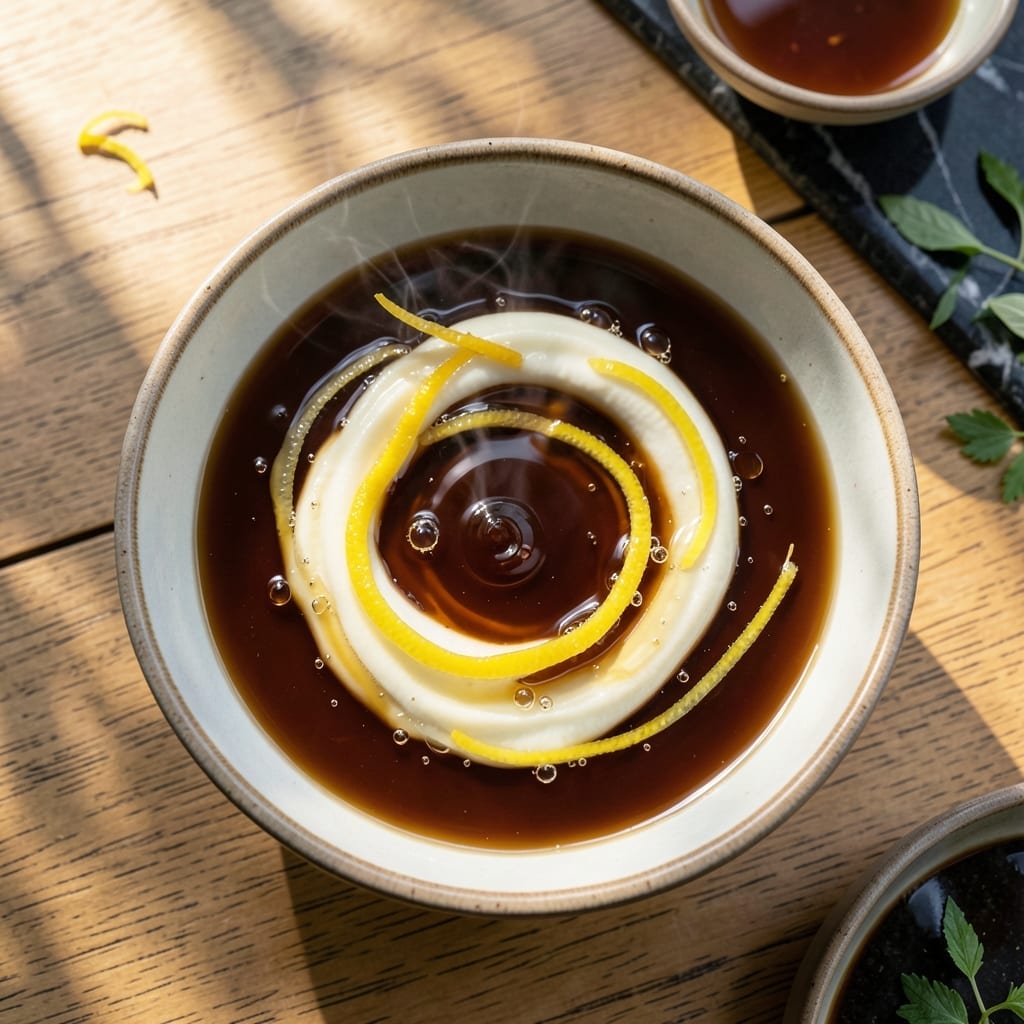
This tangy citrus-soy sauce brings Japanese flair to any dish with its bright, balanced flavor profile.
A foolproof blend of soy sauce, citrus juice, and vinegar creates a versatile condiment perfect for dipping, marinating, or dressing.
Ingredients for Recipe for Ponzu Sauce
Eight ingredients create this vibrant Japanese citrus soy sauce with bright, balanced complexity.
| Ingredient | Amount | Notes |
|---|---|---|
| Soy Sauce 🫒 | ½ cup | Low-sodium preferred for balance |
| Fresh Yuzu Juice 🍋 | ¼ cup | Or substitute lime juice |
| Fresh Lemon Juice 🍋 | ¼ cup | Complements yuzu flavor |
| Rice Vinegar 💧 | 2 tbsp | Mild acidity essential |
| Mirin 🍶 | 1 tbsp | Sweet rice wine for depth |
| Dashi Stock 🍲 | ¼ cup | Vegan dashi or kombu-only |
| Agave Nectar 🍯 | 1 tsp | Balances acidity subtly |
| Toasted Sesame Oil 🫒 | ½ tsp | Adds nutty aroma |
[recipe_ingredient_scaler]
Sourcing authentic yuzu juice can be challenging—Japanese specialty stores or online retailers like Weee! are reliable. For dashi, use kombu-only (vegan) dashi to maintain dietary compliance. Mirin is available at most Asian markets; avoid versions with added salt. The soy sauce should be high-quality, with Kikkoman or San-J being excellent choices.
No yuzu? Lime juice at a 1:1 ratio works well, though the flavor profile shifts slightly. Rice vinegar can be swapped for apple cider vinegar in a pinch. If mirin is unavailable, use 1 tsp sugar dissolved in 1 tbsp warm water. For dashi, vegetable broth with a splash of soy sauce mimics the umami depth.
Ponzu keeps refrigerated for about 2 weeks in an airtight container. The flavors meld and deepen over time. For longer storage, freeze in ice cube trays for up to 3 months—perfect for single-serving portions.
Why You’ll Love This Recipe
- Five-Minute Mix: I just stir these five ingredients together—no cooking, no fuss. Honestly, it’s faster than finding takeout menus.
- Bright Citrus Punch: The yuzu and lemon juice give it that zingy, fresh tang that makes everything from dumplings to salmon sing.
- Drizzle on Everything: I keep a jar in the fridge for quick marinades, dressings, or even a last-minute dip for sushi night.
- Stays Fresh for Weeks: One batch lasts me ages in the fridge, so I’m never scrambling for a flavor boost. Between us, I add a splash to ramen when no one’s looking.
Step-by-Step Instructions for Ponzu Sauce
This method ensures a perfectly balanced sauce with vibrant citrus notes and deep umami character.
Step 1: Combine the Citrus Base
In a medium bowl, whisk together the 0.5 cup Soy Sauce, 0.25 cup Fresh Yuzu Juice, and 0.25 cup Fresh Lemon Juice until fully incorporated. The yuzu provides the signature bright, floral citrus flavor, while the lemon juice adds a complementary sharpness that rounds out the profile.
This initial combination creates the foundation of the sauce. You’ll notice the soy sauce will mellow slightly as it interacts with the citrus acids, creating a more complex flavor base than either ingredient alone.
Step 2: Add the Acidic and Sweet Components
Stir in the 2 tbsp Rice Vinegar and 1 tbsp Mirin. The rice vinegar contributes a mild acidity that brightens the overall flavor without overpowering the delicate citrus notes, while the mirin adds a subtle sweetness and depth that balances the tang.
At this stage, the sauce will have a pronounced tartness. The mirin’s natural sugars will begin to soften the sharp edges of the citrus and vinegar, but the full balance won’t be achieved until the next step.
Step 3: Incorporate the Dashi and Sweetener
Pour in the 0.25 cup Dashi Stock and 1 tsp Agave Nectar. The dashi stock introduces the essential umami backbone that defines ponzu sauce, while the agave nectar provides just enough sweetness to harmonize all the elements.
Whisk gently but thoroughly to ensure the dashi is completely distributed. The sauce will take on a slightly more mellow character as the savory dashi begins to work its magic with the other ingredients.
Step 4: Finish with Toasted Sesame Oil
Add the 0.5 tsp Toasted Sesame Oil and whisk one final time. This small but crucial addition contributes a nutty aroma that complements the citrus and soy beautifully. The sesame oil should be the last ingredient added to preserve its delicate fragrance.
Let the sauce rest for 10-15 minutes at room temperature before using. This allows all the flavors to meld together completely, resulting in a balanced, complex sauce with bright citrus, deep umami, and a hint of sweetness in every drop.
Pro Tips For Making Recipe For Ponzu Sauce
- Balance the Citrus: Use a 1:1 ratio of yuzu to lemon juice—I learned this the hard way after my first batch tasted like pure sour without depth. Taste as you go and adjust.
- Skip the Cheap Soy: Splurge on a good quality soy sauce (like Japanese shoyu). The difference between bargain-bin and premium here actually changes the outcome.
- Rest Before Serving: Let the sauce sit for at least 30 minutes after mixing. The flavors meld and mellow—sounds weird, but it works.
- Warm the Mirin: Gently heat the mirin first (just until warm, not boiling) to soften its sweetness before combining. My grandmother swore by this, and she was right.
Serving Suggestions for This recipe for ponzu sauce
Dipping Delights
This bright sauce shines as a dipping companion for sushi or sashimi. I love it with fresh tuna or salmon—just add 1 tsp grated daikon for extra crunch. The citrus cuts through the richness beautifully. 💛
Marinade Magic
Use as a marinade for chicken or tofu before grilling. I recommend marinating for 2-4 hours—longer soaks can make proteins mushy. The acidic base tenderizes while adding layers of flavor.
Salad Dressing
Whisk 2 tbsp ponzu with 1 tbsp neutral oil for a light dressing. Toss with mixed greens and thinly sliced cucumbers. The citrus notes brighten any fresh vegetable medley.
Seafood Enhancer
Drizzle over grilled shrimp or seared scallops just before serving. I add 1 tsp minced scallions on top for color and freshness. The sauce’s acidity balances the seafood’s sweetness perfectly. 🔥
Rice Bowl Topper
Spoon over steamed rice with avocado slices and soft-boiled eggs. The sauce soaks into the rice, making every bite flavorful. I sprinkle toasted sesame seeds for texture.
No-Waste Uses
Mix leftover sauce with mayonnaise for a quick sandwich spread. It adds a tangy twist to fried chicken or veggie burgers. Store-bought mayo works, but I prefer Kewpie for extra creaminess.
Nutrition Facts
Frequently Asked Questions
What can I use if I don’t have yuzu juice?
Lime or lemon juice works as a substitute in equal amounts. The flavor will be slightly different but still bright and citrusy.
How long does homemade ponzu last?
Store it in an airtight container in the fridge for up to 2 weeks. For longer storage, freeze in ice cube trays for 3 months.
Can I make this gluten-free?
Yes! Simply swap regular soy sauce for tamari or a certified gluten-free soy sauce. All other ingredients are naturally gluten-free.
Why does my sauce taste too salty?
Low-sodium soy sauce helps balance flavors. If it’s too salty, add a splash more citrus juice or a pinch of sweeteners like agave.

Trained in classic French technique but raised on slow-cooked ribs and spicy rubs, she blends culinary skill with smoke and soul.
- Recipe for Boneless Pork Chops in Cast Iron Skillet: Sear and Baste to Juicy Perfection - October 3, 2026
- Recipe for Boneless Cross Rib Roast: Slow-Roasted Beef with Herb Crust - October 3, 2026
- Hamburgers in Sauce Recipe Crock Pot: Slow-Cooked Savory Delight - October 3, 2026