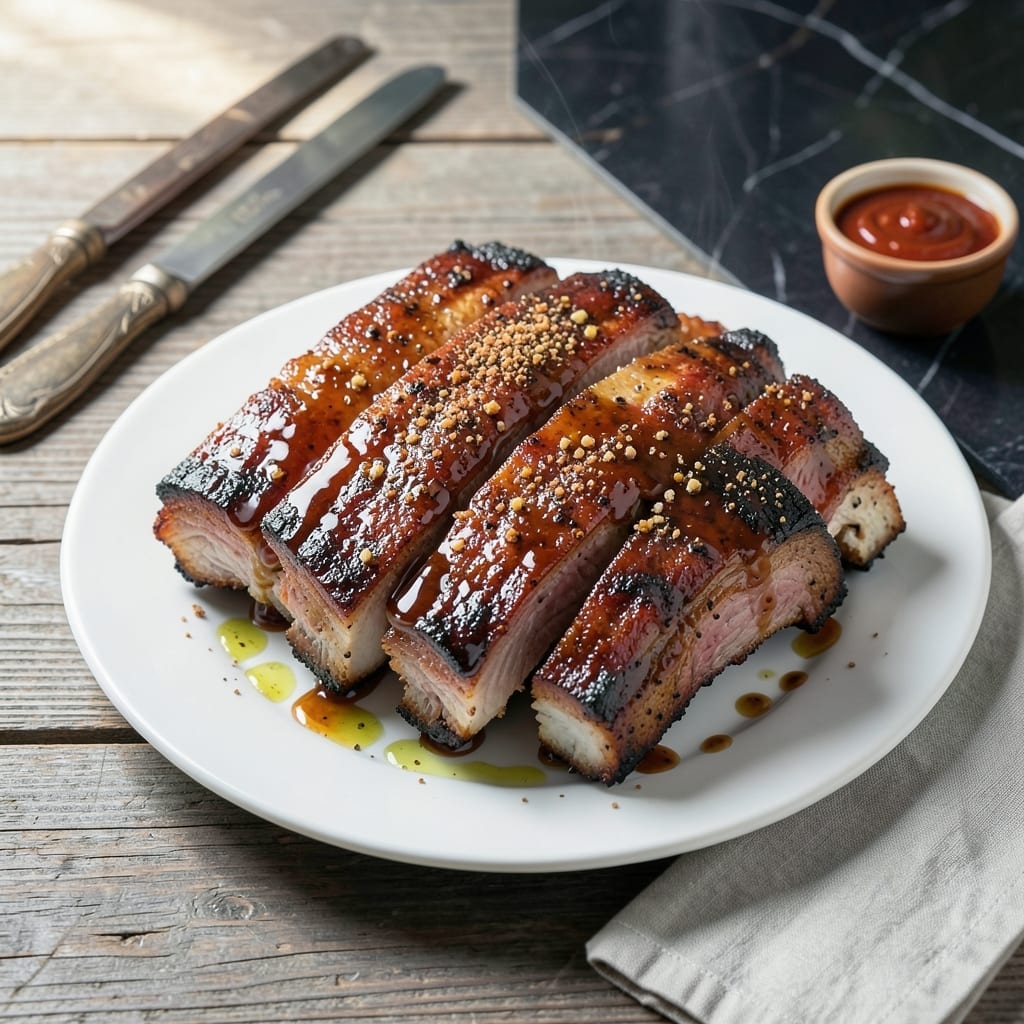
Achieving fall-off-the-bone pork ribs in your oven is simpler than you think. The secret lies in a slow bake that tenderizes the meat while allowing the flavors to develop deeply.
This method delivers restaurant-quality results with a smoky, sweet barbecue glaze that caramelizes perfectly. No smoker required—just time and the right technique.
Ingredients for Recipe for Pork Ribs in Oven with Barbecue Sauce
Quality pork ribs and a well-balanced dry rub create restaurant-level flavor at home.
| Ingredient | Amount | Notes |
|---|---|---|
| Pork Baby Back Ribs 🥩 | 2 ½ lb | Full rack, membrane removed |
| Barbecue Sauce 🍯 | 1 ½ cups | Smoky, sweet variety preferred |
| Brown Sugar 🍚 | ¼ cup | Light or dark, packed |
| Paprika 🌶️ | 1 tbsp | Smoked or sweet variety |
| Garlic Powder 🧄 | 1 tsp | Fresh ground preferred |
| Onion Powder 🧅 | 1 tsp | Fine powder consistency |
| Kosher Salt 🧂 | 1 tbsp | Diamond Crystal brand recommended |
| Black Pepper 🌶️ | 1 tsp | Freshly ground for best flavor |
| Chili Powder 🌶️ | ½ tsp | Adjust for heat preference |
| Cumin 🌿 | ½ tsp | Ground, toasted for depth |
| Apple Cider Vinegar 🍏 | 2 tbsp | Balances sweetness in glaze |
| Olive Oil 🫒 | 1 tbsp | For rubbing on ribs |
| Yellow Mustard 🟡 | 1 tbsp | Helps dry rub adhere |
[recipe_ingredient_scaler]
The ribs are everything here. Baby back ribs from Costco or Sam’s Club offer consistent quality and size—look for racks with good marbling. Remove the membrane yourself (it’s easy with a paper towel for grip) for maximum flavor penetration. For the dry rub, Penzeys or Spicewalla brands deliver superior potency and freshness compared to grocery store options.
Out of smoked paprika? Regular paprika plus a pinch of cayenne gets you close. No apple cider vinegar? White vinegar at half the amount works, though the flavor profile shifts slightly. The barbecue sauce can be store-bought (I like Stubb’s Original), but check the sugar content—some brands are cloyingly sweet. For a homemade touch, mix ketchup with molasses and liquid smoke.
Dry rub keeps in an airtight container for up to 6 months. Ribs can be prepped and rubbed a day ahead—store uncovered in the fridge overnight for a tackier surface. Cooked ribs hold well for 3-4 days refrigerated or freeze for 3 months.
Why You’ll Love This Recipe
- Set It and Forget: I toss the ribs with spices, pop them in the oven, and let the heat do the work—no babysitting required.
- Sticky Sweet Perfection: That combo of brown sugar and barbecue sauce caramelizes into a glossy, finger-licking glaze I can never resist.
- Crowd Pleaser: Between us, I’ve served these at backyard cookouts and quiet Sunday dinners—everyone cleans their plate.
- Meal Prep Hero: Leftovers reheat beautifully, so I’ll make a double batch for easy lunches all week.
Step-by-Step Instructions for Pork Ribs in Oven With Barbecue Sauce
This method delivers fall-off-the-bone ribs with a sticky, caramelized glaze every time.
Step 1: Prepare and Season the Ribs
Pat the 2.5 lb pork baby back ribs completely dry with paper towels. Remove the thin membrane from the bone side by sliding a butter knife underneath to loosen it, then pulling it off with a paper towel for better grip.
In a small bowl, combine the 0.25 cup brown sugar, 1 tbsp paprika, 1 tsp garlic powder, 1 tsp onion powder, 1 tbsp kosher salt, 1 tsp black pepper, 0.5 tsp chili powder, and 0.5 tsp cumin. Rub this mixture evenly over all surfaces of the ribs, pressing firmly to adhere.
Brush the ribs lightly with the 1 tbsp yellow mustard to help the dry rub stick, then drizzle with the 1 tbsp olive oil. Let them sit at room temperature for 30 minutes while the oven preheats.
Step 2: Slow-Roast the Ribs
Preheat your oven to 275°F. Place the seasoned ribs meat-side up on a rimmed baking sheet lined with aluminum foil. Pour 1 cup of water into the pan to create steam, which keeps the ribs moist during the long cook.
Cover the entire pan tightly with another sheet of foil, sealing the edges completely to trap the steam. Roast for 2.5 hours at this low temperature—this slow cooking breaks down the connective tissue without drying out the meat.
After 2.5 hours, carefully remove the foil. The ribs should be tender but not yet falling apart, with the meat beginning to pull back from the ends of the bones.
Step 3: Apply the Barbecue Glaze
Increase the oven temperature to 375°F. In a bowl, mix the 1.5 cups barbecue sauce with the 2 tbsp apple cider vinegar—this addition balances the sweetness and adds a subtle tang.
Brush the ribs generously with about half of the barbecue sauce mixture, coating both sides completely. Return them to the oven, uncovered, for 15 minutes to allow the sauce to set.
After 15 minutes, flip the ribs and brush with the remaining sauce. Roast for an additional 10-15 minutes until the sauce has thickened into a glossy, caramelized glaze and the ribs are deeply browned at the edges.
Step 4: Rest and Serve
Remove the ribs from the oven and transfer them to a cutting board. Let them rest for 10 minutes before slicing—this allows the juices to redistribute and the glaze to set slightly.
Using a sharp knife, cut between the bones to separate the ribs into individual pieces. The meat should pull back slightly from the bones, revealing moist, tender flesh underneath.
Serve immediately while hot, with any extra caramelized sauce from the pan spooned over the top. The ideal serving temperature ensures the glaze remains sticky and glossy rather than hardening as it cools.
Pro Tips For Making Recipe For Pork Ribs In Oven With Barbecue Sauce
- Preheat to 300°F: Low and slow is non-negotiable for tender ribs—I learned this the hard way after my first batch came out tough as boots at 375°F.
- Pat ribs dry: Sounds weird, but it works: drying the ribs with paper towels before seasoning guarantees the rub actually sticks instead of sliding off with excess moisture.
- Skip boiling ribs: Resist the urge to parboil the ribs first—it washes away flavor and makes the meat mushy, and I was skeptical until I tried it both ways.
- Sauce last 15 minutes: Brush on the barbecue sauce only in the final 15 minutes of baking to prevent it from burning (yes, even if you’re impatient like me).
Troubleshooting This Dish
Sauce Burning Issues
If your barbecue glaze burns, it’s likely from too-high heat. Lower the oven to 350°F during the glazing phase and tent with foil if needed. I learned this the hard way at my first local BBQ competition! 🌡️
Tough Meat Problems
Tough ribs usually mean they need more time. Extend the slow-roast at 275°F for up to 3 hours, checking every 30 minutes. The membrane removal step is crucial—don’t skip it!
Dry Ribs Fix
Dry results often come from insufficient steam. Add 1.5 cups water to the pan and ensure the foil is tightly sealed. Brushing with olive oil before the dry rub also helps lock in moisture.
Uneven Cooking
Rotate the pan 180° halfway through the slow-roast to ensure even heat distribution. If using multiple racks, swap their positions. My vintage motorcycle rides inspire me to check every detail!
Sauce Too Sweet
Balance sweetness by adding 1 tbsp apple cider vinegar to your barbecue sauce. For a tangier kick, mix in ½ tsp mustard powder. I always taste and adjust as I go.
Glaze Not Setting
For a thicker glaze, broil for 2-3 minutes at the end, watching closely to avoid burning. Alternatively, reduce the sauce on the stovetop for 5 minutes before applying. Foraging wild herbs taught me patience pays off! 💡
Nutrition Facts
Frequently Asked Questions
What temperature should I use for the slow roast?
Set your oven to 275°F for the initial slow-roast phase. This low temperature ensures the connective tissue breaks down gradually without drying out the meat.
How do I prevent the sauce from burning?
Lower the oven to 350°F when glazing and tent with foil if needed. Watch closely during the final 10-15 minutes to avoid overheating the sugar in the sauce.
Can I use a different type of ribs?
Yes, but adjust cooking time. Spareribs need about 3 hours at 275°F, while country-style ribs may take 2 hours. Baby back ribs are ideal for this method.
Why rest the ribs before serving?
Resting for 10 minutes lets juices redistribute, keeping the meat moist. Skipping this step can cause the glaze to harden and the meat to dry out.

Trained in classic French technique but raised on slow-cooked ribs and spicy rubs, she blends culinary skill with smoke and soul.
- Recipe for Boneless Pork Chops in Cast Iron Skillet: Sear and Baste to Juicy Perfection - October 3, 2026
- Recipe for Boneless Cross Rib Roast: Slow-Roasted Beef with Herb Crust - October 3, 2026
- Hamburgers in Sauce Recipe Crock Pot: Slow-Cooked Savory Delight - October 3, 2026