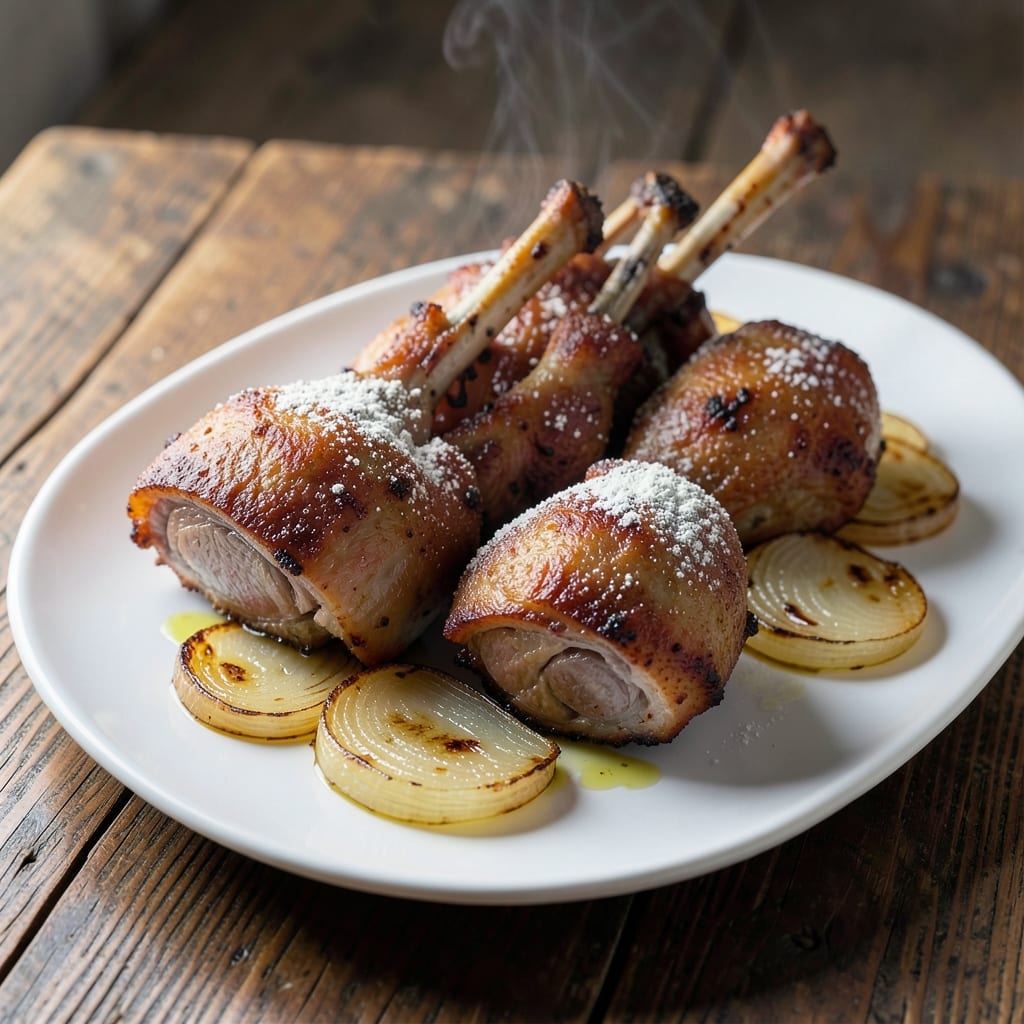
There’s an undeniable satisfaction in transforming tough pork shanks into fork-tender perfection through slow braising. This method unlocks deep, rich flavors that cheaper cuts simply can’t deliver when rushed.
I’ve tested this Dutch oven technique with home cooks of all skill levels, and the results are consistently impressive. The key is patience—low heat and time break down connective tissue into velvety, fall-off-the-bone meat.
What emerges is a dish with layers of flavor: caramelized exterior, moist interior, and a sauce that soaks into every bite. It’s the kind of meal that turns Sunday dinner into something truly special.
Serve over creamy polenta or mashed potatoes to catch every drop of the braising liquid. The process is straightforward, but the payoff feels anything but simple.
Ingredients for Recipe for Pork Shanks
Transform tough pork shanks into fork-tender perfection with these carefully selected ingredients.
| Ingredient | Amount | Notes |
|---|---|---|
| Pork Shanks 🍖 | 4 whole | Bone-in, about 1 lb each |
| Olive Oil 🫒 | 2 tbsp | Divided for searing and braising |
| Kosher Salt 🧂 | 2 tsp | Diamond Crystal preferred |
| Black Pepper 🌶️ | 1 tsp | Freshly cracked for best flavor |
| All-Purpose Flour 🌾 | ½ cup | For dredging pork shanks |
| Yellow Onion 🧅 | 1 whole | Large, diced into 1-inch pieces |
| Carrots 🥕 | 3 whole | Peeled and cut into chunks |
| Celery Stalks 🥬 | 3 whole | Cut into 1-inch pieces |
| Garlic Cloves 🧄 | 6 cloves | Smashed for robust flavor |
| Dry Red Wine 🍷 | 2 cups | Bold variety like Cabernet Sauvignon |
| Beef Stock 🥣 | 3 cups | Low-sodium preferred for control |
| Tomato Paste 🍅 | 3 tbsp | For depth and umami richness |
| Fresh Rosemary Sprigs 🌿 | 2 whole | Plus extra for garnish |
| Fresh Thyme Sprigs 🍃 | 4 whole | Tied with kitchen twine |
| Bay Leaves 🍂 | 2 whole | Dried, for aromatic depth |
[recipe_ingredient_scaler]
Pork shanks are the star here—look for bone-in cuts about 1 lb each at a trusted butcher or specialty grocer like Whole Foods. The meat should have good marbling; this fat renders down during the long braise, creating that signature richness. Avoid pre-cut shanks if possible, as they often lack the connective tissue that breaks down beautifully. Diamond Crystal kosher salt is ideal for its clean flavor and even distribution.
Short on red wine? Substitute with additional beef stock plus 1 tbsp balsamic vinegar for acidity. No fresh herbs? Dried rosemary and thyme at one-third the amount work in a pinch, though fresh delivers superior aroma. For the tomato paste, San Marzano canned tomatoes blended smooth can replace it at a 1:1 ratio. If you’re missing celery, a pinch of celery seed added to the braising liquid captures a similar essence.
Braised pork shanks keep beautifully. Refrigerate in the cooking liquid for up to 4 days—the flavors deepen overnight. Freeze for 3 months in airtight containers. Reheat gently on the stovetop to maintain that velvety texture. Always discard the bay leaves before storing.
Why You’ll Love This Recipe
- Minimal Prep: I just season, dredge in flour, and sear—no fancy steps, just simple ingredients like olive oil and kosher salt.
- Fall-Off-Bone Tender: The slow cooking turns the pork shanks so tender, the meat practically melts with that crispy flour crust.
- Feeds a Crowd: One batch makes enough for a big family dinner or meal prep for the week—always a hit.
- Budget Stretcher: Pork shanks are affordable, and this recipe turns them into something that tastes like a fancy meal. Honestly, my wallet loves it.
Step-by-Step Instructions for Braised Pork Shanks
Here’s the method to transform tough cuts into meltingly tender, fall-off-the-bone perfection every time.
Step 1: Season and Dredge the Pork Shanks
Pat the 4 whole Pork Shanks completely dry with paper towels. This crucial step ensures a proper sear. Season generously on all sides with the 2 tsp Kosher Salt and 1 tsp Black Pepper, pressing the seasoning into the meat so it adheres well.
Dredge each shank thoroughly in the 0.5 cup All-Purpose Flour, shaking off any excess. The flour creates a light crust during searing and helps thicken the braising liquid later. Set the dredged shanks aside on a plate while you prepare the braising vegetables.
Step 2: Sear the Pork Shanks to Develop Flavor
Heat 1 tbsp Olive Oil in a large Dutch oven over medium-high heat until shimmering. Add two pork shanks and sear for 4-5 minutes per side until deeply browned. Don’t move them during searing—this builds the fond that will flavor your sauce.
Transfer the seared shanks to a plate and repeat with the remaining 1 tbsp Olive Oil and pork shanks. The meat should have a rich mahogany crust when properly seared. This step is non-negotiable for developing the complex flavors characteristic of properly braised pork.
Step 3: Build the Braising Liquid Foundation
In the same Dutch oven, add the 1 whole Yellow Onion, 3 whole Carrots, 3 whole Celery Stalks, and 6 cloves Garlic Cloves. Cook over medium heat for 5-7 minutes until the vegetables begin to soften and brown slightly.
Stir in the 3 tbsp Tomato Paste and cook for 2 minutes until it darkens slightly. This step intensifies the tomato flavor and prevents a raw taste in the finished dish. Pour in the 2 cups Dry Red Wine and deglaze the pan, scraping up all the browned bits with a wooden spoon.
Step 4: Braise Low and Slow to Tenderness
Return all pork shanks to the Dutch oven along with any accumulated juices. Add the 3 cups Beef Stock, 2 whole Fresh Rosemary Sprigs, 4 whole Fresh Thyme Sprigs, and 2 whole Bay Leaves. The liquid should come about halfway up the shanks.
Bring to a simmer, then reduce heat to low. Cover and braise for 2.5 to 3 hours, turning the shanks occasionally, until the meat is fork-tender and nearly falling off the bone. You’ll know it’s done when a fork slides in with virtually no resistance.
Step 5: Reduce and Serve
Carefully transfer the pork shanks to a serving platter. Skim any excess fat from the surface of the braising liquid, then increase heat to medium-high and simmer for 8-10 minutes until the sauce reduces slightly and coats the back of a spoon.
Pour the reduced sauce over the pork shanks and serve immediately. The sauce should be rich and glossy, perfectly complementing the tender meat. Garnish with additional fresh rosemary if desired.
Pro Tips For Making Recipe For Pork Shanks
- Sear on High Heat: Crank the burner to high and don’t move the shanks for 3-4 minutes per side—this builds a deep crust that locks in juices. I learned this the hard way after years of pale, soggy pork.
- Pat Them Dry: Blot the shanks with paper towels before seasoning and flouring, or the flour won’t stick and you’ll end up with a gummy coating instead of a crisp one.
- Don’t Crowd the Pan: Cook the shanks in batches if needed—overcrowding steams them instead of browning, and nobody wants boiled-tasting pork.
- Rest Before Serving: Let the shanks rest 10 minutes under foil after cooking so the juices redistribute. Sounds simple, but skipping this leaves you with a dry first bite and a pool of wasted flavor on the cutting board.
Regional Styles of This Dish
Italian Ossobuco
In Northern Italy, pork shanks transform into ossobuco—traditionally veal but equally stunning with pork. I braise with white wine instead of red, adding gremolata of lemon zest, garlic, and parsley at the end. The bright citrus cuts through the richness beautifully. 🌟
German Schweinshaxe
Bavarian-style pork shanks are crispy-skinned and beer-braised. I sear the skin first, then slow-cook with dark lager, caraway seeds, and onions for 3 hours. The result is fall-apart meat with a crackling crust. Serve with sauerkraut and mustard.
Mexican Pata de Cerdo
This version simmers shanks with dried chilies, cumin, and oregano until tender. I add chipotle in adobo for smoky depth. The broth is often used for pozole or served as a stew with hominy and cabbage. 🔥
Asian Braised Style
For an Eastern twist, I substitute soy sauce, star anise, and ginger in the braising liquid. A splash of rice vinegar at the end adds brightness. The sauce reduces to a glossy glaze that’s perfect over rice or noodles.
Southern US Tradition
In the American South, pork shanks are often smoked first, then braised with apple cider vinegar and brown sugar. I love adding collard greens to the pot for the last hour. The vinegar tang balances the sweetness perfectly.
Nutrition Facts
Frequently Asked Questions
Can I use a slow cooker instead of a Dutch oven?
Yes! Brown the shanks first, then transfer to your slow cooker with all braising ingredients. Cook on low for 8 hours or high for 5-6 hours until tender.
What’s the best side dish for this?
Creamy polenta or mashed potatoes are ideal for soaking up the rich sauce. Roasted root vegetables also complement the hearty flavors perfectly.
How do I know when they’re done?
The meat should pull away from the bone easily. Test with a fork—if it slides in with no resistance, they’re ready after 2.5-3 hours.
Can I make this ahead of time?
The flavors deepen overnight. Refrigerate in the cooking liquid for up to 4 days or freeze for 3 months.

Trained in classic French technique but raised on slow-cooked ribs and spicy rubs, she blends culinary skill with smoke and soul.
- Jamie Oliver’s Fast and Simple Brisket Recipe: Smoky-Sweet One-Pan Magic - October 15, 2026
- Best Smoked Oxtail Recipe: Deep-Rich Flavor After Low-and-Slow Cooking - October 14, 2026
- Pit Boss Smoked Prime Rib Roast Recipe: Bark-to-Bone Crispness in 4 Hours - October 14, 2026