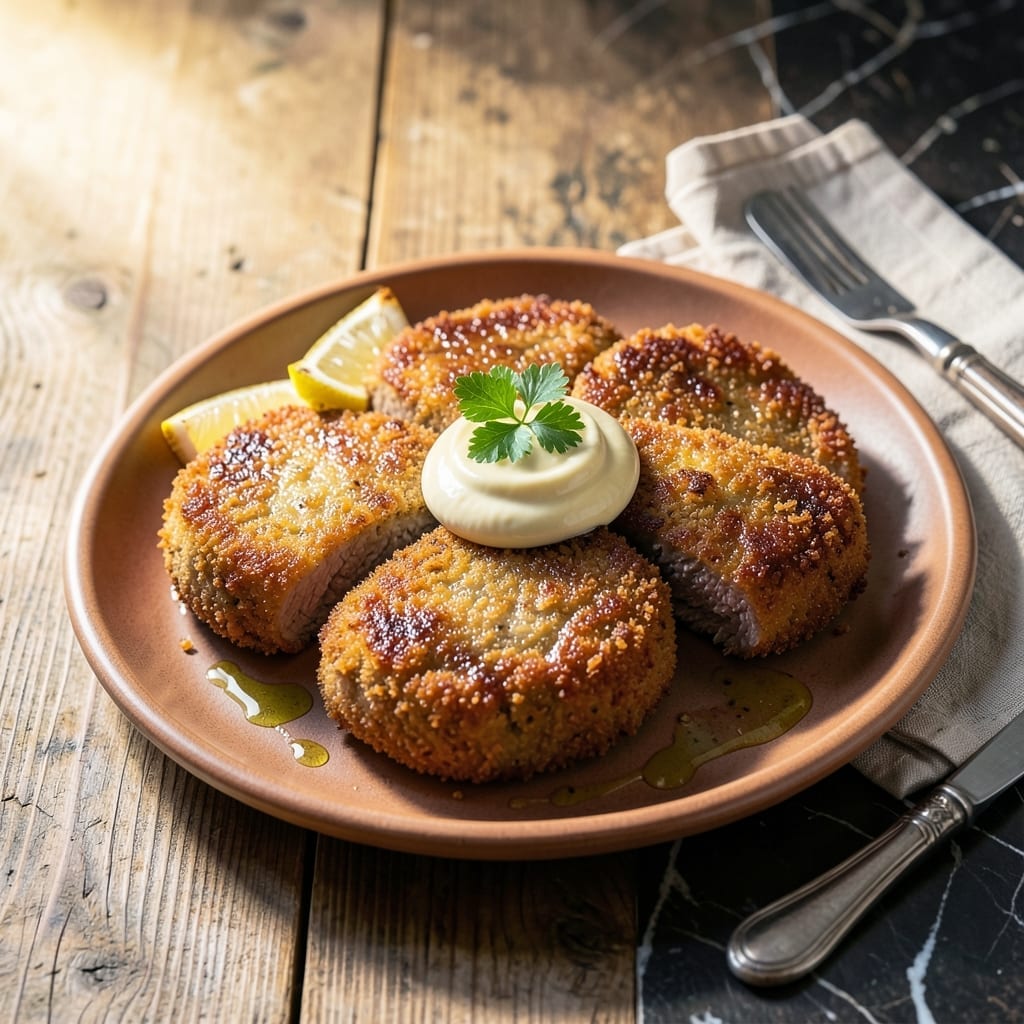
This schnitzel delivers a golden crisp exterior with the promised tender bite inside, using a proven breading method.
Thin beef cutlets are coated and pan-fried to perfection, creating a dish that’s simple yet impressive for any meal.
Ingredients for Recipe for Schnitzel Beef
Thin beef cutlets and a triple breading layer create that signature crisp exterior and tender interior.
| Ingredient | Amount | Notes |
|---|---|---|
| Beef Top Round Steak 🥩 | 1 ½ lb | Thinly sliced into cutlets |
| All-Purpose Flour 🌾 | 1 cup | For initial dredging layer |
| Large Eggs 🥚 | 2 whole | Beaten for egg wash |
| Panko Breadcrumbs 🍞 | 2 cups | For crispy outer coating |
| Dijon Mustard 🟡 | 2 tbsp | Optional for enhanced flavor |
| Kosher Salt 🧂 | 1 ½ tsp | Divided for seasoning |
| Freshly Ground Black Pepper 🌶️ | 1 tsp | Divided for seasoning |
| Garlic Powder 🧄 | 1 tsp | For added depth of flavor |
| Onion Powder 🧅 | 1 tsp | For added depth of flavor |
| Vegetable Oil 🫒 | 1 cup | For frying, high smoke point |
| Unsalted Butter 🧈 | 2 tbsp | Optional for browning richness |
| Lemon Wedges 🍋 | 4 pieces | For serving garnish |
| Fresh Parsley 🌿 | ¼ cup | Chopped, for garnish |
[recipe_ingredient_scaler]
The beef cut is critical for schnitzel. Top round steak is ideal—lean yet tender when pounded thin. Request pre-sliced cutlets from the butcher at Whole Foods or Kroger to save time, or slice a whole roast yourself at home. Ensure the meat is cut against the grain for maximum tenderness. Look for cuts with minimal visible fat, as this promotes even cooking and better breading adhesion.
No panko on hand? Standard breadcrumbs work at a 1:1 ratio, though the texture won’t be quite as crisp. For gluten-free, substitute crushed cornflakes or gluten-free panko. The vegetable oil can be swapped for canola or peanut oil (both have high smoke points). If avoiding eggs, use a cornstarch slurry or aquafaba for the dredging step—though the binding won’t be as robust.
Fry cutlets in batches to avoid crowding the pan (this drops oil temperature). Drain on a wire rack, not paper towels, to maintain crispness. Best served immediately, but leftovers keep 2-3 days in the fridge. Reheat in a 350°F oven for 10 minutes to revive the crust—microwaving makes it soggy.
Why You’ll Love This Recipe
- One Pan Wonder: I love how the flour-egg-panko combo comes together in minutes without dirtying every bowl in my kitchen.
- Crispy Perfection: That panko crust with Dijon mustard beneath it? Honestly, it’s the crunch-to-taste ratio I dream about.
- Weeknight Hero: Perfect for quick dinners, and leftovers make killer sandwiches the next day.
- Budget Friendly: Top round steak stays affordable, and a little goes a long way with this satisfying dish.
Step-by-Step Instructions for Schnitzel Beef
Master the technique for achieving a perfectly crisp exterior with a juicy, tender interior.
Step 1: Prepare and Season the Beef Cutlets
Begin by slicing the 1.5 lb beef top round steak into ¼-inch thick cutlets. Place each piece between plastic wrap and pound gently with a meat mallet to an even thickness. This ensures uniform cooking and maximum tenderness.
Season both sides of each cutlet with ½ tsp kosher salt, ½ tsp freshly ground black pepper, 1 tsp garlic powder, and 1 tsp onion powder. The seasoning should adhere well to the surface. Let the cutlets rest at room temperature for 10 minutes to allow the salt to penetrate slightly.
Step 2: Set Up the Breading Station
Create a breading assembly line with three shallow dishes. Place the 1 cup all-purpose flour in the first dish. In the second, whisk the 2 whole large eggs with the 2 tbsp Dijon mustard until fully combined—this adds depth of flavor and helps the crumbs adhere better.
Put the 2 cups panko breadcrumbs in the third dish. The panko’s coarse texture is essential for that signature crispy, airy crust. Arrange the dishes in order: flour, egg wash, then panko.
Step 3: Bread the Cutlets with Precision
Dredge each cutlet in the flour, shaking off any excess. The flour creates a dry surface for the egg wash to cling to. Next, dip the floured cutlet into the egg mixture, ensuring both sides are fully coated. Let any excess drip off for a moment—this prevents a thick, gummy layer of breading.
Press the cutlet into the panko, turning to coat both sides completely. Apply gentle pressure to ensure the crumbs adhere well, especially around the edges. Transfer the breaded cutlets to a wire rack set over a baking sheet. This setup allows air circulation, preventing the breading from becoming soggy while resting.
Step 4: Fry to Golden Perfection
Heat the 1 cup vegetable oil in a large, heavy skillet over medium-high heat until it reaches 350°F. To test, drop in a pinch of panko—if it sizzles immediately, the oil is ready. Add the 2 tbsp unsalted butter to the oil just before frying for extra richness and flavor.
Fry the cutlets in batches to avoid crowding the pan, which would lower the oil temperature and result in greasy schnitzel. Cook each cutlet for 2-3 minutes per side until the breading is deep golden brown and crisp. The internal temperature should reach 145°F for medium doneness. Transfer to a paper towel-lined plate to drain excess oil.
Step 5: Serve Immediately with Garnishes
Schnitzel is best served immediately while the crust is still crisp. Arrange the cutlets on a warm platter and garnish with the 4 pieces lemon wedges and a sprinkle of the 0.25 cup fresh parsley. The acidity from the lemon brightens the richness of the dish.
Encourage diners to squeeze fresh lemon juice over each piece just before eating. The contrast of the crispy exterior, tender beef, and zesty lemon is what makes this dish exceptional. Serve with additional lemon wedges on the side for those who want extra tang.
Pro Tips For Making Recipe For Schnitzel Beef
- Pound the Steak Thin: Use a meat mallet to pound the top round steak to an even ¼-inch thickness—this guarantees even cooking and a tender bite every time. I learned this the hard way after pulling chewy, uneven pieces out of the pan.
- Dry the Meat First: Pat the steak completely dry with paper towels before dredging. Sounds obvious, but even a little moisture prevents the flour and panko from sticking properly.
- Skip Cold Oil: Heat the oil in the pan until it shimmers before adding the schnitzel—about 350°F. After burning my first few batches, I finally figured out that cold oil just soaks into the breading.
- Rest on a Rack: Place fried schnitzels on a wire rack, not paper towels, to keep them crisp while draining. My grandmother swore by this, and she was right: it stops the bottom from getting soggy.
Storing and Reheating recipe for schnitzel beef
Refrigerator Storage
Let your schnitzel cool completely, then place in an airtight container with layers separated by parchment. It’ll keep in the fridge at 40°F or below for 2-3 days. I always use Glasslock containers for better visibility and no plastic aftertaste. ❄️
Freezer Storage
For longer storage, freeze breaded but uncooked cutlets on a tray first, then transfer to freezer bags. They’ll stay fresh for up to 2 months. Thaw overnight in the fridge before cooking. This method preserves the panko’s crisp texture better than freezing after frying.
Oven Reheating
Preheat to 375°F and place schnitzel on a wire rack over a baking sheet. Heat for 8-10 minutes until the breading crisps and internal temp hits 145°F. This is my go-to method—it revives the crust beautifully without drying the beef.
Skillet Reheating
Add a thin layer of vegetable oil to a skillet over medium heat. Cook each piece for 2-3 minutes per side until golden and heated through. This works great for small batches when you want that fresh-fried taste. 🔥
Avoid the Microwave
Microwaving turns the breading soggy in seconds—it’s the one method I’d skip entirely. If you must, use 50% power and a paper towel to absorb moisture, but even then, the texture won’t be the same.
Nutrition Facts
Frequently Asked Questions
What’s the best oil for frying?
Use vegetable oil or peanut oil for their high smoke points. Avoid olive oil as it can burn at frying temps.
Can I use chicken instead of beef?
Yes! Pound chicken breasts to ¼-inch thickness and cook for 3-4 minutes per side. Internal temp should reach 165°F.
Why did my breading fall off?
Common causes: not drying the meat first or skipping the resting step after breading. Press crumbs firmly and let cutlets rest 5 minutes before frying.
What sides pair well?
Classic pairings include lemon wedges, potato salad, or a crisp green salad. The acidity cuts through the richness perfectly.

Trained in classic French technique but raised on slow-cooked ribs and spicy rubs, she blends culinary skill with smoke and soul.
- Recipe For Leftover Fried Fish: Crunchy Leftovers Transformed - October 3, 2026
- Recipe for Crock Pot Swiss Steak: Slow-Cooked Beef With Mushroom Gravy - October 3, 2026
- Recipe for Kabsa Rice: Spiced Middle Eastern Feast in One Pot - October 3, 2026