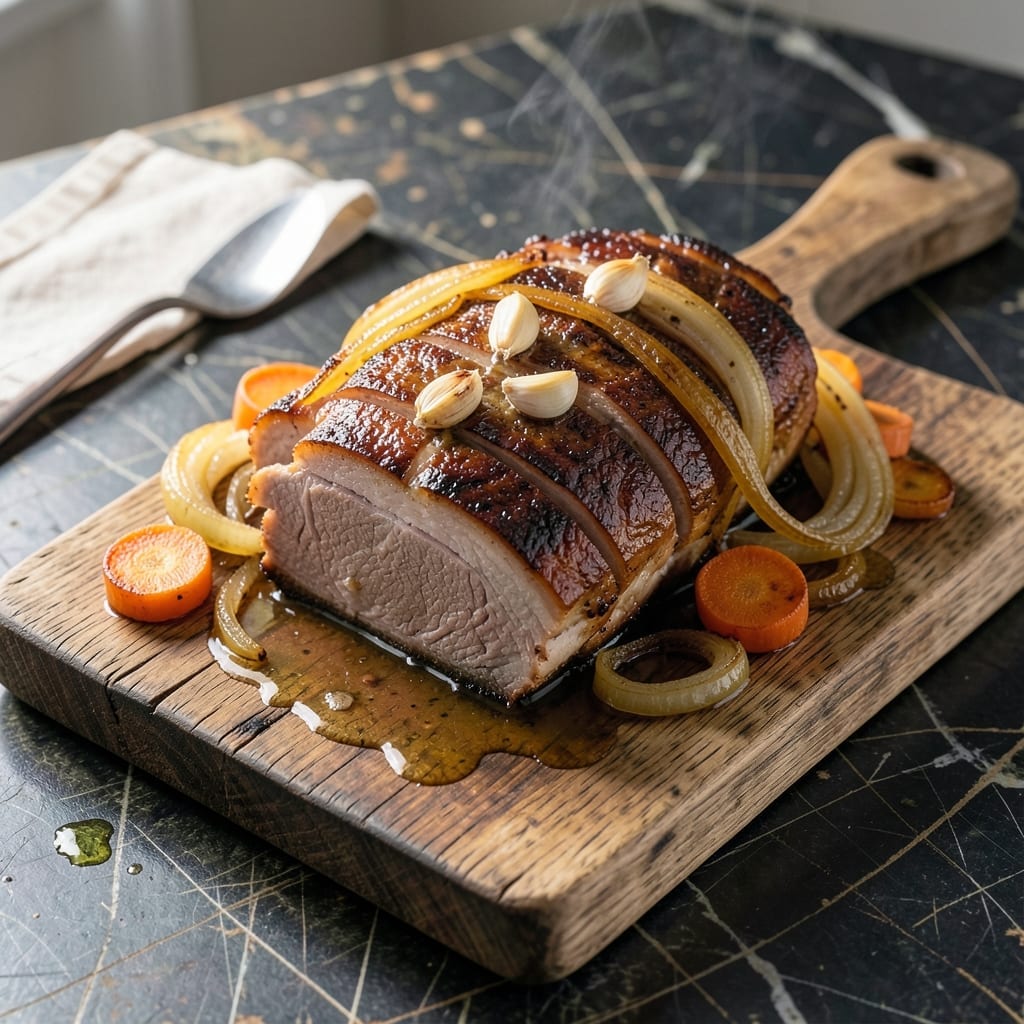
Slow-roasting transforms tough shoulder cuts into melt-in-your-mouth perfection. This method guarantees tender results every time.
With just a few hours in the oven, the meat becomes fork-tender while developing deep, rich flavors. The technique is simple but delivers professional results.
Ingredients for Shoulder Roast Recipe Oven
Transform tough cuts into melt-in-your-mouth perfection with these quality ingredients for slow-roasting.
| Ingredient | Amount | Notes |
|---|---|---|
| Pork Shoulder Roast 🥩 | 3 lb | Bone-in, well-marbled preferred |
| Kosher Salt 🧂 | 1 ½ tbsp | Diamond Crystal preferred |
| Black Pepper 🌶️ | 1 tsp | Freshly ground |
| Garlic Cloves 🧄 | 6 cloves | Peeled, smashed |
| Yellow Onion 🧅 | 1 whole | Large, quartered |
| Carrots 🥕 | 3 whole | Peeled, cut into chunks |
| Fresh Rosemary 🌿 | 2 tbsp | Chopped, stems removed |
| Fresh Thyme 🍃 | 2 tbsp | Chopped, stems removed |
| Dry White Wine 🥂 | 1 cup | Or substitute beef broth |
| Extra-Virgin Olive Oil 🫒 | 2 tbsp | For searing and roasting |
| Bay Leaves 🍃 | 2 whole | Dried, for aroma |
| Low-Sodium Chicken Broth 💧 | 1 cup | Or use vegetable broth |
[recipe_ingredient_scaler]
The pork shoulder is non-negotiable here. Bone-in with good marbling ensures the juiciest results. Whole Foods or Costco typically carry high-quality cuts. Ask your butcher for a picnic or Boston butt roast—both work beautifully. Avoid pre-cut stew meat; it lacks the connective tissue needed for that perfect breakdown during the long, slow cook.
No white wine? Dry vermouth or extra broth with a splash of apple cider vinegar works in a pinch. Fresh herbs are ideal, but dried at one-third the amount will do. If you’re out of rosemary or thyme, dried oregano can substitute (use sparingly—it’s potent). The onions and carrots add sweetness as they caramelize; baby carrots work fine if that’s what you have.
Leftovers keep beautifully. Store sliced meat in its juices in an airtight container for up to 4 days in the fridge. For longer storage, portion and freeze for up to 3 months. Reheat gently in the oven or on the stovetop with a splash of broth to restore moisture.
Why You’ll Love This Recipe
- Set and Forget: I rub the shoulder with salt, pepper, and garlic, pop it in the oven, and let the oven do the work for hours.
- Feeds the Week: One roast makes enough for tacos, sandwiches, and a hearty soup—leftovers that actually get better.
- Budget Stretcher: Pork shoulder is cheap, and this recipe turns it into a meal that feels like a splurge.
Step-by-Step Instructions for Shoulder Roast Oven
Here’s the method for transforming the pork shoulder roast into fall-apart tender perfection.
Step 1: Season and Sear the Pork Shoulder Roast
Pat the 3 lb Pork Shoulder Roast dry with paper towels to ensure a proper sear. Rub the entire surface with the 1.5 tbsp Kosher Salt and 1 tsp Black Pepper, pressing the seasoning into the meat so it adheres well. This dry brine step is crucial for flavor penetration and moisture retention.
Heat the 2 tbsp Extra-Virgin Olive Oil in a large Dutch oven over medium-high heat until shimmering. Sear the pork shoulder roast on all sides for 8-10 minutes total, turning occasionally, until deeply browned. You’re looking for a rich mahogany crust—this develops the Maillard reaction that adds depth of flavor to the finished dish.
Step 2: Build the Aromatic Base
Remove the seared pork shoulder roast and set it aside. In the same pot, add the 1 whole Yellow Onion (quartered), 3 whole Carrots (cut into chunks), 6 cloves Garlic Cloves (peeled and smashed), 2 tbsp Fresh Rosemary, and 2 tbsp Fresh Thyme. Cook for 3-4 minutes until the vegetables begin to soften and the herbs release their fragrance.
Pour in the 1 cup Dry White Wine to deglaze the pot, scraping up all the browned bits from the bottom with a wooden spoon. These fond bits are pure flavor—incorporating them into the liquid creates a richer, more complex base for your braise. Let the wine reduce by half, about 3-4 minutes.
Step 3: Slow-Roast to Tenderness
Return the pork shoulder roast to the pot. Add the 2 whole Bay Leaves and 1 cup Low-Sodium Chicken Broth. The liquid should come about halfway up the roast—if it doesn’t, add a splash of water. Cover the pot tightly with a lid or foil.
Transfer to a preheated 325°F oven and roast for 3-3.5 hours. You’ll know it’s done when the meat pulls apart easily with a fork and reaches an internal temperature of 195-200°F. Resist the urge to check too frequently—every time you open the oven, you lose heat and extend the cooking time.
Step 4: Rest and Shred
Carefully remove the pork shoulder roast from the pot and transfer it to a cutting board. It should be incredibly tender at this point—nearly falling apart as you move it. Tent loosely with foil and let it rest for 15-20 minutes. This resting period allows the juices to redistribute throughout the meat.
While the pork shoulder roast rests, skim any excess fat from the surface of the braising liquid. Shred the meat using two forks, discarding any large fat cap pieces or bones. Return the shredded pork shoulder roast to the pot and toss it with the braising liquid to coat evenly before serving.
Pro Tips For Making Shoulder Roast Recipe Oven
- Start Low and Slow: Set your oven to 275°F and give it 3-4 hours—this is the sweet spot for breaking down the pork shoulder’s connective tissue without drying it out. I learned this the hard way after pulling a tough roast out of a 350°F oven too soon.
- Score the Fat Cap: Use a sharp knife to cut a crosshatch pattern into the fat cap, about 1/4-inch deep. This helps the salt, pepper, and garlic penetrate deeper and gives you crispier edges.
- Don’t Skip the Rest: After roasting, let the pork shoulder rest under foil for at least 20 minutes before shredding. Sounds tedious, but it redistributes the juices so they don’t all end up on the cutting board.
- Use a Meat Thermometer: Aim for 195-203°F internally—this is the range where collagen melts into gelatin and the meat falls apart. Guessing by time alone left me with chewy results more than once.
Perfect Pairings for This Recipe
Wine Pairings
A medium-bodied Red Zinfandel complements the rich, savory flavors beautifully—its berry notes balance the pork’s depth. For white wine lovers, try a Viognier; its floral aromatics cut through the meat’s richness. Both pairings work well with the dish’s slow-roasted complexity. 🍷
Side Dish Ideas
Creamy mashed potatoes soak up the braising liquid perfectly. I also love roasted Brussels sprouts with a balsamic glaze for contrast. For a lighter option, a crisp kale salad with lemon vinaigrette adds freshness.
Breads and Starters
A crusty sourdough loaf is perfect for mopping up every last bit of juice. For a Southern touch, serve with cornbread—its sweetness pairs wonderfully with the pork. I often bake a loaf while the roast finishes in the oven.
Vegetable Accompaniments
Roasted root vegetables like parsnips or turnips mirror the dish’s slow-cooked approach. For color, add steamed green beans tossed with garlic and butter. Both sides hold up well to the pork’s hearty nature.
Beer Options
A malty amber ale enhances the caramelized flavors in the roast. For a lighter choice, a crisp pilsner cleanses the palate between bites. I prefer local craft brews from coastal breweries near my foraging spots. 🍺
Nutrition Facts
Frequently Asked Questions
How long should I let it rest after cooking?
Let the roast rest for 15-20 minutes before shredding. This allows juices to redistribute for maximum tenderness and flavor. Skipping this step can result in dry meat.
Can I use a boneless cut instead?
Yes, but bone-in adds more flavor and helps keep the meat moist. If using boneless, reduce cooking time by about 30 minutes and check for doneness at 195°F internal temperature.
What if my roast isn’t tender after the suggested time?
If it’s not fork-tender, return it to the oven for 30-minute increments at 325°F until it reaches 195-200°F. The collagen needs time to break down completely.

Trained in classic French technique but raised on slow-cooked ribs and spicy rubs, she blends culinary skill with smoke and soul.
- Recipe for Boneless Pork Chops in Cast Iron Skillet: Sear and Baste to Juicy Perfection - October 3, 2026
- Recipe for Boneless Cross Rib Roast: Slow-Roasted Beef with Herb Crust - October 3, 2026
- Hamburgers in Sauce Recipe Crock Pot: Slow-Cooked Savory Delight - October 3, 2026