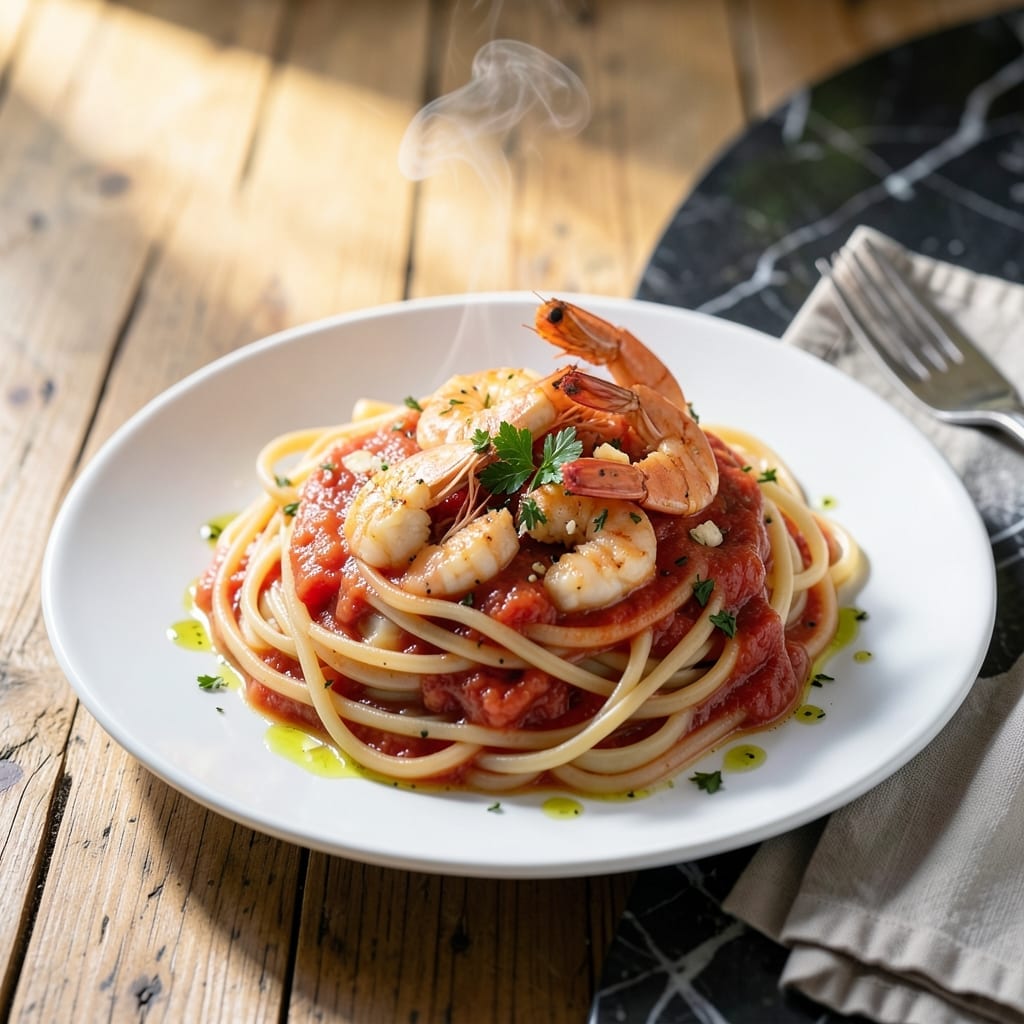
This dish brings together plump shrimp, al dente pasta, and a rich tomato sauce in under 20 minutes. The key is cooking the shrimp just until pink to keep them tender.
Garlic and herbs infuse the sauce with Mediterranean flair, while a splash of white wine adds depth. Simple ingredients, professional results.
Ingredients for Recipe for Shrimp Pasta with Tomato Sauce
Mediterranean flavors start with plump shrimp, al dente pasta, and rich tomato sauce ingredients ready in minutes.
| Ingredient | Amount | Notes |
|---|---|---|
| Linguine Pasta 🍝 | 12 oz | Or sub spaghetti or fettuccine |
| Large Shrimp 🦐 | 1 ½ lb | Peeled and deveined, tails on or off |
| Extra-Virgin Olive Oil 🫒 | 3 tbsp | Divided for cooking and finishing |
| Garlic Cloves 🧄 | 5 cloves | Minced for maximum flavor |
| Crushed Tomatoes 🍅 | 28 oz | San Marzano preferred for richness |
| Dry White Wine 🍷 | ½ cup | Sauvignon Blanc or Pinot Grigio |
| Fresh Basil Leaves 🌿 | ½ cup | Loosely packed, torn by hand |
| Fresh Parsley 🍃 | ¼ cup | Chopped, for garnish |
| Red Pepper Flakes 🌶️ | ½ tsp | Adjust to spice preference |
| Kosher Salt 🧂 | 1 ½ tsp | Diamond Crystal preferred for precision |
| Ground Black Pepper 🌶️ | ½ tsp | Freshly ground for best flavor |
| Parmesan Cheese 🧀 | ½ cup | Freshly grated from wedge |
| Lemon 🍋 | 1 whole | Zested and juiced for brightness |
[recipe_ingredient_scaler]
The shrimp quality matters—wild-caught from the seafood counter (ask for the day’s catch) beats frozen every time, but frozen peeled and deveined works in a pinch. For the tomatoes, San Marzano cans at Whole Foods or Eataly deliver the sweetest, most vibrant sauce base. The white wine doesn’t need to be expensive—any dry variety from Trader Joe’s works perfectly for deglazing.
No white wine? Substitute with chicken or vegetable broth plus a splash of lemon juice for acidity. Fresh herbs are ideal, but dried basil and parsley at half the amount can work. For a richer sauce, stir in 2 tbsp tomato paste with the crushed tomatoes. The pasta shape is flexible—linguine’s width holds sauce well, but spaghetti or fettuccine are equally excellent.
Cooked shrimp keeps in the fridge for 1-2 days max—best used immediately. The sauce alone freezes beautifully for up to 3 months. Pasta should be cooked fresh, but you can prep all other ingredients 1 day ahead (store shrimp separately).
Why You’ll Love This Recipe
- One Pot Wonder: I love that this comes together in a single pan—linguine cooks right in the tomato-garlic sauce while the shrimp soaks up all the flavor.
- Garlic-Kissed Perfection: The sizzle of garlic in olive oil with crushed tomatoes creates a sauce so rich, I’ve caught myself licking the spoon.
- Weeknight MVP: Honestly, it’s my Tuesday night hero—fast enough for a school night but impressive enough for company.
- Leftovers? Yes Please: The flavors deepen overnight, so I always make extra. Cold shrimp pasta straight from the fridge is my guilty snack.
Step-by-Step Instructions for Shrimp Pasta With Tomato Sauce
Master this method and you’ll deliver restaurant-quality results with minimal effort.
Step 1: Cook the Linguine Pasta Al Dente
Bring a large pot of salted water to a rolling boil. Add the 12 oz Linguine Pasta and cook according to package instructions until 1 minute shy of al dente. Reserve 1 cup of pasta water before draining—the starchy liquid is essential for adjusting the sauce consistency.
I always undercook the pasta slightly because it will finish in the sauce, absorbing those garlicky tomato flavors. Drain the pasta but don’t rinse; the surface starch helps the sauce cling better to each strand.
Step 2: Sauté the Shrimp and Aromatics
While the pasta cooks, heat 2 tbsp Extra-Virgin Olive Oil in a large, deep skillet over medium-high heat. Add the 1.5 lb Large Shrimp, season with 1 tsp Kosher Salt and 0.5 tsp Ground Black Pepper, and cook for 1-2 minutes per side until the shrimp turn pink and opaque. Remove the shrimp and set aside.
In the same skillet, add the remaining 1 tbsp Extra-Virgin Olive Oil and the 5 cloves minced Garlic Cloves. Sauté for 30 seconds until fragrant, then stir in the 0.5 tsp Red Pepper Flakes. This builds the flavor base that defines the dish.
Step 3: Deglaze and Build the Tomato Sauce
Pour in the 0.5 cup Dry White Wine to deglaze the pan, scraping up any browned bits from the bottom. Let it simmer for 2 minutes until the liquid reduces by half. This step captures all the concentrated flavors from the shrimp and garlic.
Add the 28 oz Crushed Tomatoes, 0.5 tsp Kosher Salt, and the zest and juice of the 1 whole Lemon. Stir well and simmer for 5-7 minutes until the sauce thickens slightly. Tear the 0.5 cup Fresh Basil Leaves by hand and stir them in just before combining with the pasta.
Step 4: Combine and Finish
Add the cooked linguine and shrimp to the skillet with the tomato sauce. Toss everything together over medium heat for 1-2 minutes, adding reserved pasta water as needed until the sauce coats the pasta beautifully. The pasta should finish cooking in this step, absorbing all the flavors.
Remove from heat and stir in the 0.5 cup Parmesan Cheese until fully melted and incorporated. Taste and adjust seasoning if needed. The sauce should be rich but balanced, with a bright finish from the lemon.
Garnish with the 0.25 cup chopped Fresh Parsley and serve immediately. Each plate should have a generous portion of shrimp nestled in the saucy pasta, ready to be enjoyed.
Pro Tips For Making Recipe For Shrimp Pasta With Tomato Sauce
- Sear Shrimp First: Cook the shrimp in olive oil over medium-high heat just until pink—about 2 minutes per side—then set aside. I learned this the hard way: adding them to the sauce too early turns them rubbery.
- Use Starchy Pasta Water: Before draining, reserve about 1/2 cup of the pasta water. Sounds weird, but it works: the starch helps thicken the tomato sauce and bind it to the linguine.
- Skip Pre-Cooked Shrimp: Raw shrimp taste fresher and absorb the garlic and tomato flavors better. The frozen pre-cooked kind just don’t compare, even if they’re more convenient.
- Simmer Sauce Low: Once the crushed tomatoes and garlic are in, keep the heat at a gentle simmer—no boiling. After burning three batches, I finally figured out that high heat makes the sauce bitter.
Common Mistakes When Making recipe for shrimp pasta with tomato sauce
🔥 Overcooking the Shrimp
Shrimp cooks lightning-fast, and leaving it in the pan too long turns it rubbery and tough. This is especially true for smaller shrimp, which can go from perfect to overdone in under a minute.
Fix: Cook shrimp just until they turn pink and opaque (about 2-3 minutes per side). Remove them from the pan immediately and set aside until ready to combine with the pasta.
🍳 Skimping on the Garlic
Garlic is the backbone of flavor in this dish. Using too little or burning it can leave your sauce tasting flat or bitter. Raw or undercooked garlic can also overpower the dish with a harsh bite.
Fix: Use at least 3-4 fresh garlic cloves, minced finely. Sauté on medium-low heat until fragrant (about 30 seconds) but not browned to avoid bitterness.
🥘 Using Watery Tomatoes
Canned tomatoes with excess liquid can make your sauce thin and watery, diluting the rich, concentrated flavors. This often leads to a lackluster sauce that doesn’t cling to the pasta.
Fix: Drain and crush whole canned tomatoes by hand, or use high-quality crushed tomatoes. Simmer the sauce uncovered to thicken it before adding the shrimp back in.
⏰ Not Salting the Pasta Water
Pasta absorbs salt, so cooking it in unsalted water results in bland noodles, even if the sauce is well-seasoned. This is a common oversight that leaves the dish tasting unbalanced.
Fix: Add 1-2 tablespoons of salt to the boiling pasta water—it should taste like the sea. This ensures the pasta itself is flavorful from the start.
Nutrition Facts

Trained in classic French technique but raised on slow-cooked ribs and spicy rubs, she blends culinary skill with smoke and soul.
- Recipe for Boneless Pork Chops in Cast Iron Skillet: Sear and Baste to Juicy Perfection - October 3, 2026
- Recipe for Boneless Cross Rib Roast: Slow-Roasted Beef with Herb Crust - October 3, 2026
- Hamburgers in Sauce Recipe Crock Pot: Slow-Cooked Savory Delight - October 3, 2026