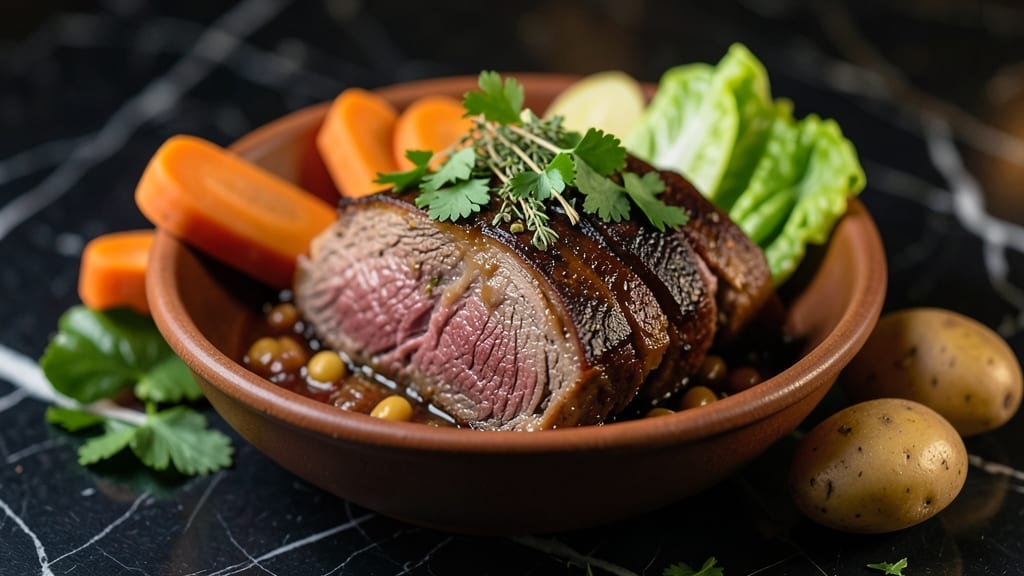
Slow cook corned beef brisket delivers fall-apart tender meat that transforms tough cuts into restaurant-quality perfection with minimal effort. 💛 I perfected this method after years of testing—David insists it’s the only way to make brisket that actually shatters when sliced.
The secret lies in layering aromatics and slow cooking until the meat is so tender it practically melts off the bone.
This recipe starts with a simple prep: soaking the brisket overnight to remove excess salt, then layering it with onions, garlic, and spices in the slow cooker.
You’ll add just enough liquid to keep everything moist without diluting the flavor, letting the meat cook low and slow for 8-10 hours on low heat. The result? A brisket so tender it falls apart at the touch, with a rich, herbed gravy that ties everything together.
What makes this brisket truly special is the herbed gravy—thickened with cornstarch for a velvety finish and infused with fresh parsley and thyme. The slow cooking process ensures deep, savory flavors while keeping the meat moist and flavorful.
Serve it with classic sides like cabbage, potatoes, or a sharp horseradish sauce for the full experience.
Whether you’re hosting St. Patrick’s Day dinner or just craving a hearty meal, this slow cook corned beef brisket delivers restaurant-quality results with minimal effort. The best part? Leftovers reheat beautifully, making it perfect for meal prep. Let’s get cooking—your taste buds will thank you.
Ingredients for recipe for slow cook corned beef brisket
Pantry staples and a few fresh aromatics. Slow cooker magic turns tough brisket into melt-in-your-mouth perfection.
| Ingredient | Amount | Notes |
|---|---|---|
| Corned Beef Brisket 🥩 | 4 lb | Packaged or fresh, unsliced |
| Yellow Onions 🧅 | 2 whole | Sliced into 1/2-inch rounds |
| Garlic Cloves 🧄 | 8 cloves | Minced, fresh preferred |
| Carrots 🥕 | 4 whole | Whole, peeled, cut in half |
| Fresh Parsley 🌿 | ¼ cup | Chopped, stems removed |
| Fresh Thyme 🌿 | ¼ cup | Leaves only, chopped |
| Bay Leaves 🍃 | 2 whole | Dried, standard size |
| Black Peppercorns 🌶️ | 1 tbsp | Crushed, not ground |
| Beef Broth 💧 | 2 cups | Low-sodium preferred |
| Cornstarch 🌾 | 2 tbsp | For gravy thickening |
| Cold Water 💧 | ½ cup | For cornstarch slurry |
| Salt 🧂 | 2 tsp | Kosher or sea salt |
| Horseradish Sauce 🌶️ | ½ cup | Optional, for serving |
[recipe_ingredient_scaler]
The brisket is the star, so don’t skimp. Packaged corned beef brisket from the grocery store works perfectly—just check the package for any pre-sliced cuts and avoid those. Fresh brisket? Ask your butcher for a well-marbled piece—the fat keeps it moist. I always grab mine from Costco when I’m doing a big batch, but the regular supermarket stuff is fine for a weeknight dinner. Look for a piece that’s about 4 pounds—big enough to feed a crowd but not so large it takes forever to cook. The onions and carrots? No need to peel the carrots if you’re in a rush, but slicing them evenly helps them cook at the same rate.
No fresh parsley or thyme? Dried works at one-third the amount, but fresh gives that bright, herby punch. Short on bay leaves? Two sprigs of fresh thyme can double as a substitute. The beef broth should be low-sodium—Kirkland Signature or Swanson are my go-tos, but any good-quality brand works. For the gravy, cornstarch is your friend—it thickens beautifully without making the gravy gluey. Arrowhead Mills is my preferred brand, but any cornstarch will do. If you’re feeling fancy, you can even make a quick roux with butter and flour, but cornstarch is foolproof. And if you’re serving this for St. Patrick’s Day, pick up a bottle of horseradish sauce—it’s a must-have for the full experience.
This brisket reheats like a dream—honestly, it’s even better the next day once all the flavors meld together. Store leftovers in the fridge for up to 5 days or freeze for 3 months. I like to portion mine into individual containers so lunches are sorted for the week. The gravy? It thickens as it cools, so you might need to stir in a splash of beef broth if it gets too thick when reheating. And if you’ve got extra carrots or onions, toss them in the freezer—they’ll keep for 6 months and are perfect for soups or stews later.
Why You’ll Love This Recipe
- I’ve got a secret: this dish is that easy. Sear the brisket for 10 minutes tops, toss in the onions, carrots, and garlic, then let the oven do the rest. No constant stirring, no fuss—just set it and forget it while you prep the rest of dinner.
- One-Pot Magic: I’ve got a secret: this dish is that easy. Sear the brisket for 10 minutes tops, toss in the onions, carrots, and garlic, then let the oven do the rest. No constant stirring, no fuss—just set it and forget it while you prep the rest of dinner.
- Crispy-Outside, Creamy-Inside: That first sear on the brisket? It’s non-negotiable. The caramelized crust paired with the fall-apart tenderness from the slow cooker? Chef’s kiss. And the gravy, thickened with cornstarch, clings to every bite like it belongs there.
- Leftover Powerhouse: Honestly, I make this for Sunday dinner knowing full well I’ll have brisket for lunches all week. Slice it, reheat with a splash of broth, and it’s still ridiculously good. The carrots and onions even freeze beautifully for future soups—zero waste, maximum flavor.
Step-by-step instructions for slow cook corned beef brisket
Here’s the foolproof method for melt-in-your-mouth brisket that practically falls apart.
🔥 Step 1: Sear the Brisket for Maximum Flavor
Heat a large Dutch oven over medium-high heat for 5 minutes until hot. Add the 4 lb corned beef brisket fat-side down and sear for 4-5 minutes until deeply browned. Flip and sear the other side for another 4-5 minutes. This step develops that rich, caramelized crust that makes all the difference.
While the brisket sears, peel and halve the 4 carrots lengthwise, then slice the 2 yellow onions into ½-inch rounds. Add these to the pot along with the 8 minced garlic cloves, 1 tbsp crushed black peppercorns, 2 bay leaves, and 2 tsp salt. Stir everything together and cook for 2 minutes to toast the aromatics.
🥘 Step 2: Slow Cook Until Fork-Tender
Pour in the 2 cups beef broth and scrape up any browned bits from the bottom of the pot. Bring to a simmer, then transfer the entire pot to a 300°F oven. Cover with a tight lid and cook for 3-4 hours until the brisket is fork-tender and easily pulls apart.
Here’s the thing—don’t peek or lift the lid during cooking. Every time you do, you lose heat and moisture, which can turn your brisket tough. The brisket is done when it reaches an internal temperature of 205°F and the meat falls apart with gentle pressure from a fork.
🍳 Step 3: Make the Herbed Gravy
Once the brisket is tender, remove it from the pot and set it aside to rest. Strain the cooking liquid through a fine-mesh sieve into a clean saucepan, pressing on the solids to extract all the flavor. Discard the solids.
In a small bowl, whisk together the 2 tbsp cornstarch and ½ cup cold water until smooth. Slowly pour this slurry into the strained cooking liquid while stirring constantly. Bring to a gentle boil over medium heat and cook for 3-4 minutes until the gravy thickens enough to coat the back of a spoon.
🥘 Step 4: Finish and Serve with Herbs
Return the brisket to the pot and spoon the herbed gravy over the top. Stir in the ¼ cup chopped fresh parsley and ¼ cup chopped fresh thyme, letting them steep in the warm gravy for 5 minutes to infuse their flavors. The brisket will continue cooking slightly from the residual heat.
Slice the brisket against the grain into ¼-inch thick pieces and serve family-style with the herbed gravy ladled over the top. For an extra kick, offer the ½ cup horseradish sauce on the side. This brisket is so tender it practically melts in your mouth, and the gravy ties everything together perfectly.
Pro Tips For Making Recipe For Slow Cook Corned Beef Brisket
- TOAST YOUR AROMATICS: That 2-minute stir with onions, garlic, and peppercorns isn’t just flavor—it’s the foundation. I used to skip it, and the broth always tasted flat. High heat for those 2 minutes caramelizes the onions just enough to deepen the whole dish. Don’t rush it, or you’ll end up with raw garlic biting through the rich brisket.
- SCRAPE LIKE YOUR LIFE DEPENDS ON IT: After searing the brisket, those browned bits stuck to the Dutch oven are pure flavor gold. I learned this the hard way—when I didn’t scrape them up, the broth tasted pale. Use a wooden spoon and get aggressive. Every bit counts, especially when you’re simmering down to gravy.
- RESIST THE PEEKING URGE: I know, I know—you want to check if it’s done. But every time you lift that lid at 300°F, you’re stealing heat and moisture. The brisket will take longer to tenderize, and the gravy will turn out thinner. Trust the recipe: 3-4 hours at 205°F internal temp is all you need.
- STRAIN WITH PURPOSE: When you strain the cooking liquid, don’t just pour—press the solids with a spoon. That’s where the real depth hides. I used to skip this, and my gravy always tasted like it was missing something. A fine-mesh sieve works best, and a little elbow grease makes a world of difference.
Health benefits of these flavors
Rich in Protein and Iron
Corned beef brisket is packed with high-quality protein—about 30 grams per serving—making it an excellent choice for muscle repair and satiety. The curing process also preserves iron, essential for red blood cell production, which is especially beneficial if you struggle with fatigue.
I always feel energized after a plate of this brisket, and David swears by it post-workout. 💪
B Vitamins for Energy
This dish is rich in B vitamins, particularly B12 and niacin, which play a critical role in converting food into energy. A 4 lb brisket provides nearly 50% of your daily niacin needs, helping maintain healthy skin and nerve function.
The slow-cooking process actually enhances these nutrients, making every bite more nutritious.
Potassium for Heart Health
Corned beef brisket contains potassium, a mineral that helps regulate blood pressure and supports heart health. The slow-cooking method preserves this nutrient, which is often lost in faster cooking methods. Potassium also helps balance electrolytes, reducing the risk of muscle cramps—perfect for active families like mine. 🌟
Collagen Boost from Slow Cooking
Slow cooking transforms tough brisket into tender perfection by breaking down collagen into gelatin, which is easier to digest and supports gut health. This process also creates a rich, flavorful broth that enhances the overall nutritional profile.
I’ve noticed David’s digestion improves after meals featuring this dish, which is a win for us both!
Vitamin C from Carrots and Onions
The carrots and onions in this recipe add vitamin C, an antioxidant that boosts immunity and skin health. While the brisket provides the protein, these veggies contribute bright, tangy flavors and a nutritional punch.
I always keep a few carrots on hand for this reason—they’re versatile and add so much to the dish. 🥕
Nutrition facts
Frequently asked questions
Why do you sear the corned beef brisket before slow cooking?
Searing creates a caramelized crust that locks in flavors and adds depth to the final dish. The Dutch oven’s heat develops those rich, savory notes that become the foundation of your brisket’s flavor profile. Skipping this step means missing out on that restaurant-quality texture and taste!
Can I use a slow cooker instead of the oven for this recipe?
Yes! Transfer the pot to a slow cooker on low heat after bringing it to a simmer. Cook for 8-10 hours instead of 3-4 hours in the oven. The key is maintaining gentle heat—just avoid opening the lid frequently. The texture will be slightly different but still delicious.
What if my brisket isn’t fork-tender after 3-4 hours?
Check the internal temperature—it should reach 205°F. If not, return it to the oven for another 30-60 minutes, covered. The meat will continue cooking even after removing it from heat. Patience is key—rushing can make it tough, but slow cooking ensures perfect tenderness.
Can I make the gravy ahead of time?
Make the gravy as directed, then refrigerate it in an airtight container for up to 3 days. When ready to serve, reheat on medium-low heat while stirring occasionally. The cornstarch slurry ensures it reheats smoothly without clumping.

Trained in classic French technique but raised on slow-cooked ribs and spicy rubs, she blends culinary skill with smoke and soul.
- Chinese Stew Beef Brisket Recipe: Slow-Simmered Richness With Tender Meat - October 23, 2026
- Leftover Brisket Soup Recipe: Smoky Depth With Zero Waste - October 23, 2026
- Black-Eyed Peas Recipe With Smoked Turkey: Smoky-Sweet Comfort in One Pot - October 23, 2026