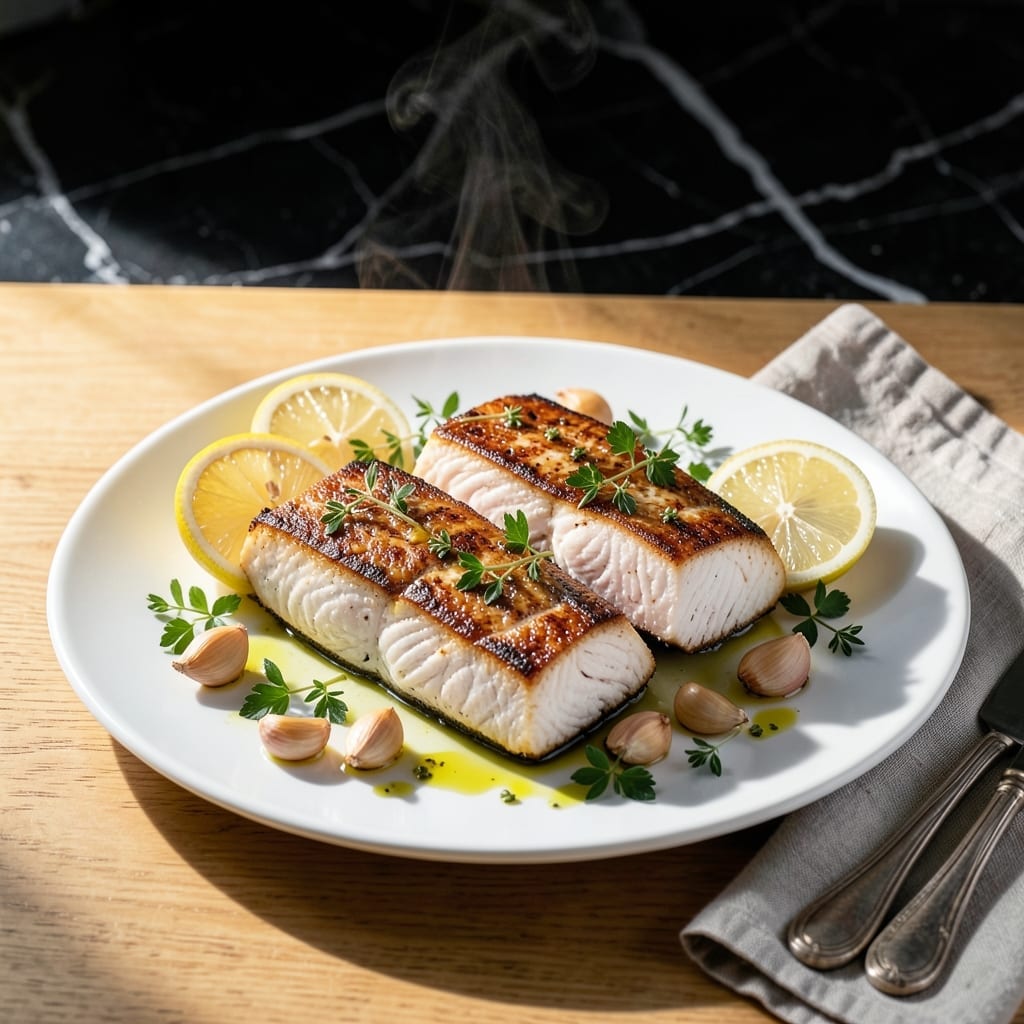
Baking swordfish creates a dish with buttery flakes and delicate texture that’s hard to match with other methods. This approach highlights the fish’s natural richness while keeping preparation simple and precise.
With a few key ingredients—lemon, herbs, and proper timing—you’ll achieve restaurant-quality results every time. The oven’s dry heat ensures a perfectly cooked center without drying the edges.
Ingredients for Recipe for Swordfish Baked
Fresh swordfish, bright citrus, and aromatic herbs create this elegant yet simple baked preparation.
| Ingredient | Amount | Notes |
|---|---|---|
| Swordfish Steaks 🐟 | 1 ½ lb | Skinless, about 1-inch thick |
| Extra-Virgin Olive Oil 🫒 | 3 tbsp | Divided for cooking and finishing |
| Lemon 🍋 | 1 whole | Zested and juiced |
| Garlic Cloves 🧄 | 3 cloves | Minced finely |
| Fresh Parsley 🌿 | ¼ cup | Chopped, for garnish |
| Fresh Thyme Sprigs 🍃 | 4 whole | Leaves stripped from stems |
| Dijon Mustard 🟡 | 1 tbsp | For tangy depth |
| Sea Salt 🧂 | 1 tsp | Fine grain, plus more to taste |
| Freshly Ground Black Pepper 🌶️ | ½ tsp | Plus more to taste |
| Unsalted Butter 🧈 | 2 tbsp | Melted, for basting |
| Dry White Wine 🍷 | ¼ cup | Optional for deglazing |
| Shallot 🧅 | 1 whole | Finely diced |
[recipe_ingredient_scaler]
The swordfish is the star here—opt for wild-caught from a reputable seafood counter like Whole Foods or your local fishmonger. Look for steaks that are moist, not dry, with a vibrant, translucent color. Thickness matters: aim for 1-inch steaks to ensure even cooking. For the herbs, fresh thyme and parsley make a difference, but dried can work at one-third the amount.
No fresh herbs? Dried Italian seasoning at one-third the amount gets you close. Short on white wine? Skip it or use seafood or vegetable stock instead. The butter can be swapped for olive oil, though you’ll lose some richness. If swordfish isn’t available, halibut or mahi-mahi are solid substitutes (adjust cooking time accordingly).
This bakes best served immediately, but leftovers keep for 2-3 days in the fridge. Reheat gently in a low oven to preserve moisture. The lemon zest and herbs can be prepped ahead—store them separately in the fridge until ready to use.
Why You’ll Love This Recipe
- One Pan Magic: Honestly, it’s just swordfish, olive oil, garlic, and lemon—toss it on a sheet pan and let the oven do the work.
- Bright and Zesty: That lemon and garlic combo with the parsley? It’s fresh, not overpowering, and makes the fish taste like a restaurant dish.
- Dinner in Minutes: I’ve had this ready before the rice finishes cooking—ideal for nights when time is tight.
- Leftovers? Yes Please: Cold the next day, it’s even better flaked over greens or tucked into a sandwich.
Step-by-Step Instructions for Swordfish Baked
Here is the method. Precise, tested, and designed for perfect results every time.
Step 1: Prepare the Swordfish and Aromatics
Pat the 1.5 lb Swordfish Steaks completely dry with paper towels to ensure even browning. Season both sides with the 1 tsp Sea Salt and 0.5 tsp Freshly Ground Black Pepper. This step is critical—dry fish sears better and absorbs flavors more effectively.
Preheat your oven to 400°F. In a small bowl, combine the 1 tbsp Dijon Mustard with the zest of the 1 whole Lemon and the minced 3 cloves Garlic Cloves. Strip the leaves from the 4 whole Fresh Thyme Sprigs and add them to the mixture. This aromatic paste will infuse the fish with bold, balanced flavors.
Step 2: Sear the Swordfish for a Perfect Crust
Heat 2 tbsp Extra-Virgin Olive Oil in a large oven-safe skillet over medium-high heat until it shimmers. Carefully place the swordfish steaks in the pan and sear for 2-3 minutes per side until the exterior turns golden brown and a crust forms. The fish should release easily from the pan when it’s ready to flip—don’t force it.
While the swordfish sears, finely dice the 1 whole Shallot. This will be used later to build the pan sauce, adding a subtle sweetness that complements the lemon and herbs. Transfer the seared swordfish to a plate temporarily and reduce the heat to medium.
Step 3: Build the Pan Sauce and Finish in the Oven
In the same skillet, add the diced shallot and sauté for 1-2 minutes until it softens and becomes translucent. Pour in the 0.25 cup Dry White Wine to deglaze the pan, scraping up any browned bits with a wooden spoon. Let the wine reduce by half, which should take about 2-3 minutes.
Stir in the remaining 1 tbsp Extra-Virgin Olive Oil and the 2 tbsp Unsalted Butter until melted. Return the swordfish steaks to the skillet, spooning the sauce over the top. Transfer the skillet to the preheated oven and bake for 8-10 minutes until the fish is opaque and flakes easily with a fork.
Step 4: Garnish and Serve Immediately
Remove the skillet from the oven and squeeze the juice from the 1 whole Lemon over the swordfish. Sprinkle the chopped 0.25 cup Fresh Parsley evenly over the top for a fresh, vibrant finish. The parsley adds a pop of color and a bright, herbal note that ties all the flavors together.
Serve the swordfish immediately, spooning the pan sauce over each portion. The fish should be tender and moist, with a buttery, citrus-infused sauce that enhances its natural richness. This dish pairs beautifully with roasted vegetables or a simple green salad.
Pro Tips For Making Recipe For Swordfish Baked
- Preheat the Pan: Get your baking dish or skillet screaming hot—425°F minimum—before adding the swordfish, or it’ll steam instead of sear.
- Dry the Fish: Pat those steaks bone-dry with paper towels first; I learned this the hard way after my first three batches came out soggy.
- Don’t Overcrowd: Leave at least an inch between steaks so the heat circulates and they bake evenly rather than poach in their own juices.
- Zest the Lemon: Use the zest along with the juice—it packs way more flavor and clings to the olive oil and garlic instead of sliding off.
Serving Suggestions for This Recipe
Plating Elegance
Serve each swordfish steak on a warm plate with a drizzle of pan sauce spooned over the top. I arrange the fish slightly off-center for visual appeal, then scatter the 0.25 cup Fresh Parsley around the edges. The bright green pop makes the dish look restaurant-worthy. 💫
Side Pairings
Roasted asparagus spears tossed with 1 tbsp olive oil and sea salt complement the fish beautifully. Alternatively, a simple arugula salad with lemon vinaigrette cuts through the richness. Both options keep the meal light and balanced.
Wine Match
A crisp Sauvignon Blanc from New Zealand pairs perfectly with the lemon and herbs. For red lovers, try a light Pinot Noir—its bright acidity won’t overpower the fish. I always serve wine slightly chilled, even the reds. 🍷
Bread Option
Offer crusty sourdough bread to soak up the buttery sauce. Toast it lightly and rub with a garlic clove for extra flavor. This simple addition turns the dish into a more substantial meal.
Garnish Finish
Just before serving, add a sprinkle of lemon zest and a few thyme leaves for freshness. The citrus aroma enhances the eating experience. I find this small touch makes a big difference.
Nutrition Facts
Frequently Asked Questions
What oven temperature works best?
400°F delivers perfect results. This high heat ensures a golden crust while keeping the inside moist and flaky. Preheat fully before adding the fish.
How do I know when it’s done?
The fish should reach an internal temperature of 145°F and flake easily with a fork. Opaque flesh throughout is another clear sign it’s ready.
Can I use frozen swordfish?
Yes, but thaw it completely in the fridge overnight first. Pat it very dry before seasoning to avoid steaming instead of searing.
What can I substitute for white wine?
Use seafood or vegetable stock instead. The acidity won’t be the same, but it still adds depth to the pan sauce.

Trained in classic French technique but raised on slow-cooked ribs and spicy rubs, she blends culinary skill with smoke and soul.
- Recipe for Boneless Pork Chops in Cast Iron Skillet: Sear and Baste to Juicy Perfection - October 3, 2026
- Recipe for Boneless Cross Rib Roast: Slow-Roasted Beef with Herb Crust - October 3, 2026
- Hamburgers in Sauce Recipe Crock Pot: Slow-Cooked Savory Delight - October 3, 2026