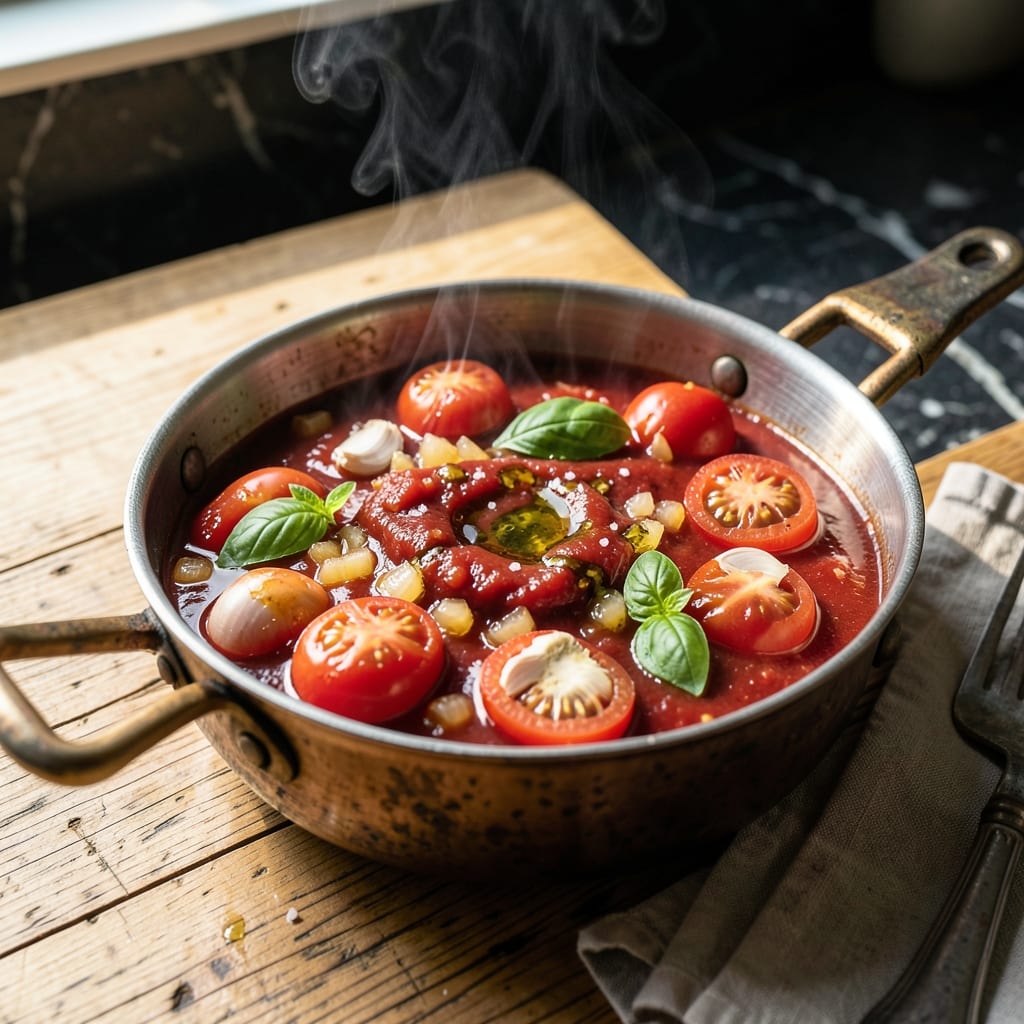
This proven method transforms humble tomato paste into a rich, bold sauce that rivals fresh tomato versions. The secret lies in proper sautéing and simmering to develop deep, complex flavors.
With just 5 ingredients and 20 minutes, you’ll create a versatile sauce perfect for pasta, pizza, or braising. No fresh tomatoes required.
Ingredients for Recipe for Tomato Sauce Using Tomato Paste
Just five humble ingredients transform into a bold, rich sauce without fresh tomatoes.
| Ingredient | Amount | Notes |
|---|---|---|
| Tomato Paste 🍅 | ½ cup | Double-concentrated preferred |
| Extra-Virgin Olive Oil 🫒 | 3 tbsp | High quality, fruity |
| Garlic Cloves 🧄 | 4 cloves | Minced finely |
| Dried Oregano 🌿 | 1 tsp | Mediterranean variety preferred |
| Sea Salt 🧂 | ½ tsp | Fine grain for even distribution |
| Water 💧 | 1 ½ cups | Or vegetable broth for depth |
| Red Pepper Flakes 🌶️ | ¼ tsp | Adjust to heat preference |
| Black Pepper 🌶️ | ¼ tsp | Freshly ground for best flavor |
[recipeingredientscaler]
The tomato paste is the foundation here. Double-concentrated paste delivers deeper flavor with less cooking time. Seek out Italian brands like Mutti or Amore—they’re thicker and sweeter than standard supermarket offerings. The olive oil should be high-quality extra-virgin; its fruitiness balances the paste’s acidity. Don’t bother with light olive oil—it lacks the body this sauce needs.
No fresh tomatoes? That’s the point. Vegetable broth can replace water for added depth. If you’re out of oregano, dried basil or thyme at the same amount works nicely. Garlic powder can sub for fresh (use 1 tsp per 4 cloves), but fresh is ideal. For heat, cayenne pepper can replace red pepper flakes at half the quantity.
This keeps beautifully. Store in an airtight container in the fridge for up to 5 days, or freeze for 3 months. The flavors deepen overnight, making it even better the next day. Freeze in ice cube trays for easy portioning later.
Why You’ll Love This Recipe
- Five-Minute Base: I dump the paste, oil, and garlic in a pan and it transforms into rich sauce before the pasta boils.
- Deep Umami Punch: That concentrated paste plus sizzling garlic and oregano gives it a bold, savory depth no canned sauce matches.
- Endless Meal Starter: I use it on pizza, simmer it into stew, or thin it for soup—same batch, three different dinners.
- Pantry Hero: A tube of paste and a few staples stretch into a quart of sauce for pennies, and it keeps a week in the fridge.
Step-by-Step Instructions for Tomato Sauce Using Tomato Paste
Transform concentrated paste into rich, velvety sauce with this straightforward technique.
Step 1: Bloom Aromatics in Olive Oil
Heat the 3 tbsp extra-virgin olive oil in a medium saucepan over medium heat until it shimmers but doesn’t smoke. The oil should have a gentle ripple across its surface—this is the optimal temperature for infusing flavors without burning.
Add the 4 cloves minced garlic cloves and cook for 30-45 seconds, stirring constantly, until just golden at the edges. You want the garlic to release its aroma and soften slightly but not take on any color beyond pale gold. Burnt garlic will impart a bitter taste to your sauce.
Step 2: Toast the Tomato Paste
Add the 0.5 cup tomato paste to the pan with the garlic and oil. I like to use a rubber spatula to press the thick paste flat against the bottom of the pan. This maximizes surface contact for even cooking.
Cook the paste for 2-3 minutes, stirring frequently, until it deepens in color from bright red to a more brick-red hue. This toasting step is crucial—it removes the raw, metallic taste of canned paste and develops the deep, caramelized flavors that define a great tomato sauce.
Step 3: Season and Deglaze
Sprinkle in the 1 tsp dried oregano, 0.5 tsp sea salt, 0.25 tsp red pepper flakes, and 0.25 tsp black pepper. Stir these into the tomato paste mixture and cook for an additional 30 seconds to bloom the spices. You should notice the kitchen filling with a rich, herbal aroma.
Carefully pour in the 1.5 cups water while stirring. The liquid will sizzle as it hits the hot pan and lift all those concentrated flavors from the bottom. This deglazing step creates the foundation of your sauce’s complexity.
Step 4: Simmer to Perfection
Reduce the heat to low and let the sauce simmer uncovered for 20-25 minutes. You want to maintain a gentle bubble—just enough to keep the sauce moving but not so vigorous that it sputters and spits.
As it cooks, the sauce will darken slightly and thicken to coat the back of a spoon. The raw taste of the tomato paste will completely disappear, replaced by a rich, mellow depth. Stir occasionally, especially toward the end, to prevent sticking as the sauce reduces.
Taste and adjust seasoning if needed, though I typically find the initial measurements perfect. The sauce should have a balanced flavor—bright from the tomato, aromatic from the garlic and oregano, with just a hint of heat from the red pepper flakes.
Pro Tips For Making Recipe For Tomato Sauce Using Tomato Paste
- Bloom the Paste: Cook the tomato paste in olive oil for 2-3 minutes before adding liquids—I learned this the hard way after my first few sauces tasted raw and flat.
- Slice Garlic Thin: Use a microplane or fine mincer for the garlic so it melts into the sauce rather than leaving harsh, chunky bits.
- Skip the Water: Resist the urge to thin the sauce with water; instead, use a splash of pasta water later if needed to keep the flavor concentrated.
- Toast the Oregano: Add dried oregano to the hot oil for 10-15 seconds before the garlic to wake up its flavors—sounds weird, but it works.
Perfect Pairings for This recipe for tomato sauce using tomato paste
Side Dishes
A rich tomato sauce using tomato paste pairs beautifully with classic Italian sides. Creamy polenta or buttery garlic bread soak up the bold flavors perfectly. For a lighter option, a crisp arugula salad with shaved Parmesan adds a peppery contrast. Roasted vegetables like zucchini or eggplant also complement the sauce’s depth. 🍽️
Drink Pairings
Balance the acidity of the sauce with a medium-bodied Chianti or a fruity Sangiovese. For non-alcoholic options, a sparkling lemon soda or iced hibiscus tea adds a refreshing touch. A bold espresso can also cut through the richness if served with pasta. ☕
Complementary Flavors
Enhance your sauce with fresh basil or oregano for a herbal note. A pinch of red pepper flakes adds heat, while grated Parmigiano-Reggiano or Pecorino Romano deepens the umami. For a sweet contrast, a drizzle of balsamic glaze elevates the dish. 🌿
Nutrition Facts

Trained in classic French technique but raised on slow-cooked ribs and spicy rubs, she blends culinary skill with smoke and soul.
- Recipe for Boneless Pork Chops in Cast Iron Skillet: Sear and Baste to Juicy Perfection - October 3, 2026
- Recipe for Boneless Cross Rib Roast: Slow-Roasted Beef with Herb Crust - October 3, 2026
- Hamburgers in Sauce Recipe Crock Pot: Slow-Cooked Savory Delight - October 3, 2026