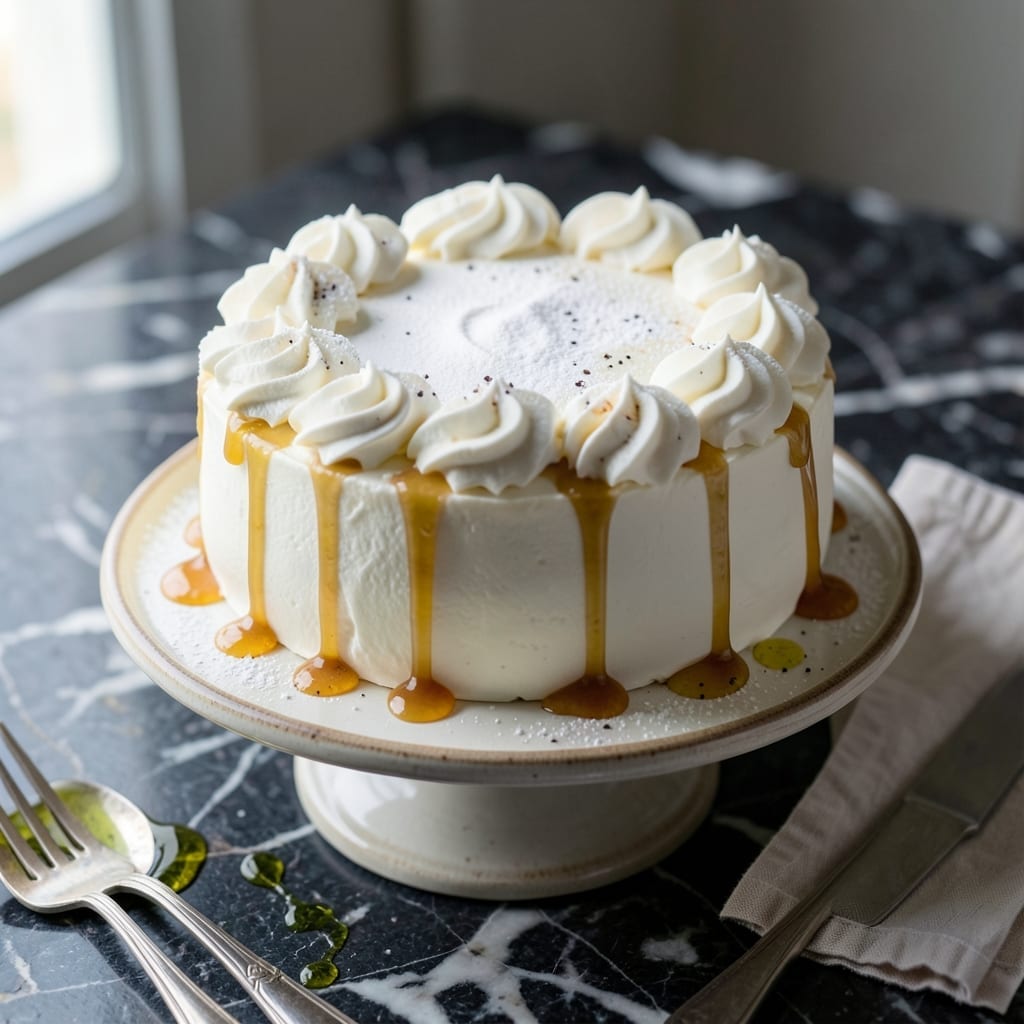
This frosting redefines what a buttercream can be—silky, light, and impossibly smooth.
Built on a Swiss meringue base, it achieves a professional texture that holds its shape while melting on the tongue. The method demands precision but rewards with results that outshine any store-bought version.
Ingredients for Recipe Italian Buttercream Frosting
Eight ingredients transform into professional-quality frosting with Swiss meringue elegance and precision.
| Ingredient | Amount | Notes |
|---|---|---|
| Granulated Sugar 🍚 | 1 ½ cups | Fine grain for smooth meringue |
| Large Egg Whites 🥚 | 5 whole | Room temperature essential |
| Unsalted Butter 🧈 | 1 ½ cups | Softened, cut into tablespoons |
| Vanilla Extract 🌿 | 2 tsp | Pure, not imitation |
| Salt 🧂 | ¼ tsp | Fine sea salt preferred |
| Heavy Cream 🥛 | 2 tbsp | Optional, for extra richness |
| Lemon Juice 🍋 | ½ tsp | Freshly squeezed for balance |
| Water 💧 | ¼ cup | For sugar syrup consistency |
[recipe_ingredient_scaler]
The egg whites are non-negotiable here. Room temperature is critical—cold whites won’t reach proper volume. Use fresh, high-quality eggs for best results. The sugar must be fine grain to dissolve completely in the syrup. Domino or C&H brands are reliable. For the butter, European-style is ideal due to higher fat content, but standard unsalted works if that’s what’s available.
No vanilla extract? Vanilla bean paste at half the amount adds visible specks and intense flavor. Short on butter? Vegan butter substitutes can work but may alter texture slightly. The heavy cream is optional but adds stability—skip if humidity is high. Lemon juice can be swapped for cream of tartar (same amount) to stabilize the meringue. Always use a clean, grease-free bowl for whipping.
This frosting holds at room temperature for 2 days or 1 week refrigerated. Freeze for up to 3 months in airtight containers. Thaw in the fridge overnight, then re-whip briefly. Avoid freezing if using fresh cream—it can separate upon thawing.
Why You’ll Love This Recipe
- No-Fail Whip: I can make this with just a mixer and a saucepan—no candy thermometer required.
- Silky Sweetness: The egg whites and sugar cook to a glossy meringue, then blend with butter for a frosting that’s light but rich.
- Cake’s Best Friend: I’ve used it on birthday cakes, cupcakes, even cookies—it pipes beautifully and holds its shape.
- Stays Fresh: Honestly, it keeps in the fridge for a week, and I can freeze extras for last-minute baking emergencies.
Step-by-Step Instructions for Italian Buttercream Frosting
Master this technique for a silky, stable frosting that pipes beautifully and holds up in any weather.
Step 1: Prepare the Sugar Syrup
In a small saucepan, combine the 1.5 cups Granulated Sugar and 0.25 cup Water. Stir just until the sugar is moistened, then stop—any further stirring can cause crystallization. Heat over medium-high heat until the mixture reaches 240°F on a candy thermometer.
Watch for the syrup to turn clear and just begin to show the faintest threads when drizzled from a spoon. At this stage, the sugar has fully dissolved and reached the soft-ball stage, which is critical for creating the stable meringue base that defines Italian buttercream.
Step 2: Whip the Room Temperature Egg Whites
While the syrup heats, place the 5 whole Large Egg Whites in the bowl of a stand mixer fitted with the whisk attachment. Begin whipping on medium speed until the egg whites become frothy, then gradually increase to high speed as they gain volume.
Add the 0.25 tsp Salt and 0.5 tsp Lemon Juice once soft peaks form. The acid in the lemon juice strengthens the protein structure, while the salt balances sweetness. Continue whipping until the egg whites reach stiff, glossy peaks that hold their shape when the whisk is lifted.
Step 3: Create the Swiss Meringue Base
With the mixer running on medium-high speed, carefully pour the 240°F sugar syrup in a thin, steady stream down the side of the bowl. Avoid pouring directly onto the whisk to prevent splattering. This slow incorporation tempers the egg whites, cooking them gently while maintaining volume.
Once all the syrup is added, continue whipping for 5-7 minutes until the meringue is cool to the touch and forms a thick, glossy mixture. The bowl should feel only slightly warm. This cooling step is essential—adding butter to warm meringue will cause it to melt and separate.
Step 4: Incorporate the Butter and Flavorings
Reduce the mixer speed to medium and add the 1.5 cups Unsalted Butter, softened and cut into tablespoon-sized pieces, one piece at a time. Wait for each piece to fully incorporate before adding the next. This gradual addition emulsifies the fat into the meringue, creating the signature smooth texture.
Once all the butter is incorporated, add the 2 tsp Vanilla Extract and 2 tbsp Heavy Cream. The cream adds richness and ensures a silky consistency. Beat for an additional 2-3 minutes until the frosting is light, fluffy, and holds stiff peaks. If the mixture appears curdled at any point, continue beating—it will come together.
Step 5: Achieve the Perfect Consistency
Assess the frosting’s texture. It should be smooth, creamy, and hold its shape when piped. If it’s too stiff, beat in an additional 1-2 teaspoons of heavy cream, one teaspoon at a time. If it’s too soft, chill the bowl in the refrigerator for 5-10 minutes and re-whip.
Use immediately for piping or spreading, or store in an airtight container at room temperature for up to 3 days. Before using chilled frosting, re-whip briefly to restore its fluffy texture. This frosting pipes beautifully and maintains its structure in warm conditions, making it ideal for cakes, cupcakes, and elaborate decorations.
Pro Tips For Making Recipe Italian Buttercream Frosting
- Heat the Egg Whites: Start with egg whites at room temperature—about 70°F—so they whip up fluffier and hold more volume. I learned this the hard way after my first few batches stayed stubbornly flat.
- Cook the Sugar Right: Use a candy thermometer and pull the sugar syrup at 248°F (firm ball stage). Any lower and your frosting will be runny; any higher and it’ll seize up like cement.
- Beat Before Cooling: Once the sugar syrup is in, beat the egg whites on high for a full 5-7 minutes until the bowl feels cool to the touch. Skipping this step leaves you with grainy, unstable frosting.
- Use Soft Butter: Your butter should be soft but still hold its shape—press your finger in and it should leave a slight dent but not sink. Too warm and the frosting will collapse; too cold and it’ll look curdled.
Best Sauces and Condiments for This recipe italian buttercream frosting
Fruit Compotes
Pair this frosting with a berry compote for a tart contrast. Simmer 1 cup frozen raspberries with 2 tbsp sugar and 1 tsp lemon juice for 5 minutes. The acidity cuts through the richness beautifully.
Chocolate Ganache
Drizzle warm chocolate ganache over frosted cakes for depth. Melt ½ cup heavy cream with 4 oz dark chocolate, then cool slightly. Use 70% cacao for a bittersweet balance that complements the smooth frosting.
Citrus Curds
A lemon curd filling adds bright, zesty notes between cake layers. Whisk 3 egg yolks, ½ cup sugar, and ⅓ cup lemon juice over a double boiler until thickened. Strain for silky texture. 🍋
Caramel Sauce
Drizzle salted caramel sauce for a rich, buttery contrast. Cook 1 cup sugar to amber, then add ½ cup warm cream and 2 tbsp butter. Finish with ½ tsp sea salt for complexity.
Nutty Additions
Toasted chopped hazelnuts or pecans add crunch and earthiness. Press lightly into the frosting’s surface for texture. I prefer Georgia pecans for their buttery sweetness.
Coffee Syrup
Brush cake layers with coffee syrup for depth. Simmer ½ cup strong coffee with ¼ cup sugar until dissolved. This enhances the vanilla notes in the frosting without overpowering it. 💛
Nutrition Facts
Frequently Asked Questions
Why use egg whites at room temperature?
Room temperature whites whip up faster and hold more air, creating a stable meringue base. Cold whites can’t reach full volume, leading to dense frosting.
Can I use salted butter instead?
No, salted butter can make the frosting too salty. Stick with unsalted and control the salt content yourself. The recipe already includes 0.25 tsp salt for balance.
How do I fix curdled frosting?
If it looks separated, keep mixing on medium speed for 2-3 minutes. The heat from friction will re-emulsify it. If too warm, chill for 10 minutes before re-whipping.
How long can I store this frosting?
At room temperature for 2 days, refrigerated for 1 week, or frozen for 3 months. Always re-whip chilled frosting before using.

Trained in classic French technique but raised on slow-cooked ribs and spicy rubs, she blends culinary skill with smoke and soul.
- Recipe for Boneless Pork Chops in Cast Iron Skillet: Sear and Baste to Juicy Perfection - October 3, 2026
- Recipe for Boneless Cross Rib Roast: Slow-Roasted Beef with Herb Crust - October 3, 2026
- Hamburgers in Sauce Recipe Crock Pot: Slow-Cooked Savory Delight - October 3, 2026