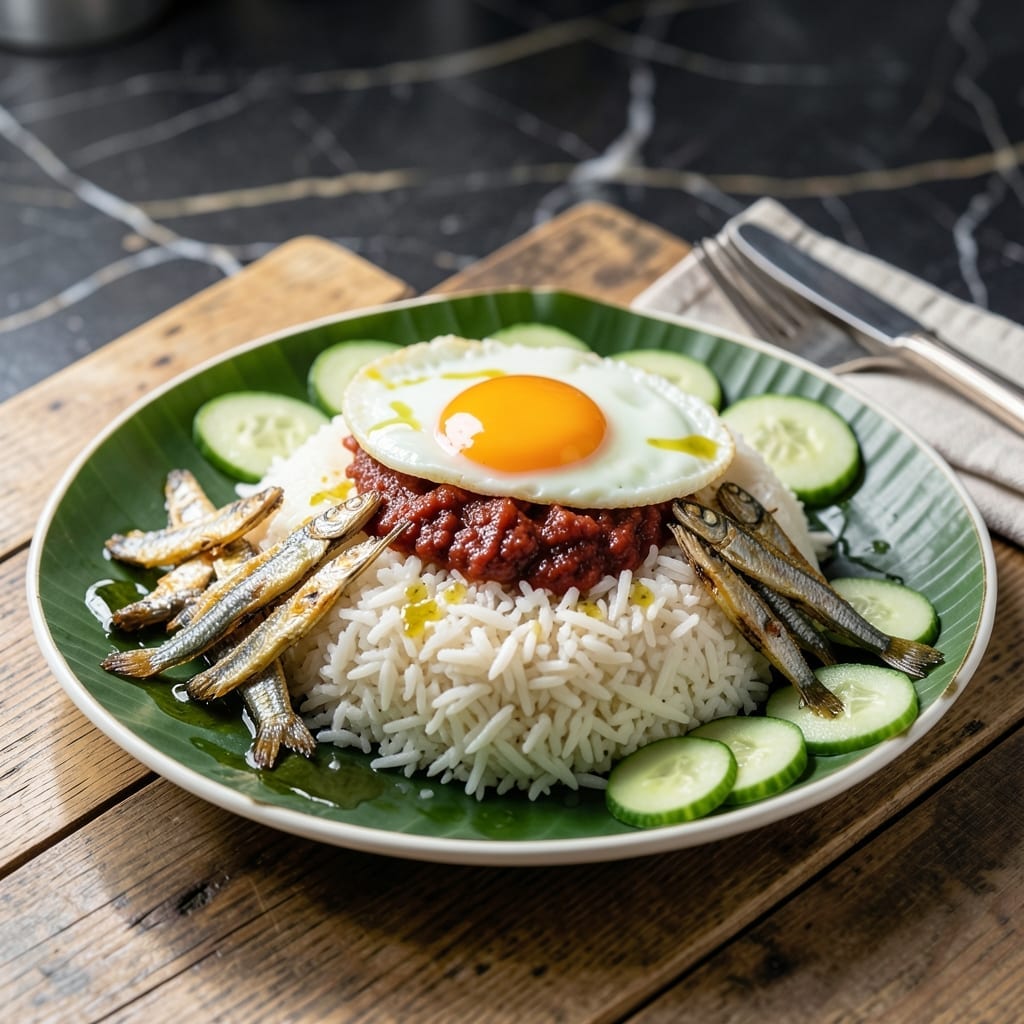
This dish brings together the essence of Malaysian breakfast in one fragrant plate. Coconut rice forms the base, while spicy sambal delivers the signature heat.
The combination of crispy anchovies, roasted peanuts, and boiled eggs creates a perfect balance of textures and flavors. Each bite offers a harmonious blend of creamy, spicy, and savory elements.
Ingredients for Recipe of Nasi Lemak
Fragrant coconut rice, crispy anchovies, spicy sambal, and rich peanuts create this iconic plate.
| Ingredient | Amount | Notes |
|---|---|---|
| Jasmine Rice 🍚 | 2 cups | Rinsed until water runs clear |
| Coconut Milk 🥥 | 1 ½ cups | Full-fat for creaminess |
| Water 💧 | 1 ½ cups | For cooking rice |
| Pandan Leaves 🌿 | 2 whole | Knot each leaf before adding |
| Salt 🧂 | 1 tsp | Adjust to taste |
| Dried Anchovies 🐟 | ½ cup | Rinsed and drained |
| Vegetable Oil 🫒 | ½ cup | For frying anchovies |
| Raw Peanuts 🥜 | ½ cup | Unsalted, skin-on preferred |
| Large Eggs 🥚 | 4 whole | Boiled until set |
| Red Chilies 🌶️ | 10 whole | Fresh or dried, stems removed |
| Shallots 🧅 | 4 whole | Peeled and chopped |
| Garlic Cloves 🧄 | 4 cloves | Peeled and minced |
| Shrimp Paste 🦐 | 1 tbsp | Optional for depth |
| Palm Sugar 🍯 | 1 tbsp | Or brown sugar alternative |
| Lime 🍋 | 1 whole | Juiced for serving |
[recipe_ingredient_scaler]
The coconut milk is non-negotiable for authentic flavor. Full-fat brands like Thai Kitchen or Chaokoh deliver the right creaminess. Jasmine rice is standard, but basmati works in a pinch (just adjust water). Asian grocery stores will have pandan leaves fresh—dried works too but lacks aroma. For the anchovies, look for dried ikan bilis in the international aisle.
No pandan leaves? Bay leaves at half the amount add subtle depth. Can’t find shrimp paste? Fish sauce at one-third the amount mimics the umami (but skip entirely for vegetarian). Substitute cashews for peanuts if needed. For quicker prep, pre-boiled eggs from the store work fine. The sambal heat adjusts easily—reduce chilies for milder flavor.
Cooked rice stays fresh for 2 days in the fridge—reheat with a splash of water. Sambal keeps for 1 week refrigerated or 3 months frozen. Fry anchovies and peanuts just before serving to maintain crispness.
Why You’ll Love This Recipe
- 5-Minute Prep: I just dump everything in the rice cooker—jasmine rice, coconut milk, pandan leaves—and walk away.
- Rich Coconut Aroma: The fragrant coconut milk and pandan leaves make the rice so creamy and delicious it’s hard to stop at one bite.
- Weeknight Hero: Honestly, it’s my go-to for busy evenings when I need something hearty and quick.
- Budget Stretcher: A handful of affordable ingredients feeds my whole family, and leftovers taste even better the next day.
Step-by-Step Instructions for Fragrant Coconut Rice With Spicy Sambal
Master this authentic method for perfectly aromatic rice and balanced, spicy accompaniments.
Step 1: Prepare and Cook the Coconut Rice
Rinse the 2 cups Jasmine Rice until the water runs completely clear. This removes excess starch and ensures fluffy, separate grains. Drain thoroughly in a fine-mesh sieve.
In a rice cooker or heavy pot, combine the drained rice with 1.5 cups Coconut Milk, 1.5 cups Water, 2 whole Pandan Leaves (knotted to release flavor), and 1 tsp Salt. The liquid should come about 1 inch above the rice level.
Cook according to your rice cooker’s standard setting or simmer covered on the stovetop for 18-20 minutes until all liquid is absorbed and the rice is tender. Let it rest covered for 10 minutes to steam completely. The rice should be fragrant with a subtle coconut aroma and the distinctive pandan scent.
Step 2: Fry the Anchovies and Peanuts
Heat the 0.5 cup Vegetable Oil in a wok or deep skillet over medium heat. Add the 0.5 cup Dried Anchovies (rinsed and drained) and fry for 3-4 minutes, stirring constantly, until they turn golden brown and crisp.
Using a slotted spoon, transfer the anchovies to a paper towel-lined plate to drain. In the same hot oil, add the 0.5 cup Raw Peanuts and fry for 2-3 minutes until light golden and fragrant. Remove and drain on paper towels. The oil will now carry the flavors of both anchovies and peanuts, which you’ll use in the next steps.
Step 3: Make the Spicy Sambal
In a food processor or mortar and pestle, combine the 10 whole Red Chilies (stems removed), 4 whole Shallots (peeled and chopped), 4 cloves Garlic Cloves (peeled and minced), 1 tbsp Shrimp Paste, and 1 tbsp Palm Sugar. Process until you have a coarse paste.
Heat 2 tablespoons of the anchovy-peanut oil in a pan over medium-low heat. Add the chili paste and cook for 8-10 minutes, stirring frequently, until the mixture darkens slightly and the raw smell of the chilies dissipates. The sambal should be thick and deeply aromatic. Adjust seasoning with a pinch of salt if needed.
Step 4: Prepare the Accompaniments
Boil the 4 whole Large Eggs in water for 7-8 minutes for soft yolks or 9-10 minutes for fully set yolks. Immediately transfer to an ice bath to stop the cooking process. Peel when cool enough to handle.
Slice the eggs in half lengthwise just before serving. Cut the 1 whole Lime into wedges for serving. The contrast of the cool, creamy egg yolks against the spicy sambal and fragrant rice is what makes this dish exceptional.
Step 5: Assemble and Serve
Fluff the coconut rice with a fork and discard the pandan leaves. Arrange the rice on a serving platter or individual plates. Surround with the fried anchovies, peanuts, and halved eggs.
Place the sambal in a small bowl or directly on top of the rice. Serve immediately with lime wedges on the side. Each bite should layer the creamy coconut rice, the crunch of peanuts, the saltiness of anchovies, the richness of egg, and the fiery kick of the sambal.
Pro Tips For Making Recipe Of Nasi Lemak
- Rinse the Rice: Wash jasmine rice until water runs clear—this removes excess starch so your nasi lemak stays fluffy, not gummy. I learned this the hard way after making mushy rice more times than I’d like to admit.
- Balance the Liquids: Use a 1:1 ratio of coconut milk to water for the perfect creamy texture without being overly rich. After a few greasy batches, I finally nailed this proportion.
- Simmer Low and Slow: Cook the rice on the lowest heat once it boils, or the coconut milk will separate. I used to rush this and ended up with oily, unevenly cooked rice.
- Bruise the Pandan: Lightly crush the pandan leaves before adding them to release more aroma. Sounds weird, but it works—my grandmother swore by this, and she was right.
Essential Equipment for This Dish
Rice Cooker Essentials
For perfect coconut rice every time, I swear by a Zojirushi rice cooker—its fuzzy logic technology adjusts cooking time and temperature automatically. A standard 5.5-cup capacity is ideal for most households. The non-stick inner pot makes cleanup a breeze after the coconut milk cooks down. 💡
Wok for Frying
A carbon steel wok (like Made In’s 14-inch) is my go-to for frying anchovies and peanuts. Its high heat distribution ensures even crispiness without burning. Look for one with a flat bottom if you have an electric stove. The sloped sides make stirring and removing food effortless.
Food Processor
Making sambal is much easier with a mini food processor. I use my Cuisinart 3-cup model for small batches—it pulverizes chilies and shallots into a smooth paste in seconds. For larger quantities, a 7-cup processor handles the job just as well.
Fine-Mesh Sieve
Rinsing jasmine rice properly requires a fine-mesh sieve to prevent grains from slipping through. I keep a stainless steel one from OXO in my kitchen—it’s durable and fits perfectly over my sink. The fine mesh also works for draining anchovies after frying.
Mortar and Pestle
For the most authentic sambal texture, nothing beats a traditional granite mortar and pestle. The grinding action releases more oils from the chilies and shallots. I found mine at a local Asian market for under $20. It’s a workout but worth the effort for that perfect consistency. 🔥
Slotted Spoon
A stainless steel slotted spoon is essential for transferring fried anchovies and peanuts from hot oil to paper towels. The slots allow oil to drain while keeping the crispy texture intact. I always have two on hand—one for cooking, one for serving.
Nutrition Facts
Frequently Asked Questions
Can I substitute basmati rice for jasmine?
Yes, but use 1/4 cup less water and reduce cooking time by 2-3 minutes. Basmati grains stay firmer, so the texture will differ slightly.
How do I make it less spicy?
Remove seeds from chilies and reduce the quantity by half. Adding 1 tsp sugar to the sambal also balances heat effectively.
Can I prepare components ahead?
Cook rice and boil eggs 1 day ahead. Store separately and reheat rice with a splash of water. Fry anchovies and peanuts just before serving.
Why is my rice mushy?
Overcooking or too much liquid causes this. Use exactly 1.5 cups coconut milk and 1.5 cups water for 2 cups rice, and avoid stirring during cooking.

Trained in classic French technique but raised on slow-cooked ribs and spicy rubs, she blends culinary skill with smoke and soul.
- Recipe for Boneless Pork Chops in Cast Iron Skillet: Sear and Baste to Juicy Perfection - October 3, 2026
- Recipe for Boneless Cross Rib Roast: Slow-Roasted Beef with Herb Crust - October 3, 2026
- Hamburgers in Sauce Recipe Crock Pot: Slow-Cooked Savory Delight - October 3, 2026