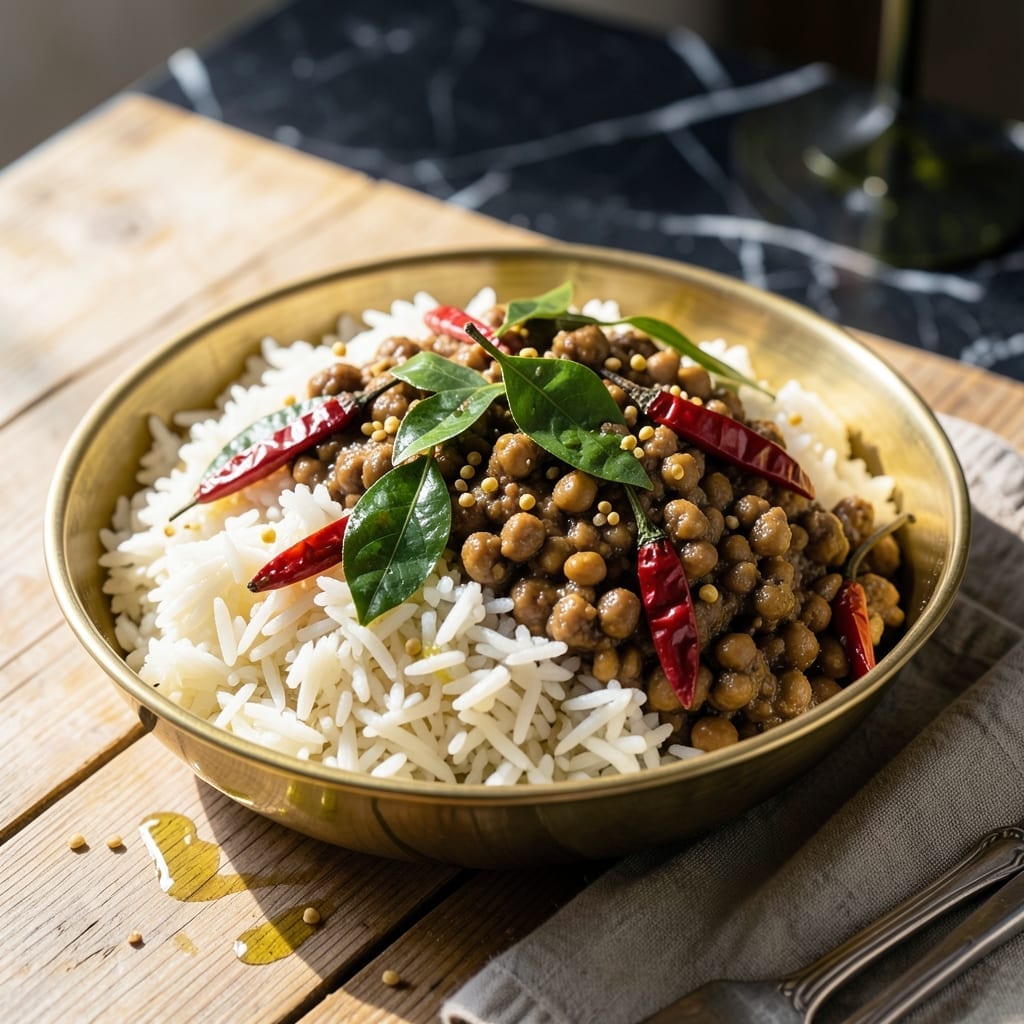
South Indian cuisine captures the essence of bold flavors and authentic traditions. I’ve refined this recipe to deliver the true taste of the region.
With fresh spices and traditional techniques, this dish brings vibrant, aromatic flavors to your kitchen.
Ingredients for Recipe of South Indian Food
Bold spices and fresh herbs bring authentic South Indian flavors to your kitchen table.
| Ingredient | Amount | Notes |
|---|---|---|
| Basmati Rice 🍚 | 2 cups | Rinsed until water runs clear |
| Toor Dal 🌾 | 1 cup | Split pigeon peas, washed |
| Fresh Curry Leaves 🍃 | 10 pieces | Whole leaves, not dried |
| Mustard Seeds 🌿 | 1 tsp | Black or brown variety |
| Cumin Seeds 🌿 | 1 tsp | Whole, not ground |
| Dried Red Chilies 🌶️ | 3 whole | Stems removed, whole |
| Turmeric Powder 🧂 | ½ tsp | Ground, for color and flavor |
| Asafoetida 🌿 | ¼ tsp | Optional but traditional |
| Fresh Ginger 🌿 | 1 tbsp | Finely grated or minced |
| Garlic Cloves 🧄 | 4 cloves | Peeled and minced |
| Green Chilies 🌶️ | 2 whole | Slit lengthwise, seeds in |
| Fresh Cilantro 🌿 | ¼ cup | Chopped, for garnish |
| Coconut Oil 🥥 | 2 tbsp | Or use ghee for richness |
| Tamarind Paste 🍯 | 1 tbsp | For tangy depth |
| Water 💧 | 4 cups | For cooking dal and rice |
[recipe_ingredient_scaler]
The spices are non-negotiable here. Curry leaves and asafoetida are the soul of South Indian cooking—find them at Indian grocery stores or online at Patel Brothers. Mustard and cumin seeds should be fresh (if they don’t smell strong when dry-toasted, they’re old). I always grab my turmeric from Burlap & Barrel for that vibrant color and punch. Don’t skip rinsing the dal and rice—removes excess starch for fluffier results.
No fresh curry leaves? Dried work in a pinch but cut the amount by half. Out of tamarind? Lemon juice at half the quantity adds the tang. Green chilies can be swapped for serranos or jalapeños (adjust seeds for heat). For a quicker version, pressure cook the dal—saves 30 minutes. Coconut oil is traditional, but ghee adds richness if you’re not strict vegetarian.
Dal thickens as it sits—add a splash of water when reheating. Keeps 3-4 days in the fridge, freezes for 2 months. Rice is best fresh, but leftovers make great fried rice the next day. Store spices in airtight containers away from light to preserve their punch.
Why You’ll Love This Recipe
- One Pot Wonder: I can toss the rice, dal, and spices in together and let it simmer while I fold laundry.
- Aroma Bomb: The mustard seeds popping with curry leaves fills my kitchen with that unmistakable South Indian scent.
- Feeds Everyone: Honestly, it’s my go-to for potlucks—vegetarian friends and meat-lovers both ask for seconds.
- Stretches for Days: Leftovers taste even better the next day, and it freezes beautifully for future lazy dinners.
Step-by-Step Instructions for South Indian Dal and Rice
Here’s the traditional method that delivers authentic flavors with perfect texture every time.
Step 1: Prepare the Rice and Dal for Cooking
Rinse the 2 cups Basmati Rice in a fine-mesh strainer under cold water until the water runs completely clear. This removes excess starch and prevents the grains from becoming gummy during cooking. Drain thoroughly and set aside.
In a separate bowl, wash the 1 cup Toor Dal by rubbing the split pigeon peas between your fingers under running water. This removes any surface impurities. Drain and add the dal to a pot with 2 cups Water—it should be just covered by about an inch. Let both the rice and dal sit while you prepare the tempering.
Step 2: Create the Aromatic Tempering Base
Heat the 2 tbsp Coconut Oil in a heavy-bottomed pot over medium heat. When the oil shimmers, add the 1 tsp Mustard Seeds. As soon as they begin to pop—which should happen within 30-45 seconds—add the 1 tsp Cumin Seeds, 3 whole Dried Red Chilies, and 10 pieces Fresh Curry Leaves.
Stir constantly for 15-20 seconds until the cumin seeds turn a shade darker and the curry leaves become fragrant. Immediately add the 0.25 tsp Asafoetida—this hing adds depth but burns easily, so work quickly. The kitchen should fill with an intoxicating aroma at this point.
Step 3: Build the Flavor Foundation
Add the 1 tbsp Fresh Ginger, 4 cloves Garlic Cloves, and 2 whole Green Chilies to the pot. Sauté for 1-2 minutes until the raw garlic smell mellows and the ginger turns slightly golden at the edges. Be careful not to let the garlic brown or it will turn bitter.
Stir in the 0.5 tsp Turmeric Powder and cook for 10 seconds just until it loses its raw smell. The turmeric will deepen the golden color of the oil, creating a beautiful base. Now add the drained Toor Dal with its 2 cups Water, the remaining 2 cups Water, and 1 tbsp Tamarind Paste. Stir well to combine.
Step 4: Cook the Dal and Rice to Perfection
Bring the dal mixture to a boil, then reduce heat to low. Cover and let it simmer for 25-30 minutes, stirring occasionally, until the dal is completely soft and creamy. The lentils should break apart easily when pressed between your fingers, and the liquid should have thickened slightly.
While the dal cooks, prepare the rice. In a separate pot, combine the drained Basmati Rice with 4 cups Water—wait, no, use 2 cups Water here (the dal is using the other 2 cups). Bring to a boil, then reduce to low heat, cover, and cook for 15-18 minutes until the water is absorbed and the rice is fluffy. The grains should be distinct and tender, not mushy.
Step 5: Combine and Garnish for Serving
Once both the dal and rice are cooked, fluff the rice gently with a fork. Taste the dal and adjust seasoning if needed, though the tamarind and spices should provide a balanced tangy, savory flavor. The dal should have a smooth, almost porridge-like consistency with visible whole spices.
Serve the hot dal over a bed of steamed Basmati Rice. Garnish generously with the 0.25 cup Fresh Cilantro, chopping it just before serving to preserve its bright flavor. The final dish should have distinct layers of aroma—earthy from the dal, fragrant from the tempering, and fresh from the cilantro. The rice should be light and fluffy, the perfect canvas for the rich, spiced dal.
Pro Tips For Making Recipe Of South Indian Food
- Toast the Spices: Heat mustard and cumin seeds in hot oil until they pop and release aroma—about 30-45 seconds. I learned this the hard way: raw seeds taste bitter and ruin the dish.
- Rinse the Rice: Wash basmati rice until the water runs clear, then soak for 15 minutes. Skipping this gives you gummy, clumpy grains instead of fluffy separate ones.
- Cook Dal Separately: Boil toor dal until soft but not mushy—about 20 minutes on medium heat. Overcooking turns it to paste, and undercooking leaves it gritty.
- Use Fresh Curry Leaves: Sounds weird, but it works: dried leaves just don’t have the same citrusy punch. Fry 8-10 fresh leaves in the tempering for maximum flavor.
Perfect Pairings for This recipe of south indian food
Beverage Pairings
I love serving this with masala chai—the cardamom and ginger in the tea complement the spices beautifully. Brew 1 cup water with 1 tsp loose chai and ½ cup milk for the perfect balance. The warmth cuts through the richness. 🍵
Fresh Accompaniments
A simple cucumber raita cools the palate with its yogurt base. Mix 1 cup plain yogurt with ½ cup grated cucumber and ¼ tsp roasted cumin powder. I also add fresh mint leaves for extra freshness.
Crunchy Sides
Pappadums add the perfect textural contrast. Fry or microwave until crisp—about 20-30 seconds each. For extra flavor, brush with 1 tsp ghee and sprinkle chaat masala before serving. I source mine from Patel Brothers.
Vegetable Additions
A quick stir-fried greens dish rounds out the meal. Sauté 2 cups spinach with 1 tsp coconut oil and ½ tsp black salt for 2-3 minutes. The slight bitterness balances the dal’s tangy depth. 🥗
Dessert Follow-Up
End with mango lassi for a sweet finish. Blend 1 cup yogurt, ½ cup mango pulp, and 1 tbsp honey until smooth. The cool, creamy texture is the perfect way to end a spiced meal.
Nutrition Facts
Frequently Asked Questions
What makes South Indian dishes unique?
South Indian cuisine stands out with its bold use of tamarind, coconut, and curry leaves. The dishes are lighter, often rice-based, and packed with tangy, spicy flavors.
Can I use substitutes for curry leaves?
If curry leaves are unavailable, try bay leaves or a pinch of asafoetida for depth. Fresh leaves are best, but dried work in a pinch—just use half the amount.
How do I store leftovers?
Store dal and rice separately in airtight containers. They’ll keep for 3-4 days in the fridge or 2 months in the freezer. Reheat with a splash of water to restore texture.
Why is tamarind important in these recipes?
Tamarind adds a signature tangy depth that balances the heat from chilies. Without it, the dish may taste flat. Use lemon juice as a quick substitute if needed.

Trained in classic French technique but raised on slow-cooked ribs and spicy rubs, she blends culinary skill with smoke and soul.
- Recipe for Boneless Pork Chops in Cast Iron Skillet: Sear and Baste to Juicy Perfection - October 3, 2026
- Recipe for Boneless Cross Rib Roast: Slow-Roasted Beef with Herb Crust - October 3, 2026
- Hamburgers in Sauce Recipe Crock Pot: Slow-Cooked Savory Delight - October 3, 2026