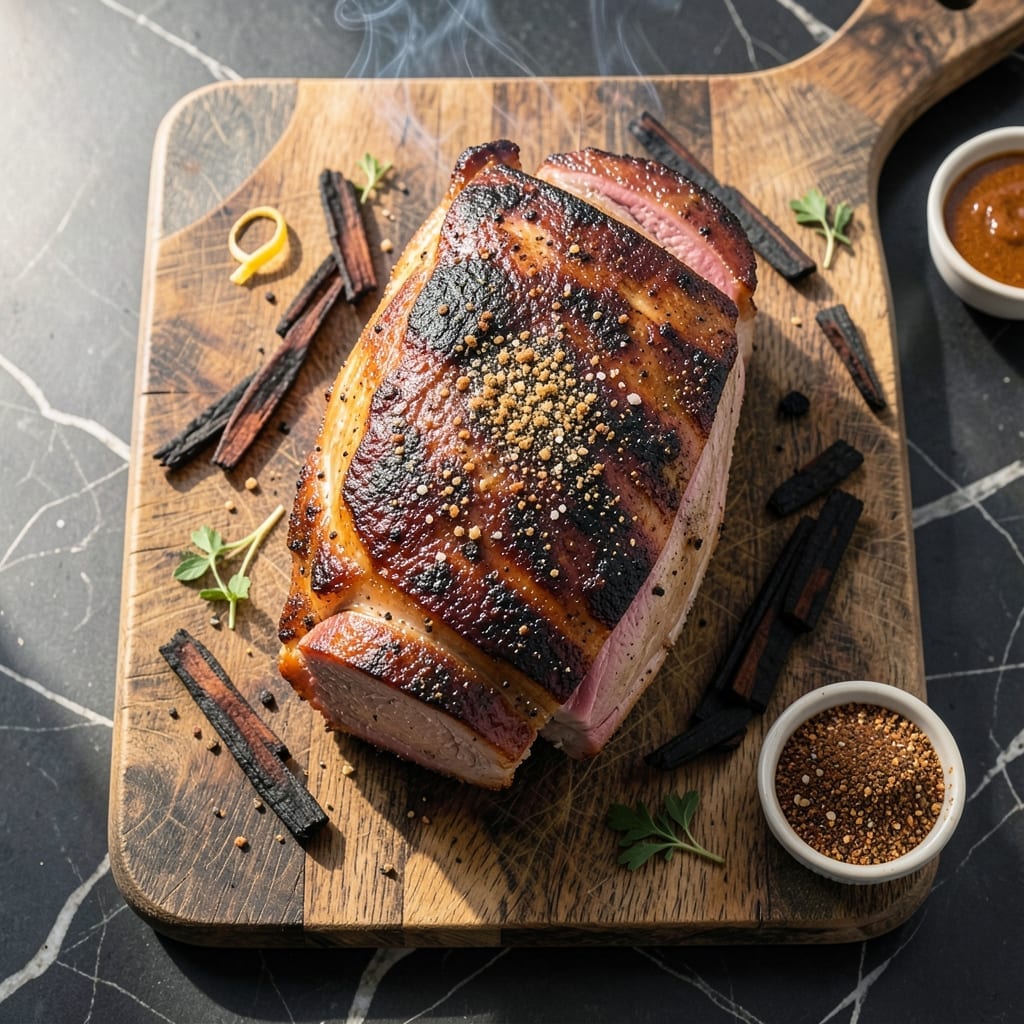
This smoked pork sirloin roast delivers tender, oak-infused perfection that elevates any meal. I developed this method after years of experimenting with wood types and smoking techniques to achieve restaurant-quality results at home.
The key is patience—low and slow smoking allows the pork to absorb the oak’s subtle flavors while maintaining incredible moisture. I learned early on that rushing the process only leads to disappointment, so I always allow ample time for the meat to rest after smoking.
What emerges from the smoker is a roast with a beautiful bark outside and juicy, tender meat inside. The oak wood provides a mild, balanced smoke that complements the pork’s natural sweetness without overpowering it.
Serve with roasted vegetables or creamy mashed potatoes for a complete meal. Here’s how to achieve this tender result every time.
Ingredients for Recipe Smoked Pork Sirloin Roast
Oak wood and a handful of pantry staples create this showstopping centerpiece.
| Ingredient | Amount | Notes |
|---|---|---|
| Pork Sirloin Roast 🥩 | 3 lb | Boneless, trimmed of excess fat |
| Oak Wood Chips 🪵 | 2 cups | Soaked in water for 30 minutes |
| Coarse Kosher Salt 🧂 | 1 ½ tbsp | Diamond Crystal preferred for even seasoning |
| Freshly Ground Black Pepper 🌶️ | 1 tbsp | Coarse grind for texture |
| Garlic Powder 🧄 | 1 tbsp | Not garlic salt |
| Onion Powder 🧅 | 1 tbsp | Balances the rub |
| Smoked Paprika 🌶️ | 1 tsp | Adds depth to the bark |
| Brown Sugar 🧈 | 1 tbsp | Light or dark, for caramelization |
| Olive Oil 🫒 | 2 tbsp | For binding the rub |
| Apple Cider Vinegar 🍏 | ¼ cup | For spritzing during smoking |
| Yellow Mustard 🟡 | 2 tbsp | Binder for the rub |
| Dried Thyme 🌿 | 1 tsp | Optional but recommended |
| Dried Rosemary 🌿 | 1 tsp | Crushed to release flavor |
[recipe_ingredient_scaler]
The pork sirloin roast is the star here—look for a well-marbled, boneless cut around 3-4 pounds for even cooking. I always grab mine from Costco or a trusted butcher (they’ll trim it for you if asked). For the oak wood chips, avoid pre-soaked varieties with additives; plain, natural chips from Home Depot or a grill supply store work best. Soak them yourself for 30 minutes to prevent flare-ups.
No oak chips? Hickory or apple wood gives a different but still delicious smoke profile. Out of brown sugar? Honey or maple syrup (just a tablespoon) can sub in a pinch, though it’ll caramelize faster. If you don’t have apple cider vinegar, white vinegar or lemon juice works for the spritz. The mustard is just a binder—Dijon or whole-grain adds extra flavor if you prefer.
The roast can rest in the fridge with the rub overnight (actually improves flavor). Smoked pork keeps 4-5 days wrapped in the fridge, or freeze slices for 3 months. Leftovers make killer sandwiches or tacos—just reheat gently to avoid drying out.
Why You’ll Love This Recipe
- Set It & Forget: I rub the pork with salt, pepper, and garlic powder, toss in oak chips, and let the smoker do the rest.
- Smoky, Garlicky Bite: That oak smoke with the garlic powder crust gives every slice a deep, savory punch.
- Feeds a Crowd: One roast means leftovers for sandwiches, tacos, or next-day fried rice.
- Budget-Friendly Feast: A pork sirloin roast gives restaurant-quality flavor without the hefty price tag.
Step-by-Step Instructions for Smoked Pork Sirloin Roast
Here’s the method I use to achieve perfectly tender, oak-kissed pork every time.
Step 1: Prepare and Season the Pork Sirloin Roast
Pat the 3 lb Pork Sirloin Roast dry with paper towels to ensure the rub adheres properly. In a small bowl, combine the 1.5 tbsp Coarse Kosher Salt, 1 tbsp Freshly Ground Black Pepper, 1 tbsp Garlic Powder, 1 tbsp Onion Powder, 1 tsp Smoked Paprika, 1 tbsp Brown Sugar, 1 tsp Dried Thyme, and 1 tsp Dried Rosemary.
Rub the 2 tbsp Yellow Mustard all over the pork to create a sticky base for the seasoning. Sprinkle the rub mixture evenly over the entire surface, pressing it in firmly so it forms a crust. Drizzle with the 2 tbsp Olive Oil to help bind everything together.
Let the seasoned roast sit at room temperature for 30-45 minutes while you prepare the smoker. This resting period allows the salt to begin penetrating the meat, enhancing both flavor and tenderness.
Step 2: Set Up the Smoker with Oak Wood Chips
Soak the 2 cups Oak Wood Chips in water for 30 minutes to ensure they smolder rather than burn. Fill your smoker’s water pan to maintain moisture during the long cook. Preheat the smoker to 225°F—this low and slow temperature is key for breaking down the collagen in the pork without drying it out.
Once the smoker reaches temperature, add the soaked oak wood chips to the firebox or smoker box. You want clean, thin blue smoke (not thick white smoke) when you place the pork inside. Position the roast directly on the grates, fat-side up, so the rendered fat bastes the meat as it cooks.
Step 3: Smoke and Spritz for Maximum Tenderness
Smoke the pork undisturbed for the first 2-3 hours. Resist the urge to open the smoker—every time you do, you lose heat and extend the cooking time. After the initial period, begin spritzing the roast every 45-60 minutes with the 0.25 cup Apple Cider Vinegar mixed with an equal amount of water.
The spritz keeps the surface moist and helps build a beautiful bark while preventing the meat from drying out. Continue smoking until the internal temperature reaches 160°F—this typically takes 4-5 hours depending on your smoker’s consistency and the roast’s thickness.
Step 4: Rest and Slice for Optimal Juiciness
Once the pork reaches 160°F, remove it from the smoker and transfer it to a cutting board. Tent it loosely with foil and let it rest for 15-20 minutes. This resting period allows the juices to redistribute throughout the meat, ensuring every slice is moist and flavorful.
Slice the pork against the grain into ½-inch thick pieces. Serving it this way shortens the muscle fibers, making each bite more tender. The roast should have a dark, flavorful bark on the outside and be juicy and smoke-infused throughout.
Pro Tips For Making Recipe Smoked Pork Sirloin Roast
- Soak the Wood Chips: I learned this the hard way—dry oak chips burn too fast and create bitter smoke. Give them at least 30 minutes in water before adding to the smoker.
- Dry the Roast First: Pat the pork sirloin completely dry with paper towels before seasoning. Sounds weird, but it works: the salt and pepper stick better, and you get a more even crust.
- Use a Thermometer: After burning three batches, I finally figured out that pork sirloin is done at 145°F internally—guessing just doesn’t cut it with this cut.
- Rest Before Slicing: Give it a solid 10-15 minutes under foil after smoking. I skip this when I’m lazy, but the juices stay in the meat instead of all over the cutting board.
Health Benefits of This Dish
Rich Protein Source
This dish delivers a powerful protein punch with about 50 grams per 4-ounce serving. Protein is essential for muscle repair and growth, and pork sirloin provides all nine essential amino acids your body needs. I love that it keeps me full and energized for hours. 💪
Vitamin B Powerhouse
Pork is naturally rich in B vitamins, particularly B1, B6, and B12. A serving provides over 20% of your daily B12 needs, which supports nerve function and red blood cell production. These vitamins help your body convert food into energy efficiently.
Iron and Zinc Boost
You’ll get a healthy dose of heme iron (the easily absorbed type) and zinc from this recipe. Iron carries oxygen in your blood, while zinc supports immune function. A 3-ounce serving provides about 10% of your daily iron needs.
Low in Saturated Fat
Compared to other cuts, sirloin is relatively lean with only about 3 grams of saturated fat per serving. I appreciate that I can enjoy the rich flavor without excess saturated fat. The smoking process adds flavor without adding unhealthy fats. 🥩
Rich in Phosphorus
This meal is an excellent source of phosphorus, with one serving providing about 25% of your daily needs. Phosphorus works with calcium to build strong bones and teeth, and helps maintain proper pH balance in your body.
Selenium Content
Pork contains selenium, a powerful antioxidant that protects cells from damage. A 3-ounce serving of pork sirloin provides about 30% of your daily selenium needs. This mineral also supports thyroid function and immune health.
Nutrition Facts
Frequently Asked Questions
Can I use a different wood besides oak?
Hickory adds a stronger flavor, while apple or cherry wood gives a sweeter smoke. Each wood type brings its own unique profile to the pork.
How do I know when it’s done?
Use a meat thermometer—remove the roast when it hits 160°F internally. The temperature will rise to 165°F while resting, ensuring perfect doneness every time.
What if my pork turns out dry?
This usually means it was overcooked or rested too long uncovered. Next time, pull it at 160°F and tent with foil for 15-20 minutes before slicing.
Can I smoke a smaller roast?
Yes, but reduce cooking time. A 2 lb roast typically takes 3-4 hours at 225°F. Always go by internal temperature, not time alone.

Trained in classic French technique but raised on slow-cooked ribs and spicy rubs, she blends culinary skill with smoke and soul.
- Recipe for Boneless Pork Chops in Cast Iron Skillet: Sear and Baste to Juicy Perfection - October 3, 2026
- Recipe for Boneless Cross Rib Roast: Slow-Roasted Beef with Herb Crust - October 3, 2026
- Hamburgers in Sauce Recipe Crock Pot: Slow-Cooked Savory Delight - October 3, 2026