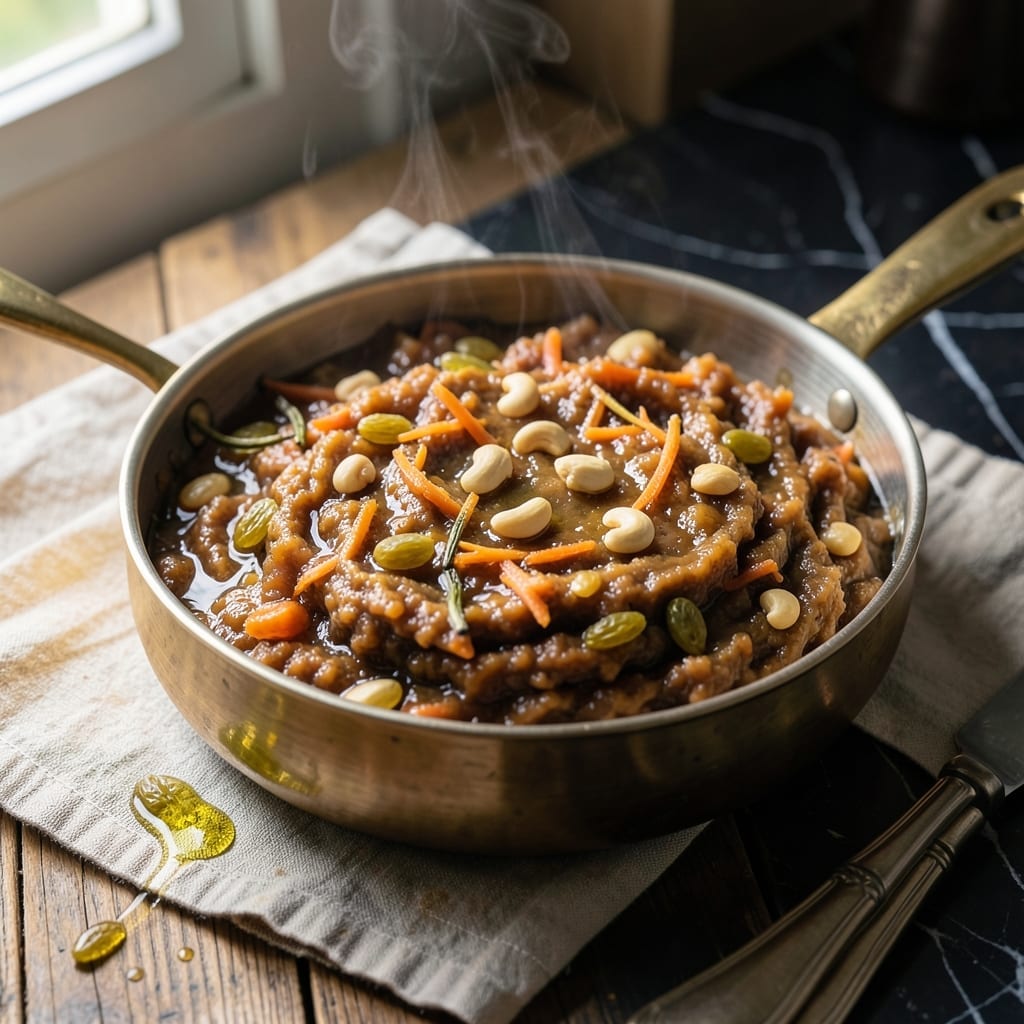
This carrot pudding brings authentic Indian tradition to your kitchen with minimal effort. The rich combination of slow-cooked carrots, ghee, and aromatic cardamom creates a dessert that’s both comforting and elegant.
I’ve refined this method to preserve the dish’s classic flavors while making it accessible. The traditional preparation ensures a creamy texture with just the right balance of sweetness and spice.
Ingredients for Recipe to Make Gajar Ka Halwa
Traditional Indian carrots, ghee, and cardamom create this creamy, spiced dessert with ease.
| Ingredient | Amount | Notes |
|---|---|---|
| Carrots 🥕 | 2 lb | Peeled and finely grated |
| Ghee 🧈 | ½ cup | Clarified butter, unsalted |
| Whole Milk 🥛 | 2 cups | Full-fat for creaminess |
| Sugar 🍚 | ¾ cup | Adjust to taste preference |
| Green Cardamom Pods 🌿 | 8 whole | Lightly crushed, seeds removed |
| Cashew Nuts 🌰 | ¼ cup | Chopped, for garnish |
| Raisins 🍇 | ¼ cup | Golden or black varieties |
| Water 💧 | ½ cup | For initial cooking |
| Saffron Strands 🌼 | 1 pinch | Optional, soaked in warm milk |
| Rose Water 🌹 | 1 tsp | Optional, for floral aroma |
| Pistachios 🌰 | ¼ cup | Shelled and chopped |
| Ground Cinnamon 🌿 | ¼ tsp | Optional, for warmth |
[recipe_ingredient_scaler]
For authentic flavor, freshly grated carrots are essential—avoid pre-shredded as they lose moisture. Ghee should be pure, unsalted, and preferably from an Indian grocery like Patel Brothers. The cardamom pods must be green and aromatic; discard any that smell dull (a sign of age). Whole milk ensures the rich, creamy texture that defines traditional halwa.
No ghee? Clarified butter works in a pinch, but avoid regular butter—it burns. For a dairy-free version, coconut oil is a decent substitute. Short on cardamom? Half the amount of ground cardamom works, but whole pods release flavor slowly. Raisins can be swapped for chopped dates if preferred. The sugar amount is flexible—start with less and adjust.
This keeps well in the fridge for 4-5 days in an airtight container. For longer storage, freeze portions for up to 3 months. Reheat gently on the stove with a splash of milk to restore creaminess. Always bring to room temperature before serving for the best texture and flavor.
Why You’ll Love This Recipe
- One-Pot Magic: I just dump everything in a heavy-bottomed pan—carrots, milk, ghee—and let it simmer while I fold laundry.
- Cardamom Heaven: The ghee-bloomed cardamom pods perfume the whole kitchen, and that warm, floral note in every bite is unreal.
- Feeds a Crowd: I double the batch for Diwali and it’s always the first thing to vanish, even with picky cousins around.
- Better the Next Day: Honestly, the flavors deepen overnight, so I make extra just to sneak cold spoonfuls from the fridge.
Step-by-Step Instructions for Traditional Carrot Pudding
This method delivers authentic texture and depth of flavor through careful layering of techniques.
Step 1: Prepare and Cook the Carrots
Peel and finely grate the 2 lb Carrots using a box grater or food processor. The finer the grate, the quicker they’ll cook down and the smoother your final texture will be. Transfer the grated carrots to a heavy-bottomed pot or kadhai.
Add the 0.5 cup Ghee and 0.5 cup Water to the pot. Cook over medium heat, stirring frequently, until the carrots soften and the water evaporates—this should take 15-20 minutes. You’ll notice the color deepening and the mixture thickening as the moisture reduces.
Step 2: Infuse with Milk and Aromatics
Pour in the 2 cups Whole Milk and add the 8 whole Green Cardamom Pods (lightly crushed to release their seeds). Stir well to combine. The milk will begin to reduce as it simmers—this is where the magic happens.
If using, add the 1 pinch Saffron Strands (soaked in 2 tablespoons of warm milk) at this stage. Cook over medium-low heat for 30-40 minutes, stirring every 5 minutes to prevent sticking. The mixture should reduce by about half, and the carrots will absorb the milk’s creaminess.
Step 3: Sweeten and Thicken
Add the 0.75 cup Sugar and stir until fully dissolved. The sugar will initially make the mixture more liquid, but it will thicken as it cooks. Continue simmering over medium-low heat for another 20-25 minutes.
You’re aiming for a thick, pudding-like consistency where the mixture pulls away from the sides of the pot slightly. If using, stir in the 0.25 tsp Ground Cinnamon during the last 5 minutes of cooking for warmth. The halwa should now be rich and glossy, with the ghee starting to separate slightly at the edges.
Step 4: Finish with Nuts, Raisins, and Fragrance
In a small pan, lightly toast the 0.25 cup Cashew Nuts in a little of the separated ghee until golden brown. Add the 0.25 cup Raisins and cook for 1-2 minutes until they plump up. Pour this mixture into the halwa and stir to combine.
If using, add the 1 tsp Rose Water and mix well. The rose water adds a delicate floral note that complements the richness. Cook for another 2-3 minutes to allow the flavors to meld. The halwa is ready when it reaches a dense, fudge-like consistency that holds its shape when scooped.
Garnish with the 0.25 cup Pistachios and serve warm or at room temperature. The contrast of the cool, crunchy nuts against the warm, creamy halwa is essential to the experience.
Pro Tips For Making Recipe To Make Gajar Ka Halwa
- Grate the Carrots: Use a fine grater or food processor—thin, even shreds cook faster and absorb milk better than chunky pieces. I learned this the hard way after chewing on undercooked slivers.
- Cook Milk Slowly: Simmer the carrots in milk on medium-low heat, stirring often. High heat curdles the milk and leaves the halwa grainy instead of creamy.
- Skip the Shortcuts: Resist the urge to substitute milk powder or condensed milk for whole milk. The real thing reduces properly and gives that authentic, rich texture.
- Add Cardamom Early: Crush the green cardamom pods lightly and add them to the milk while cooking—this lets the aroma infuse the halwa deeply instead of tasting like an afterthought.
Perfect Pairings for recipe to make gajar ka halwa
Beverage Pairings
Serve this creation with masala chai—the warm spices in the tea complement the cardamom and saffron beautifully. I brew mine with 1 tsp loose Assam tea and 2 crushed cardamom pods for harmony. The milk in chai echoes the halwa’s creaminess. 💛
Dessert Accompaniments
Vanilla ice cream offers a cool contrast to the warm pudding. The creamy texture pairs perfectly with the halwa’s density. I scoop ½ cup per serving and drizzle with 1 tbsp honey for extra flair.
Fresh Fruit Contrast
Serve with sliced mangoes or pomegranate seeds for a refreshing contrast. The fruit’s acidity cuts through the richness, balancing each bite. I use 1 ripe Alphonso mango per 4 servings.
Savory Balance
A small portion of savory samosas alongside creates a traditional Indian dessert spread. The spiced potato filling contrasts the sweetness beautifully. I recommend 2-3 mini samosas per person.
Garnish Enhancements
Fresh rose petals or edible silver leaf elevate the presentation for special occasions. The floral notes enhance the rose water in the recipe. A sprinkle of crushed pistachios adds color and crunch. ✨
Nutrition Facts
Frequently Asked Questions
Can I use regular butter instead of ghee?
Use clarified butter as a substitute, but avoid regular butter. Ghee has a higher smoke point and adds authentic flavor. Regular butter may burn and lacks the nutty aroma of traditional ghee.
Why do I need to grate the carrots finely?
Finely grated carrots cook faster and create a smoother texture. Coarse grating results in uneven cooking and a chunkier consistency. For best results, use a fine grater or food processor.
How do I know when the halwa is done?
The mixture should pull away from the pot sides and hold its shape when scooped. Look for a glossy texture with ghee separating at the edges. This takes about 1 hour total cooking time.
Can I make this dairy-free?
Yes! Replace ghee with coconut oil and use almond or oat milk. The texture may be slightly less creamy, but the flavors will still shine.

Trained in classic French technique but raised on slow-cooked ribs and spicy rubs, she blends culinary skill with smoke and soul.
- Recipe for Boneless Pork Chops in Cast Iron Skillet: Sear and Baste to Juicy Perfection - October 3, 2026
- Recipe for Boneless Cross Rib Roast: Slow-Roasted Beef with Herb Crust - October 3, 2026
- Hamburgers in Sauce Recipe Crock Pot: Slow-Cooked Savory Delight - October 3, 2026