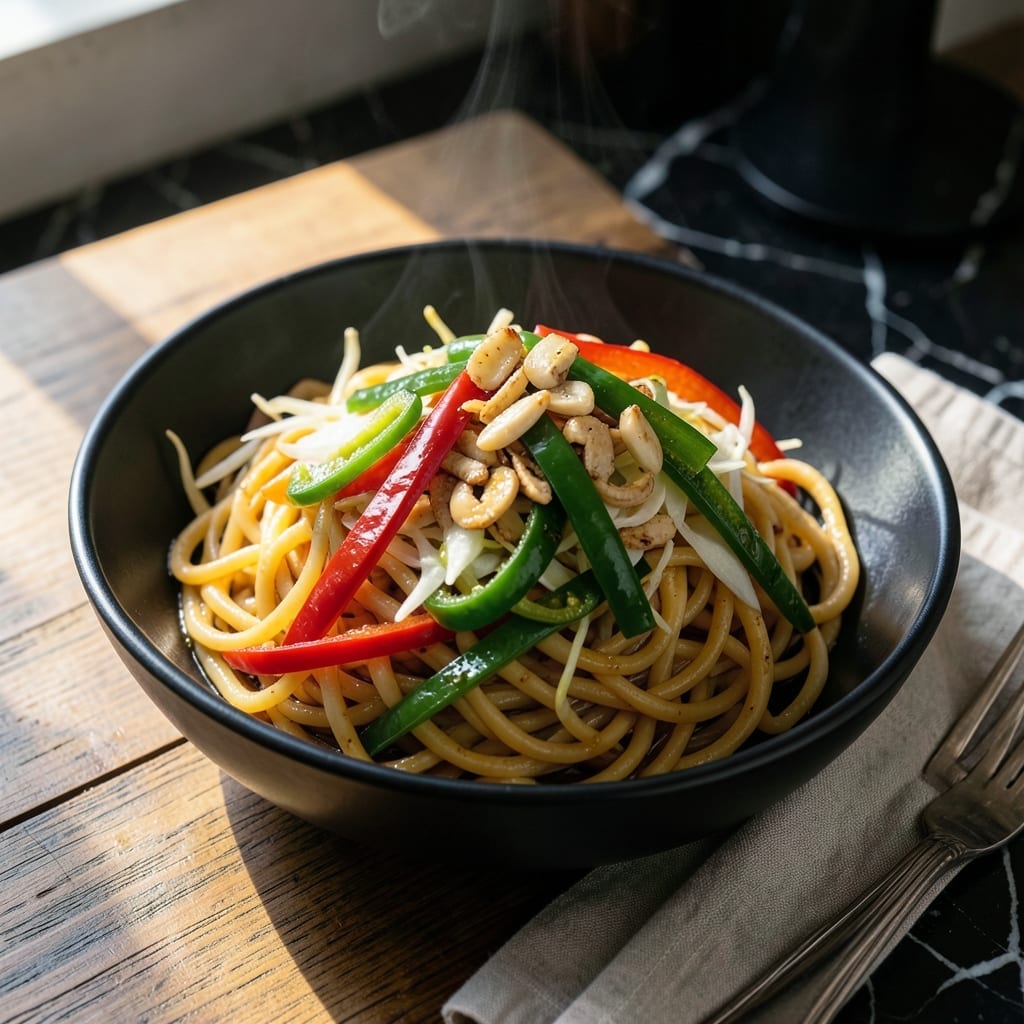
I’ve been chasing that perfect street-food taste for years, and this version nails it every time.
This creation delivers those signature smoky, wok-tossed flavors with tender noodles and a bold savory kick.
Ingredients for Recipe to Make Hakka Noodles
A handful of fresh veggies, bold sauces, and those signature wok-tossed noodles bring the street-food magic home.
| Ingredient | Amount | Notes |
|---|---|---|
| Hakka Noodles 🍜 | 14 oz | Or egg noodles, parboiled |
| Vegetable Oil 🫒 | 3 tbsp | High smoke point preferred |
| Garlic Cloves 🧄 | 6 cloves | Minced finely for depth |
| Fresh Ginger 🌿 | 1 tbsp | Grated or minced |
| Green Bell Pepper 🌶️ | 1 whole | Julienned for texture |
| Red Bell Pepper 🌶️ | 1 whole | Julienned for color |
| Carrot 🥕 | 2 whole | Julienned or shredded |
| Cabbage 🥬 | 2 cups | Shredded thinly |
| Green Onions 🧅 | 4 whole | Sliced diagonally |
| Soy Sauce 💧 | 3 tbsp | Dark soy for color |
| Chili Sauce 🔥 | 2 tbsp | Adjust to spice preference |
| Tomato Ketchup 🍅 | 2 tbsp | For tangy sweetness |
| White Vinegar 💧 | 1 tbsp | Or rice vinegar |
| Sugar 🧂 | 1 tsp | Balances acidity |
| Salt 🧂 | 1 tsp | Adjust to taste |
[recipe_ingredient_scaler]
The noodles are the foundation—look for Hakka noodles at an Asian market (they’re often in the refrigerated section), or sub with egg noodles. The veggies should be fresh and crisp: bell peppers for crunch, carrots for sweetness, cabbage for texture. I grab mine from Trader Joe’s or the local farmers market when I can (the colors pop better in summer).
No green bell pepper? Zucchini or snap peas add great texture. Swap chili sauce for sriracha or Sambal Oelek if that’s what you’ve got. The soy sauce is non-negotiable though—dark soy gives that deep color and umami. If you’re missing tomato ketchup, a splash of hoisin sauce adds similar sweetness with extra depth.
Prep all veggies first—this cooks fast. Keeps in the fridge for 2-3 days, but honestly it’s best fresh. Leftovers? Reheat in a wok with a splash of water to bring the noodles back to life (don’t microwave, they’ll get mushy).
Why You’ll Love This Recipe
- One Pan Meal: I toss everything into a single pan—noodles, peppers, and that aromatic ginger-garlic combo. Cleanup is a breeze.
- Addictive Aroma: The sizzle of garlic and ginger in hot oil hits you first, then the bell peppers add that fresh crunch. It’s ridculously good.
- Weeknight Hero: Between us, this is my go-to when I need dinner fast. It’s unfussy and ready before the kids start complaining.
- Budget Stretcher: Noodles are cheap, the veggies go far, and it fills us up without breaking the bank. Honestly, it’s my secret weapon.
Step-by-Step Instructions for Hakka Noodles
Here’s the method I use for perfectly wok-tossed noodles with vibrant colors and bold flavors.
Step 1: Prep All Vegetables for Even Cooking
Start by julienning the green bell pepper, red bell pepper, and carrots into uniform 2-inch strips. Thinly shred the cabbage and slice the green onions diagonally into 1-inch pieces. This consistent sizing ensures everything cooks at the same rate in the wok.
Mince the garlic cloves finely and grate the fresh ginger—this releases their aromatic oils for maximum flavor impact. I keep these separate from the other vegetables because they’ll go into the wok at a different stage. Having everything prepped and ready is crucial for stir-frying success.
Step 2: Parboil and Drain the Hakka Noodles
Bring a large pot of water to a rolling boil and add the 14 oz Hakka noodles. Cook them for 2 minutes less than the package instructions suggest—you want them slightly underdone because they’ll finish cooking in the wok.
Drain immediately in a colander and rinse under cold water to stop the cooking process. Toss the noodles with 1 tbsp of the vegetable oil to prevent sticking while you prepare the rest. This step is non-negotiable; properly parboiled noodles absorb the sauce better and won’t turn mushy during the final stir-fry.
Step 3: Stir-Fry Aromatics and Vegetables
Heat the remaining 2 tbsp vegetable oil in a wok or large skillet over high heat until it shimmers. Add the minced garlic and grated ginger, stir-frying for 30-45 seconds until fragrant but not browned. Here’s where timing matters—burnt garlic turns bitter fast.
Immediately add the julienned green bell pepper, red bell pepper, and carrots. Stir-fry for 2-3 minutes until the vegetables are tender-crisp. Then add the shredded cabbage and cook for another 2 minutes. The vegetables should retain some bite and their vibrant colors should pop.
Step 4: Combine Noodles with Sauce and Finish
Add the parboiled Hakka noodles to the wok along with the soy sauce, chili sauce, tomato ketchup, white vinegar, sugar, and salt. Toss everything together vigorously with tongs for 3-4 minutes until the noodles are heated through and evenly coated with the sauce.
The sauce should glisten and cling to each noodle. If the mixture seems dry, add a splash of water and continue tossing. Taste and adjust seasoning if needed. Finally, add the sliced green onions and toss for another 30 seconds to wilt them slightly while keeping their fresh crunch.
Step 5: Serve Immediately While Hot
Transfer the Hakka noodles to serving plates right away—stir-fried dishes wait for no one. The noodles should be glossy with sauce, the vegetables vibrant and slightly crisp, and the aroma irresistible. Garnish with extra green onions if desired.
This dish is best enjoyed fresh from the wok when the noodles are at their peak texture. The flavors will meld beautifully as it sits, but the texture is perfect straight from the pan. Serve with your favorite protein or enjoy as a vegetarian main.
Pro Tips For Making Recipe To Make Hakka Noodles
- Pre-cook the noodles: Boil the Hakka noodles for 2-3 minutes less than package instructions—they’ll finish cooking in the wok. I learned this the hard way after ending up with mushy noodles too many times.
- High heat only: Crank the burner to max and keep it there. After burning three batches, I finally figured out that Hakka noodles need that searing heat to get the right texture.
- Uniform vegetable cuts: Slice the green bell pepper into thin, even strips—about 2 inches long. Sounds weird, but it actually changes the outcome by ensuring everything cooks at the same rate.
- Bloom the aromatics: Add the garlic and ginger to the oil first and let them sizzle for 15-20 seconds before adding anything else. My grandmother swore by this, and she was right: it builds the base flavor.
Creative Variations of These Flavors
Spicy Sichuan Twist
Add 1 tbsp Sichuan peppercorns and 1 tsp crushed red pepper to the oil with the garlic and ginger. The numbing heat from the peppercorns pairs beautifully with the bold flavors of the dish. I also add ½ cup chopped cilantro at the end for freshness.
Thai Basil Infusion
Swap the green onions for 1 cup fresh Thai basil leaves, adding them at the very end. The anise-like aroma elevates the dish to restaurant quality. A squeeze of lime juice just before serving brightens all the flavors.
Protein-Packed Version
Add 1 lb cooked chicken breast or shrimp when tossing the noodles with the sauce. For vegetarians, 14 oz firm tofu works perfectly. I prefer chicken for its ability to absorb the sauce flavors.
Extra Veggie Boost
Incorporate 1 cup bean sprouts and ½ cup sliced mushrooms with the cabbage. These add extra texture and nutrition. The bean sprouts should retain a slight crunch for the best experience.
Sweet and Spicy
Increase the chili sauce to 3 tbsp and add 2 tbsp honey to the sauce mixture. This creates a perfect balance of heat and sweetness that kids and adults both love. 🌶️
Gluten-Free Option
Use rice noodles or tamari instead of regular soy sauce. The texture will be slightly different but equally delicious. I find rice noodles hold up well to the high-heat stir-frying.
Nutrition Facts
Frequently Asked Questions
Can I use regular spaghetti instead of Hakka noodles?
Yes, but the texture will differ. Spaghetti works in a pinch, though it won’t absorb flavors as well. For best results, use egg noodles which are closer to Hakka noodles in texture and taste.
Why rinse the noodles after boiling?
Rinsing stops the cooking process and removes excess starch. This prevents them from becoming mushy when stir-fried later and helps the sauce cling better.
How do I adjust the spice level?
Reduce or omit the chili sauce for milder flavor, or add extra for more heat. Start with 1 tbsp and adjust to taste before adding all at once.
Can I make this ahead of time?
It’s best served fresh, but you can prep veggies and sauce a day ahead. Store them separately and cook just before serving to maintain texture and flavor.

Trained in classic French technique but raised on slow-cooked ribs and spicy rubs, she blends culinary skill with smoke and soul.
- Recipe for Boneless Pork Chops in Cast Iron Skillet: Sear and Baste to Juicy Perfection - October 3, 2026
- Recipe for Boneless Cross Rib Roast: Slow-Roasted Beef with Herb Crust - October 3, 2026
- Hamburgers in Sauce Recipe Crock Pot: Slow-Cooked Savory Delight - October 3, 2026