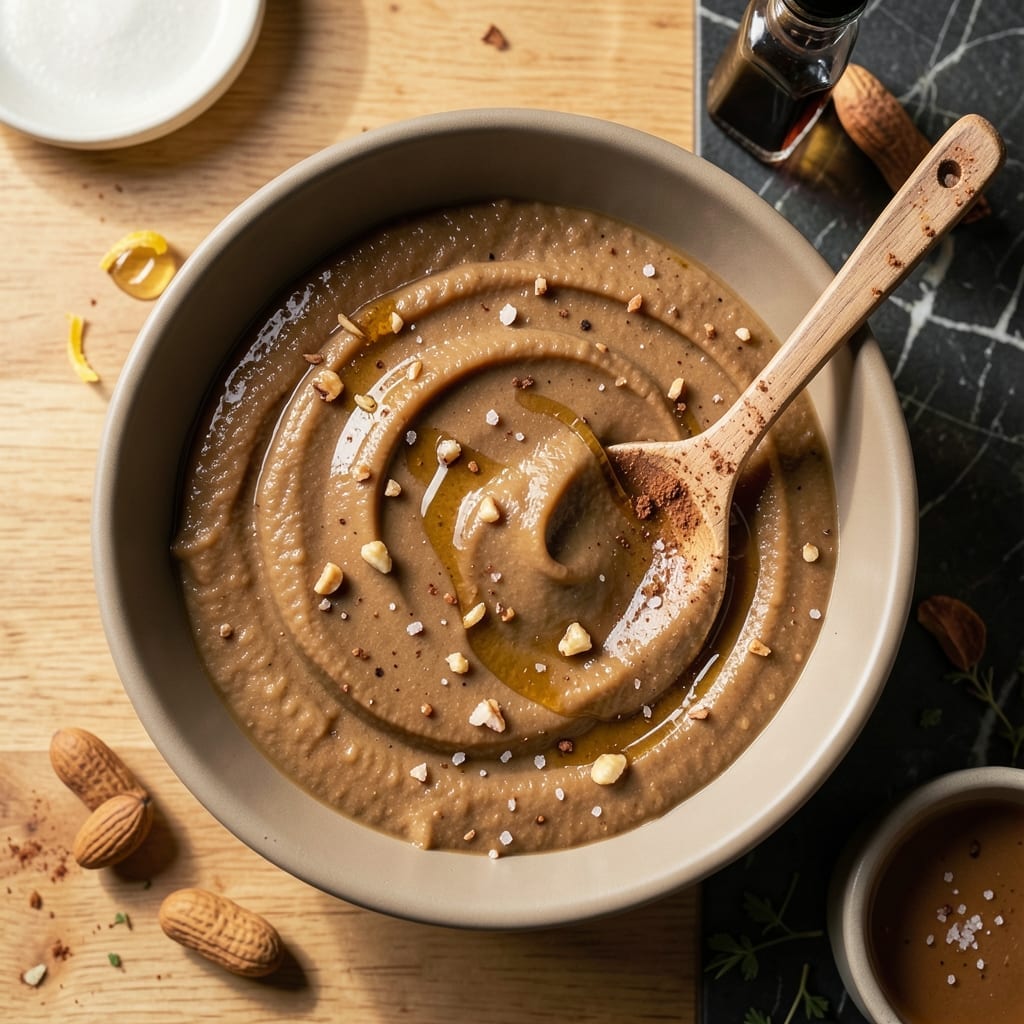
Making peanut butter at home transforms simple peanuts into a fresh, smooth spread that puts store-bought to shame. This method requires just one ingredient and a food processor.
What you get is rich, natural peanut butter with no added preservatives or sugars. It stays fresh for weeks and tastes better than anything you’ll find in stores.
Ingredients for Recipe to Make Peanut Butter
One main ingredient transforms into rich, spreadable goodness right in your kitchen.
| Ingredient | Amount | Notes |
|---|---|---|
| Dry Roasted Peanuts 🥜 | 2 cups | Unsalted, skin-on or off |
| Sea Salt 🧂 | ¼ tsp | Fine grain preferred, optional |
| Honey 🍯 | 1 tbsp | Omit for strict vegan |
| Peanut Oil 💧 | 1 tbsp | Optional for creaminess |
| Vanilla Extract 🌿 | ½ tsp | Pure extract, optional |
| Cinnamon 🌶️ | ¼ tsp | Ground, optional |
[recipe_ingredient_scaler]
Peanuts are the star here. Dry roasted gives the best texture—raw peanuts won’t blend as smoothly. I grab mine from Trader Joe’s or the bulk bins at Whole Foods. Look for unsalted (you can always add salt later) and check the roast date if buying in bulk. Oil-roasted works in a pinch, but your butter might be greasier.
No peanuts? Any nut or seed works—almonds, cashews, sunflower seeds. Want it sweeter? Swap honey for maple syrup or agave. Skipping oil? The peanuts release their own as they blend. The vanilla and cinnamon are just suggestions (I’m team vanilla), but feel free to add cocoa powder or a pinch of cayenne for variety.
Store in an airtight jar at room temp for 2-3 weeks, or fridge for 2 months. The oil may separate—just stir before using. No need to refrigerate if you’ll use it within a few weeks (that’s how I roll).
Why You’ll Love This Recipe
- 5-Minute Whirl: I toss everything in the food processor and walk away—roasted peanuts, honey, a splash of oil, done.
- Sweet & Salty Magic: The honey and sea salt hit that perfect balance, and the vanilla sneaks in a cozy warmth.
- Jars for Days: I double the batch and gift it in cute jars—friends actually ask for repeat deliveries.
- Pantry MVP: A pound of peanuts makes three jars for the cost of one store-bought tub.
Step-by-Step Instructions for Peanut Butter
This is the foolproof way to make creamy homemade peanut butter with just a few ingredients.
Step 1: Process the Dry Roasted Peanuts
Add all 2 cups Dry Roasted Peanuts to the bowl of a food processor. Secure the lid and pulse for 10-15 seconds to break the peanuts into coarse crumbs. You’ll hear the texture change as they go from whole to finely chopped.
Next, run the processor continuously on high speed. After about 30 seconds, the mixture will look like coarse sand. Keep going—this is where most people stop too soon. The peanuts will release their natural oils and start to clump together.
After 1-2 minutes, you’ll notice the mixture begins to form a thick, dough-like ball. Scrape down the sides with a spatula and continue processing. This stage is normal and means you’re on the right track.
Step 2: Achieve Creamy Texture
Continue processing for another 2-3 minutes. The mixture will transform from crumbly to smooth as the peanuts release more oil. You’ll see it go from a thick paste to a glossy, liquid-like consistency. This is the peanut butter coming together.
Stop and scrape the sides and bottom of the bowl every 30-45 seconds to ensure even processing. The peanut butter is ready when it’s completely smooth and drizzles easily from a spoon. This usually takes 4-5 minutes total processing time.
If it seems too thick at this point, don’t worry—the next step will help achieve that perfect spreadable consistency.
Step 3: Add Flavor Enhancers
With the processor running on low, drizzle in the 1 tbsp Peanut Oil. This adds richness and helps create an ultra-smooth texture. Process for 20-30 seconds until fully incorporated. The peanut butter should now look glossy and have a more fluid consistency.
Add the 0.25 tsp Sea Salt, 1 tbsp Honey, 0.5 tsp Vanilla Extract, and 0.25 tsp Cinnamon. Process for another 30-45 seconds until all the additions are evenly distributed and the peanut butter is perfectly smooth.
Taste and adjust seasoning if needed. For a sweeter spread, you can add a bit more honey, but remember the flavors will develop slightly as it sits.
Step 4: Store Properly
Transfer the peanut butter to a clean, airtight jar. Since there are no preservatives, it’s important to store it properly. At room temperature, it will keep for up to 2 weeks. For longer storage, refrigerate for up to 3 months.
Over time, the natural oils may separate and rise to the top. This is completely normal for homemade peanut butter. Simply stir it back together before each use to restore the creamy consistency.
Let it cool completely before sealing the jar. The peanut butter will thicken slightly as it cools, which is exactly what you want for that perfect spreadable texture.
Pro Tips For Making Recipe To Make Peanut Butter
- Pulse First, Then Blend: Start by pulsing the peanuts in short bursts to break them down before switching to continuous blending—this prevents the motor from overheating and gives you more control over the texture.
- Warm the Honey: Microwave the honey for 10-15 seconds before adding it to the mix; cold honey seizes up in the peanut butter and creates clumps that are a pain to smooth out.
- Stop Before It Separates: Keep an eye on the mixture once it starts looking creamy—if you let it run too long, the oils will separate and you’ll end up with a greasy mess instead of spreadable peanut butter.
- Add Oil Gradually: Drizzle in the peanut oil a teaspoon at a time while blending; adding it all at once can make the peanut butter too thin, and you can’t take it back out.
Pro Cooking Tips for recipe to make peanut butter
💡 Master the Roast
Roasting peanuts before blending deepens their flavor. Spread raw peanuts on a baking sheet and roast at 350°F (175°C) for 10-12 minutes, stirring halfway. Watch closely—they should turn golden, not dark brown. Over-roasting can make your peanut butter bitter.
✨ Texture Control
For ultra-smooth peanut butter, blend while the peanuts are still warm. If your mixture seems too thick, add 1-2 teaspoons of neutral oil (like peanut or vegetable oil) to help it emulsify. For a chunky texture, reserve a handful of roasted peanuts, pulse them coarsely, then fold into the smooth blend.
🌡️ Temperature Matters
Let your food processor or blender rest between pulses to avoid overheating, which can turn the peanut butter oily. If your appliance struggles, scrape down the sides frequently. The natural oils will release gradually—patience is key! Store in an airtight jar at room temperature for up to 2 weeks.
🎯 Flavor Boosters
Elevate your peanut butter with add-ins like honey, cinnamon, or a pinch of sea salt. For a richer taste, toast the peanuts with a drizzle of oil and a sprinkle of salt before blending. These small tweaks make a big difference in both flavor and aroma.
Nutrition Facts

Trained in classic French technique but raised on slow-cooked ribs and spicy rubs, she blends culinary skill with smoke and soul.
- Recipe for Boneless Pork Chops in Cast Iron Skillet: Sear and Baste to Juicy Perfection - October 3, 2026
- Recipe for Boneless Cross Rib Roast: Slow-Roasted Beef with Herb Crust - October 3, 2026
- Hamburgers in Sauce Recipe Crock Pot: Slow-Cooked Savory Delight - October 3, 2026