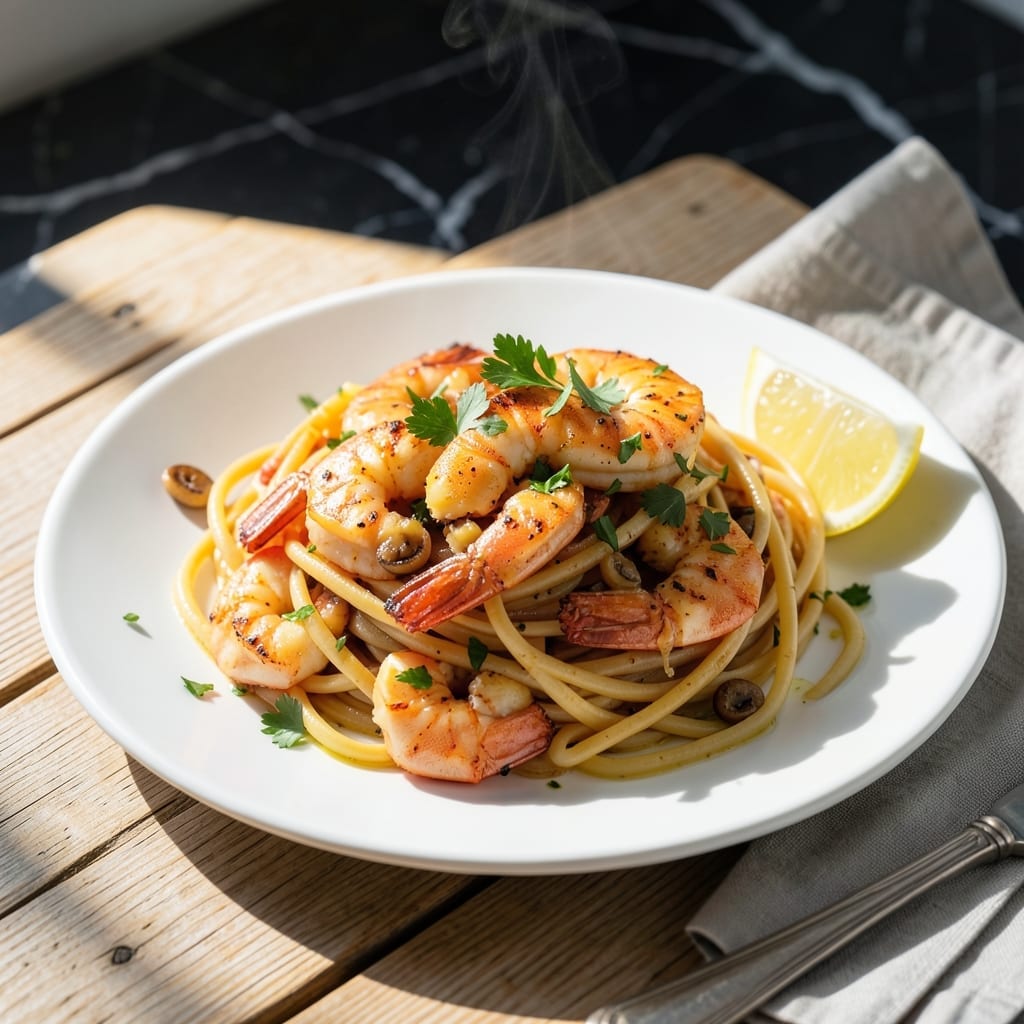
Frozen cooked shrimp can be transformed into a 15-minute gourmet meal with the right technique. This method ensures perfect texture and flavor every time.
Thawing properly and quickly searing in garlic butter creates a dish that tastes fresh, not frozen. The key is in the timing and quality ingredients.
Ingredients for Recipe Using Frozen Cooked Shrimp
Simple ingredients for a restaurant-quality shrimp dinner in minutes. Nothing complicated here.
| Ingredient | Amount | Notes |
|---|---|---|
| Frozen Cooked Shrimp 🦐 | 1 lb | Peeled, deveined, tail-on or off |
| Unsalted Butter 🧈 | ½ cup | Cut into small pieces |
| Garlic Cloves 🧄 | 4 cloves | Minced finely for even flavor |
| Fresh Lemon 🍋 | 1 whole | Zested and juiced |
| Fresh Parsley 🌿 | ¼ cup | Chopped, for garnish |
| Olive Oil 🫒 | 2 tbsp | Extra-virgin preferred |
| Red Pepper Flakes 🌶️ | ¼ tsp | Adjust for heat preference |
| Kosher Salt 🧂 | ½ tsp | Diamond Crystal brand recommended |
| Ground Black Pepper 🌶️ | ¼ tsp | Freshly ground preferred |
| Dry White Wine 🍷 | ¼ cup | Optional for deglazing pan |
| Linguine Pasta 🍝 | ½ lb | Or sub favorite pasta shape |
[recipe_ingredient_scaler]
The shrimp is the star, so quality matters. Look for wild-caught if possible—Trader Joe’s and Whole Foods carry solid frozen options. Tail-on adds presentation, but tail-off saves time. Thaw in cold water (never hot) to preserve texture. The butter should be high-fat European-style for richer flavor—Plugrá or Kerrygold are excellent choices.
No white wine? Chicken or vegetable broth works for deglazing. Fresh parsley is ideal but dried at half the amount is fine. If you’re avoiding butter, olive oil plus a splash of lemon keeps it bright. The pasta can be any shape—spaghetti, fettuccine, or even zucchini noodles for a lighter option. Just keep an eye on cooking time.
Cooked shrimp keeps 3-4 days in the fridge, but best used fresh. Leftover dish reheats gently—microwave at 50% power to avoid rubbery texture. Freeze cooked shrimp separately for up to 3 months, but thaw before reheating. Always store shrimp in a sealed container to prevent freezer burn.
Why You’ll Love This Recipe
- No-Thaw Needed: I just toss the frozen shrimp straight into the buttery garlic sauce—no waiting, no fuss.
- Bright and Zesty: That fresh lemon squeeze at the end makes the garlic butter pop in the best way.
- Dinner in 15: From pan to plate faster than my kids can argue over who sets the table.
- Doubles as Lunch: Leftovers taste even better cold on a salad the next day—no reheat required.
Step-by-Step Instructions for Quick Garlic Butter Shrimp Dinner
This method delivers restaurant-quality results in minutes with minimal effort.
Step 1: Thaw and Season the Shrimp
Place the 1 lb Frozen Cooked Shrimp in a colander and run under cold water for 2-3 minutes to thaw. Pat completely dry with paper towels—this prevents steaming in the pan and ensures a good sear.
Transfer the shrimp to a bowl and toss with 0.5 tsp Kosher Salt, 0.25 tsp Ground Black Pepper, and 0.25 tsp Red Pepper Flakes. Seasoning now allows the flavors to penetrate as the shrimp finishes cooking.
Step 2: Cook the Pasta
Bring a large pot of salted water to a rolling boil. Add the 0.5 lb Linguine Pasta and cook according to package directions until al dente. Reserve ½ cup of pasta water before draining—this starchy liquid will help create a silky sauce.
While the pasta cooks, move to the next step. Timing this right means your shrimp and pasta finish together, so work efficiently. The pasta will continue cooking slightly in the next steps, so err on the side of underdone.
Step 3: Prepare the Garlic Butter Sauce
In a large skillet, heat 2 tbsp Olive Oil over medium heat. Add the 4 cloves Garlic Cloves and sauté for 30-45 seconds until fragrant but not browned. Browning garlic makes it bitter, so watch closely.
Add the 0.5 cup Unsalted Butter and let it melt completely. Stir in the zested 1 whole Fresh Lemon and its juice. The acid brightens the rich butter and balances the dish.
Step 4: Finish with Shrimp and Pasta
Increase heat to medium-high and add the seasoned shrimp to the skillet. Cook for 2-3 minutes, stirring occasionally, until the shrimp are heated through and coated in the garlic butter sauce. Pour in 0.25 cup Dry White Wine and let it simmer for 1 minute to deglaze the pan and deepen the flavors.
Add the drained pasta to the skillet and toss everything together. If the sauce seems too thick, add a splash of the reserved pasta water to reach your desired consistency. Taste and adjust seasoning if needed.
Step 5: Garnish and Serve
Transfer the shrimp and pasta to serving bowls. Sprinkle with 0.25 cup Fresh Parsley for a pop of color and freshness. The parsley adds a clean finish that cuts through the richness of the dish.
Serve immediately while hot. Each bite should deliver tender shrimp, silky pasta, and a luxurious garlic butter sauce with just the right amount of zing from the lemon.
Pro Tips For Making Recipe Using Frozen Cooked Shrimp
- Thaw Properly First: Dump the shrimp in a colander and run cold water over them for 5-10 minutes—this keeps them from turning rubbery. I learned this the hard way after microwaving them straight from the freezer.
- Pat Them Dry: Use paper towels to blot the shrimp completely dry before cooking. Sounds tedious, but it makes a real difference in getting a good sear instead of steaming them.
- Skip Overcooking: Frozen cooked shrimp only need 1-2 minutes in the pan to heat through. After burning a few batches, I finally figured out they’re already done—just warm them gently.
- Bloom the Garlic: Cook the minced garlic in the butter for 30 seconds until fragrant before adding shrimp. My grandmother swore by this, and she was right—it adds depth to the dish.
Troubleshooting recipe using frozen cooked shrimp
Shrimp Still Frozen
If you forget to thaw, place sealed 1 lb Frozen Cooked Shrimp in a bowl of cold water for 10-15 minutes. Never use hot water—it makes shrimp rubbery. I learned this the hard way during a rushed dinner service. 💡
Shrimp Turns Rubbery
This usually means overcooking. Since the shrimp is pre-cooked, it only needs 2-3 minutes in the hot pan to heat through. Watch the edges—they’ll turn opaque when done. Remove immediately to prevent toughness.
Sauce Too Thin
Simmer uncovered for 1-2 minutes to reduce. If still thin, mix 1 tsp cornstarch with 1 tbsp cold water, stir into sauce, and cook for 30 seconds. The reserved pasta water will also help thicken naturally.
Sauce Breaks
If your garlic butter separates, remove from heat and whisk vigorously. Add 1 tbsp cold water while whisking to re-emulsify. European-style butter like Plugrá is more stable for sauces. I always keep some on hand for this reason.
Pasta Sticks Together
Toss with a bit of olive oil right after draining. Work quickly—pasta starts sticking as it cools. Use the reserved pasta water to loosen the noodles when combining with shrimp and sauce.
Flavors Seem Bland
Taste before serving and adjust. Add ¼ tsp Kosher Salt, a squeeze of lemon juice, or pinch of red pepper flakes. The wine deglazing step boosts depth—don’t skip it if possible.
Nutrition Facts
Frequently Asked Questions
Do I need to thaw the shrimp first?
Yes, always thaw under cold water for 2-3 minutes. This preserves texture and prevents rubbery results. Never use hot water or microwave thawing.
How do I prevent overcooking?
Since it’s pre-cooked, only heat for 2-3 minutes in the pan. Watch for opaque edges as the doneness signal. Remove immediately to avoid toughness.
Can I use a different pasta shape?
Try spaghetti, fettuccine, or penne. Just adjust cooking time per package instructions and reserve that starchy pasta water for your sauce.
What if I don’t have white wine?
Use chicken or vegetable broth instead. The acidity isn’t identical but it will still create a flavorful deglaze. Skip entirely if needed—the dish will still be delicious.

Trained in classic French technique but raised on slow-cooked ribs and spicy rubs, she blends culinary skill with smoke and soul.
- Recipe for Boneless Pork Chops in Cast Iron Skillet: Sear and Baste to Juicy Perfection - October 3, 2026
- Recipe for Boneless Cross Rib Roast: Slow-Roasted Beef with Herb Crust - October 3, 2026
- Hamburgers in Sauce Recipe Crock Pot: Slow-Cooked Savory Delight - October 3, 2026