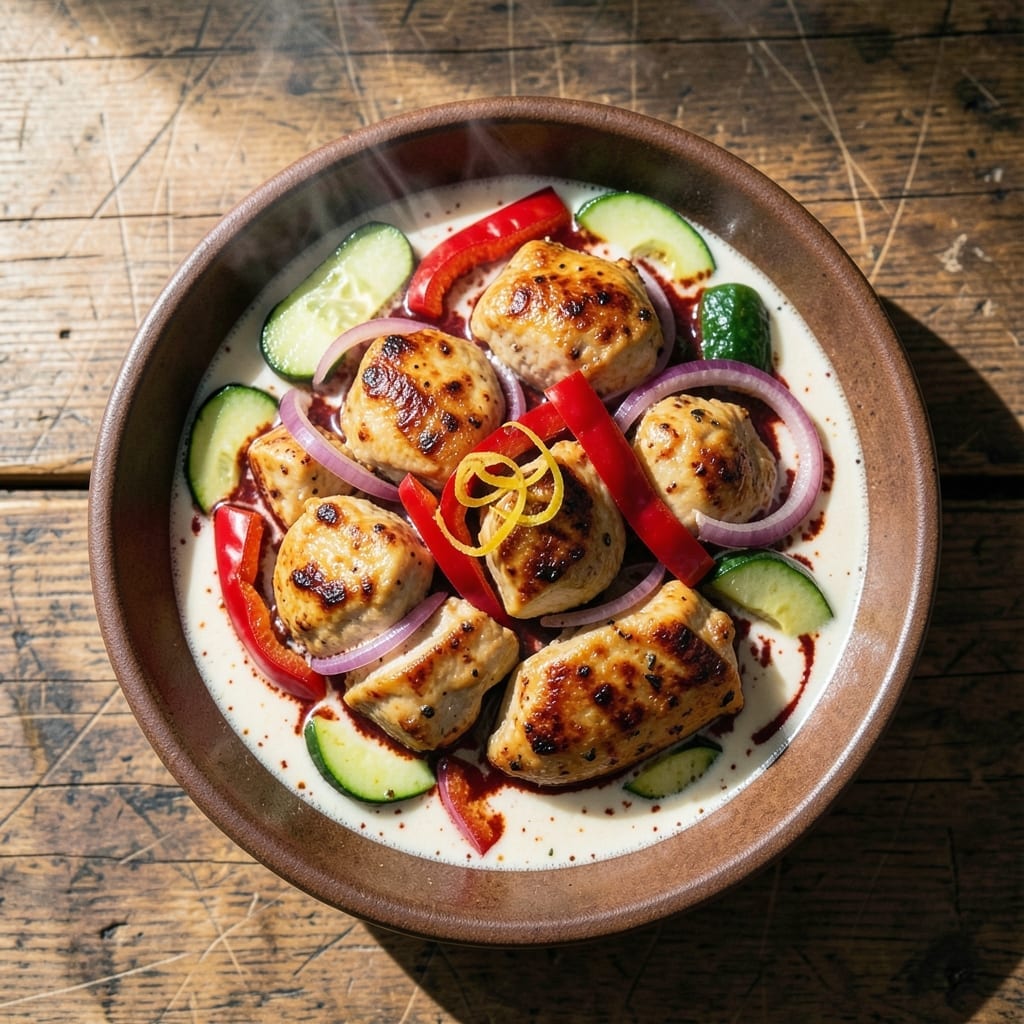
This recipe delivers bold coconut spice with minimal effort using store-bought red curry paste as its flavor foundation.
In 25 minutes, you’ll create a restaurant-quality dish with tender proteins, vibrant vegetables, and a creamy, aromatic sauce.
Ingredients for Red Thai Curry Recipe Using Paste
Store-bought curry paste and a handful of fresh ingredients create this vibrant dish.
| Ingredient | Amount | Notes |
|---|---|---|
| Red Curry Paste 🌶️ | 3 tbsp | Store-bought, Thai brand preferred |
| Coconut Milk 🥥 | 2 cups | Full-fat for creaminess |
| Chicken Breasts 🍗 | 1 ½ lb | Boneless, skinless, sliced thin |
| Red Bell Pepper 🌶️ | 1 whole | Sliced into strips |
| Zucchini 🥒 | 1 whole | Medium size, sliced into half-moons |
| Red Onion 🧅 | 1 whole | Thinly sliced |
| Garlic Cloves 🧄 | 4 cloves | Minced for depth of flavor |
| Fresh Ginger 🌿 | 1 tbsp | Peeled and finely grated |
| Fish Sauce 🐟 | 2 tbsp | Thai brand for authenticity |
| Brown Sugar 🍚 | 1 tbsp | Light or dark variety |
| Fresh Lime 🍋 | 1 whole | Juiced for brightness |
| Fresh Thai Basil 🌿 | ¼ cup | Loosely packed leaves |
| Jasmine Rice 🍚 | 1 ½ cups | Uncooked, for serving |
| Vegetable Oil 🫒 | 2 tbsp | Neutral oil for sautéing |
| Salt 🧂 | 1 tsp | Or to taste |
[recipe_ingredient_scaler]
The curry paste is non-negotiable. Maesri or Thai Kitchen are widely available and deliver authentic flavor. For the coconut milk, full-fat cans from Thai brands like Chaokoh yield the creamiest sauce—avoid light versions as they separate. Chicken breasts should be uniform in thickness for even cooking; pound thicker pieces if needed. Fresh Thai basil (distinct anise flavor) is ideal, but regular basil works in a pinch.
No fish sauce? Soy sauce or tamari offers a similar umami punch at one-to-one ratio. For a vegetarian version, swap chicken for extra-firm tofu or chickpeas. The red bell pepper can be replaced with bell peppers of any color. Brown sugar substitutes include coconut sugar or a touch of maple syrup. If using pre-minced ginger, reduce to 2 teaspoons—it’s more concentrated.
This curry tastes even better the next day as flavors meld. Store in an airtight container for up to 4 days in the fridge or freeze for 3 months. Reheat gently to avoid coconut milk separation (a quick stir brings it back together).
Why You’ll Love This Recipe
- One Pot Wonder: I just dump everything in a single pan—paste, coconut milk, veggies—and let it simmer.
- Flavor Bomb: The red curry paste with creamy coconut milk hits that perfect sweet-spicy balance.
- Meal Prep Magic: I make a big batch Sunday and it tastes even better by Tuesday.
- Budget Stretcher: Chicken breasts and zucchini keep this dish filling without breaking the bank.
Step-by-Step Instructions for Red Thai Curry
This method ensures balanced flavors and perfectly cooked chicken in minimal time.
Step 1: Prepare the Aromatic Base
Heat the 2 tbsp Vegetable Oil in a large pot or deep skillet over medium heat. Add the 3 tbsp Red Curry Paste and stir constantly for 1-2 minutes until the paste darkens slightly and releases its fragrance. This blooms the spices, deepening their flavor.
Quickly add the 1 tbsp Fresh Ginger and minced 4 cloves Garlic Cloves, stirring for 30 seconds until just fragrant. Be careful not to let the garlic brown—it can turn bitter. The mixture should be bubbly and aromatic, filling your kitchen with a rich, spicy scent.
Step 2: Build the Curry Foundation
Pour in 1 cup of the 2 cups Coconut Milk, stirring to dissolve the red curry paste completely. This creates a smooth, vibrant base. Bring to a gentle simmer, then add the 1.5 lb Chicken Breasts (sliced thin for even cooking).
Cook for 5-6 minutes, stirring occasionally, until the chicken is no longer pink on the outside. The coconut milk will begin to separate slightly, which is normal and adds texture to the finished dish.
Step 3: Add Vegetables and Seasonings
Stir in the 1 whole Red Bell Pepper (sliced into strips), 1 whole Zucchini (sliced into half-moons), and 1 whole Red Onion (thinly sliced). Cook for 5 minutes until the vegetables soften slightly but retain some bite.
Add the remaining 1 cup Coconut Milk, 2 tbsp Fish Sauce, 1 tbsp Brown Sugar, and 1 tsp Salt. Stir well and simmer for 5-7 minutes until the chicken is cooked through and the vegetables are tender. The sauce should thicken enough to coat the back of a spoon.
Step 4: Finish and Serve
Remove from heat and stir in the juice of the 1 whole Fresh Lime. Taste and adjust seasoning if needed—add more fish sauce for saltiness or brown sugar for sweetness. The lime brightens the rich coconut base beautifully.
Gently fold in the 0.25 cup Fresh Thai Basil, reserving a few leaves for garnish. Serve immediately over 1.5 cups Jasmine Rice (cooked according to package instructions). The basil adds a fresh, herbal note that complements the bold curry flavors perfectly.
Pro Tips For Making Red Thai Curry Recipe Using Paste
- Bloom the Paste: Cook the red curry paste in a dry pan for 1-2 minutes before adding coconut milk—this wakes up the flavors and prevents a raw, bitter taste.
- Slice Chicken Thin: Cut the chicken breasts into 1/4-inch strips so they cook through in the 5-7 minutes it takes the veggies to soften—no more dry, overcooked meat.
- Skip the Boil: Never let the coconut milk reach a rolling boil, or it’ll separate and turn oily; keep it at a gentle simmer instead.
- Prep Veggies First: Chop the bell pepper and zucchini before you start cooking, so you can toss them in as soon as the chicken is nearly done—no frantic knife work mid-recipe.
Regional Styles of This Recipe
Southern Thailand Style 🌶️
In its birthplace, Southern Thailand, red Thai curry is bold and fiery, packed with fresh bird’s eye chilies, lemongrass, and kaffir lime leaves. The paste is often pounded by hand in a mortar, ensuring vibrant, authentic flavors. Coconut milk balances the heat, while Thai basil and fish sauce add depth. Historically, this region’s proximity to the sea means seafood like shrimp or squid are common proteins.
Central Thailand Style 🥥
Central Thailand’s version leans slightly sweeter and creamier, thanks to a heavier hand with coconut milk and the addition of palm sugar. The paste may include galangal and coriander roots for complexity. Often paired with chicken or tofu, this style reflects the royal cuisine influence, where balance and elegance are key. It’s a crowd-pleaser that’s rich but not overwhelmingly spicy.
Northern Thailand Style 🍛
Northern Thailand’s take on red curry often incorporates local herbs like pepperwood leaves and wild ginger, giving it an earthy twist. The paste might be less sweet, letting the chilies and spices shine. Pork or game meats are traditional here, showcasing the region’s forest-foraging history. The curry tends to be thicker, almost stew-like.
Isaan Style 🔥
Isaan’s red curry is all about heat and simplicity. The paste is spicier, with less coconut milk to dilute the fire. Minced pork or frog are common proteins, reflecting the rural, protein-rich diet. Fermented fish sauce (padaek) often replaces regular fish sauce, adding a funky depth. This style is rustic, unapologetically bold, and deeply tied to the region’s Lao roots.
Nutrition Facts

Trained in classic French technique but raised on slow-cooked ribs and spicy rubs, she blends culinary skill with smoke and soul.
- Recipe for Boneless Pork Chops in Cast Iron Skillet: Sear and Baste to Juicy Perfection - October 3, 2026
- Recipe for Boneless Cross Rib Roast: Slow-Roasted Beef with Herb Crust - October 3, 2026
- Hamburgers in Sauce Recipe Crock Pot: Slow-Cooked Savory Delight - October 3, 2026