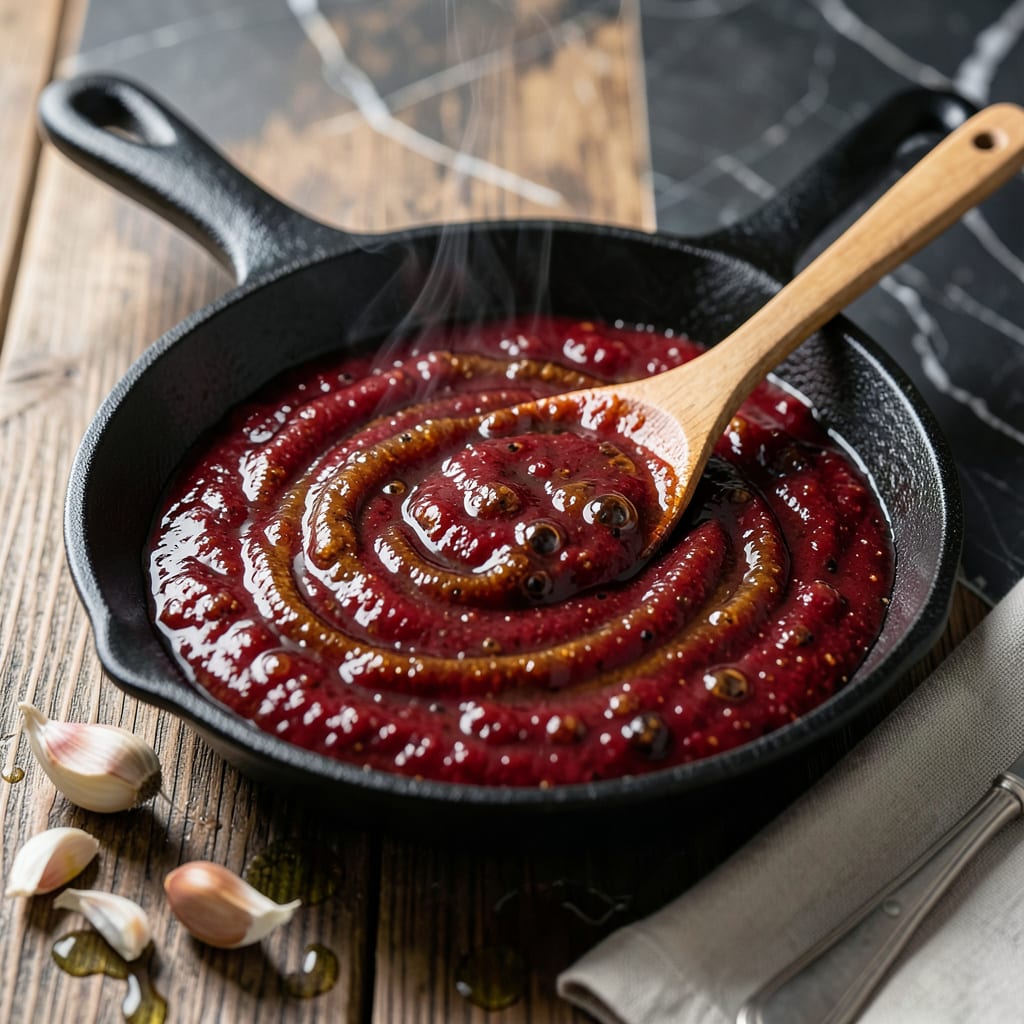
This sauce elevates grilled meats with a sophisticated twist on classic BBQ flavor. I developed it to add depth to competition entries, blending bold red wine with traditional sweet and tangy notes.
Simmered to perfection, it reduces to a glossy consistency that clings beautifully to ribs, chicken, or burgers. The wine’s acidity balances the sweetness, creating a complex sauce that stands out at any cookout.
Ingredients for Red Wine Bbq Sauce
Bold flavors for your grill. Only ten ingredients to that competition-level sauce.
| Ingredient | Amount | Notes |
|---|---|---|
| Red Wine 🍷 | 1 cup | Dry, full-bodied like Cabernet |
| Ketchup 🍅 | 1 ½ cups | Organic preferred for cleaner taste |
| Apple Cider Vinegar 🍏 | ¼ cup | Balances sweetness with tang |
| Molasses 🍯 | ¼ cup | Blackstrap for deeper flavor |
| Brown Sugar 🧈 | ¼ cup | Light or dark works |
| Worcestershire Sauce 🫒 | 2 tbsp | Use vegan variety (Annie's or Edward & Sons) |
| Dijon Mustard 🟡 | 1 tbsp | Smooth, not grainy |
| Garlic Cloves 🧄 | 4 cloves | Minced for even distribution |
| Smoked Paprika 🌶️ | 1 tsp | Adds authentic BBQ depth |
| Black Pepper 🌶️ | ½ tsp | Freshly ground preferred |
[recipe_ingredient_scaler]
The red wine is non-negotiable here—Cabernet Sauvignon or Merlot give that deep, jammy base. Don’t waste the good stuff (save your $20 bottles for drinking), but avoid cooking wine. Trader Joe’s has solid affordable options. For molasses, blackstrap brings more iron and a darker flavor, but regular works in a pinch. The ketchup? I swear by Organic Heinz—no high-fructose corn syrup funk.
No red wine? Red grape juice plus 1 tbsp vinegar gets you 80% there. Swap molasses for honey or maple syrup (but remember, this is vegan, so maple’s your go-to). Out of Worcestershire? Soy sauce plus a dash of vinegar works—just use the vegan kind. The smoked paprika is key for that BBQ vibe, but regular paprika plus a pinch of liquid smoke does the trick.
This sauce keeps 2 weeks in the fridge in a sealed jar. For longer storage, freeze in ice cube trays—6 months easy. The flavors deepen overnight, so make it a day ahead if you can. Stir before using—it’ll thicken as it cools.
Why You’ll Love This Recipe
- One-Pot Wonder: I just dump everything in a saucepan and let it simmer—no fancy steps, no extra bowls.
- Rich & Tangy: The molasses and red wine give it this deep, complex sweetness that’s way better than store-bought.
- Grill Night Hero: I slather it on ribs, chicken, even veggie burgers—it works for everything at our cookouts.
- Makes a Jar: I always double the batch and keep the leftovers in the fridge for up to two weeks.
Step-by-Step Instructions for Red Wine BBQ Sauce
Here’s the method that delivers that deep, complex flavor you’re after.
Step 1: Sauté the Aromatics
Heat a medium saucepan over medium heat. Add the 4 cloves Garlic Cloves (minced) and cook for 1-2 minutes until fragrant but not browned. You want to soften the garlic’s sharpness without burning it—burnt garlic turns bitter and ruins the sauce.
This quick sauté releases the garlic’s essential oils, which will infuse the sauce with aromatic depth. Keep the heat moderate; if it starts to brown too quickly, reduce the heat slightly.
Step 2: Combine the Liquid Base
Pour in the 1 cup Red Wine, 1.5 cups Ketchup, 0.25 cup Apple Cider Vinegar, 0.25 cup Molasses, and 2 tbsp Worcestershire Sauce. Stir well to combine all the ingredients. The mixture will look thin at first, but it will thicken as it simmers.
As you add the red wine, you’ll notice the color deepen immediately. This is the foundation of the sauce’s rich hue and complex flavor. Let the mixture come to a gentle simmer before moving to the next step.
Step 3: Incorporate Sweet and Spicy Elements
Stir in the 0.25 cup Brown Sugar, 1 tbsp Dijon Mustard, 1 tsp Smoked Paprika, and 0.5 tsp Black Pepper. The brown sugar and molasses will dissolve as the sauce heats, creating a balanced sweetness that complements the tangy vinegar.
The smoked paprika adds that authentic BBQ depth mentioned in the ingredients list. Taste the sauce now—you should detect a harmonious blend of sweet, tangy, and smoky notes. If the flavor seems off, double-check that all ingredients are added in the correct amounts.
Step 4: Simmer to Perfection
Reduce the heat to low and let the sauce simmer uncovered for 20-25 minutes. Stir occasionally to prevent sticking and ensure even cooking. The sauce will gradually thicken as the liquids reduce.
You’ll know it’s ready when it coats the back of a spoon and has a glossy, slightly syrupy consistency. If it thickens too much before the time is up, add a splash of water and continue simmering. This slow reduction concentrates the flavors, giving you that rich, complex BBQ sauce you’re aiming for.
Remove from heat and let it cool slightly. The sauce will continue to thicken as it cools. Once cooled, transfer to an airtight container—it will keep in the refrigerator for up to 2 weeks.
Pro Tips For Making Red Wine Bbq Sauce
- Simmer Low and Slow: Keep the heat at a gentle simmer—too high and the red wine will reduce too fast, leaving a harsh, boozy taste instead of a rich, mellow base. I learned this the hard way after ruining a batch by cranking it to high.
- Use Bold Red Wine: Skip the cooking wine and go for a dry, full-bodied red like Cabernet or Zinfandel. The better the wine, the deeper the flavor—your sauce will actually taste like it has character.
- Balance the Sweetness: Taste as you go, especially with the molasses and brown sugar. Red wine can be tannic, and too much sweetness will make the sauce cloying—add sugar gradually, about 1 tablespoon at a time.
- Reduce the Vinegar First: If you’re short on time, simmer the apple cider vinegar for 2-3 minutes before adding other ingredients. This softens its sharpness so it blends smoothly with the wine and ketchup without overpowering them.
Serving Suggestions for This Recipe
Grilled Meats Pairing
This sauce shines on slow-cooked baby back ribs—brush it on during the last 30 minutes of smoking. The acidity in the wine cuts through the fat beautifully. For chicken, I love it on thighs or drumsticks grilled over indirect heat. 🔥
Burger and Sandwich Uses
Drizzle over beef or portobello burgers for a gourmet touch. It also transforms pulled pork sandwiches—I recommend 1-2 tbsp per sandwich to avoid overwhelming the meat. The molasses adds a caramelized depth that pairs perfectly with smoked meats.
Vegetarian Options
Don’t overlook its potential on grilled vegetables—eggplant and portobello mushrooms soak it up like sponges. Toss cauliflower florets in the sauce before roasting at 400°F for a sticky, sweet glaze. Even tofu benefits from its bold flavor.
Cheese Board Surprise
Use it as a dipping sauce for aged cheddar or smoked gouda. The tangy-sweet profile balances sharp cheeses beautifully. I serve it in small ramekins at gatherings—guests always ask for the recipe after the first taste. 💛
Leftovers Reinvented
Mix leftover sauce with mayonnaise for a quick BBQ aioli, perfect for fries or onion rings. Thin it with apple cider vinegar to create a vibrant salad dressing. I’ve even stirred it into baked beans for extra depth.
Nutrition Facts

Trained in classic French technique but raised on slow-cooked ribs and spicy rubs, she blends culinary skill with smoke and soul.
- Recipe for Boneless Pork Chops in Cast Iron Skillet: Sear and Baste to Juicy Perfection - October 3, 2026
- Recipe for Boneless Cross Rib Roast: Slow-Roasted Beef with Herb Crust - October 3, 2026
- Hamburgers in Sauce Recipe Crock Pot: Slow-Cooked Savory Delight - October 3, 2026