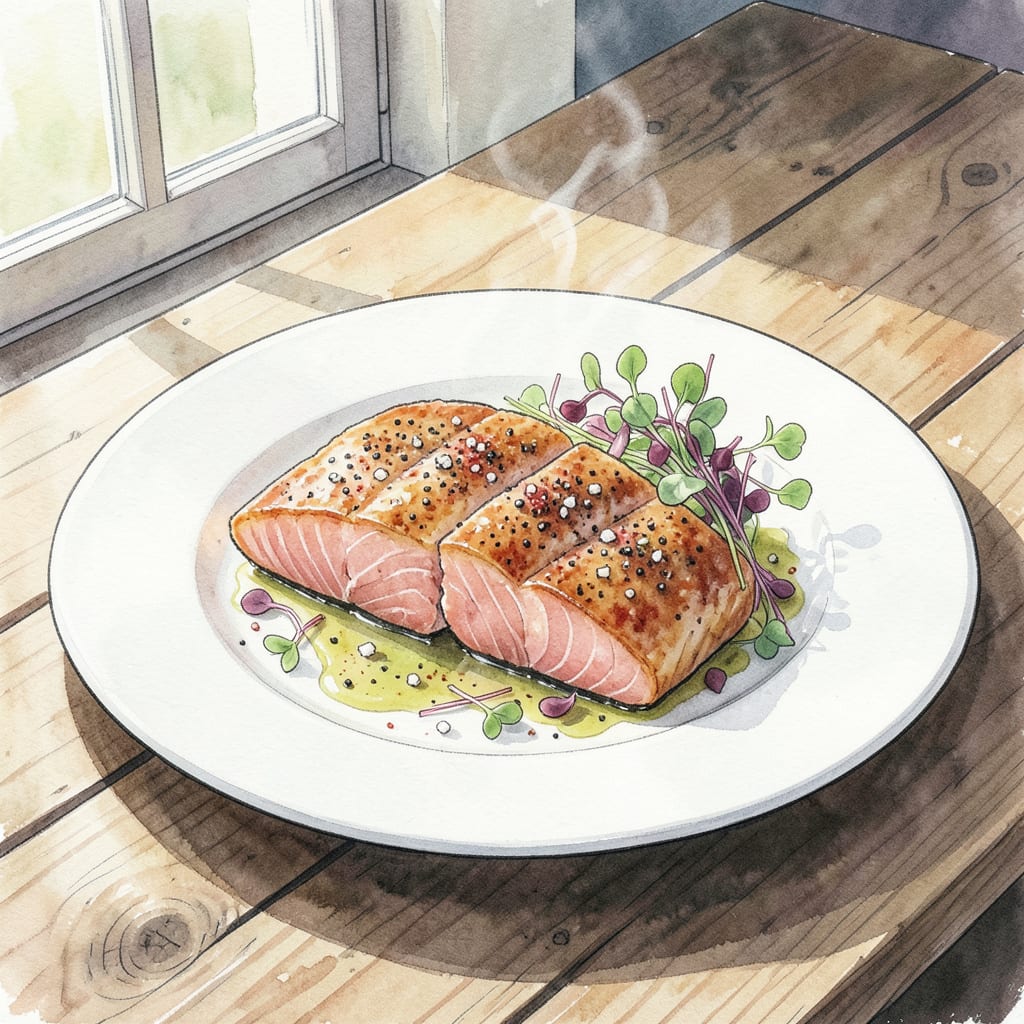
As a pitmaster with French technique training, I’ve perfected the art of pan-searing salmon to achieve restaurant-quality results at home. The key is achieving that crispy skin while keeping the flesh tender and moist.
My secret lies in proper preparation and precise temperature control. By seasoning the salmon just right and searing it in a hot skillet, you’ll achieve perfectly cooked salmon every time. Serve with your favorite sides for a complete meal.
Ingredients for Restaurant Salmon
Quality salmon, precise seasoning, and hot skillet – that’s all you need.
| Ingredient | Amount | Notes |
|---|---|---|
| Salmon Fillets 🐟 | 4 pieces | Skin-on, preferably wild-caught |
| Kosher Salt 🧂 | 1 ½ tsp | Diamond Crystal preferred |
| Black Pepper 🌶️ | 1 tsp | Freshly ground |
| Garlic Powder 🧄 | ½ tsp | For even coating |
| Paprika 🌿 | ¼ tsp | Smoked or sweet |
| Olive Oil 🫒 | 2 tbsp | High-quality, for searing |
| Unsalted Butter 🧈 | 2 tbsp | For finishing, cold |
| Fresh Lemon 🍋 | 1 whole | For juice and zest |
| Fresh Parsley 🌿 | ¼ cup | Chopped, for garnish |
| Fresh Dill 🌿 | ¼ cup | Chopped, optional |
| White Wine 🍷 | 2 tbsp | Dry, for deglazing |
[recipe_ingredient_scaler]
For the best results, choose wild-caught Alaskan or Pacific salmon. The skin should be intact for that perfect crispy sear. Most grocery stores carry it, but Whole Foods often has the best selection. Freshness matters here—if it smells fishy, it’s too old.
No white wine? Use chicken or vegetable broth for deglazing. Fresh herbs make a difference, but dried dill works in a pinch. If your salmon has scales, make sure they’re removed before cooking. For an extra burst of flavor, add a squeeze of fresh lemon just before serving.
Leftover salmon keeps for 2-3 days in the fridge. Reheat gently in a skillet with a bit of oil to prevent drying out. The cold butter trick at the end makes all the difference – it adds richness without overpowering the salmon. Freeze individual portions for up to 3 months.
Step-by-Step Instructions for Pan-Seared Salmon
Follow these precise steps to achieve restaurant-quality salmon with a perfect sear every time.
Step 1: Prepare the Salmon Fillets
Start by patting the 4 pieces Salmon Fillets dry with paper towels, ensuring they’re completely moisture-free. This step is crucial for achieving that perfect sear. Season both sides of the fillets with the 1.5 tsp Kosher Salt, 1 tsp Black Pepper, 0.5 tsp Garlic Powder, and 0.25 tsp Paprika. Make sure to coat the fillets evenly, pressing the seasoning into the fish gently.
Let the seasoned salmon fillets sit at room temperature for 10-15 minutes before cooking. This helps the fish cook more evenly. While waiting, prepare your other ingredients: chop the 0.25 cup Fresh Parsley and 0.25 cup Fresh Dill if using, and have the 1 whole Fresh Lemon ready for juicing later.
Step 2: Sear the Salmon to Perfection
Heat a large skillet over medium-high heat and add the 2 tbsp Olive Oil. Once the oil is hot and shimmering, carefully place the salmon fillets skin-side up (if they have skin) or presentation-side down (if skinless). Cook for 3-4 minutes until you see a golden-brown crust forming on the bottom. Don’t touch or move the fillets during this time – let them develop that beautiful crust.
Flip the salmon and cook for another 3-4 minutes on the other side, or until it reaches your desired level of doneness. For medium-rare, aim for an internal temperature of 120-125°F at the thickest part. Remove the salmon from the skillet and transfer it to a plate, tenting it loosely with foil to keep warm.
Step 3: Finish with Butter and Aromatics
Reduce the heat to medium and add the 2 tbsp Unsalted Butter to the same skillet. Once melted, tilt the pan to ensure the butter coats the entire surface. Add the chopped 0.25 cup Fresh Parsley and 0.25 cup Fresh Dill (if using) to the butter and let them sizzle for 30 seconds until fragrant. Squeeze in some juice from the 1 whole Fresh Lemon – about 1-2 tablespoons should do – and let it simmer briefly.
Deglaze the pan with 2 tbsp White Wine, scraping up any browned bits from the bottom. Let the wine reduce by half, which should take about 1-2 minutes. The sauce should be lightly emulsified and slightly thickened. Taste and adjust seasoning as needed.
Step 4: Serve Immediately
Place the cooked salmon fillets on warmed plates and spoon the butter-lemon sauce over the top. Garnish with additional chopped parsley or dill if desired. Serve immediately while the salmon is still warm and the sauce is at its most flavorful. The total cooking time should be around 8-12 minutes depending on the thickness of your fillets.
For the best experience, serve with your choice of sides, such as roasted vegetables or a light salad. Enjoy your perfectly cooked, restaurant-quality salmon!
Perfect Pairings for restaurant salmon
Classic Side Dishes
For a restaurant-quality presentation, I recommend pairing your pan-seared salmon with roasted asparagus or sauteed spinach. The slightly bitter notes of these greens complement the rich flavor of the salmon beautifully. Simply toss the vegetables in olive oil, season with salt and pepper, and roast or sauté until tender. 🌿
Wine Pairing Suggestions
A dry Pinot Grigio or Sauvignon Blanc pairs wonderfully with pan-seared salmon. The crisp acidity cuts through the richness of the butter sauce, refreshing your palate. If you prefer red wine, a Pinot Noir with its light tannins won’t overpower the delicate flavor of the salmon. For a special occasion, try a Chablis – its minerality enhances the dish. 🍷
Sauces and Toppings
While the butter-lemon sauce is delicious on its own, you can elevate your dish with additional toppings. Try adding a spoonful of caviar or a sprinkle of microgreens for a touch of luxury. For a Mediterranean twist, serve with a dollop of tzatziki sauce or a sprinkle of sumac. These additions bring exciting new flavors to the classic salmon recipe.
Starchy Sides
For a heartier meal, consider serving your salmon with garlic mashed potatoes or roasted sweet potato wedges. The creamy texture of mashed potatoes pairs beautifully with the flaky salmon, while sweet potato adds a nice contrast in texture and flavor. Simply boil or roast your chosen starch until tender, then season to taste.
Garnishing Tips
To finish your dish like a pro, garnish with fresh herbs such as parsley or dill. A squeeze of fresh lemon juice just before serving adds brightness and enhances the flavors. For a pop of color, add a few slices of heirloom tomato or a sprinkle of edible flowers around the plate. These simple touches make a big difference in presentation.

Trained in classic French technique but raised on slow-cooked ribs and spicy rubs, she blends culinary skill with smoke and soul.
- Recipe for Boneless Pork Chops in Cast Iron Skillet: Sear and Baste to Juicy Perfection - October 3, 2026
- Recipe for Boneless Cross Rib Roast: Slow-Roasted Beef with Herb Crust - October 3, 2026
- Hamburgers in Sauce Recipe Crock Pot: Slow-Cooked Savory Delight - October 3, 2026