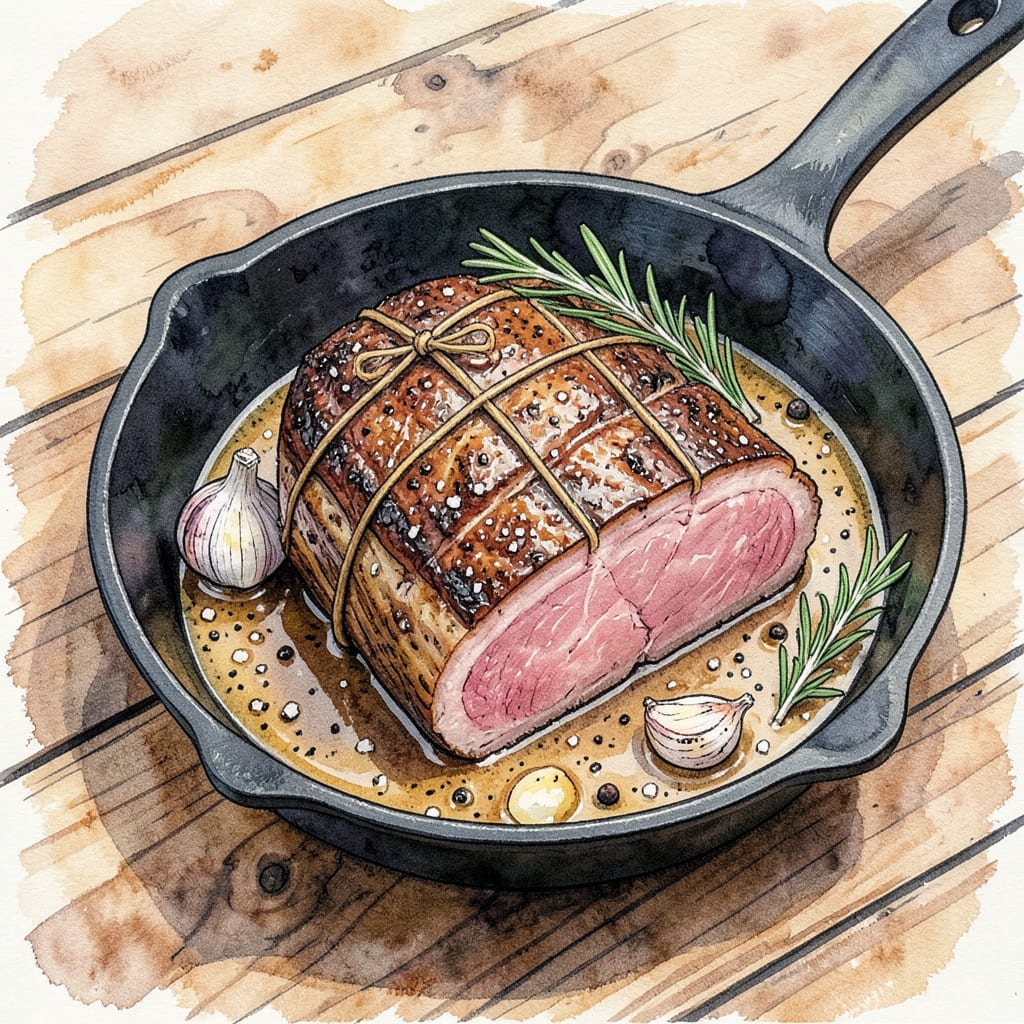
The reverse sear method transforms beef tenderloin from good to perfect—every single time. By starting with a low-temperature oven phase at 225°F, you achieve edge-to-edge tenderness that traditional searing alone can’t match. This technique ensures the meat cooks evenly, eliminating the gray band that often plagues steakhouse cuts.
Finishing with a high-heat sear at 500°F creates a caramelized crust that contrasts beautifully with the tender, rosy interior. The result is steakhouse-quality beef tenderloin at home, with precise control over doneness and a texture that rivals professional kitchens. No fancy equipment required—just patience and a reliable meat thermometer.
Ingredients for Reverse Sear Beef Tenderloin
These precision ingredients deliver steakhouse-quality beef tenderloin through the reverse sear method, ensuring perfect texture and flavor.
| Ingredient | Amount | Notes |
|---|---|---|
| Beef Tenderloin Roast 🥩 | 3 lb | Center-cut, trimmed of excess fat |
| Kosher Salt 🧂 | 1 ½ tbsp | Diamond Crystal preferred for precision |
| Freshly Ground Black Pepper 🌶️ | 1 tbsp | Coarse grind for optimal crust |
| Unsalted Butter 🧈 | 4 tbsp | European-style for superior browning |
| Garlic Cloves 🧄 | 4 cloves | Lightly crushed for aromatic infusion |
| Fresh Rosemary Sprigs 🌿 | 3 whole | Stems intact for basting |
| Fresh Thyme Sprigs 🌿 | 4 whole | Optional but recommended for depth |
| Extra-Virgin Olive Oil 🫒 | 2 tbsp | High smoke point variety |
| Vegetable Oil 🫒 | 1 tbsp | Neutral flavor for searing |
| Flossing String or Butcher's Twine 🧵 | 1 piece | For tying roast if needed |
[recipe_ingredient_scaler]
The beef tenderloin quality is paramount for this technique. USDA Prime or Choice grade ensures optimal marbling and tenderness. Source from a reputable butcher or high-end grocery like Whole Foods—avoid pre-trimmed cuts as they often lose valuable fat cap. The 3-pound center-cut roast provides uniform thickness for even cooking. For salt, Diamond Crystal kosher salt offers precise measurement control due to its lighter density compared to table salt. European-style butter contains higher fat content (82-86%), which is critical for achieving the ideal Maillard reaction during searing.
No fresh herbs? Dried rosemary and thyme at one-third the quantity can substitute, though fresh provides superior aromatic qualities. For garlic, garlic powder (1 tsp) works in a pinch but lacks the roasted complexity of fresh cloves. The vegetable oil can be replaced with avocado oil for its higher smoke point (520°F). If butcher’s twine is unavailable, unflavored dental floss serves as an effective alternative for tying the roast. Always verify your meat thermometer’s accuracy by testing in ice water (should read 32°F) before beginning.
Store the raw tenderloin on a wire rack over a tray in the coldest part of your refrigerator (34-36°F) for up to 3 days. Post-cooking, rest the meat at room temperature for 15-20 minutes before slicing to retain juices. Leftover cooked tenderloin maintains quality for 4 days refrigerated or 3 months frozen when vacuum-sealed. Reheat gently in a 250°F oven to preserve texture—microwaving destroys the carefully developed crust.
Step-by-Step Instructions for Reverse Sear Beef Tenderloin
This method delivers restaurant-quality results with precise temperature control and perfect doneness throughout.
Step 1: Season and Prepare the Tenderloin
Begin by patting the beef tenderloin roast completely dry with paper towels. This ensures optimal browning during the searing process. Tie the roast with the flossing string or butcher’s twine at 1-inch intervals to maintain an even shape during cooking.
Season the entire surface generously with the kosher salt and freshly ground black pepper. The coarse grind of the pepper creates a superior crust. Allow the seasoned roast to rest uncovered on a wire rack set over a baking sheet in the refrigerator for at least 1 hour, or preferably overnight. This drying process enhances the Maillard reaction during searing.
Step 2: Low-Temperature Oven Cooking
Preheat your oven to 250°F. Place the seasoned tenderloin on a wire rack set inside a rimmed baking sheet. Position an oven-safe thermometer in the thickest part of the roast. Roast in the preheated oven until the internal temperature reaches 110-115°F for medium-rare doneness.
This low-and-slow cooking method typically requires 1.5-2 hours for a 3 lb roast. The gradual heating ensures even cooking from edge to center without overcooking the outer layers. Monitor the temperature closely during the final 30 minutes as the temperature rises more rapidly during this phase.
Step 3: Prepare the Aromatic Basting Butter
While the tenderloin cooks, prepare the basting butter. In a small saucepan, melt the unsalted butter over low heat. Add the lightly crushed garlic cloves, fresh rosemary sprigs, and fresh thyme sprigs. Allow the mixture to infuse for 5-7 minutes until fragrant, ensuring the butter doesn’t brown.
Remove from heat and let the flavors steep while the tenderloin finishes in the oven. This aromatic butter will serve multiple purposes: basting during searing and finishing the roast after cooking. The herbs should remain intact for easy removal after basting.
Step 4: High-Heat Searing
Remove the tenderloin from the oven when it reaches the target internal temperature. Heat the vegetable oil and extra-virgin olive oil in a large cast-iron skillet over high heat until shimmering. Carefully place the tenderloin in the hot skillet and sear for 1-2 minutes per side, basting continuously with the aromatic butter using a spoon.
The searing process should create a deep, golden-brown crust on all sides. Watch for the butter to turn a light hazelnut color and for the herbs to become slightly crisp. The internal temperature will rise to 125-130°F during this process, achieving perfect medium-rare doneness throughout.
Step 5: Rest and Serve
Transfer the seared tenderloin to a cutting board and remove the twine. Tent loosely with aluminum foil and let rest for 10-15 minutes before slicing. This resting period allows the juices to redistribute throughout the meat, ensuring each slice remains moist and tender.
Slice the tenderloin against the grain into 1-inch thick medallions. Arrange on a serving platter and drizzle with any remaining aromatic butter from the searing process. The center of each slice should display a perfect pink hue, while the exterior maintains a crisp, flavorful crust.
Creative Variations of This Recipe
Herb-Crusted Variation
For an aromatic twist, create a herb crust by blending ¼ cup fresh parsley, 2 tbsp fresh thyme leaves, and 1 tbsp fresh rosemary with the salt and pepper. I love adding 1 tsp lemon zest for brightness. Press this mixture onto the tenderloin before the low-temperature phase. The herbs form a fragrant crust during searing. 🌿
Coffee-Rubbed Boldness
My coastal BBQ competition secret: Replace half the black pepper with 2 tbsp finely ground coffee and add 1 tbsp smoked paprika. The coffee deepens the crust’s color and adds subtle bitterness that pairs perfectly with the beef’s richness. Use dark roast for maximum impact.
Garlic-Butter Infusion
Double down on the aromatic butter by adding 1 tbsp Dijon mustard and 1 tsp Worcestershire sauce to the melted butter. Baste aggressively during searing—this creates a sticky, flavor-packed glaze. I learned this trick from a French-trained chef at a local competition.
Peppercorn-Crusted Classic
For a steakhouse-style finish, roll the seasoned tenderloin in 3 tbsp crushed mixed peppercorns (black, green, pink) before the oven phase. The varied peppercorns create complex heat layers. Press firmly to ensure adhesion—this forms a dramatic crust during searing that guests will remember.
Smoked Salt Variation
Swap the kosher salt for 2 tbsp applewood-smoked salt to infuse subtle smokiness without a smoker. I forage wild sage near my coastal rides and add 1 tbsp crumbled dried sage to the rub. This variation bridges my French training with my pitmaster roots beautifully.
Red Wine Reduction
After searing, deglaze the skillet with ½ cup bold red wine (I use Cabernet Sauvignon) and reduce by half. Swirl in 2 tbsp cold butter off-heat for a glossy sauce. Drizzle over sliced tenderloin—this elevates the dish to special-occasion status with minimal effort. 💫
Nutrition Facts

Trained in classic French technique but raised on slow-cooked ribs and spicy rubs, she blends culinary skill with smoke and soul.
- Recipe for Boneless Pork Chops in Cast Iron Skillet: Sear and Baste to Juicy Perfection - October 3, 2026
- Recipe for Boneless Cross Rib Roast: Slow-Roasted Beef with Herb Crust - October 3, 2026
- Hamburgers in Sauce Recipe Crock Pot: Slow-Cooked Savory Delight - October 3, 2026