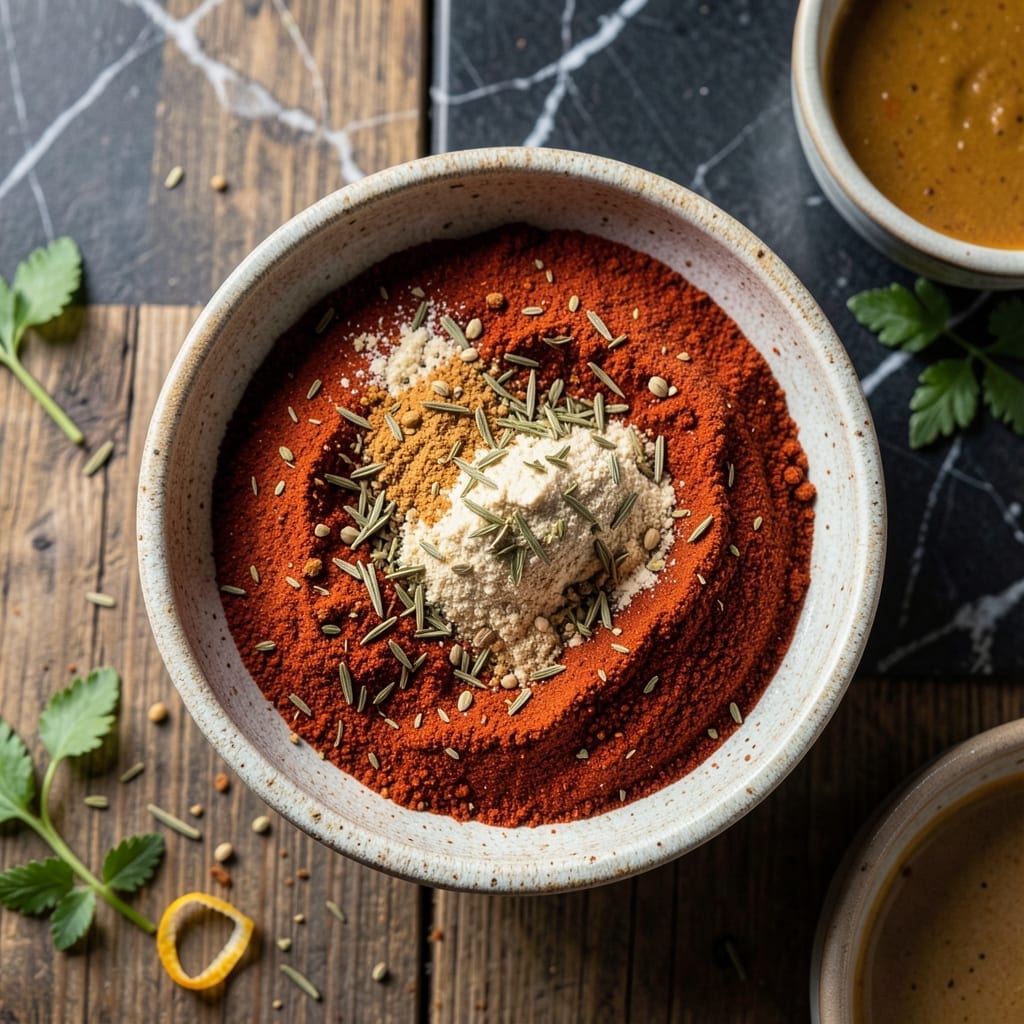
This savory dry rub delivers bold flavor without a trace of sugar, perfect for ribs that taste as good as they smell.
With just a few tablespoons of spices, you’ll create a blend that enhances meat naturally—no sweetness needed.
Ingredients for Rib Dry Rub Recipe No Sugar
A few tablespoons of spices bring bold, savory flavor to life. No sugar needed.
| Ingredient | Amount | Notes |
|---|---|---|
| Paprika 🌶️ | 3 tbsp | Sweet or smoked variety |
| Chili Powder 🌶️ | 2 tbsp | Mild or hot based on heat preference |
| Ground Cumin 🌿 | 1 tbsp | Toasted for deeper flavor |
| Garlic Powder 🧄 | 2 tsp | Not garlic salt |
| Onion Powder 🧅 | 2 tsp | Fresh ground preferred |
| Dried Oregano 🍃 | 1 tbsp | Mexican oregano if available |
| Black Pepper 🌶️ | 1 tbsp | Freshly ground preferred |
| Sea Salt 🧂 | 2 tsp | Fine grain for even coating |
| Cayenne Pepper 🔥 | ½ tsp | Adjust for heat preference |
| Dried Thyme 🌿 | 1 tsp | Rubbed between fingers to release flavor |
[recipe_ingredient_scaler]
The paprika is doing most of the heavy lifting here, so Penzeys or McCormick are solid choices—both have good color and potency. I grab mine from the bulk section at Whole Foods when I want to try smaller amounts. Smoked paprika adds a nice depth if you’re into that (I usually do half sweet, half smoked). Make sure your spices aren’t ancient—if they smell like dust, they’re past their prime.
No cayenne? Red pepper flakes at half the amount work fine. Want more complexity? Swap in chipotle powder for a smoky kick. The cumin is key—don’t skip it. If you’ve got whole cumin seeds, toast and grind them fresh (worth the extra minute). Out of garlic powder? Use granulated garlic at the same amount, but fresh minced won’t work in a dry rub.
Store this in an airtight container in a dark cabinet—keeps for 6-12 months. I make a double batch every time; one jar for the grill, one for the pantry. Works on chicken and pork too, not just ribs.
Why You’ll Love This Recipe
- Five-Minute Mix: I dump all five spices in a bowl, stir, and boom—dry rub ready before the oven preheats.
- Smoky Depth: Paprika and cumin hit first, then garlic and onion powder linger like a slow-burning campfire.
- Rub for Anything: I’ve used it on ribs, chicken, even roasted nuts when I’m feeling wild.
- Pantry Staples: No sugar means no extra shopping—just spices I already have, and it keeps for months.
Step-by-Step Instructions for Rib Dry Rub
Mixing this blend is straightforward, and the result packs a serious flavor punch.
Step 1: Combine the Base Spices
In a medium bowl, add the 3 tbsp Paprika and 2 tbsp Chili Powder. I like to use a whisk here—it breaks up any clumps and ensures even distribution better than a spoon. The paprika gives that signature deep red color, while the chili powder adds complexity.
If you’re using smoked paprika, you’ll notice an immediate difference in aroma. This is where the foundation of your rub starts to take shape. Don’t rush this first step; getting these two spices fully incorporated matters.
Step 2: Add the Earthy and Aromatic Elements
Next, whisk in the 1 tbsp Ground Cumin, 1 tbsp Dried Oregano, and 1 tsp Dried Thyme. The cumin brings a warm, earthy depth that balances the brightness of the other spices. I always rub the dried thyme between my fingers before adding it—this releases the oils and intensifies the flavor.
At this point, your kitchen should smell incredible. The oregano, especially if it’s Mexican oregano, adds a slightly citrusy note that cuts through the richness. Stir until you see no streaks of individual spices.
Step 3: Incorporate the Garlic and Onion Powders
Add the 2 tsp Garlic Powder and 2 tsp Onion Powder. These two are the flavor amplifiers—they make everything taste more vibrant without overpowering. Fresh ground onion powder has a sharper, more pronounced flavor, so if that’s what you have, you’ll notice the difference immediately.
Mix thoroughly until the powders disappear into the blend. The garlic and onion should be evenly distributed so every bite of your ribs gets that savory depth. Don’t skip this step or the flavor will be uneven.
Step 4: Finish with Salt, Pepper, and Heat
Finally, add the 2 tsp Sea Salt, 1 tbsp Black Pepper, and 0.5 tsp Cayenne Pepper. The fine-grain sea salt ensures even coating, while the black pepper adds a subtle bite. The cayenne brings the heat, but since it’s a small amount, it won’t overwhelm—just add a slow-building warmth.
If you’re sensitive to heat, start with half the cayenne and adjust to taste. Whisk everything together one last time until the rub is uniform in color and texture. The finished blend should look cohesive, with no visible clumps or streaks.
Step 5: Store and Apply
Transfer the rub to an airtight container. It’ll keep for up to 6 months in a cool, dark place. When you’re ready to use it, pat your ribs dry, then apply the rub generously—about 1-2 tbsp per pound of meat. Press it in so it adheres well.
Let the ribs sit with the rub for at least 1 hour before cooking, or overnight for maximum flavor penetration. The salt will draw out moisture slightly, creating a sticky surface that helps the rub form a beautiful crust when cooked.
Pro Tips For Making Rib Dry Rub Recipe No Sugar
- Toast Your Spices: Lightly toast the paprika, chili powder, and cumin in a dry pan for 30 seconds—it wakes up the flavors and makes the rub taste fresher than store-bought.
- Rub It Early: Apply the dry rub at least 2 hours before cooking (overnight if possible), so the garlic and onion powders have time to penetrate the meat.
- Skip the Clumps: Mix your rub ingredients thoroughly first—I learned this the hard way after biting into a mouthful of pure cumin.
- Double the Batch: Make extra rub and store it in a jar; it keeps for months and saves time the next time you fire up the grill.
Regional Styles of This rib dry rub recipe no sugar
Texas Style 🔥
In Texas, simplicity reigns supreme. A salt-and-pepper rub is the foundation, often enhanced with garlic powder, onion powder, and a touch of paprika for depth. Pitmasters here favor post oak or hickory wood for a clean, smoky flavor. Ribs are typically cooked low and slow at 225-250°F for tender perfection. Historically, Texas BBQ focuses on the meat itself, letting the rub and smoke shine without sugary distractions.
Carolina Style 🍖
Carolina’s approach leans toward tangy and vinegar-based, but even their dry rubs stay sugar-free. A mustard and black pepper base is common, with cayenne or red pepper flakes for heat. These ribs are often mopped with a vinegar sauce during cooking. Traditionally, pork ribs dominate, slow-cooked over hickory or pecan wood for a distinct regional taste.
Kansas City Style 🥘
Known for its bold, balanced flavors, Kansas City dry rubs use a mix of paprika, garlic, onion, and chili powder for a robust kick. While KC is famous for its sweet sauces, sugar-free rubs rely on smoked paprika and cumin for complexity. Ribs are slow-smoked over cherry or apple wood, often finished with a light sauce or served dry.
Memphis Style 😋
Memphis dry rubs are all about heat and depth, with generous amounts of chili powder, cumin, and cayenne. These ribs are usually dry-rubbed and cooked without sauce, letting the spices create a flavorful crust. Hickory wood is the go-to for smoking, and the ribs are often served with a side of tangy, tomato-based sauce for dipping.
Nutrition Facts

Trained in classic French technique but raised on slow-cooked ribs and spicy rubs, she blends culinary skill with smoke and soul.
- Recipe for Boneless Pork Chops in Cast Iron Skillet: Sear and Baste to Juicy Perfection - October 3, 2026
- Recipe for Boneless Cross Rib Roast: Slow-Roasted Beef with Herb Crust - October 3, 2026
- Hamburgers in Sauce Recipe Crock Pot: Slow-Cooked Savory Delight - October 3, 2026