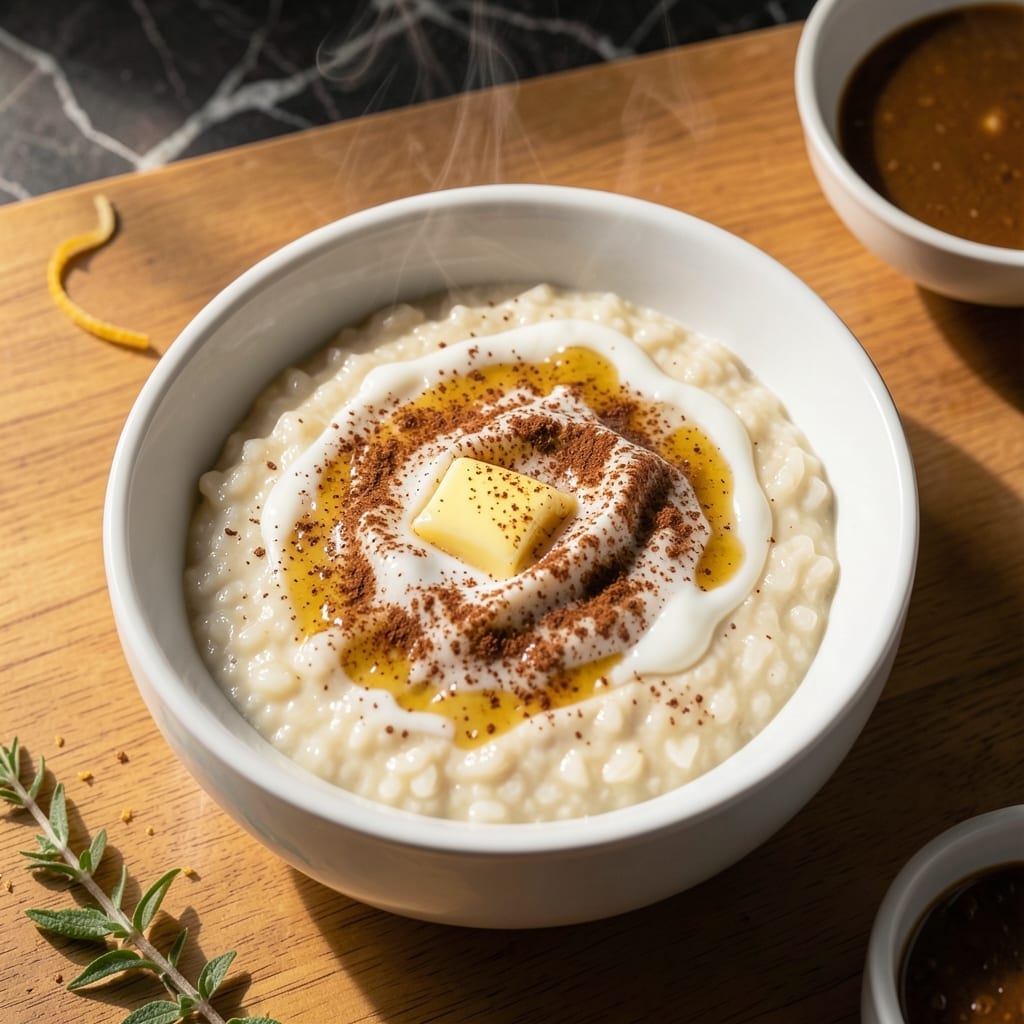
This professional method transforms pre-cooked rice into a creamy custard with minimal effort. The secret lies in slow simmering with milk and sugar.
Vanilla and cinnamon add warm depth, creating a velvety texture that’s rich yet light. The rice absorbs the flavors beautifully for a satisfying finish.
Ingredients for Rice Pudding Recipe with Cooked Rice
Transform pre-cooked rice into a creamy custard with milk, sugar, and warm spices.
| Ingredient | Amount | Notes |
|---|---|---|
| Cooked White Rice 🍚 | 2 cups | Long-grain or short-grain, cooled |
| Whole Milk 🥛 | 4 cups | Full-fat for creaminess |
| Granulated Sugar 🍚 | ½ cup | Adjust to taste preference |
| Pure Vanilla Extract 🌿 | 2 tsp | High-quality for best flavor |
| Ground Cinnamon 🌿 | 1 tsp | Freshly ground preferred |
| Unsalted Butter 🧈 | 2 tbsp | For richness and depth |
| Large Eggs 🥚 | 2 whole | Lightly beaten for custard |
| Salt 🧂 | ¼ tsp | Fine grain preferred |
| Heavy Cream 🥛 | ½ cup | Optional for extra creaminess |
| Raisins 🍇 | ½ cup | Optional for texture contrast |
| Ground Nutmeg 🌰 | ¼ tsp | Freshly grated for aroma |
[recipe_ingredient_scaler]
The milk quality directly impacts the final texture. Whole milk from a trusted dairy brand ensures the creamiest result, though organic or local farm milk elevates it further. Pre-cooked rice should be completely cooled to prevent curdling—jasmine or basmati work exceptionally well. Avoid instant rice as it tends to break down too much during simmering.
No whole milk? Half-and-half with a splash of water provides similar richness. Eggs can be omitted for a lighter version, though the custard won’t set as firmly. Brown sugar instead of white adds a caramel note, while cardamom in place of cinnamon offers a sophisticated twist. The butter is optional but recommended for depth.
Store leftovers in an airtight container—they’ll keep for 4-5 days in the fridge. The pudding thickens as it cools, so stir in a splash of milk when reheating. For best flavor, serve slightly warm or at room temperature. Freezing isn’t recommended as it alters the texture.
Why You’ll Love This Recipe
- No-Fuss Start: I love that this uses leftover cooked rice—no waiting for raw grains to soften.
- Warm Vanilla Hug: The whole milk and vanilla create this creamy, cozy flavor that’s pure comfort in a bowl.
- Breakfast or Dessert: Honestly, I’ve served it chilled for breakfast and warm with cinnamon for dessert.
- Pennywise Treat: Between us, a big batch costs less than a fancy coffee and lasts for days.
Step-by-Step Instructions for Rice Pudding With Cooked Rice
This method ensures a velvety texture with rich vanilla and warm spice notes throughout.
Step 1: Combine Rice and Milk Mixture
In a large saucepan, combine the 2 cups cooked white rice, 4 cups whole milk, and 0.5 cup granulated sugar. Stir gently over medium heat until the sugar dissolves completely—this should take 3-4 minutes.
Watch for tiny bubbles at the edges, not a rolling boil. The mixture should reach 160-170°F but not scorch. I stir frequently with a wooden spoon to prevent the rice from sticking to the bottom.
Step 2: Temper and Incorporate Eggs
In a separate bowl, whisk the 2 whole large eggs with the 0.25 tsp salt and 2 tsp pure vanilla extract until smooth. Slowly ladle 1 cup of the hot milk mixture into the eggs while whisking constantly—this tempering prevents curdling.
Pour the tempered egg mixture back into the saucepan, stirring continuously. The custard base will begin to thicken almost immediately. Maintain medium-low heat and cook for 5-7 minutes until the mixture coats the back of a spoon.
Step 3: Finish with Butter and Spices
Remove the saucepan from heat and stir in the 2 tbsp unsalted butter, 1 tsp ground cinnamon, and 0.25 tsp ground nutmeg until the butter melts completely. The cinnamon and nutmeg will bloom in the residual heat, releasing their aromas.
At this point, the pudding should have a glossy sheen and ribbon-like consistency. Fold in the 0.5 cup raisins if using—they’ll plump slightly from the warmth. Let the mixture rest for 2 minutes off heat to stabilize.
Step 4: Add Cream and Chill
Stir in the 0.5 cup heavy cream for an ultra-luxurious finish. The cream tempers the warmth and adds a silky richness. Transfer the pudding to a heatproof bowl or individualramekins.
Press plastic wrap directly onto the surface to prevent a skin from forming. Refrigerate for at least 4 hours or overnight—the pudding thickens further as it cools, achieving that perfect creamy density. Serve chilled or at room temperature.
Pro Tips For Making Rice Pudding Recipe With Cooked Rice
- Simmer Low and Slow: Keep the heat at a gentle simmer—any higher and the milk will scorch or the rice will turn mushy. I learned this the hard way after scraping burnt pudding off the bottom of a pot more times than I’d like to admit.
- Use Day-Old Rice: Leftover rice works better than fresh because it’s drier and absorbs the milk more evenly. Sounds weird, but it actually changes the outcome from soupy to perfectly creamy.
- Skip the Pre-Sweetening: Hold off on adding all the sugar at once—start with half, taste as you go, and adjust. Milk reduces as it cooks, and you don’t want a pudding that’s cloyingly sweet by the end.
- Stir in Vanilla Last: Add the vanilla extract in the final 5 minutes of cooking. My grandmother swore by this, and she was right: it keeps the flavor bright and aromatic instead of cooking off into the steam.
Essential Equipment for This Dish
Heavy Saucepan
A 3-4 quart heavy-bottomed saucepan is essential to prevent scorching. I use my All-Clad stainless steel pot for even heat distribution. Thin pots will cause hot spots that can burn the milk mixture. 🔥
Wooden Spoon
A flat-bottomed wooden spoon lets you scrape the bottom while stirring. Avoid metal utensils that can scratch non-stick surfaces. The spoon should be long enough to reach all corners of your saucepan comfortably.
Whisk
For tempering eggs, a balloon whisk creates the smoothest mixture. I prefer the OXO Good Grips model for its comfortable handle. A fork works in a pinch, but won’t incorporate air as effectively.
Heatproof Bowl
Transfer your pudding to a glass or ceramic bowl for cooling. I use a Pyrex 8-cup measure that doubles as a serving dish. Avoid plastic, which can absorb odors and retain heat too long.
Fine Mesh Strainer
If you want ultra-smooth pudding, press the finished mixture through a fine mesh strainer to remove any cooked egg bits. This is optional but gives a restaurant-quality texture. Clean immediately after use.
Plastic Wrap
Press plastic wrap directly onto the pudding surface before chilling to prevent a skin from forming. I use Glad Press’n Seal for the best adherence. This simple step makes a noticeable difference in presentation.
Nutrition Facts
Frequently Asked Questions
Can I use leftover rice from the fridge?
Cold cooked rice works perfectly—just ensure it’s fully cooled first. This prevents curdling when mixed with hot milk. Leftover jasmine or basmati rice gives the creamiest texture.
Why does my pudding turn out watery?
This usually means the mixture didn’t simmer long enough. Cook for the full 5-7 minutes after adding eggs until it coats a spoon. Also, use whole milk—lower-fat versions won’t thicken as well.
How can I make it dairy-free?
Swap whole milk for full-fat coconut milk and use dairy-free butter. The texture will be slightly different but still delicious. Avoid almond milk—it’s too thin for this recipe.
Can I add fruit instead of raisins?
Yes! Try diced apples or pears—add them with the spices at the end. Dried cranberries also work well. Just avoid overly juicy fruits like strawberries, which can thin the pudding.

Trained in classic French technique but raised on slow-cooked ribs and spicy rubs, she blends culinary skill with smoke and soul.
- Recipe for Boneless Pork Chops in Cast Iron Skillet: Sear and Baste to Juicy Perfection - October 3, 2026
- Recipe for Boneless Cross Rib Roast: Slow-Roasted Beef with Herb Crust - October 3, 2026
- Hamburgers in Sauce Recipe Crock Pot: Slow-Cooked Savory Delight - October 3, 2026