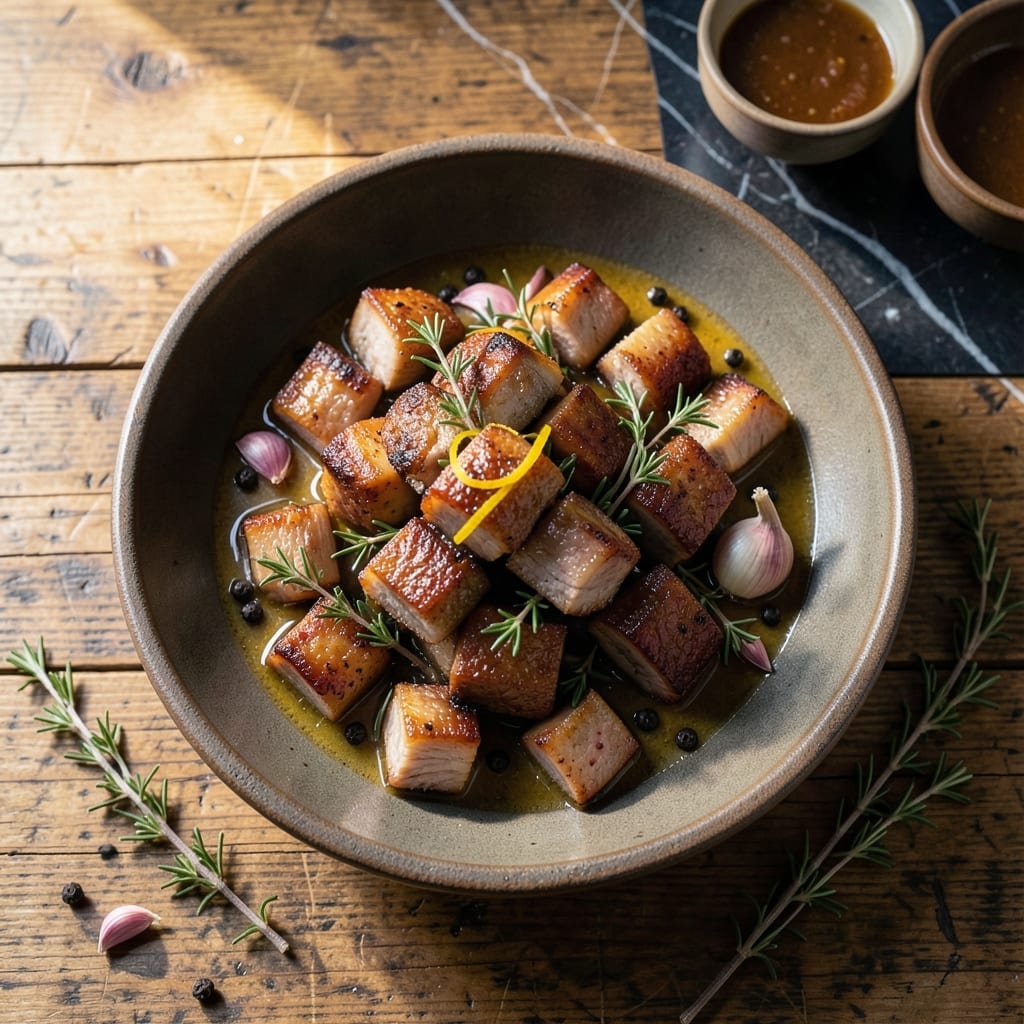
This traditional French technique transforms pork belly into crispy, golden cubes rendered in their own rich fat. My training taught me the precision needed to achieve perfect texture and flavor.
Each bite delivers tender meat with a shatteringly crispy exterior, elevated by slow cooking and proper seasoning. The result is restaurant-quality at home.
Ingredients for Rillons
Pantry raid plus a butcher stop. Nothing exotic, just precision with pork belly.
| Ingredient | Amount | Notes |
|---|---|---|
| Pork Belly 🥓 | 2 lb | Skin-on, cubed into 1-inch pieces |
| Kosher Salt 🧂 | 2 tbsp | Diamond Crystal preferred for curing |
| Black Peppercorns 🌶️ | 1 tbsp | Lightly crushed for texture |
| Fresh Thyme Sprigs 🌿 | 4 whole | Stems removed, roughly chopped |
| Fresh Rosemary Sprigs 🍃 | 2 whole | Stems removed, roughly chopped |
| Garlic Cloves 🧄 | 6 cloves | Smashed but left whole |
| Bay Leaves 🌿 | 2 whole | Dried, for aromatic base |
| Juniper Berries 🍇 | 10 pieces | Lightly crushed to release oils |
| White Wine Vinegar 🧪 | ¼ cup | For acidity and balance |
| Water 💧 | 2 cups | For initial cooking liquid |
| Duck Fat 🍗 | ½ cup | Optional, for extra richness |
| Shallot 🧅 | 1 whole | Thinly sliced for garnish |
[recipe_ingredient_scaler]
The pork belly is non-negotiable here. Skin-on gives that perfect crisp—ask your butcher to cube it for you if you’re not confident with a knife. I get mine from Whole Foods or a local butcher (they’ll know what you’re making). Look for good marbling—fat equals flavor in this dish. The curing salt step is what separates restaurant-quality from home attempts, so don’t skip it.
No fresh herbs? Dried thyme and rosemary at half the amount work, but fresh is ideal for that bright finish. Swap juniper berries with a pinch of allspice if you’re in a bind. Duck fat seems fancy, but bacon grease works too (or just use the rendered pork fat—it’s already amazing). The vinegar can be apple cider in a pinch, but white wine keeps the flavor clean.
Rillons keep 5 days in the fridge covered in their fat, but they’re best eaten fresh. Freeze for up to 3 months if you’re batching. Reheat in a pan to recrisp the exterior—that’s where the magic happens.
Why You’ll Love This Recipe
- Low-Effort Luxury: Honestly, you just rub pork belly with salt, peppercorns, and herbs, then let the oven do the rest.
- Herb-Infused Magic: The thyme and rosemary soak into every bite—crispy outside, tender inside.
- Crowd-Pleasing Appetizer: I serve these at parties, and they vanish before I can grab one myself.
- Budget Stretcher: Pork belly is affordable, and a batch makes enough for leftovers that taste even better the next day.
Step-by-Step Instructions for Rillons
Here’s the method I use for achieving perfectly crispy pork cubes every time.
Step 1: Cure the Pork Belly with Aromatics
In a large bowl, combine the 2 lb Pork Belly with the 2 tbsp Kosher Salt, 1 tbsp Black Peppercorns, 4 whole Fresh Thyme Sprigs, 2 whole Fresh Rosemary Sprigs, 6 cloves Garlic Cloves, 2 whole Bay Leaves, and 10 pieces Juniper Berries. Mix well to ensure the pork is evenly coated with the salt and spices.
Add the 0.25 cup White Wine Vinegar and 2 cups Water, then cover and refrigerate for 24-48 hours. This curing process infuses the pork with flavor and begins breaking down the proteins for a more tender result. The liquid should cover the pork completely—press down on it if needed.
Step 2: Slow-Cook the Pork in Fat
After curing, drain the pork and pat it dry with paper towels. Place the pork in a heavy pot or Dutch oven and add the 0.5 cup Duck Fat. The fat should cover the pork—if it doesn’t, add a bit more duck fat or use a smaller pot.
Cook over low heat for 2-3 hours, stirring occasionally. The pork should be submerged in the fat the entire time, cooking gently until it’s fork-tender and the edges start to curl. This slow cooking process renders the fat and transforms the pork into melt-in-your-mouth bites.
Step 3: Crisp the Pork in the Oven
Preheat your oven to 400°F. Using a slotted spoon, transfer the pork cubes to a baking sheet, arranging them in a single layer. Pour some of the cooking fat over the pork—just enough to lightly coat the cubes.
Roast for 20-25 minutes, turning the cubes halfway through, until they’re deep golden brown and crispy on all sides. The high heat will dry out the exterior, creating that irresistible crunch while keeping the inside succulent.
Step 4: Garnish and Serve
Thinly slice the 1 whole Shallot and scatter it over the rillons just as they come out of the oven. The residual heat will soften the shallot slightly, taking the edge off its sharpness without losing its fresh bite.
Serve the rillons warm, straight from the oven, with some of the rendered fat spooned over the top for extra richness. The contrast between the crispy exterior and the tender, flavorful interior is what makes this dish truly special.
Pro Tips For Making Rillons
- Cube Evenly: Cut the pork belly into uniform 1-inch cubes—this ensures even cooking and that perfect crispy edge on every piece.
- Dry the Belly: Pat the pork belly cubes completely dry before seasoning. I learned this the hard way—moisture prevents the fat from rendering properly.
- Skip the Overcrowding: Give each cube space in the pan, or they’ll steam instead of brown. Cook in batches if needed—it’s the only way to get that golden crust.
- Use Fresh Herbs: Fresh thyme and rosemary make a real difference here. Dried herbs just don’t deliver the same bright, aromatic punch.
Wine and Beer Pairings for This Recipe
White Wine Pairings
A crisp Sancerre from the Loire Valley complements the richness with its bright acidity and mineral notes. The wine’s citrus undertones cut through the pork fat beautifully. I always reach for this classic pairing when serving rillons at dinner parties. 🍷
Red Wine Options
A light-bodied Pinot Noir from Burgundy offers red fruit flavors that harmonize with the pork’s savory notes. The wine’s earthy undertones match the herbs in the dish. Avoid heavy tannic reds that can overpower the delicate flavors.
Beer Pairings
A Belgian Saison with its peppery notes and crisp finish works wonderfully. The beer’s slight funkiness complements the rillons’ depth. For a local option, try a French-style Biere de Garde with its malty sweetness balancing the salt. 🍺
Cider Alternative
Dry French cider from Normandy offers a refreshing contrast with its effervescence and apple notes. The acidity cleanses your palate between bites. I discovered this pairing at a coastal cider festival during one of my motorcycle rides.
Non-Alcoholic Option
Sparkling water with a squeeze of lemon and a sprig of rosemary provides a clean, herbaceous contrast. The effervescence mimics the palate-cleansing effect of wine. This works particularly well for lunch servings.
Nutrition Facts
Frequently Asked Questions
What’s the best cut of pork for this?
Use skin-on pork belly—it’s non-negotiable for that perfect crisp texture. Ask your butcher for 2 lb and have them cube it into 1-inch pieces if you’re not comfortable with a knife.
Can I skip the curing step?
No, the 24-48 hour cure with salt and aromatics is essential. It seasons the meat deeply and starts breaking down proteins for tenderness. Skipping it means missing out on that restaurant-quality flavor.
How do I store leftovers?
Keep rillons submerged in their rendered fat in an airtight container. They’ll stay fresh in the fridge for 5 days or freeze for up to 3 months. Reheat in a pan to recrisp.

Trained in classic French technique but raised on slow-cooked ribs and spicy rubs, she blends culinary skill with smoke and soul.
- Recipe for Boneless Pork Chops in Cast Iron Skillet: Sear and Baste to Juicy Perfection - October 3, 2026
- Recipe for Boneless Cross Rib Roast: Slow-Roasted Beef with Herb Crust - October 3, 2026
- Hamburgers in Sauce Recipe Crock Pot: Slow-Cooked Savory Delight - October 3, 2026