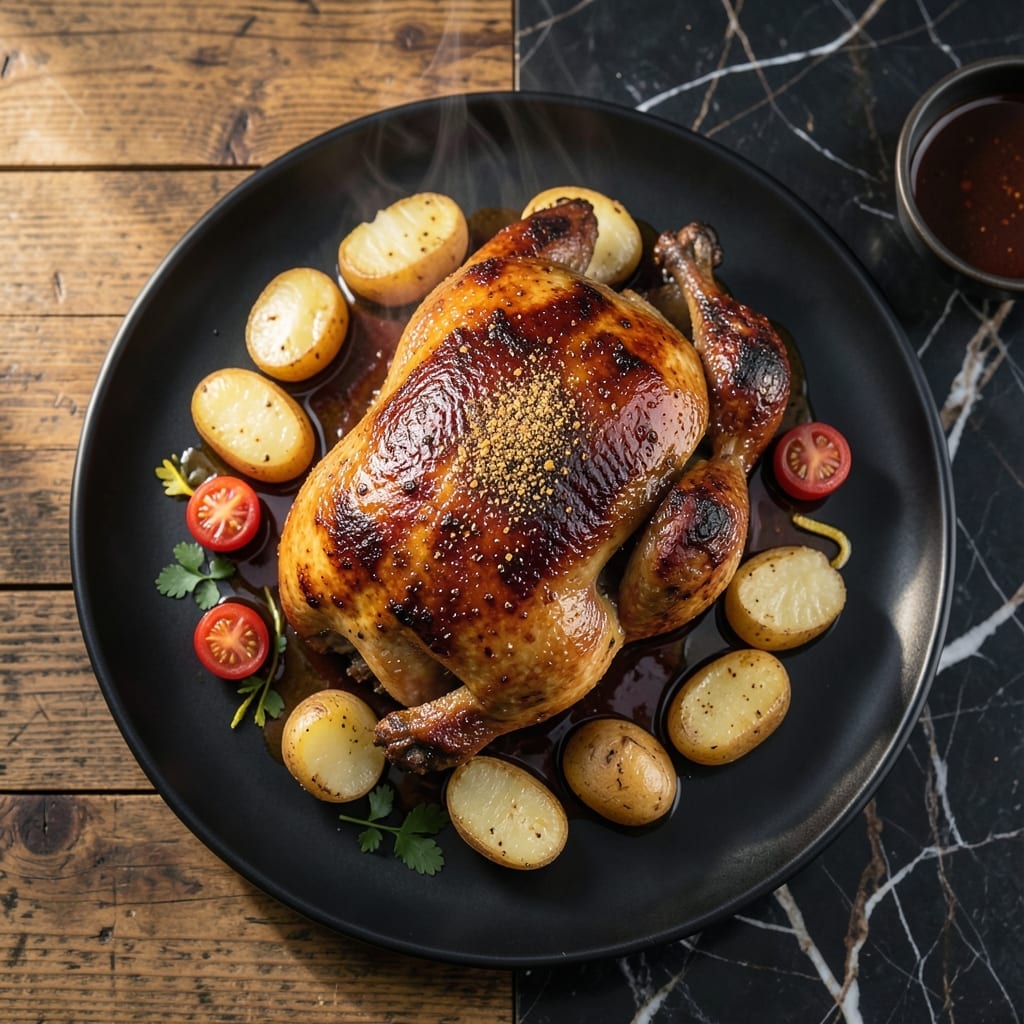
This professional method delivers crispy skin and tender meat with minimal effort. I’ve refined the technique to ensure consistent results every time.
The five-spice rub adds depth while the high-heat finish guarantees that signature crackling exterior. Perfect for special occasions or Sunday dinners.
Ingredients for Roast Duck Recipe Gordon Ramsay
Professional ingredients for crispy, five-spice infused duck with minimal effort required.
| Ingredient | Amount | Notes |
|---|---|---|
| Whole Duck 🦆 | 4 lb | Fresh, not frozen, giblets removed |
| Chinese Five-Spice Powder 🌿 | 2 tsp | Freshly ground for best aroma |
| Kosher Salt 🧂 | 1 tbsp | Diamond Crystal preferred for texture |
| Ground Black Pepper 🌶️ | 1 tsp | Freshly cracked for robustness |
| Honey 🍯 | 2 tbsp | Warm for easier application |
| Soy Sauce 🥢 | 2 tbsp | Low-sodium recommended for balance |
| Rice Vinegar 🍶 | 1 tbsp | Or substitute apple cider vinegar |
| Fresh Ginger 🌱 | 1 whole | Peeled, grated, about 1 tbsp |
| Garlic Cloves 🧄 | 4 cloves | Minced finely for even distribution |
| Scallions 🧅 | 4 whole | Green parts only, sliced for garnish |
| Orange 🍊 | 1 whole | Zest only, for bright finish |
| Vegetable Stock 🥣 | 1 cup | For deglazing pan juices |
[recipe_ingredient_scaler]
The duck is the foundation—source from a reputable butcher or specialty store like Whole Foods for the best fat content. Chinese five-spice blends vary; Penzeys offers a balanced version. Kosher salt is non-negotiable here; its coarse texture adheres better to the skin. Look for fresh, plump ducks (not previously frozen) with unblemished skin for optimal crisping results.
No five-spice powder? Combine cinnamon, cloves, fennel, star anise, and Szechuan peppercorns in equal parts. Soy sauce can be swapped for tamari (gluten-free), and rice vinegar for white wine vinegar in a pinch. Fresh ginger is ideal, but ground ginger at half the amount works. The honey glaze is essential for that signature Ramsay sheen—maple syrup is a vegan alternative.
Store the duck uncovered in the fridge 12-24 hours before cooking to dry the skin. Leftovers keep 3-4 days refrigerated or freeze the meat (without skin) for 2 months. Always reheat gently to preserve the crispiness you worked so hard to achieve.
Why You’ll Love This Recipe
- Hands-Off Cooking: I rub the duck with five-spice, salt, and honey, then let the oven do all the work while I relax.
- Sweet-Savory Magic: That sticky honey glaze with the warm spice and crispy skin is ridiculously good.
- Dinner Party Star: I serve this for special occasions and it always impresses without me stressing.
- Leftovers Luxury: The next-day duck makes the best sandwiches or fried rice—no waste here.
Step-by-Step Instructions for Roast Duck
Master the technique for crispy skin and tender meat with this professional approach.
Step 1: Prepare and Season the Duck
Pat the 4 lb Whole Duck completely dry inside and out with paper towels. This step is crucial—any moisture prevents crispy skin. Prick the skin all over with a sharp knife, being careful not to pierce the meat. This allows fat to render out during cooking.
Rub the duck with the 2 tsp Chinese Five-Spice Powder, 1 tbsp Kosher Salt, and 1 tsp Ground Black Pepper, ensuring even coverage inside the cavity and over the skin. The spice blend should be freshly ground for maximum aroma. Place the duck on a wire rack set over a baking sheet and refrigerate uncovered for 12 hours to dry the skin thoroughly.
Step 2: Create the Glaze
In a small bowl, whisk together the 2 tbsp Honey, 2 tbsp Soy Sauce, and 1 tbsp Rice Vinegar until smooth. Peel and grate the 1 whole Fresh Ginger—you’ll need about 1 tbsp of grated ginger for the glaze. Stir the ginger into the mixture along with the minced 4 cloves Garlic Cloves.
This glaze adds a balance of sweet, salty, and tangy flavors that complement the rich duck. Set it aside until ready to use in the final cooking stage.
Step 3: Roast the Duck to Crispy Perfection
Preheat your oven to 375°F. Place the duck breast-side up on the wire rack in the baking sheet. Roast for 1 hour, then flip the duck breast-side down and continue roasting for another 45 minutes.
Flip the duck breast-side up again and brush generously with half of the prepared glaze. Increase the oven temperature to 425°F and roast for an additional 15-20 minutes, basting once more with the remaining glaze, until the skin is deep golden brown and crispy.
Step 4: Rest and Prepare the Pan Sauce
Transfer the duck to a cutting board and let it rest for 15 minutes. This allows the juices to redistribute, ensuring moist meat. While the duck rests, pour off all but 2 tablespoons of fat from the baking sheet.
Place the baking sheet on the stovetop over medium heat. Add the sliced green parts of the 4 whole Scallions and the zest of the 1 whole Orange. Pour in the 1 cup Vegetable Stock and deglaze the pan, scraping up any browned bits. Simmer for 3-4 minutes until slightly reduced, then strain into a serving jug.
Step 5: Carve and Serve
Carve the duck by removing the legs and thighs first, then slicing the breast meat off the bone. Arrange the pieces on a platter and drizzle with some of the pan sauce. Garnish with the remaining sliced scallion greens.
Serve the duck with the pan sauce on the side for dipping. The skin should be impossibly crispy, while the meat remains juicy and infused with the aromatic five-spice flavor.
Pro Tips For Making Roast Duck Recipe Gordon Ramsay
- Dry the Duck First: Pat the duck completely dry with paper towels before seasoning—this guarantees crispier skin, and I learned this the hard way after serving soggy skin twice.
- Score the Skin: Use a sharp knife to score the duck skin in a crosshatch pattern, cutting just through the fat but not into the meat. This renders the fat better and lets the five-spice and honey penetrate deeper.
- Start Hot, Finish Low: Roast at 400°F for the first 30 minutes to crisp the skin, then drop to 350°F to cook through without burning the honey glaze.
- Rest Before Carving: Let the duck rest for at least 15 minutes under foil after roasting—it keeps the juices inside the meat instead of all over your cutting board.
Flavor Customization for These Flavors
Sweet Heat Glaze
For a spicy-sweet twist, add 1 tbsp sriracha or 1 tsp gochujang to your honey glaze. I love how this balances the richness with a subtle kick. The heat builds gradually without overpowering the five-spice notes. 🌶️
Citrus Infusion
Swap the orange zest for lime or lemon zest in both the glaze and garnish. The brighter citrus cuts through the fat beautifully. I find lime works particularly well with the soy sauce base.
Herb Crust
Press a mix of chopped thyme and rosemary into the skin before the final high-heat roast. Use about 1 tbsp of each for a 4 lb duck. This adds a fragrant layer that complements the spice rub.
Smoky Depth
Add ½ tsp smoked paprika or a pinch of chipotle powder to your spice rub. This gives the duck a subtle barbecue-like quality. I discovered this trick when I wanted a more rustic presentation.
Umami Boost
Stir 1 tsp fish sauce or 1 tbsp oyster sauce into your glaze for deeper savory notes. The umami enhances the duck’s natural richness without tasting fishy. 💡
Honey Alternatives
Replace honey with maple syrup or agave nectar in equal amounts. Maple adds a caramel-like depth, while agave keeps the glaze lighter. Both work beautifully with the five-spice profile.
Nutrition Facts
Frequently Asked Questions
How do I get extra crispy skin?
Pat the duck completely dry before seasoning, then refrigerate uncovered for 12-24 hours. This dries the skin for maximum crispiness. Finish at 425°F for the last 15-20 minutes.
What if my duck isn’t browning?
Increase oven temperature to 425°F and baste with more glaze. Ensure the rack allows air circulation underneath. The skin needs direct high heat to caramelize properly.
Can I use a different spice blend?
Yes! Try 1 tsp each of cinnamon, cloves, fennel, star anise, and Szechuan peppercorns. Or use 2 tsp of your favorite poultry seasoning for a milder flavor.
How long should the duck rest before carving?
Let it rest for 15 minutes after roasting. This allows juices to redistribute for moist meat. Skipping this step can cause dryness in the finished dish.

Trained in classic French technique but raised on slow-cooked ribs and spicy rubs, she blends culinary skill with smoke and soul.
- Recipe for Boneless Pork Chops in Cast Iron Skillet: Sear and Baste to Juicy Perfection - October 3, 2026
- Recipe for Boneless Cross Rib Roast: Slow-Roasted Beef with Herb Crust - October 3, 2026
- Hamburgers in Sauce Recipe Crock Pot: Slow-Cooked Savory Delight - October 3, 2026