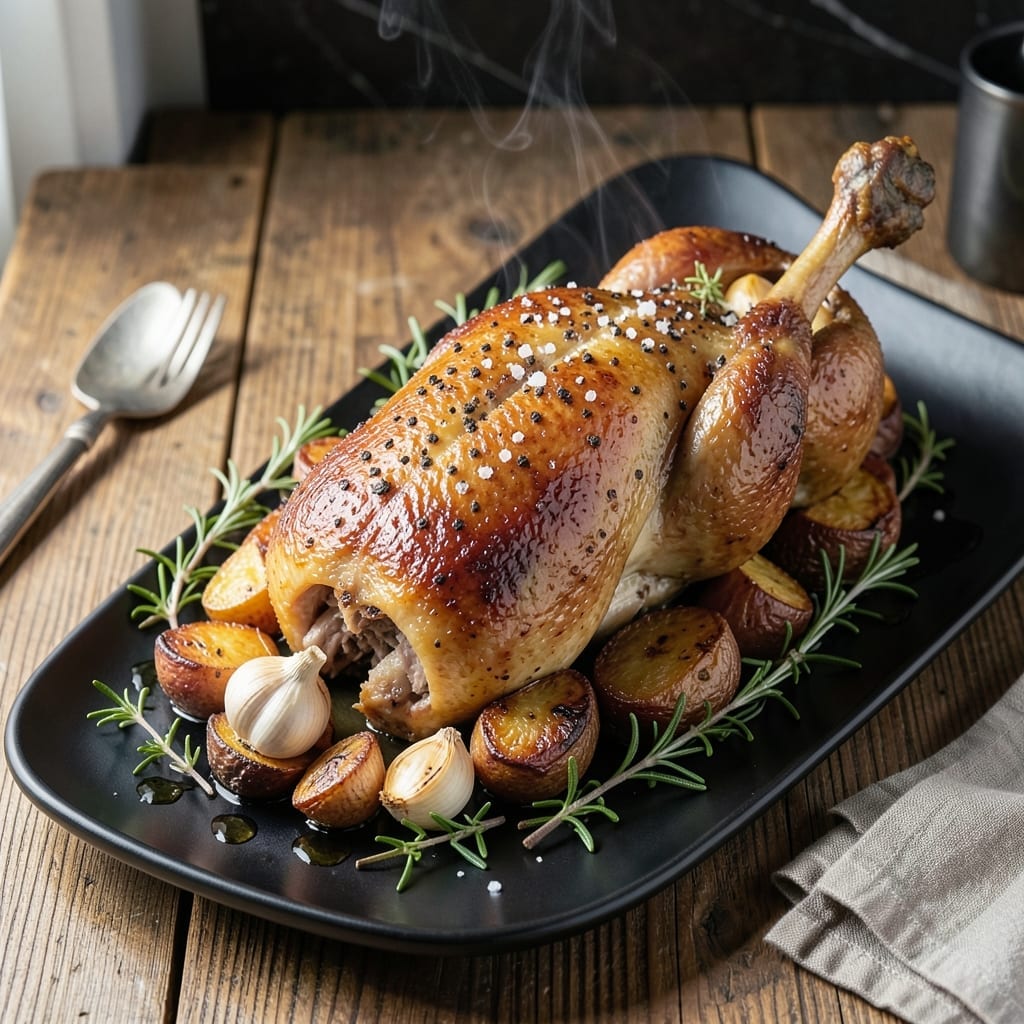
Wild duck roasting demands precision to achieve that crispy skin while preserving its rich, gamey depth. My method balances French technique with pitmaster instincts, ensuring every bite delivers bold flavor.
The key is proper drying and high initial heat to render fat, followed by lower temperatures to cook through without toughening the meat. A simple herb rub enhances the duck’s natural complexity.
What emerges is perfectly browned skin with tender, juicy meat beneath—no gaminess, just pure, refined wild flavor. The aroma alone signals you’ve nailed it.
Serve with roasted root vegetables or a sharp fruit compote to complement the duck’s richness. This is game cooking at its best.
Ingredients for Roast Wild Duck
A wild duck and a handful of herbs create game cooking at its finest.
| Ingredient | Amount | Notes |
|---|---|---|
| Wild Duck 🦆 | 4 whole | Fresh, dressed, about 5-6 lb each |
| Kosher Salt 🧂 | 2 tbsp | Diamond Crystal preferred for even coverage |
| Black Pepper 🌶️ | 1 tbsp | Freshly cracked, coarse grind |
| Fresh Thyme Sprigs 🌿 | 6 pieces | Leaves stripped, stems discarded |
| Fresh Rosemary Sprigs 🌿 | 4 pieces | Leaves chopped, woody stems removed |
| Garlic Cloves 🧄 | 8 cloves | Lightly crushed, skin on for roasting |
| Bay Leaves 🍃 | 2 whole | Dried, whole for infusion |
| Unsalted Butter 🧈 | ½ cup | Melted for basting |
| Juniper Berries 🌿 | 1 tsp | Lightly crushed for aroma |
| Olive Oil 🫒 | 2 tbsp | Extra-virgin for finishing |
| Red Wine Vinegar 🍷 | 1 tbsp | For acidity balance |
| Honey 🍯 | 1 tbsp | For glaze if desired |
[recipe_ingredient_scaler]
The duck is paramount—source from a reputable game purveyor like D’Artagnan or local hunters with proper handling. Look for birds with intact skin and minimal shot damage. Freshness is critical; wild duck degrades faster than farm-raised. For the herbs, organic fresh thyme and rosemary provide superior aroma. Avoid pre-ground black pepper—it lacks the punch of freshly cracked.
No wild duck? Domestic duck (Pekin or Muscovy) works but requires less cooking time. Out of fresh herbs? Dried at one-third the quantity, but fresh is vastly superior. For the vinegar, apple cider or sherry vinegar can substitute. The honey can be omitted for a more savory profile, or replaced with maple syrup for depth.
Duck fat is liquid gold—render it and save for potatoes or eggs. The roasted duck keeps 3-4 days refrigerated, but the skin loses crispness. Re-crisp in a 400°F oven for 8-10 minutes. Carve just before serving to retain juices.
Why You’ll Love This Recipe
- One Pan Simplicity: I just season the duck with salt, pepper, and fresh herbs, then let the oven do the work.
- Herb-Infused Richness: The thyme and rosemary make the wild duck taste like a fancy restaurant dish at home.
- Impressive for Guests: I serve this for dinner parties, and it always feels special without extra effort.
- Leftover Magic: Honestly, the duck tastes even better the next day in sandwiches or salads.
Step-by-Step Instructions for Roast Wild Duck
Achieve perfectly crispy skin and rich game flavor with this proven roasting method.
Step 1: Cure and Season the Duck
Begin by patting the wild duck completely dry with paper towels, inside and out. This step is critical for achieving crispy skin. Season the cavity generously with 2 tbsp Kosher Salt, 1 tbsp Black Pepper, 6 pieces Fresh Thyme Sprigs, 4 pieces Fresh Rosemary Sprigs, 8 cloves Garlic Cloves, and 2 whole Bay Leaves.
Rub the exterior with the remaining Kosher Salt and Black Pepper. Place the duck on a wire rack set over a baking sheet, uncovered, in the refrigerator for 12-24 hours. This dry-brining process seasons the meat deeply while drying the skin for maximum crispness.
Step 2: Prep Aromatics and Preheat Oven
Remove the duck from the refrigerator 1 hour before roasting to bring it to room temperature. Preheat your oven to 375°F. Lightly crush the 1 tsp Juniper Berries to release their aromatic oils—this adds a subtle piney note that complements the wild duck beautifully.
Melt the 0.5 cup Unsalted Butter and have it ready for basting. The combination of juniper and fresh herbs will infuse the duck with complex, earthy flavors that balance the richness of the meat.
Step 3: Roast with Precision
Place the duck breast-side up on the rack in a roasting pan. Roast at 375°F for 1 hour, then flip and roast for another 45-60 minutes. Baste with the melted Unsalted Butter every 20 minutes to ensure even browning and moisture.
You’ll know it’s done when the internal temperature reaches 165°F in the thickest part of the thigh and the skin is deep mahogany brown and crisp to the touch. The basting process is essential for both flavor and texture.
Step 4: Rest and Finish
Transfer the duck to a cutting board and let it rest for 15-20 minutes. This allows the juices to redistribute, ensuring moist, tender meat. While the duck rests, whisk together the 2 tbsp Olive Oil, 1 tbsp Red Wine Vinegar, and 1 tbsp Honey to create a bright, tangy glaze.
Brush the glaze lightly over the duck just before carving. This final touch adds a subtle sheen and balances the richness of the meat with a hint of acidity and sweetness. Carve the duck and serve immediately to preserve the crispy skin.
Pro Tips For Making Roast Wild Duck
- Dry the Skin: Pat the duck skin completely dry with paper towels before seasoning—this guarantees a crispy finish instead of a steamed one. I learned this the hard way after my first few attempts came out rubbery.
- Rest Before Carving: Let the duck rest for 10-15 minutes under foil after roasting, or all those precious juices will end up on the cutting board, not in the meat.
- Use Fresh Herbs: Skip the dried thyme and rosemary; fresh sprigs tucked under the skin actually change the outcome, giving the meat a bright, aromatic flavor that dried herbs can’t match.
- Start Hot, Finish Low: Roast at 425°F for the first 20 minutes to render fat and crisp the skin, then drop to 350°F to cook through without drying it out. Sounds weird, but it works.
Flavor Customization for roast wild duck
Sweet and Tangy Glaze
For a brighter finish, I whisk 2 tbsp Olive Oil, 1 tbsp Red Wine Vinegar, and 1 tbsp Honey together. This glaze adds a subtle sheen and cuts through the duck’s richness. Brush it on just before serving to preserve that perfect crispy skin. 💫
Herb-Infused Variations
Swap the Fresh Thyme and Fresh Rosemary for sage and marjoram—foraged wild herbs work beautifully here. I’ve found they add a more earthy, rustic note that pairs wonderfully with wild duck’s gamey depth.
Smoky Depth
Add ½ tsp smoked paprika to the salt and pepper rub before dry-brining. This gives the skin a subtle smokiness without overpowering the duck’s natural flavor. It’s a nod to my pitmaster roots.
Citrus Brightness
Zest 1 orange or 1 lemon and mix it into the herb rub. The citrus oils lift the richness and add a fresh, aromatic layer. It’s a trick I picked up from French technique that balances the duck’s depth.
Spiced Rub
For a warmer profile, add ½ tsp ground coriander and ¼ tsp ground allspice to the salt and pepper. These spices complement the Juniper Berries and enhance the duck’s wild, complex flavors.
Asian Twist
Replace the Red Wine Vinegar with rice vinegar and add 1 tbsp soy sauce to the glaze. This creates a savory-sweet finish that’s unexpected but delicious with the duck’s bold character.
Nutrition Facts
Frequently Asked Questions
Why do I need to dry-brine the duck overnight?
Dry-brining seasons the meat deeply while drawing moisture from the skin. This results in crispier skin and more flavorful meat. Skipping this step risks a rubbery texture.
How do I know when the duck is done?
Use a meat thermometer to check the internal temperature. It’s ready at 165°F in the thigh, with deep mahogany skin that feels crisp to the touch.
Can I use a domestic duck instead?
Yes, but reduce cooking time by 15-20 minutes. Domestic ducks are fattier and cook faster than wild. Monitor the temperature closely.
What if the skin isn’t crispy enough?
Return it to a 400°F oven for 8-10 minutes to re-crisp. Ensure the duck is dry before roasting and baste regularly during cooking.

Trained in classic French technique but raised on slow-cooked ribs and spicy rubs, she blends culinary skill with smoke and soul.
- Recipe for Boneless Pork Chops in Cast Iron Skillet: Sear and Baste to Juicy Perfection - October 3, 2026
- Recipe for Boneless Cross Rib Roast: Slow-Roasted Beef with Herb Crust - October 3, 2026
- Hamburgers in Sauce Recipe Crock Pot: Slow-Cooked Savory Delight - October 3, 2026