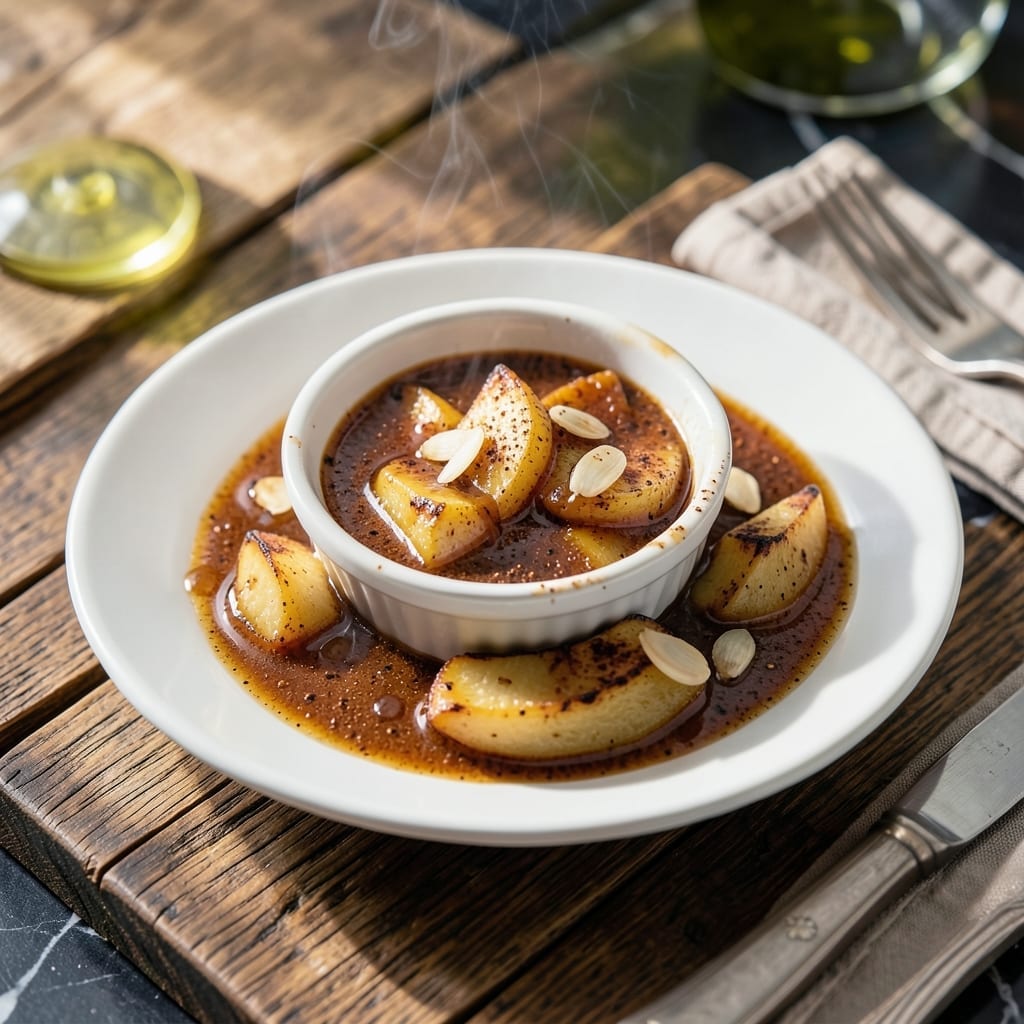
This sauce transforms ordinary burgers into restaurant-quality masterpieces with its perfect balance of sweet, smoky, and tangy flavors. I developed it after years of experimenting with different fruit-based glazes for the grill.
The secret lies in roasting fresh apples until they caramelize, then blending them with a touch of apple cider vinegar and warm spices. This creates a thick, glossy sauce that clings beautifully to meats while adding depth of flavor.
Use it as a glaze for burgers, a dip for fries, or even a topping for grilled chicken. The sauce keeps well in the fridge for up to two weeks, making it perfect for meal prep.
Here’s how to make this versatile condiment that will elevate your next cookout.
Ingredients for Roasted Apple Grille Sauce
Nine simple ingredients create this glossy, flavor-packed sauce for your grill favorites.
| Ingredient | Amount | Notes |
|---|---|---|
| Fresh Apples 🍎 | 2 whole | Peeled, cored, diced |
| Apple Cider Vinegar 🍏 | ¼ cup | Raw, unfiltered preferred |
| Brown Sugar 🍚 | ¼ cup | Light or dark variety |
| Smoked Paprika 🌶️ | 1 tsp | For smoky depth |
| Ground Cinnamon 🌿 | ½ tsp | Warm spice essence |
| Garlic Cloves 🧄 | 2 cloves | Peeled and minced |
| Olive Oil 🫒 | 1 tbsp | For roasting apples |
| Salt 🧂 | ¼ tsp | Kosher or sea salt |
| Black Pepper 🌶️ | ¼ tsp | Freshly ground preferred |
[recipe_ingredient_scaler]
The apples are key here. Honeycrisp or Fuji hold up best to roasting and give that perfect sweet-tart balance. I grab mine from Trader Joe’s—they always have good options without the crazy price tag. Don’t skip the roasting step (worth the extra minute)—it’s what gives the sauce its deep, caramelized flavor that makes it cling to burgers so well.
No smoked paprika? Regular paprika plus a pinch of liquid smoke (just a few drops) gets you close. Brown sugar can be swapped for maple syrup or honey if you prefer. The vinegar is non-negotiable though—it cuts through the sweetness. If you’ve got raw, unfiltered apple cider vinegar, use it. The cloudy stuff has way more flavor.
This keeps beautifully in the fridge for up to 2 weeks. I store mine in a mason jar—easy to shake before using since it thickens up when cold. For longer storage, freeze in ice cube trays (up to 3 months), then pop out what you need.
Why You’ll Love This Recipe
- One Pan Magic: I just toss chopped apples with the vinegar and spices, roast, and blend—no fancy techniques.
- Smoky Sweet Balance: The brown sugar caramelizes with the smoked paprika for that perfect sweet-heat combo.
- Grill Night Hero: Slather it on chicken, pork, or even burgers—my go-to for summer cookouts.
- Makes Extra: Honestly, it keeps for a week in the fridge, so I double the batch for easy meals.
Step-by-Step Instructions for Roasted Apple Grille Sauce
Here’s the method I use to create this rich, smoky-sweet sauce every time.
Step 1: Roast the Apples for Deep Flavor
Preheat your oven to 400°F. Toss the 2 whole Fresh Apples (peeled, cored, and diced) with 1 tbsp Olive Oil in a baking dish. Sprinkle with 0.25 tsp Salt and 0.25 tsp Black Pepper, then stir to coat evenly.
Roast for 20-25 minutes, stirring halfway through, until the apples are soft and caramelized. This step intensifies their natural sweetness and creates a deep, complex base for the sauce. Keep an eye on them toward the end to prevent burning.
Step 2: Build the Flavor Base on the Stovetop
While the apples roast, heat a saucepan over medium heat. Add the 2 cloves Garlic Cloves (minced) and sauté for 30 seconds until fragrant. Be careful not to let it brown—just soften it slightly.
Immediately add the 0.25 cup Apple Cider Vinegar, 0.25 cup Brown Sugar, 1 tsp Smoked Paprika, and 0.5 tsp Ground Cinnamon. Stir well and let the mixture simmer for 2 minutes until the sugar dissolves completely. You’ll start to smell the warm spices blooming.
Step 3: Combine and Simmer to Perfection
Carefully transfer the roasted apples (with all their juices) to the saucepan. Stir everything together, then reduce the heat to low-medium. Let the mixture simmer uncovered for 15-20 minutes.
The sauce is ready when it thickens enough to coat the back of a spoon and the apples break down into a chunky puree. Stir occasionally and reduce heat if it starts to stick. The sauce will deepen in color as it reduces.
Step 4: Blend and Adjust Consistency
For a smooth sauce, use an immersion blender to puree the mixture directly in the pot. If you prefer some texture, leave it as is or pulse a few times. Taste and adjust seasoning if needed, though the roasting process usually concentrates the flavors perfectly.
If the sauce seems too thick, thin it with a tablespoon or two of water. It should be thick enough to cling to burgers but still pourable. Let it cool slightly before using—it will thicken a bit more as it cools.
Pro Tips For Making Roasted Apple Grille Sauce
- Roast Low and Slow: Keep your oven at 325°F—any hotter and the brown sugar will caramelize too fast, leaving you with bitter spots instead of that deep, mellow sweetness.
- Core the Apples: I learned this the hard way—leaving the cores in makes the sauce grainy, and nobody wants that in their grille sauce.
- Balance the Vinegar: Apple cider vinegar can overpower if you’re heavy-handed; start with 2 tablespoons, taste, then add more if needed—sounds basic, but it’s the difference between tangy and sour.
- Toast the Spices: Toss the smoked paprika and cinnamon into the hot pan for 30 seconds before adding liquids—it wakes up their flavors, and you’ll notice it in every bite.
Essential Equipment for This Recipe
Immersion Blender
An immersion blender is my top choice for this recipe—it lets you puree the sauce directly in the pot, minimizing cleanup. I recommend the Cuisinart CSB-100 for its power and durability. It handles the roasted apples beautifully. 💡
Saucepan Selection
Use a 2-quart saucepan with a heavy bottom to prevent scorching. My go-to is the All-Clad Stainless Steel—it distributes heat evenly and lasts forever. Avoid nonstick for this recipe, as the caramelized bits add flavor.
Baking Dish
A 9×13-inch baking dish gives the apples enough room to roast properly. I prefer stoneware for even heat distribution. A half-sheet pan works too if you’re in a pinch.
Measuring Tools
Precision matters here. I use OXO measuring cups for dry ingredients and a Pyrex glass measuring cup for liquids. Weighing with a digital kitchen scale ensures consistency, especially for the brown sugar.
Storage Containers
For fridge storage, mason jars with airtight lids are perfect. I like the Ball wide-mouth pint jars—they’re easy to fill and clean. For freezing, silicone ice cube trays portion the sauce perfectly.
Optional Upgrade
If you want ultra-smooth results, a fine-mesh strainer helps remove any remaining apple skins. I press the sauce through with a spatula for a velvety finish. Not essential, but nice for special occasions.
Nutrition Facts
Frequently Asked Questions
Can I use a different type of vinegar?
Apple cider vinegar adds the best flavor, but rice vinegar works in a pinch. Avoid white vinegar—it’s too harsh for this sauce.
How long does this sauce last in the fridge?
Stored in an airtight container, it stays fresh for up to 2 weeks. For longer storage, freeze in ice cube trays for up to 3 months.
What if my sauce is too thin?
Simmer it uncovered for an extra 5-10 minutes to thicken. If it’s still loose, mix in 1 tsp cornstarch with a splash of water.
Can I make this without roasting?
Roasting deepens the flavor, but you can sauté the apples in a pan for 10-12 minutes instead. The taste won’t be as rich.

Trained in classic French technique but raised on slow-cooked ribs and spicy rubs, she blends culinary skill with smoke and soul.
- Recipe for Boneless Pork Chops in Cast Iron Skillet: Sear and Baste to Juicy Perfection - October 3, 2026
- Recipe for Boneless Cross Rib Roast: Slow-Roasted Beef with Herb Crust - October 3, 2026
- Hamburgers in Sauce Recipe Crock Pot: Slow-Cooked Savory Delight - October 3, 2026