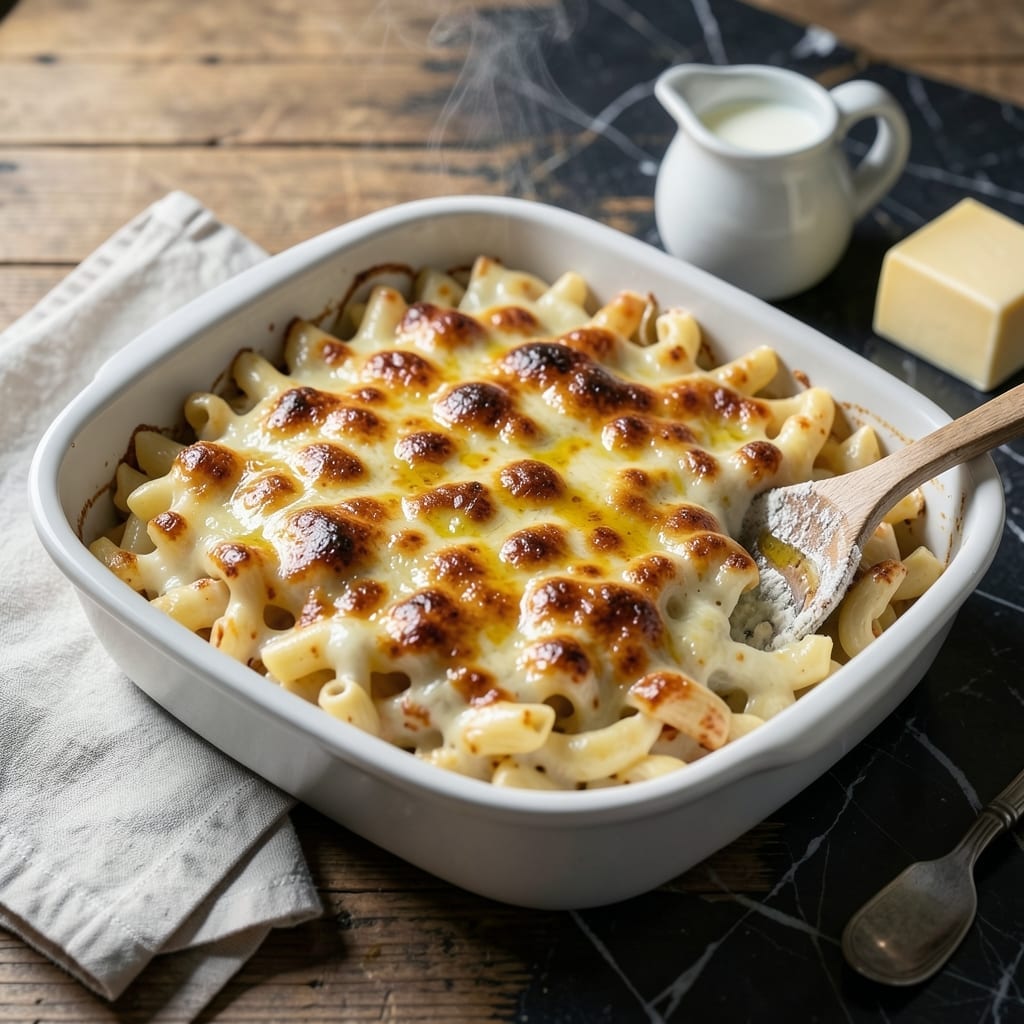
Mastering a proper roux transforms your mac n cheese from good to extraordinary. This simple mixture of fat and flour creates the silky foundation for a creamy sauce that clings perfectly to every noodle.
Cook it just until golden for a subtle nuttiness, then whisk in milk for a velvety base. The key is patience—rushing this step risks a lumpy or thin sauce.
Ingredients for Roux Recipe for Mac N Cheese
Ten ingredients build that silky, golden foundation your pasta deserves.
| Ingredient | Amount | Notes |
|---|---|---|
| Unsalted Butter 🧈 | 4 tbsp | European-style preferred for richness |
| All-Purpose Flour 🌾 | 4 tbsp | Sifted for lump-free roux |
| Whole Milk 🥛 | 4 cups | Full-fat for creaminess |
| Heavy Cream 🥛 | 1 cup | Optional for extra decadence |
| Sharp Cheddar Cheese 🧀 | 2 cups | Freshly grated, block preferred |
| Gruyère Cheese 🧀 | 1 cup | Freshly grated for depth |
| Dijon Mustard 🟡 | 1 tsp | Smooths cheese sauce flavor |
| Worcestershire Sauce 💧 | 1 tsp | Vegetarian version required |
| Salt 🧂 | ½ tsp | Diamond Crystal preferred |
| White Pepper 🌶️ | ¼ tsp | Freshly ground for subtle heat |
[recipe_ingredient_scaler]
The butter makes or breaks this. Plugrá or Kerrygold work beautifully—their higher fat content means less water to evaporate off. Flour should be fresh (not that sad canister from 2019). I grab mine from King Arthur when I’m stocking up. The milk? Whole is non-negotiable—2% or skim won’t give you that luscious texture. If you’re feeling fancy, a splash of cream pushes it over the top.
No whole milk? Half-and-half at half the quantity works in a pinch. Sharp cheddar is ideal, but Gouda or Monterey Jack melt just as well. Skip the pre-shredded cheese (that anti-caking stuff ruins the melt). For the Worcestershire, Annie’s makes a vegetarian version—look for it at Whole Foods. Dijon mustard can be swapped for regular yellow, but you’ll lose some depth.
This base keeps 3-4 days in the fridge—reheat gently with a splash of milk. Freezing’s tricky (it can separate), but if you must, 1 month max. Make extra roux and store the cooked paste in the freezer for future batches.
Why You’ll Love This Recipe
- No-Fuss Roux: I melt the butter, whisk in flour, and in two minutes flat, the base for my creamiest mac is ready.
- Sharp Cheddar Shine: The sharp cheddar melts into the milk and cream so smoothly it coats every noodle in that deep, tangy richness I crave.
- Crowd-Pleasing Dish: From weeknight dinners to potlucks, this mac disappears fast—even my pickiest nephew cleans his plate.
- Leftovers? Better: Honestly, it tastes even richer the next day after the flavors meld overnight in the fridge.
Step-by-Step Instructions for Roux-Based Mac N Cheese
This method delivers the creamiest sauce you’ve ever made—smooth, rich, and perfectly emulsified.
Step 1: Cook the Roux to a Golden Blonde
Melt the 4 tbsp unsalted butter in a heavy-bottomed saucepan over medium heat. Let it foam and subside before adding the 4 tbsp all-purpose flour all at once. Stir constantly with a wooden spoon—this is non-negotiable.
The mixture will transform from a wet paste to a bubbling, fragrant base. Cook for 2-3 minutes until it turns a light golden color, just shy of tan. You’ll smell a nutty aroma when it’s ready. Don’t rush this; undercooked flour tastes raw, and overcooked roux loses thickening power.
Step 2: Gradually Whisk in the Dairy
Slowly pour in the 4 cups whole milk, a ½ cup at a time, whisking vigorously after each addition. The mixture will seize up at first—this is normal. Keep whisking until smooth before adding more milk.
Once all the milk is incorporated, add the 1 cup heavy cream. Bring the mixture to a gentle simmer, then reduce heat to medium-low. Stir frequently as it thickens enough to coat the back of a spoon, about 5-7 minutes. The sauce should ripple when you draw a finger through it on the spoon.
Step 3: Melt in the Cheeses Off Heat
Remove the saucepan from heat. Add the 2 cups sharp cheddar cheese and 1 cup gruyère cheese, a handful at a time, stirring until fully melted and silky before adding more. This prevents the sauce from breaking.
Stir in the 1 tsp Dijon mustard, 1 tsp Worcestershire sauce, 0.5 tsp salt, and 0.25 tsp white pepper. Taste and adjust seasoning if needed. The mustard and Worcestershire deepen the flavor without overpowering it.
Step 4: Combine with Pasta for Ultra Creamy Results
Immediately pour the cheese sauce over cooked, drained pasta. The residual heat will help the sauce cling perfectly to every noodle. Toss gently but thoroughly to coat.
If the sauce seems too thick, add a splash of hot pasta water to loosen it to your desired consistency. Let it sit for 2-3 minutes before serving—the sauce will thicken slightly as it cools, creating that signature velvety texture.
Pro Tips For Making Roux Recipe For Mac N Cheese
- Cook the Roux Longer: I learned this the hard way—let your butter and flour mixture turn a light golden brown (about 3-4 minutes) to lose that raw flour taste.
- Warm the Milk: Sounds weird, but it works: heat your whole milk and heavy cream together before adding to the roux to prevent a lumpy sauce.
- Skip Pre-Shredded Cheese: After a few grainy batches, I finally figured out pre-shredded cheddar has anti-caking agents that mess with the melt—grate your own sharp cheddar.
- Add Cheese Off Heat: Make sure to pull the pot from the burner when stirring in the cheese to keep it creamy instead of stringy or separated.
Common Mistakes When Making roux recipe for mac n cheese
Rushing the Roux
Cooking the roux too quickly over high heat is a common mistake. I always use medium heat and stir constantly for 2-3 minutes until it reaches that perfect light golden color. High heat can burn the flour, giving your sauce a bitter taste.
Adding Milk Too Fast
Pouring all the milk in at once causes lumps. I whisk in the 4 cups whole milk gradually, about ½ cup at a time, ensuring each addition is smooth before adding more. Patience here prevents a clumpy disaster. 💡
Overcooking the Roux
Taking the roux past golden to brown reduces its thickening power. I stop cooking as soon as it turns a light tan and smells nutty. Darker roux works for gumbo, but for mac n cheese, golden is ideal.
Skipping the Whisk
A wooden spoon won’t cut it for the milk incorporation. I always switch to a whisk for this step—it breaks up lumps and creates a smooth, velvety base. The whisk’s wires reach into corners and prevent flour clumps.
Boiling the Sauce
Once the milk is added, keep the heat at medium-low. I’ve learned that boiling can cause the sauce to separate or scorch at the bottom. Gentle simmering is the key to a silky finish.
Ignoring Temperature
Adding cold milk to hot roux can shock the mixture and create lumps. I ensure my milk is at room temperature before starting. This small step makes a noticeable difference in texture. 🔥
Nutrition Facts
Frequently Asked Questions
What’s the ideal color for the roux?
Aim for a light golden blonde, like peanut butter. Cook it for 2-3 minutes over medium heat until nutty and fragrant. Darker than this can make your sauce bitter.
Can I use oil instead of butter?
Yes, but butter adds richness and flavor. If using oil, stick to neutral options like vegetable or canola. The ratio remains 1:1 with flour.
Why does my sauce turn out lumpy?
Lumps happen when milk is added too quickly or the roux isn’t smooth. Whisk in milk gradually, ½ cup at a time, and ensure the roux is fully cooked first.
How long does the sauce last in the fridge?
Store the sauce in an airtight container for up to 3-4 days. Reheat gently with a splash of milk to restore creaminess.

Trained in classic French technique but raised on slow-cooked ribs and spicy rubs, she blends culinary skill with smoke and soul.
- Recipe for Boneless Pork Chops in Cast Iron Skillet: Sear and Baste to Juicy Perfection - October 3, 2026
- Recipe for Boneless Cross Rib Roast: Slow-Roasted Beef with Herb Crust - October 3, 2026
- Hamburgers in Sauce Recipe Crock Pot: Slow-Cooked Savory Delight - October 3, 2026