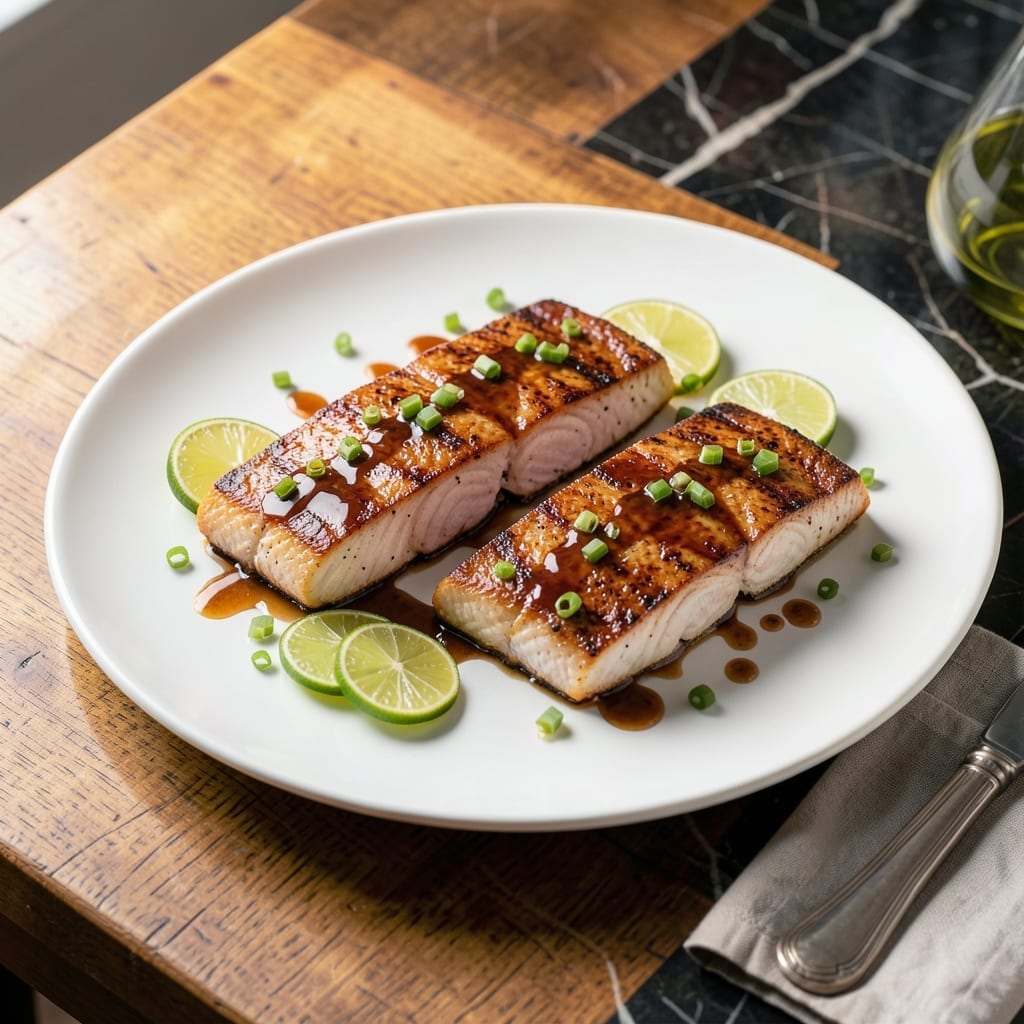
This dish brings fine dining home with a restaurant-style miso butter glaze that elevates Chilean sea bass to new heights. The technique is professional yet approachable for any home cook.
I’ve perfected the balance of sweet, umami, and buttery richness that defines this signature preparation. The result is tender, flaky fish with a glossy, flavor-packed finish.
Ingredients for Ruth Chris Chilean Sea Bass
Restaurant-quality ingredients create this signature dish with depth and elegance at home.
| Ingredient | Amount | Notes |
|---|---|---|
| Chilean Sea Bass Fillets 🐟 | 4 whole | Skin-on, about 6 oz each |
| White Miso Paste 🥣 | ¼ cup | Fermented, smooth variety |
| Unsalted Butter 🧈 | ½ cup | European-style preferred |
| Honey 🍯 | 2 tbsp | Raw or pure variety |
| Soy Sauce 🫙 | 2 tbsp | Low-sodium for balance |
| Rice Vinegar 🍶 | 1 tbsp | Seasoned or unseasoned |
| Fresh Ginger 🌿 | 1 tbsp | Peeled and finely grated |
| Garlic Cloves 🧄 | 2 cloves | Peeled and minced |
| Shallot 🧅 | 1 whole | Finely minced |
| Fresh Cilantro 🌿 | ¼ cup | Chopped, for garnish |
| Sesame Oil 🫒 | 1 tsp | Toasted variety for depth |
| Vegetable Oil 🛢️ | 2 tbsp | High smoke point for searing |
| Kosher Salt 🧂 | 1 tsp | Diamond Crystal preferred |
| Freshly Ground Black Pepper 🌶️ | ½ tsp | Coarse grind preferred |
[recipe_ingredient_scaler]
The sea bass is non-negotiable—Chilean sea bass (also called Patagonian toothfish) delivers the buttery texture essential for this preparation. Whole Foods or high-end seafood markets typically carry it fresh; if frozen, thaw overnight in the fridge. The miso paste is the umami backbone. White miso (shiro) offers the right balance of sweetness and saltiness without overpowering the fish.
No white miso? Yellow miso at half the quantity works in a pinch, though it’s slightly more assertive. Honey can be swapped for maple syrup or agave if avoiding bee products. For the soy sauce, tamari is a gluten-free alternative. The ginger and garlic are foundational—fresh is mandatory, as dried versions won’t deliver the vibrant punch this glaze requires.
Fresh sea bass should be cooked the day of purchase. The miso glaze keeps in the fridge for up to 5 days and freezes for 1 month (though texture may separate slightly). Store cilantro stems in water like flowers to extend freshness by a week.
Why You’ll Love This Recipe
- One Pan Magic: I just mix the miso, honey, and soy, brush it on the fillets, and let the oven do the rest.
- Umami Bomb: The white miso and butter create this rich, salty-sweet glaze that makes the sea bass melt in your mouth.
- Date Night Ready: I serve this with roasted veggies when we want a restaurant-quality meal at home.
- Leftovers? Rarely: Honestly, we usually finish it all, but if there’s any left, it’s just as good reheated the next day.
Step-by-Step Instructions for Chilean Sea Bass with Miso Butter Glaze
Master these professional techniques to recreate the signature dish with precision and finesse.
Step 1: Prepare and Season the Chilean Sea Bass Fillets
Pat the 4 whole Chilean Sea Bass Fillets completely dry with paper towels. This critical step ensures the skin crisps properly during searing. Season both sides lightly with the 1 tsp Kosher Salt and 0.5 tsp Freshly Ground Black Pepper—the miso glaze will add significant flavor, so restraint here prevents oversalting.
Let the fillets rest at room temperature for 10-15 minutes while you prepare the glaze. This even temperature distribution prevents the fish from seizing up when it hits the hot pan, ensuring even cooking throughout.
Step 2: Create the Miso Butter Glaze
In a small saucepan over medium-low heat, melt the 0.5 cup Unsalted Butter until just bubbling. Add the 0.25 cup White Miso Paste, 2 tbsp Honey, 2 tbsp Soy Sauce, 1 tbsp Rice Vinegar, 1 tbsp Fresh Ginger, 2 cloves Garlic Cloves, and 1 whole Shallot.
Whisk continuously for 4-5 minutes until the mixture becomes smooth and slightly thickened. The glaze should coat the back of a spoon and have a glossy sheen. Remove from heat and stir in the 1 tsp Sesame Oil for depth. Keep warm but not hot—you’ll pour this over the cooked fish.
Step 3: Sear the Fillets to Perfection
Heat the 2 tbsp Vegetable Oil in a non-stick or cast iron skillet over medium-high heat until it shimmers. Place the fillets skin-side down in the pan. Press gently with a fish spatula for the first 30 seconds to prevent curling and ensure full contact with the pan.
Cook undisturbed for 4-5 minutes until the skin is crisp and golden brown and releases easily from the pan. Flip carefully and cook for another 3-4 minutes until the fish is opaque and flakes easily with a fork. The internal temperature should reach 145°F.
Step 4: Glaze and Garnish for Restaurant-Style Presentation
Transfer the cooked fillets to a serving platter, skin-side up. Spoon the warm miso butter glaze generously over each fillet, allowing it to cascade down the sides. The glaze should pool slightly around the base of each portion.
Garnish with the 0.25 cup Fresh Cilantro, scattering it artfully over the glaze and around the plate. The vibrant green provides a striking contrast against the rich, amber-colored sauce. Serve immediately while the glaze is still glossy and the fish retains its perfect moisture.
Pro Tips For Making Ruth Chris Chilean Sea Bass
- Pat Dry Thoroughly: I learned this the hard way—any moisture left on the sea bass will steam it instead of searing. Use paper towels and press gently but firmly to get it bone-dry before it hits the pan.
- Bloom the Miso: Cook the white miso paste in a tablespoon of butter for 1-2 minutes before adding liquids. This deepens its flavor and removes the raw edge—sounds weird, but it works.
- Skip the High Heat: Chilean sea bass is delicate and burns easily. Medium heat is your friend here; if the butter starts browning too fast, pull the pan off for 10 seconds to cool it down.
- Rest Before Serving: After searing, let the fillets rest under foil for 5 minutes. I used to rush this part and wondered why my fish was dry—turns out, it needs that time to redistribute its juices.
Dietary Considerations for This Dish
Gluten-Free Adaptations
This dish is naturally gluten-free as written, but verify your soy sauce—many brands contain wheat. I use San-J tamari for guaranteed gluten-free results. The white miso paste and rice vinegar are also typically gluten-free, but always check labels. 💡
Pescatarian-Friendly
Chilean sea bass is an excellent pescatarian protein choice, rich in omega-3s and low in mercury. The miso butter glaze adds depth without any meat-based ingredients. For strict vegetarians, swap the fish for thick-cut cauliflower steaks—sear and glaze the same way.
Dairy Considerations
The recipe uses 0.5 cup unsalted butter, which can be replaced with vegan butter like Miyoko’s or coconut oil for dairy-free needs. The glaze will still emulsify beautifully, though coconut oil may add a subtle tropical note.
Low-Sodium Options
Use low-sodium soy sauce and white miso (which is naturally lower in sodium than red miso). Reduce the kosher salt to ½ tsp or omit entirely. I often skip added salt when using full-flavor miso and soy sauce.
Allergen Awareness
Seafood allergies are common, so ensure your guests are safe with Chilean sea bass. The glaze contains no nuts, but double-check sesame oil if sesame allergies are a concern. Fresh cilantro and ginger are the only other potential allergens.
Keto-Compatible
This dish fits perfectly into a keto diet with 4g net carbs per serving, primarily from the 2 tbsp honey. For stricter keto, replace honey with 1 tbsp allulose or erythritol—the glaze will be slightly less glossy but equally flavorful.
Nutrition Facts
Frequently Asked Questions
Can I use a different type of fish?
Yes, but choose firm, fatty fish like cod or halibut. Chilean sea bass is ideal for its buttery texture and mild flavor that pairs perfectly with the miso glaze.
How do I know when the fish is done?
The internal temperature should reach 145°F. The flesh will turn opaque and flake easily with a fork. Avoid overcooking to keep it tender.
Can I make the glaze ahead of time?
The miso butter glaze keeps in the fridge for up to 5 days. Reheat gently over low heat before using.
What if my glaze separates?
Simply whisk in a splash of warm water or 1 tsp soy sauce to bring it back together. This happens naturally as it cools.

Trained in classic French technique but raised on slow-cooked ribs and spicy rubs, she blends culinary skill with smoke and soul.
- Recipe for Boneless Pork Chops in Cast Iron Skillet: Sear and Baste to Juicy Perfection - October 3, 2026
- Recipe for Boneless Cross Rib Roast: Slow-Roasted Beef with Herb Crust - October 3, 2026
- Hamburgers in Sauce Recipe Crock Pot: Slow-Cooked Savory Delight - October 3, 2026