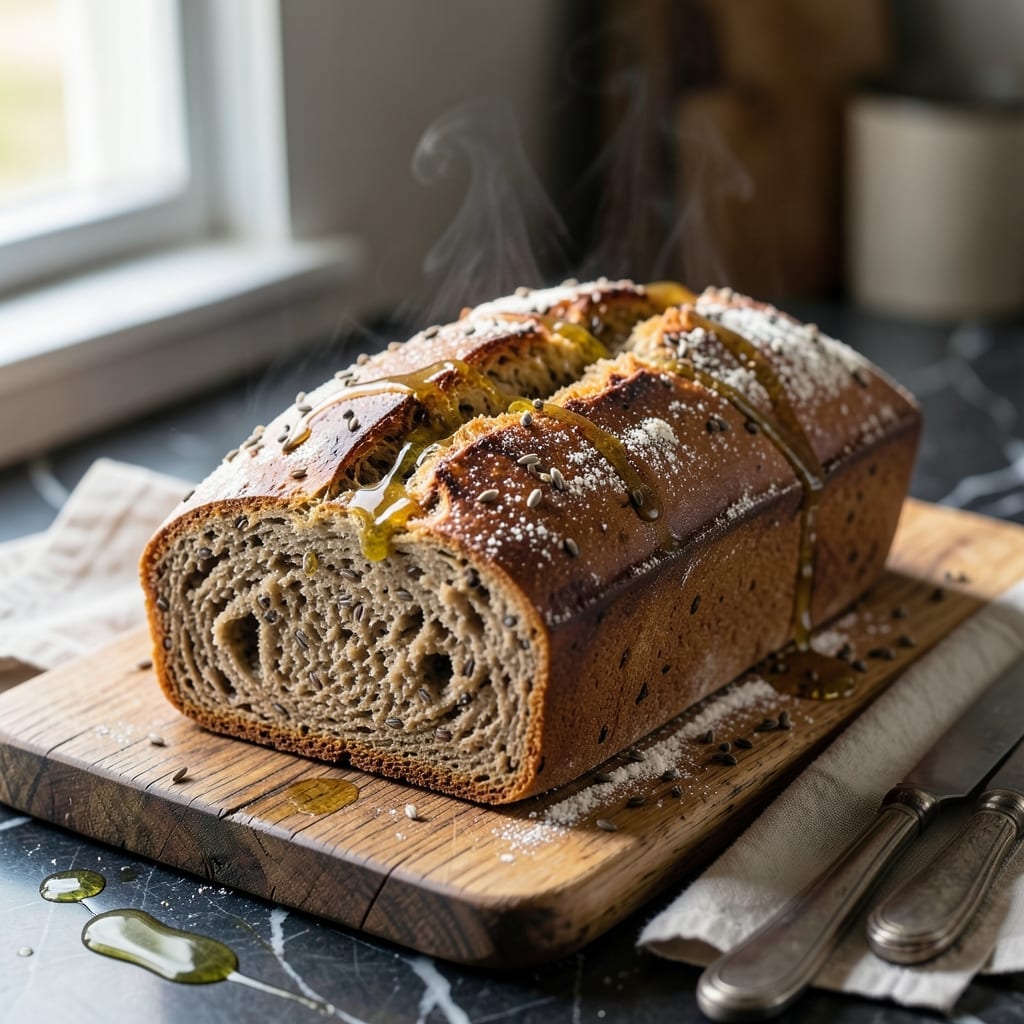
This bread machine rye bread delivers artisan results with minimal effort. The process combines caraway seeds and molasses for that classic rye flavor.
You’ll achieve a perfectly textured loaf with a dense, moist crumb and slightly chewy crust. The machine handles all the work while you enjoy the aroma.
Ingredients for Rye Bread Recipe for Bread Machine
Simple pantry staples create this rich, aromatic bread machine loaf.
| Ingredient | Amount | Notes |
|---|---|---|
| Bread Flour 🌾 | 3 cups | All-purpose works in a pinch |
| Rye Flour 🌾 | 1 cup | Dark or medium variety |
| Warm Water 💧 | 1 ¼ cups | Around 110°F for yeast activation |
| Active Dry Yeast 🍞 | 2 ¼ tsp | One packet plus a quarter |
| Molasses 🍯 | 3 tbsp | Dark for robust flavor |
| Caraway Seeds 🌿 | 2 tsp | Toasted enhances aroma |
| Salt 🧂 | 1 ½ tsp | Fine sea salt preferred |
| Olive Oil 🫒 | 2 tbsp | Extra-virgin for richness |
| Vital Wheat Gluten 🌾 | 1 tbsp | Improves rye dough elasticity |
| Honey 🍯 | 1 tbsp | Balances molasses bitterness |
| Butter 🧈 | 1 tbsp | Softened for dough tenderness |
[recipe_ingredient_scaler]
The flours are non-negotiable here. King Arthur makes reliable bread and rye flours—look for them in the baking aisle at Whole Foods or any well-stocked grocery store. Dark molasses (like Brer Rabbit) gives that deep caramel note, but light works if that’s what you have. Caraway seeds from Penzeys are potent; if yours are old, toast them lightly to wake up the flavor.
No molasses? Dark corn syrup or maple syrup at the same amount. Missing caraway? Skip it—the loaf will still be delicious, just less traditional. Vital wheat gluten can be omitted, but the texture won’t be as light. For the yeast, instant yeast works too—just add it dry with the flour. Butter can be swapped for vegetable oil (same amount) if you prefer.
Store flours in airtight containers for up to 6 months (freeze for longer storage). Molasses keeps indefinitely, but the opened bottle is best used within 1 year. Yeast stays fresh for 3-4 months in the pantry or 6 months refrigerated. Always check expiration dates before starting.
Why You’ll Love This Recipe
- Set It & Forget It: I toss the flours, molasses, yeast, and warm water in the machine before bed and wake up to fresh rye bread—no kneading, no watching.
- Deep, Earthy Sweetness: The molasses adds this rich caramel note that balances the rye’s boldness perfectly, like a bakery loaf but better.
- Sandwich Superstar: This holds up to thick pastrami, sharp cheddar, or just butter for days—no soggy bottoms, even packed for lunch.
- Budget Baker’s Win: A bag of rye flour and a spoonful of molasses stretch into multiple loaves, and it’s still cheaper than store-bought.
Step-by-Step Instructions for Rye Bread in a Bread Machine
This hands-free method delivers a perfect artisan loaf with minimal effort on your part.
Step 1: Prepare and Measure All Ingredients
Begin by gathering all your components: the 3 cups bread flour, 1 cup rye flour, 2.25 tsp active dry yeast, 1.5 tsp salt, 1 tbsp vital wheat gluten, 2 tsp caraway seeds, 3 tbsp molasses, 1 tbsp honey, 2 tbsp olive oil, and 1 tbsp butter. Precision matters here.
Measure the 1.25 cups warm water and verify it’s around 110°F—too hot and you’ll kill the yeast, too cold and it won’t activate properly. I use a kitchen thermometer for accuracy. This temperature ensures optimal yeast activity without compromising the dough’s structure.
Step 2: Layer Ingredients in the Bread Machine Pan
Insert the pan into your bread machine and begin layering. Start with the 1.25 cups warm water at the bottom, followed by the 3 tbsp molasses and 1 tbsp honey. These liquids will dissolve together as the machine begins mixing.
Next, add the dry ingredients: 3 cups bread flour, 1 cup rye flour, 1.5 tsp salt, 1 tbsp vital wheat gluten, and 2 tsp caraway seeds. I place the salt in one corner and the yeast in another to prevent direct contact—salt can inhibit yeast activation if they touch.
Finally, add the 2.25 tsp active dry yeast in its own small well on top of the flours. Don’t let it touch the liquids yet. The 2 tbsp olive oil and 1 tbsp butter go in last, in separate corners of the pan.
Step 3: Select and Start the Bread Machine Cycle
Secure the pan in the bread machine and close the lid. Select the “Basic” or “Whole Wheat” cycle—rye dough benefits from the slightly longer knead time these settings provide. Set the crust to medium for the best balance between a sturdy exterior and soft interior.
If your machine has a delay timer, I don’t recommend using it with this recipe. The 1.25 cups warm water and 2.25 tsp active dry yeast need to begin working immediately for proper rise. Press start and let the machine do its work. You should hear the kneading begin within 5-10 minutes.
Step 4: Monitor the Dough and Adjust if Needed
About 15 minutes into the cycle, check the dough through the window. It should form a smooth ball that pulls away from the sides of the pan. If it looks too dry, add 1 tsp water at a time. If it’s too sticky, sprinkle in 1 tsp bread flour.
The 1 tbsp vital wheat gluten helps compensate for rye flour’s low gluten content, but sometimes the dough needs a little adjustment. Don’t be alarmed if the dough looks slightly tacky—rye dough is naturally stickier than white bread dough. The machine’s non-stick pan handles this well.
Step 5: Complete the Cycle and Cool the Loaf
After the kneading, rising, and baking phases complete (typically 3-4 hours total), the machine will beep. Open the lid carefully—there will be hot steam. Using oven mitts, remove the pan and turn it out onto a wire rack.
Let the loaf cool for at least 1 hour before slicing. This waiting period allows the crumb structure to set and prevents a gummy texture. The 1 tbsp butter in the recipe gives the crust a beautiful sheen and the interior a tender crumb. Resist the temptation to slice early—patience rewards you with a perfect loaf.
Pro Tips For Making Rye Bread Recipe For Bread Machine
- Test the Water: Use a thermometer to check your warm water is between 105-110°F—any hotter and you’ll kill the yeast, any cooler and it won’t activate properly. I learned this the hard way after several loaves that just wouldn’t rise.
- Measure Rye Right: Rye flour is denser than bread flour, so scoop it into your measuring cup and level it off—don’t pack it down. Sounds weird, but it works: this keeps your loaf from turning out too heavy.
- Skip the Overmixing: Let the bread machine do its thing—resist the urge to open the lid and check on the dough. After burning three batches to dry, crumbly messes, I finally figured out that rye dough needs consistent, uninterrupted time to develop.
- Swap Honey for Molasses: If you’re out of molasses, use honey or dark corn syrup in a 1:1 ratio. It’s not the prettiest method, but it’s the tastiest—your loaf will still get that deep, caramelized flavor rye bread is known for.
Creative Variations of This Dish
Light Rye Version
Swap the 1 cup rye flour for white whole wheat flour to create a milder, lighter loaf. Reduce the caraway seeds to 1 tsp and add 1 tbsp brown sugar to balance the flavor. The texture will be closer to sandwich bread but with that distinctive rye character.
Marble Rye Swirl
For a stunning visual effect, divide the dough after kneading. Mix 2 tbsp cocoa powder into half the dough, then layer both portions in the pan. The molasses will enhance the dark swirl while the light portion stays classic. This is my go-to for special occasions. ✨
Pumpernickel Style
Replace the 3 tbsp molasses with ¼ cup dark corn syrup and add 2 tbsp cocoa powder plus 1 tsp instant coffee to the dry ingredients. Use only dark rye flour for a deeper, more complex flavor that’s perfect for deli-style sandwiches.
Sweet Rye Bread
Increase the honey to 3 tbsp and add ½ cup raisins or chopped dried apricots soaked in 2 tbsp warm water. Add these during the final knead cycle. This makes a fantastic French toast base that my family requests constantly.
Savory Onion Rye
Add ¼ cup caramelized onions and 1 tsp dried thyme with the wet ingredients. The onions’ sweetness complements the caraway seeds beautifully. I make this version for holiday meals when I want to impress without extra effort. 💛
Seeded Rye Loaf
Mix in 2 tbsp sunflower seeds, 1 tbsp flaxseeds, and 1 tbsp sesame seeds with the dry ingredients. The seeds add wonderful texture and nutrition. Toast the seeds lightly first to enhance their crunch and aroma.
Nutrition Facts
Frequently Asked Questions
Can I use all-purpose flour instead of bread flour?
Yes, but the texture will be slightly less chewy. Bread flour’s higher protein content creates a better structure for rye dough. If using all-purpose, consider adding an extra 1 tsp vital wheat gluten to compensate.
Why does my dough look so sticky?
Rye flour naturally absorbs less liquid than wheat flour. The dough should be tacky but not wet. If it’s sticking to the pan, add 1 tsp bread flour at a time until it forms a smooth ball.
Can I make this without caraway seeds?
The loaf will have a milder flavor but still taste delicious. For a different twist, try adding 1 tsp fennel seeds or omit seeds entirely for a plain rye.
How long does the bread stay fresh?
Store in an airtight container at room temperature for up to 3 days. For longer storage, wrap tightly and freeze for up to 3 months. Slice before freezing for easy single-serving portions.

Trained in classic French technique but raised on slow-cooked ribs and spicy rubs, she blends culinary skill with smoke and soul.
- Recipe for Boneless Pork Chops in Cast Iron Skillet: Sear and Baste to Juicy Perfection - October 3, 2026
- Recipe for Boneless Cross Rib Roast: Slow-Roasted Beef with Herb Crust - October 3, 2026
- Hamburgers in Sauce Recipe Crock Pot: Slow-Cooked Savory Delight - October 3, 2026