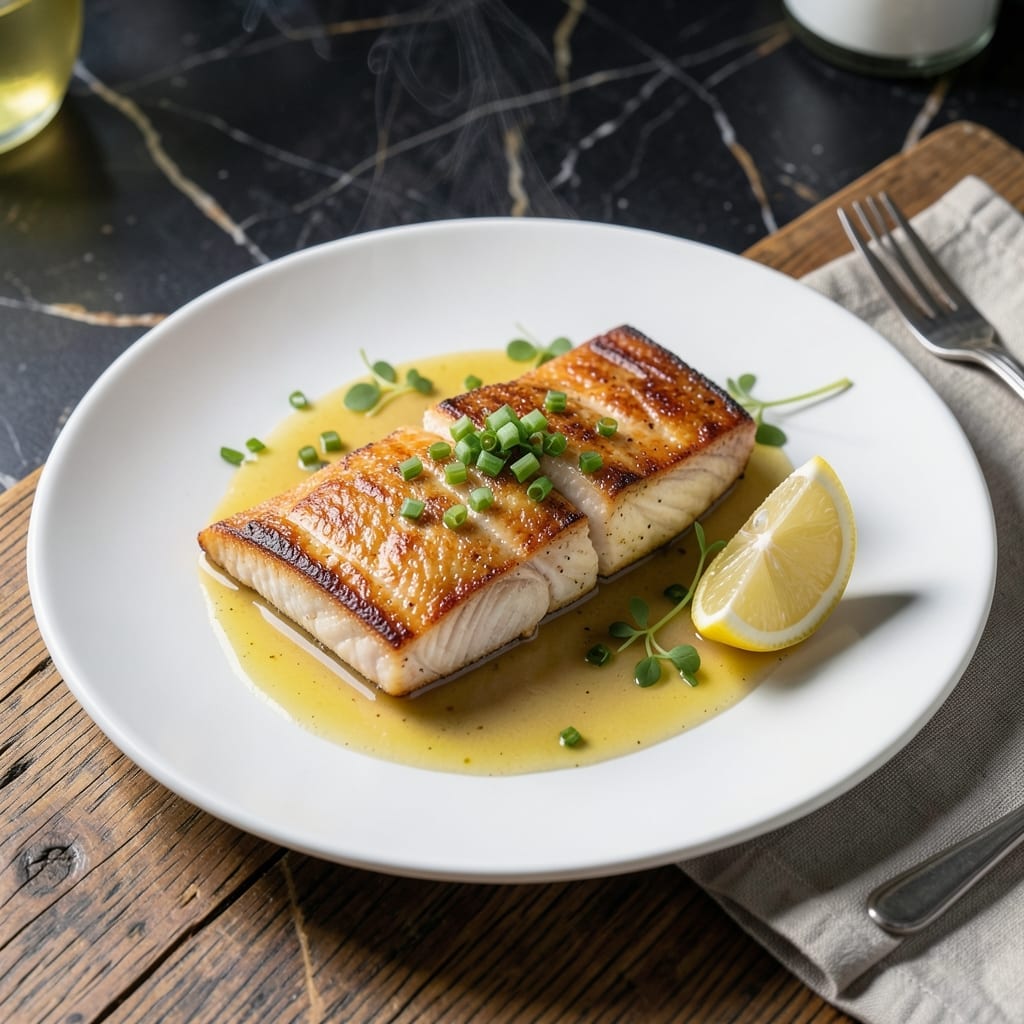
Mastering pan-fried sablefish means achieving crispy skin and buttery flesh every time. My grandmother’s vague notes about “cooking until it feels right” inspired this precise method.
This approach uses a hot pan and careful timing to create that perfect golden crust while keeping the fish moist inside. The skin becomes shatteringly crispy without burning.
What sets this dish apart is its simplicity and reliability. No fancy techniques—just a proven process that delivers restaurant-quality results in your home kitchen.
Serve immediately for the best texture. The crispy skin loses its appeal if it sits too long.
Ingredients for Sablefish Recipe Pan Fried
Just a few quality ingredients transform sablefish into something extraordinary with crispy skin.
| Ingredient | Amount | Notes |
|---|---|---|
| Sablefish Fillets 🐟 | 1 ½ lb | Skin-on, about 1-inch thick |
| Kosher Salt 🧂 | 1 ½ tsp | Diamond Crystal preferred |
| Freshly Ground Black Pepper 🌶️ | ½ tsp | Coarse grind for texture |
| All-Purpose Flour 🌾 | ¼ cup | For light dusting |
| Neutral Oil 🫒 | 3 tbsp | High smoke point, like avocado or grapeseed |
| Unsalted Butter 🧈 | 2 tbsp | Cold, cubed for basting |
| Garlic Cloves 🧄 | 3 cloves | Lightly crushed, peeled |
| Fresh Thyme Sprigs 🌿 | 4 sprigs | Optional for aroma |
| Fresh Lemon 🍋 | 1 whole | Sliced for serving |
| Fresh Parsley 🌿 | 2 tbsp | Chopped, for garnish |
[recipe_ingredient_scaler]
The sablefish is the star here. Wild-caught from Alaska (look for flash-frozen at Whole Foods or Costco) gives you that buttery richness. Skin-on fillets are non-negotiable for that shatteringly crispy finish. Ask your fishmonger to remove any pin bones if they’re not already deboned. Aim for fillets about 1-inch thick so they cook evenly without drying out.
No sablefish? Black cod is actually the same thing—just a different name. Swap in halibut or cod (thicker cuts) if needed, but cook times may vary. Skip the flour for gluten-free—just pat the fillets extra dry. The butter can be ghee for a nuttier flavor, but unsalted keeps the taste clean. Fresh herbs? Rosemary or sage work just as well as thyme.
Cook this the day you buy it, or store the fillets on ice in the fridge for 1-2 days max. Once cooked, serve immediately—the crispy skin doesn’t hold. Leftovers? Rare, but they’ll keep 2 days refrigerated. Reheat gently in a skillet to revive the texture.
Why You’ll Love This Recipe
- I’ll be real: sablefish feels fancy, but it cooks faster than salmon and stretches to feed four.
- One Pan Magic: I just heat the oil, dust the sablefish in flour, and let it sizzle—no fancy tools, no fuss.
- Buttery Richness: That flaky sablefish gets this melt-in-your-mouth texture with just salt, pepper, and a golden crust.
- Dinner or Lunch: Honestly, it’s as good cold in a salad the next day as it is hot off the pan.
Step-by-Step Instructions for Pan Fried Sablefish
Here’s how to nail that perfect crispy skin and buttery flavor every time.
Step 1: Prep and Season the Sablefish Fillets
Start by patting the 1.5 lb sablefish fillets completely dry with paper towels. This is non-negotiable—moisture prevents crispy skin. I press down firmly to remove every bit of moisture from both the skin and flesh sides.
Season both sides evenly with the 1.5 tsp kosher salt and 0.5 tsp freshly ground black pepper. The salt should form a visible layer; don’t be shy. Then lightly dust each fillet with the 0.25 cup all-purpose flour, shaking off any excess. This creates a thin protective barrier that helps achieve that golden crust.
Step 2: Sear the Fillets Skin-Side Down
Heat the 3 tbsp neutral oil in a large skillet over medium-high heat until it shimmers. You want it hot but not smoking. Carefully place the sablefish fillets in the pan skin-side down—this is crucial. Press down gently with a fish spatula for the first 10 seconds to prevent curling.
Cook undisturbed for 4-5 minutes until the skin is deep golden brown and crisp. You’ll know it’s ready when the edges look opaque and the skin releases easily from the pan. Resist the urge to peek or move the fillets; this ensures even browning.
Step 3: Flip and Baste with Garlic Butter
Flip the fillets and immediately reduce the heat to medium. Add the 2 tbsp unsalted butter, 3 cloves garlic cloves, and 4 sprigs fresh thyme sprigs to the pan. Tilt the skillet slightly and use a spoon to baste the fillets with the foaming butter for 2-3 minutes.
The garlic should turn fragrant and lightly golden, but not brown. The butter will brown slightly, adding a nutty depth to the fish. This basting technique keeps the flesh moist while the skin stays crisp. Cook until the fish flakes easily with a fork and reaches an internal temperature of 145°F.
Step 4: Rest and Garnish for Serving
Transfer the sablefish to a paper towel-lined plate to drain any excess oil. Let it rest for 2-3 minutes—this allows the juices to redistribute, ensuring every bite is tender and flavorful. The skin should remain crisp even after resting.
Garnish with the chopped 2 tbsp fresh parsley and serve with slices of the 1 whole fresh lemon on the side. The acidity from the lemon cuts through the richness of the fish, balancing each bite perfectly. Serve immediately while the skin is still crisp.
Pro Tips For Making Sablefish Recipe Pan Fried
- Dry the Fillets: Pat the sablefish dry with paper towels before seasoning—excess moisture prevents the flour from sticking and ruins the crust.
- Heat the Oil: Get the pan screaming hot before adding the fish, but not smoking. I learned this the hard way after too many pale, greasy fillets.
- Skip the Overcrowding: Cook only two fillets at a time in a 12-inch pan to avoid steaming them—this keeps the skin crisp and the center tender.
- Rest Before Serving: Give the fish 3-4 minutes on a warm plate after frying; it finishes cooking gently and stays moist.
Storing and Reheating This Recipe
Refrigerator Storage
Let your sablefish cool completely before storing—I usually wait about 30 minutes. Place in an airtight container with a paper towel to absorb excess moisture. It’ll keep at 40°F or below for up to 2 days, though I find the texture is best eaten within 24 hours. ❄️
Freezer Storage
For longer storage, wrap each cooled fillet tightly in plastic wrap, then place in a freezer-safe bag. Squeeze out all air before sealing. It freezes well for up to 1 month, but I recommend eating it sooner for the best quality.
Stovetop Reheating
This method preserves the crispy skin best. Heat a skillet over medium-low heat with 1 tbsp neutral oil. Place fillets skin-side down and cover for 3-4 minutes. The steam will warm the flesh while the skin re-crispens beautifully. 🔥
Microwave Reheating
For quick meals, place fillets on a microwave-safe plate with a damp paper towel. Heat on 50% power for 1-2 minutes, checking frequently. Note that the skin won’t be as crisp, but the fish will stay moist.
Serving Leftovers
If reheating multiple fillets, add them to soups or chowders instead. The fish will absorb flavors beautifully. I love flaking leftover sablefish into a creamy potato chowder for a hearty second meal.
Nutrition Facts
Frequently Asked Questions
What oil works best for pan frying?
Use a neutral oil with a high smoke point like avocado or grapeseed. These handle the medium-high heat without burning. Avoid olive oil as it can impart a bitter taste at high temperatures.
How do I know when it’s done?
The fish is ready when it reaches an internal temperature of 145°F and flakes easily with a fork. The skin should be deep golden brown and crisp, releasing easily from the pan.
Can I skip the flour coating?
You can, but the flour helps create that perfect crispy crust. If skipping, pat the fillets extra dry and press them firmly into the hot pan to prevent sticking. The texture won’t be quite as crisp without it.
Why did my fish stick to the pan?
This usually happens if the pan isn’t hot enough or the fish wasn’t dry. Ensure the oil shimmers before adding fillets and resist moving them for the first 4-5 minutes. Patience is key!

Trained in classic French technique but raised on slow-cooked ribs and spicy rubs, she blends culinary skill with smoke and soul.
- Smoked Whitefish Recipe: Wood-Fired Flakes with Herbed Butter Drizzle - October 15, 2026
- Smoked Teriyaki Beef Jerky Recipe: Umami-Deep Flavor in Every Chewy Bite - October 15, 2026
- Stewed Beef Brisket Recipe: Deep-Rich Flavor After 8 Hours of Slow Simmering - October 15, 2026