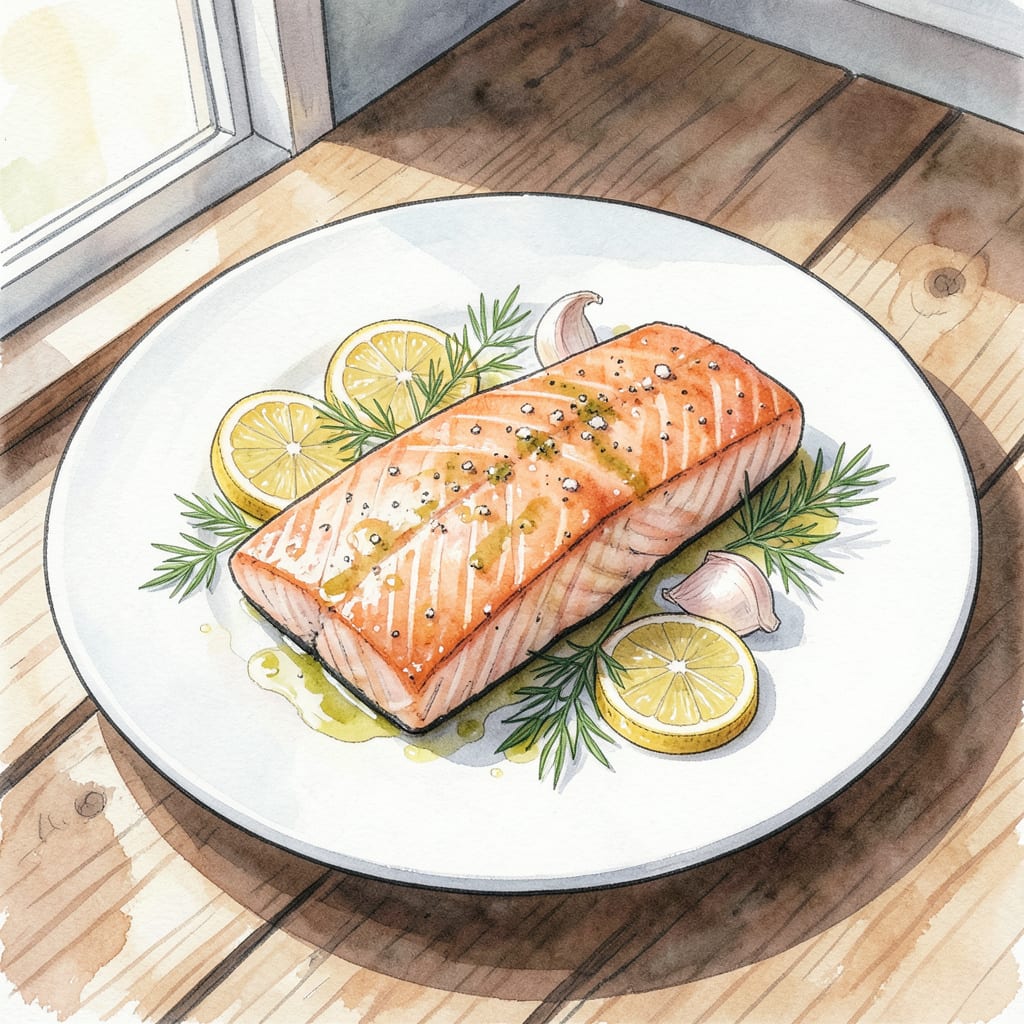
Cooking salmon in foil is a game-changer for moist, flaky fish every time. 🔥 I’ve perfected this technique through years of experimenting with different seasonings and cooking times, ensuring a delicious result that’s both easy to prepare and impressive to serve.
By baking salmon in foil, you lock in moisture and flavor, resulting in a tender fillet that’s sure to please. Whether you’re a seasoned chef or a kitchen novice, this recipe delivers consistently moist and flaky salmon that’s perfect for any occasion.
Ingredients for Salmon Foil
Simple ingredients make this moist salmon recipe shine. Fresh, quality ingredients are key.
| Ingredient | Amount | Notes |
|---|---|---|
| Salmon Fillets 🐟 | 4 pieces | Wild-caught, skin removed, about 6 oz each |
| Fresh Lemon Slices 🍋 | 8 slices | Thinly sliced, fresh |
| Fresh Dill 🌿 | ¼ cup | Chopped, fresh |
| Garlic Cloves 🧄 | 4 cloves | Minced, fresh |
| Olive Oil 🫒 | 2 tbsp | Extra-virgin, for brushing |
| Salt 🧂 | 1 tsp | Kosher, freshly ground |
| Black Pepper 🌶️ | ½ tsp | Freshly ground, to taste |
| Aluminum Foil 📦 | 4 sheets | Heavy-duty, for wrapping |
[recipe_ingredient_scaler]
The salmon matters here. Wild-caught has better flavor and texture. Look for fillets with even thickness so they cook uniformly. Most grocery stores have fresh salmon at the fish counter—request skin removal if needed. Costco often has great deals on wild-caught salmon.
No fresh dill? Fresh parsley or chopped tarragon work as substitutes. For garlic, don’t skip fresh—jarred won’t give the same punch. Lemon slices can be substituted with orange slices for a different citrus twist. If you prefer a bit of heat, add some red pepper flakes to taste.
This recipe keeps beautifully. Store leftovers in an airtight container in the fridge for up to 2 days. Reheat gently in the oven or enjoy cold. The foil packets freeze well too—just thaw overnight in the fridge before reheating. Perfect for meal prep!
Step-by-Step Instructions for Salmon in Foil
Follow these simple steps to achieve perfectly cooked, moist salmon every time.
👨🍳 Step 1: Prep the Salmon Fillets
Start by prepping the 4 pieces Salmon Fillets. Rinse them under cold water and pat dry with paper towels. I like to season both sides with 1 tsp Salt and 0.5 tsp Black Pepper to enhance the natural flavor. Make sure to handle the fillets gently to avoid breaking them.
The salmon is now ready for the aromatics. Sprinkle 4 cloves Garlic Cloves (minced) and 0.25 cup Fresh Dill (chopped) evenly over the fillets. The garlic adds a nice depth, while the dill provides a fresh, herbaceous note that complements the salmon beautifully.
🥘 Step 2: Assemble the Foil Packets
Preheat your oven to 400°F. Meanwhile, prepare the foil packets. Tear off 4 sheets Aluminum Foil, each large enough to wrap a salmon fillet completely. Place one fillet in the center of each foil sheet. Drizzle 2 tbsp Olive Oil over the salmon, ensuring each fillet gets an even coating.
Top each salmon fillet with 2 slices Fresh Lemon Slices. The lemon not only adds a burst of citrus flavor but also helps keep the salmon moist during cooking. Fold the foil over the salmon, creating a tight seal by crimping the edges. This step is crucial to trap the steam and flavors inside.
🔥 Step 3: Bake the Salmon
Place the foil packets on a baking sheet and transfer them to the preheated oven. Bake for 12-15 minutes, depending on the thickness of your fillets. The salmon is done when it flakes easily with a fork and reaches an internal temperature of 145°F. Avoid overcooking, as it can make the salmon dry.
Once done, remove the baking sheet from the oven. Let the salmon rest in the foil for 5 minutes before opening. This resting period allows the juices to redistribute, ensuring the salmon stays moist and flaky.
🍽️ Step 4: Serve
Carefully open the foil packets, watching out for the hot steam. Transfer the salmon to serving plates. Spoon any accumulated juices from the foil over the top of each fillet. The juices are packed with flavor and will enhance your dining experience.
Serve the salmon immediately, garnished with additional fresh dill if desired. The result is a moist, flaky salmon with a delicate flavor profile, perfect for a quick and healthy meal.
Essential Equipment for salmon foil
Must-Have Cooking Tools
Cooking salmon in foil requires some essential equipment to ensure perfect results. First, you’ll need heavy-duty aluminum foil that’s sturdy enough to prevent tears during cooking. I prefer Reynolds Wrap Heavy Duty for its reliability. A large baking sheet is also necessary to accommodate the foil packets. 🔥
Accurate Temperature Control
A digital oven thermometer is crucial for verifying your oven’s temperature accuracy. Many home ovens can be off by 25°F or more, which affects cooking time and quality. I use a ThermoWorks Oven Thermometer to ensure precise temperature control. This helps prevent overcooking the salmon.
Proper Handling Tools
When working with foil packets, a pair of tongs makes it easy to handle the hot packets without piercing the foil. I recommend Cuisinart stainless steel tongs for their grip and durability. For checking doneness, a digital instant-read thermometer ensures you’ve reached the safe internal temperature of 145°F.
Preparation Essentials
Having the right prep tools makes the process smoother. A sharp filleting knife helps with precise cutting if needed, while a garlic press makes mincing garlic effortless. For measuring ingredients, I use digital kitchen scales for accuracy. These tools streamline your prep work and improve overall results.
Serving and Storage
After cooking, you’ll need plates for serving. I like to use white ceramic plates to showcase the beautifully cooked salmon. For leftovers, glass storage containers with airtight lids keep the salmon fresh in the refrigerator for up to 2 days. Proper storage maintains the quality of your dish.
Additional Tips
Investing in quality equipment pays off in the long run. While these tools aren’t mandatory, they significantly improve your cooking experience. For serious home cooks, a smoke gun can add an extra layer of flavor by infusing the salmon with smoky notes. Experiment with different tools to find what works best for you.
Nutrition Facts

Trained in classic French technique but raised on slow-cooked ribs and spicy rubs, she blends culinary skill with smoke and soul.
- Recipe for Boneless Pork Chops in Cast Iron Skillet: Sear and Baste to Juicy Perfection - October 3, 2026
- Recipe for Boneless Cross Rib Roast: Slow-Roasted Beef with Herb Crust - October 3, 2026
- Hamburgers in Sauce Recipe Crock Pot: Slow-Cooked Savory Delight - October 3, 2026