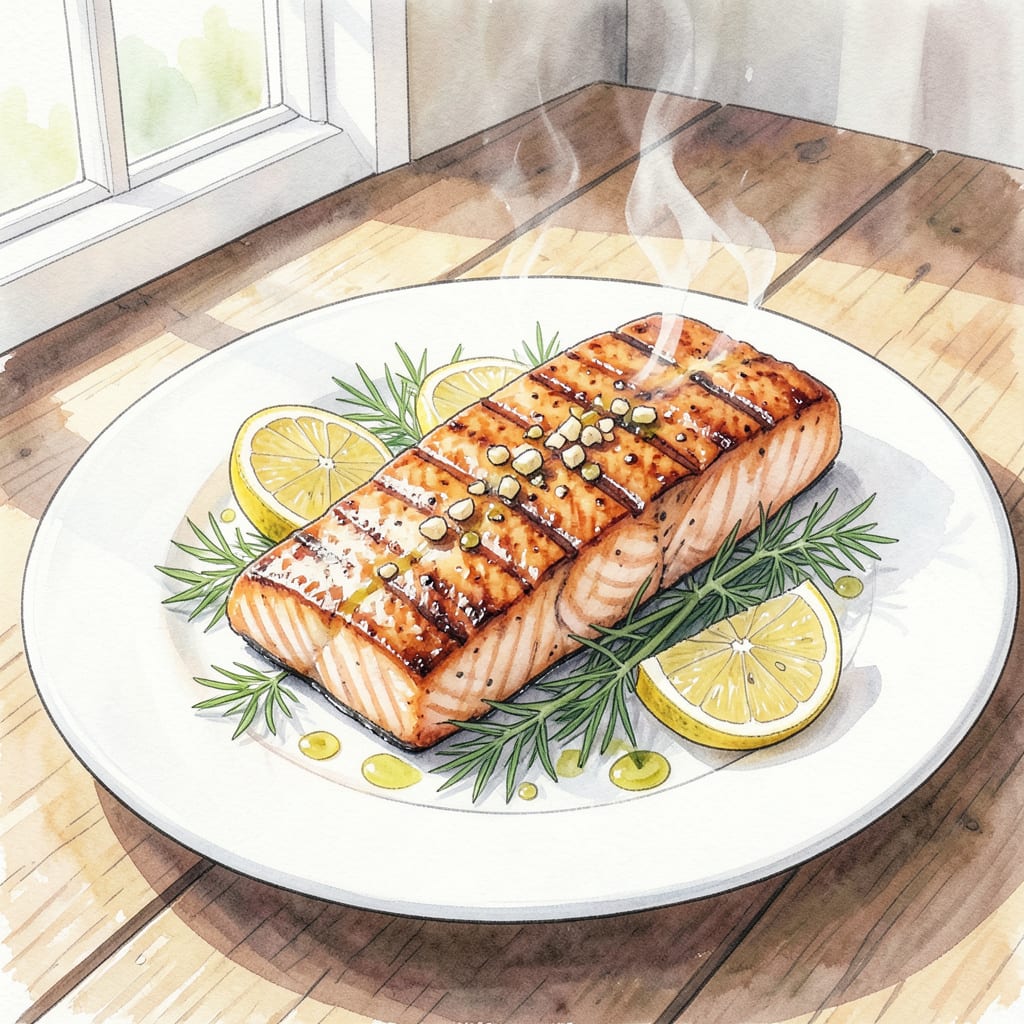
I’ve perfected the art of grilling salmon to achieve that perfectly charred exterior and flaky interior. The key is high heat and precise timing, which I’ll guide you through.
By following my technique, you’ll achieve restaurant-quality salmon with a crispy skin and tender flesh, all in under 20 minutes on your grill.
Ingredients for Salmon Grilled
Simple ingredients, big flavor. Fresh salmon and pantry staples come together beautifully.
| Ingredient | Amount | Notes |
|---|---|---|
| Salmon Fillets 🐟 | 1 ½ lb | Skin-on, wild-caught preferred |
| Olive Oil 🫒 | 2 tbsp | Extra-virgin for richness |
| Lemon Juice 🍋 | 2 tbsp | Freshly squeezed |
| Garlic Cloves 🧄 | 4 cloves | Minced, fresh |
| Fresh Dill 🌿 | ¼ cup | Chopped, fresh |
| Salt 🧂 | 1 tsp | Kosher or sea salt |
| Black Pepper 🌶️ | ½ tsp | Freshly ground |
| Paprika 🌶️ | ¼ tsp | Smoked or sweet |
| Lemon Slices 🍋 | 4 slices | For garnish |
| Fresh Parsley 🌿 | ¼ cup | Chopped, for garnish |
| Grill Brush 🧹 | 1 whole | For cleaning grill |
[recipe_ingredient_scaler]
For the best results, use wild-caught salmon from Costco or your local fish market. Freshness matters here—look for vibrant color and firm texture. I always check the smell too; fresh salmon should have a clean ocean scent, not fishy. If you’re using frozen, make sure it’s fully thawed before grilling.
No fresh dill? Fresh parsley is a fine substitute, or even dried dill at one-third the amount. For the lemon juice, fresh is best, but bottled works in a pinch. If you’re out of paprika, a pinch of cayenne pepper adds a nice kick. The garlic can be adjusted to taste—some like it strong, some like it subtle.
Leftover salmon keeps for 3-4 days in the fridge. Store it in an airtight container, and reheat gently if needed. The lemon slices can be kept in an airtight container in the fridge for up to 1 week.
Step-by-Step Instructions for Perfectly Grilled Salmon
Follow these straightforward steps to achieve perfectly charred and flaky salmon every time.
Step 1: Prepare the Salmon Fillets
Start by patting the 1.5 lb Salmon Fillets dry with paper towels. I like to be thorough here because excess moisture prevents that beautiful sear we’re after. Once dry, season both sides of the fillets with the 1 tsp Salt, 0.5 tsp Black Pepper, and 0.25 tsp Paprika. Make sure to coat them evenly.
The combination of salt, pepper, and paprika creates a nice balance of flavors that complements the natural richness of the salmon. I find that using freshly ground black pepper makes a noticeable difference in the overall flavor profile.
Step 2: Marinate with Aromatics
In a small bowl, whisk together the 2 tbsp Olive Oil, 2 tbsp Lemon Juice, and minced 4 cloves Garlic Cloves. Place the seasoned salmon fillets in a shallow dish and brush the marinade evenly over both sides of the fish. Sprinkle the 0.25 cup Fresh Dill over the top.
The acidity in the lemon juice helps to break down the proteins slightly, resulting in a more tender final product. I always use freshly squeezed lemon juice for the best flavor.
Step 3: Grill to Perfection
Preheat your grill to medium-high heat. Use the 1 whole Grill Brush to clean the grates thoroughly and prevent sticking. Once hot, place the salmon fillets skin-side down (if they have skin) on the grill. Cook for 4-5 minutes until the skin is crispy and releases easily from the grates.
Flip the salmon and cook for another 3-4 minutes on the second side, or until it reaches your desired level of doneness. I prefer my salmon cooked until it flakes easily with a fork but still retains some moisture in the center.
Step 4: Garnish and Serve
Once cooked, remove the salmon from the grill and transfer it to a serving platter. Garnish with the 4 slices Lemon Slices and sprinkle with the 0.25 cup Fresh Parsley. The fresh herbs add a bright, fresh flavor that complements the charred salmon beautifully.
Serve immediately while the salmon is still warm and the flavors are at their peak. This dish pairs wonderfully with a variety of sides, from roasted vegetables to a fresh salad.
Common Mistakes When Making Great salmon grilled
Overcooking the Salmon
One of the most common mistakes when grilling salmon is overcooking it, which results in dry, tough flesh. To avoid this, I always check the internal temperature with a thermometer and remove it from the grill when it reaches 145°F. Cooking times can vary based on the thickness of the fillets, so keep an eye on them. 🔥
Not Preheating the Grill
Not preheating the grill properly can lead to uneven cooking and sticking. I
Skipping the Marinade
While you can grill salmon without a marinade, skipping this step means missing out on extra flavor. I like to marinate my salmon in a mixture of olive oil, lemon juice, and garlic for at least 30 minutes. This not only adds flavor but also helps keep the fish moist.
Not Letting the Salmon Rest
After grilling, it’s tempting to serve the salmon immediately, but letting it rest for a few minutes can make a big difference. I let mine rest for 5 minutes before serving. This allows the juices to redistribute, making the salmon even more tender and flavorful.
Using the Wrong Type of Salmon
Using farmed salmon can sometimes result in less flavor and a softer texture compared to wild-caught salmon. I prefer using wild-caught salmon for its firmer texture and richer flavor. When shopping, look for fillets with a vibrant color and firm texture.
Not Monitoring Grill Temperature
Grill temperature can fluctuate, and not monitoring it can lead to overcooking or undercooking. I use a thermometer to keep an eye on the temperature and adjust the heat as needed. This ensures that the salmon cooks evenly and prevents it from burning. Maintaining a consistent temperature is key to perfectly grilled salmon.
Nutrition Facts
360kcal

Trained in classic French technique but raised on slow-cooked ribs and spicy rubs, she blends culinary skill with smoke and soul.
- Recipe for Boneless Pork Chops in Cast Iron Skillet: Sear and Baste to Juicy Perfection - October 3, 2026
- Recipe for Boneless Cross Rib Roast: Slow-Roasted Beef with Herb Crust - October 3, 2026
- Hamburgers in Sauce Recipe Crock Pot: Slow-Cooked Savory Delight - October 3, 2026